“It was as if the world was a great stage, and they were but players upon it, each with their entrances and exits, their moments of glory and their quiet disappearances.”
— Reflecting on the transient nature of life and fame in Amsterdam.

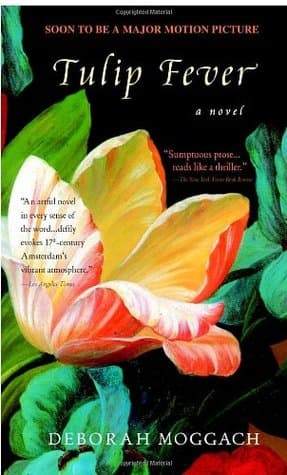
Deborah Moggach (1999)
Genre
Literary Fiction / Historical Fiction / Creativity / Romance
Reading Time
562 min
Key Themes
See below
Sign in to track this book
In 17th-century Amsterdam, a wealthy merchant's commission for a family portrait sparks a dangerous affair between his young wife and the artist, set against the backdrop of the city's intense tulip mania.
In 1636 Amsterdam, 'tulip fever' grips the city, with fortunes made and lost in the flower market. Cornelis Sandvoort, a wealthy merchant, loves his younger wife, Sophia, an orphan he rescued. Despite their comfortable life, Cornelis wants an heir, a wish Sophia has not met. To secure their legacy, Cornelis commissions a grand portrait of himself and Sophia. He hires Jan van Loos, a talented but poor young painter, bringing him into their home on the Herengracht canal.
Jan van Loos begins painting the portrait. As he spends hours with Sophia, a strong and risky attraction grows between them. Sophia, feeling trapped by her rich life and the pressure to have a child, is drawn to Jan's artistic passion and youth. Their glances linger, their hands touch, and unspoken desires fill the studio. Maria, the Sandvoorts' maid, observes their growing closeness without understanding it, harboring her own secret feelings and frustrations.
While Sophia and Jan's romance grows, Maria, the maid, discovers she is pregnant. The father is Willem, a fishmonger, but Maria keeps her condition secret, fearing his reaction. Her pregnancy creates problems for her job and future. She notices Sophia and Jan's increasing closeness, and a desperate idea begins to form in her mind, driven by her own difficult situation and a wish to secure her child's future.
Driven by their passion, Sophia and Jan plan to run away together. They need a lot of money to start a new life. Jan, caught in the tulip market craze, believes he can get rich by investing in a rare tulip bulb. Sophia, meanwhile, plans a risky scheme. Knowing Cornelis's strong desire for an heir, she will fake a pregnancy and then, after a false 'birth,' swap Maria's baby for her own, allowing her to escape with Jan while Cornelis believes he has an heir.
The deception begins. Sophia fakes pregnancy, enduring morning sickness and padding her belly. As her 'due date' nears, Maria goes into labor. In a secret operation, Maria gives birth, aided by a midwife. The healthy baby girl is then secretly swapped for Sophia's supposed 'stillborn' infant. Cornelis is thrilled by his 'daughter's' arrival, believing his prayers are answered. Sophia prepares to escape, leaving Maria to grieve her child and think about her future.
With the baby swap done, Sophia leaves the Sandvoort house at night, expecting to meet Jan and start their new life. However, Jan's plans for wealth have failed. The tulip market crashes, wiping out his fortune and leaving him with nothing. He cannot meet Sophia as planned, leaving her stranded and vulnerable, her escape plan collapsing into chaos and despair.
After Sophia's disappearance, Cornelis is heartbroken but finds comfort in the baby, whom he believes is his and Sophia's daughter. Maria, recovering from childbirth, becomes the baby's wet nurse, unknowingly nursing her own child. Through caring for the infant, a tender bond forms between Maria and Cornelis. Maria, initially desperate, grows attached to the child and, unexpectedly, to the kind, sad merchant.
Sophia, without money or a place to go after Jan's failure, faces hardship. Her dreams of escape shattered, she becomes a prostitute to survive in Amsterdam's harsh underworld. She lives in poverty, a stark contrast to her luxurious life as Cornelis Sandvoort's wife. Her journey shows the harsh results of her choices and society's unforgiving nature for women without protection or resources.
Jan van Loos, ruined by the tulip crash and feeling guilty about Sophia, tries to rebuild his life. He attempts to paint again, but his artistic spirit is dimmed by his failures. He often visits the house where Sophia's portrait still hangs, a reminder of their forbidden love and his broken promises. He eventually finds some peace through his art, creating new works, but Sophia's memory and his past mistakes still follow him.
Years pass. Cornelis, still unaware of the lie, grows fond of Maria and the child. Maria, having found stability and a unique love with Cornelis, raises her daughter, whom she now sees as part of their new, unconventional family. The secret of the child's true parents remains hidden, forming the base of their life together. They create a loving home, built on a lie, but filled with genuine affection and quiet understanding that goes beyond the initial deception.
Decades later, an older, changed Sophia returns to Amsterdam. Her life has been difficult and full of regret. She sometimes sees Cornelis and Maria, now a couple, raising the child she left behind. She watches from afar, recognizing her daughter but unable to reveal herself or reclaim her past. Her return is not for reconciliation, but perhaps for a final, silent acknowledgment of the life she chose and its results.
The portrait of Sophia, commissioned by Cornelis years ago, still hangs in the Sandvoort home. It observes the lives that unfolded around it. It shows Sophia at her most beautiful, a moment frozen in time just before her life changed forever. The painting is a strong symbol of ambition, deception, and the lasting power of art, holding the secrets and desires that shaped the destinies of Cornelis, Sophia, Jan, and Maria.
The Protagonist
Sophia transforms from a restless, privileged wife into a desperate, hardened woman, losing everything in pursuit of a fleeting romance.
The Supporting
Cornelis endures heartbreak and betrayal but ultimately finds unexpected happiness and a family in the most unusual circumstances.
The Supporting
Jan's ambition and passion lead to his downfall, but he eventually finds a measure of redemption through his art, haunted by his past mistakes.
The Supporting
Maria transforms from a desperate, pregnant maid into the stable, loving matriarch of an unconventional family, finding security and purpose.
The Mentioned
Willem's arc is minimal; he remains largely unaware of the profound impact of his brief relationship with Maria.
The Supporting
The midwife remains a static character, fulfilling her role in the deception and then fading from the narrative.
The novel centers on a key act of deception – Sophia's fake pregnancy and the baby swap – which affects everyone involved. Sophia's initial lie, born from a wish for freedom and love, leads to a life of prostitution and regret. Cornelis lives a happy life, unknowingly built on a lie, while Maria finds security through her part in the lie. This theme explores how lies, even small ones, can change destinies and create new realities, some tragic, some surprising.
“A lie, once told, becomes a life lived.”
The novel contrasts the intense, brief love between Sophia and Jan with the quieter, more lasting affection that grows between Maria and Cornelis. Sophia and Jan's love is based on physical attraction and a romantic ideal, eventually failing under pressure. In contrast, Maria and Cornelis's relationship, though starting with a lie, becomes a real bond of care, respect, and shared parenthood. This shows that true affection can come from unexpected places and often lasts longer than intense, but shallow, passion.
“He had wanted a child, and now he had one, and a woman who truly cared for him, in her own quiet way.”
The portrait of Sophia is a main symbol, embodying themes of art, beauty, and desire. It is commissioned because Cornelis wants to immortalize his love and Sophia's beauty, but it starts Jan's desire for Sophia. The act of painting itself fuels their forbidden passion. The finished portrait, a frozen image of a woman about to make a life-changing decision, outlives the characters' ambitions and silently witnesses the truths and lies. It represents art's lasting power to capture human desires.
“The canvas glowed with her youth, her beauty, and the secret longing that only he could see.”
The novel clearly shows 17th-century Amsterdam's strict social structures and how they shape opportunity and survival. Sophia, despite her beauty, is an orphan, dependent on Cornelis. Maria, as a maid, faces severe problems for an unplanned pregnancy, forcing her into a desperate act. Jan, though talented, struggles without support. The story shows how wealth and status offer protection and choices, while their absence forces people into desperate actions and limits their futures, highlighting the era's deep inequalities.
“In this city, a woman without a husband or a dowry was a leaf in the wind.”
The 'tulip fever' is a strong background and plot element, showing how quickly fortunes change and how greedy people can be. The speculative bubble, where a single tulip bulb could cost as much as a house, represents the irrationality of desire and how quickly wealth can be gained and lost. Jan van Loos's ruin in the tulip crash directly impacts Sophia's fate, showing how outside, unpredictable forces can destroy personal plans and dreams, leading to tragic results.
“The madness had swept through the city, and left ruin in its wake, like a plague.”
A commissioned painting that acts as a catalyst for forbidden love and a silent witness to deception.
The portrait of Cornelis and Sophia, painted by Jan van Loos, is the central plot device. It brings Jan and Sophia together, sparking their illicit affair. The sittings provide the intimate space for their forbidden romance to flourish. Once completed, the portrait remains in the Sandvoort home, symbolically capturing Sophia at the moment of her decision and serving as a constant, silent reminder of the past and the secrets it holds. It represents the intersection of art, beauty, and human desire, and how art can both reflect and influence reality.
A historical economic bubble that serves as both backdrop and direct cause of character's fortunes and misfortunes.
The historical phenomenon of 'tulip mania' in 17th-century Amsterdam is more than just a setting; it directly impacts the plot. Jan van Loos's decision to invest his and Sophia's potential escape money in tulip bulbs, hoping for a quick fortune, leads directly to his financial ruin when the market crashes. This event strands Sophia and shatters their plans, fundamentally altering the trajectory of their lives. It symbolizes the fleeting nature of wealth, human greed, and the unpredictable forces that can derail even the most carefully laid plans.
A central act of deception where Maria's newborn is exchanged for Sophia's 'stillborn' child.
The baby swap is the pivotal plot device that drives the entire narrative. It allows Sophia to escape her marriage, provides Cornelis with the heir he desperately desires, and gives Maria a path to security and a future for her child. This act of deception creates a new, unconventional family unit and sets into motion the long-term consequences for all characters. It is the ultimate manifestation of the theme of deception and illustrates the lengths to which individuals will go to achieve their desires or escape their circumstances.
Sophia's and Maria's shared past in an orphanage, highlighting their vulnerability and lack of social standing.
Both Sophia and Maria come from orphanage backgrounds, a detail that subtly but significantly informs their characters and motivations. For Sophia, it underscores her initial gratitude towards Cornelis but also her underlying insecurity and desperation for a better life. For Maria, it highlights her precarious social position and the dire consequences of an unplanned pregnancy, making her willing to participate in the baby swap to secure her child's future. This shared past emphasizes their vulnerability in a society where status and family connections were paramount.
“It was as if the world was a great stage, and they were but players upon it, each with their entrances and exits, their moments of glory and their quiet disappearances.”
— Reflecting on the transient nature of life and fame in Amsterdam.
“Love, she thought, was like a tulip: beautiful, fleeting, and capable of driving men to madness.”
— Cornelia musing on the intensity of the love affair and the tulip craze.
“Money was a phantom, a whisper on the wind, here one moment and gone the next, just like the scent of a rare bloom.”
— Characters grappling with the volatile tulip market and its financial implications.
“The greatest art, he believed, was not merely to copy life, but to imbue it with a spirit, a truth that transcended the visible.”
— Jan van Loos reflecting on his artistic philosophy while painting.
“To be truly free, one had to shed the expectations of others, and embrace the wild, untamed garden of one's own desires.”
— Sophia contemplating her escape and future.
“A secret shared was a burden halved, but a secret kept was a seed of poison in the heart.”
— Characters dealing with the weight of their hidden truths.
“Beauty was a dangerous thing, especially when it promised more than it could ever deliver.”
— Observations on Sophia's allure and the deceptive nature of appearances.
“The city itself was a masterpiece, a canvas of canals and gabled houses, each brick telling a story of ambition and trade.”
— Description of Amsterdam and its vibrant atmosphere.
“Hope was a fragile thing, easily crushed, but also incredibly resilient, like a tulip bulb waiting for spring.”
— Characters clinging to hope amidst their schemes and hardships.
“Every lie, no matter how small, created a ripple, distorting the truth until it was unrecognizable.”
— The escalating web of deceit affecting the characters.
“Marriage, she had learned, was often a performance, a delicate dance of expectations and veiled disappointments.”
— Sophia's reflections on her arranged marriage to Cornelis.
“The future was an unpainted canvas, full of possibilities, but also terrifying in its blankness.”
— Sophia contemplating her uncertain path after leaving her husband.
“Passion, when unleashed, could burn down everything in its path, leaving only ashes and regret.”
— The destructive nature of the illicit affair between Sophia and Jan.
“To truly see someone, he realized, was not just to look at their outward form, but to peer into the turbulent waters of their soul.”
— Jan van Loos's evolving understanding of Sophia as he paints her.
Ready to see how well you understood this book? Take our interactive quiz with 10 questions.

Deborah Moggach is a British author known for her witty and insightful novels that often explore themes of relationships and societal change. Her most famous works include the bestselling "The Best Exotic Marigold Hotel," which inspired the successful film, and the historical novel "Tulip Fever." Moggach's writing is characterized by its sharp dialogue and keen observation of human nature.







