“The castle was a living, changing thing. It grew new rooms, moved old ones, and sometimes even made new doors appear in places where there hadn't been any before.”
— Describing the magical nature of Castle Glower.

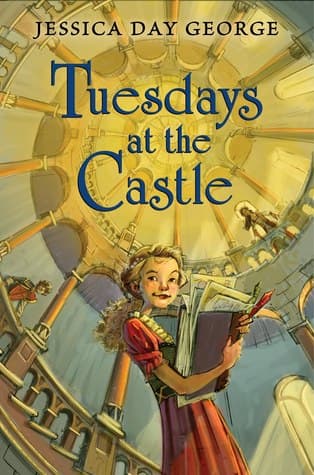
Jessica Day George (2011)
Genre
Fantasy / Children's / Young Adult
Reading Time
225 min
Key Themes
See below
Sign in to track this book
With a castle that spontaneously sprouts new rooms and turrets, Princess Celie must use her unique understanding of its ever-shifting layout to outwit usurpers and save her kingdom.
Princess Celie Glower lives in Castle Glower, a magical, sentient castle that adds and rearranges rooms every Tuesday. Celie, the youngest of four royal children, is the only one who meticulously maps the castle's changes, giving her an intimate knowledge of its unpredictable layout. The story begins with King and Queen Glower, along with Prince Rolf, returning from a diplomatic trip to the neighboring country of Grul. As they approach the castle, their carriage is ambushed. The children at the castle — Celie, Princess Lilah, and Prince Bran — witness the attack from the battlements, but the carriage tumbles down a ravine, and the royal party is presumed lost. The castle immediately responds by sealing itself off, growing new walls and disappearing existing ones, creating a labyrinthine defense.
With the King and Queen missing, Prince Rolf, as the eldest son, officially becomes the Regent. He is quickly joined by his fiancée, Princess Lulath, from the country of Grul, and her brother, Prince Lak, who arrive at Castle Glower. The castle, however, does not seem to like Lulath or Lak. It frequently rearranges their rooms to inconvenient locations, makes their belongings disappear, and creates obstacles for them. Celie, Bran, and Lilah observe this with a mix of amusement and suspicion. They notice that Lulath and Lak are unusually interested in the castle's magical properties, particularly its treasure room, and seem to be trying to isolate Rolf from his siblings.
Lulath insists on a swift wedding to Rolf, claiming it is necessary for stability, despite the mourning period for the presumed-dead King and Queen. The castle continues its subtle rebellion, making Lulath's wedding dress disappear and reappearing it in a different, less flattering style. Celie, using her detailed knowledge of the castle's ever-changing rooms, discovers a hidden passage leading to a new, secret chamber. Inside, she finds a small, enchanted spyglass that shows her images of the King and Queen alive and imprisoned in a dungeon. This discovery confirms her suspicions that Lulath and Lak are involved in their parents' disappearance and are trying to usurp the throne.
Through the magical spyglass, Celie is able to communicate with her parents, who are indeed alive but held captive in a dark, damp dungeon. They confirm that Lulath and Lak orchestrated their ambush and imprisonment. The King manages to convey a coded message about a specific hidden room in Castle Glower, which he believes the castle will reveal to Celie. This room holds an important artifact or clue related to their rescue. Celie shares this information with Bran and Lilah, who are initially skeptical but quickly come to believe her as the castle continues to subtly guide Celie and hinder Lulath and Lak's plans.
Following her father's vague clues, Celie and her siblings search for the specific room. The castle, sensing their urgency, begins to make more dramatic changes, leading Celie directly to a previously unseen chamber behind a tapestry. Inside, they find a golden key and a series of ancient scrolls detailing the history of the Glower family and the castle's magic. The scrolls reveal that the castle is a living entity tied to the royal bloodline. They also contain a prophecy about a time when the true heir will need to defend the castle from usurpers.
As the wedding day approaches, the castle becomes increasingly hostile towards Lulath and Lak. It creates dead ends, makes stairs disappear, and even traps Lak in a broom closet for an extended period. Celie, Bran, and Lilah, now fully united, use their knowledge of the castle's quirks to their advantage. They realize that the golden key found in the secret room is not for a physical lock, but a symbolic key to unlock the castle's full protective power. They decide to use the wedding ceremony as the perfect opportunity to expose Lulath and Lak, knowing the castle will assist them.
On the day of the wedding, as the ceremony is about to begin, Celie, Bran, and Lilah put their plan into action. Celie, guided by the castle, appears from a secret passage with the magical spyglass. She uses it to project the image of her imprisoned parents onto a wall, revealing their plight to the assembled guests, including the ambassadors from various kingdoms. Lulath and Lak are stunned and try to deny it, but the evidence is undeniable. The castle responds by shifting the floor beneath them, creating chasms, and making walls appear and disappear, effectively trapping the treacherous siblings and their guards.
With Lulath and Lak exposed and trapped by the castle, Prince Rolf, horrified by his fiancée's betrayal, orders their arrest. Celie then uses her knowledge to guide a search party, including Rolf, through the castle's new, temporary passages to the dungeon where their parents are held. The King and Queen are rescued, weak but alive, and overjoyed to be reunited with their children. Lulath and Lak are taken away to face justice. The castle, having accomplished its task of protecting its family, slowly begins to revert to a more stable, welcoming state, though it still retains its unique, shifting nature.
After the crisis, the Glower family celebrates their reunion and the defeat of the usurpers. King Glower, now fully aware of the extent of his youngest daughter's understanding of the castle, acknowledges Celie's invaluable role in their rescue. The family, particularly Rolf, gains a deeper appreciation for the castle's sentient nature and its fierce loyalty to the rightful Glower monarchs. The experience strengthens their bond as a family and their connection to their magical home, ensuring that Castle Glower will continue to be a central, protective force in their lives, always changing, always guarding.
The Protagonist
Celie transforms from a quiet, underestimated princess into a decisive hero who saves her family and kingdom, gaining confidence and recognition for her unique talents.
The Supporting/Setting/Magical Entity
The castle's 'personality' is revealed as it becomes an active participant in the plot, demonstrating its protective instincts and loyalty.
The Supporting
Rolf learns to see beyond appearances and trust his younger siblings, growing in wisdom and leadership.
The Supporting
Lilah moves past her initial skepticism to become a crucial, supportive member of the team, showcasing her loyalty and resourcefulness.
The Supporting
Bran shifts from an academic observer to an active participant, using his intellect to aid his family in a crisis.
The Supporting
The King's experience of imprisonment strengthens his appreciation for his family and the castle's magic.
The Supporting
The Queen endures imprisonment, embodying resilience and the strong family ties that ultimately lead to her rescue.
The Antagonist
Lulath's true, villainous nature is gradually revealed, leading to her downfall and exposure.
The Antagonist
Lak's villainy is exposed and he faces justice for his actions.
The story is about the loyalty of the Glower children to their parents and to each other. Despite initial skepticism, Celie, Bran, and Lilah unite to save their family. The castle itself shows this theme through its fierce loyalty to the Glower bloodline, actively protecting them from usurpers. This theme shows how trust and cooperation within a family are essential to overcome adversity, as seen when Rolf finally trusts his younger siblings over his manipulative fiancée.
“"The castle knew. It always knew. And it cared about the Glower family more than anything else in the world."”
This theme is shown by both Princess Celie and Castle Glower. Celie, the youngest and often overlooked princess, possesses the most important skill – her detailed knowledge of the castle's ever-changing layout. Her quiet observations and unique bond with the castle are initially dismissed as hobbies but prove indispensable. The castle itself is a powerful, sentient entity whose magic is often taken for granted or misunderstood by many, yet it holds the key to the kingdom's safety. The story suggests that true strength and importance can lie in unexpected places.
“"Nobody else bothered to map the castle, which Celie thought was a shame. It was like not noticing the way a friend changed her hair, or the way her eyes crinkled when she laughed."”
Celie's identity is deeply connected with Castle Glower. Her meticulous mapping and understanding of its quirks are not just a hobby but a fundamental part of who she is, giving her a sense of purpose and belonging that her siblings initially lack. The castle itself gets its identity from its connection to the Glower family, thriving and protecting them. The struggle to protect the castle and the royal line is also a fight for the family's identity and their rightful place within their home and kingdom.
“"It was her castle. And it knew her."”
The plot relies on the deceptive nature of appearances. Princess Lulath appears charming and suitable for Prince Rolf, but her true nature is manipulative and treacherous. Princess Celie appears to be just a quiet, unassuming younger sister, but she is the most observant and important character. The castle itself constantly changes its appearance, making it difficult to navigate for those who do not understand its true, sentient nature. This theme teaches the characters and readers to look beyond the surface to discern truth and intent.
“"The castle was always changing, always revealing new secrets, but sometimes it hid them too, behind a wall that wasn't there yesterday."”
A magical castle that is a character in its own right, actively participating in the plot.
Castle Glower is not merely a setting but a living, breathing entity with a personality and will. It changes its layout, adding rooms or removing passages, particularly on Tuesdays. Crucially, it expresses its loyalty to the Glower royal family and its dislike for enemies by creating obstacles for the latter and guiding or protecting the former. This device drives much of the plot, providing both challenges and solutions for the characters, and acts as a magical guardian of the kingdom.
The unpredictable, ever-changing architecture of the castle.
This is a direct manifestation of the sentient castle. The constant rearrangement of rooms, hallways, and turrets serves multiple functions: it creates a unique challenge for navigation, provides secret passages and hiding places, and acts as a plot mechanism for the castle to communicate its intentions and assist Celie. Celie's meticulous mapping of these changes is a key skill that becomes vital to the family's survival, turning a whimsical feature into a crucial tactical advantage.
An enchanted object used for long-distance communication and revelation.
The magic spyglass is a key magical artifact discovered by Celie. It allows her to see and communicate with her imprisoned parents, confirming their survival and providing vital information about their captors. This device serves as the primary means of communication between the captive King and Queen and their children, directly advancing the plot by revealing the villains' treachery and guiding the children's rescue efforts. It is a concrete piece of evidence that convinces the skeptical siblings and later the court.
Artifacts that unlock the castle's history and full protective power.
Found in a secret room revealed by the castle, the golden key and ancient scrolls are symbolic and literal plot devices. The scrolls provide historical context about the Glower family and the castle's magic, validating Celie's understanding. The golden key is not for a physical lock but represents the unlocking of the castle's full protective capabilities for the rightful heir, empowering Celie and the Glower family to fully utilize their home's magic against their enemies.
“The castle was a living, changing thing. It grew new rooms, moved old ones, and sometimes even made new doors appear in places where there hadn't been any before.”
— Describing the magical nature of Castle Glower.
“If you don't keep an eye on a new room, it might just disappear again.”
— Celie's observation about the transient nature of the castle's new rooms.
“Being a princess isn't all about pretty dresses and tea parties. Sometimes it's about being brave.”
— Celie reflecting on her duties and the unexpected challenges.
“The castle had its own way of doing things, and it didn't much care for rules.”
— Celie explaining the castle's independent and unpredictable behavior.
“It was a good thing the castle liked Celie, because Celie liked the castle right back.”
— Narrator's insight into the special bond between Celie and Castle Glower.
“You can't really get lost in the castle, not if you belong here. It always knows where you are.”
— Rolf reassuring Celie about navigating the ever-changing castle.
“Sometimes the best way to deal with a problem is to let the castle handle it.”
— Celie learning to trust the castle's intelligence and protective instincts.
“A good ruler knows when to listen to their advisors, and when to listen to their own heart.”
— Queen Lilah offering advice to Celie.
“The castle never did anything without a reason, even if the reason wasn't obvious at first.”
— Celie's developing understanding of the castle's deliberate actions.
“It wasn't just a building; it was part of the family.”
— Celie's deep affection and view of the castle as a sentient being.
“New rooms were always exciting, like opening a present.”
— Celie's childlike wonder and joy at the castle's constant changes.
“The castle had a sense of humor, too. Sometimes it would play little tricks.”
— Celie observing the playful side of Castle Glower.
“Being small didn't mean you couldn't be important.”
— Celie realizing her own value and role despite her age.
“It was a strange sort of comfort, knowing the castle was always there, always watching.”
— Celie finding reassurance in the castle's constant presence and awareness.
Ready to see how well you understood this book? Take our interactive quiz with 10 questions.

Biography coming soon.







