“Don't be afraid of death; be afraid of an unlived life. You don't have to live forever, you just have to live.”
— Mae Tuck explaining the Tuck family's perspective on immortality to Winnie Foster.

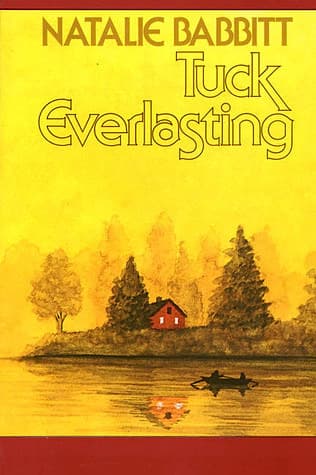
Natalie Babbitt (1975)
Genre
Fantasy / Children's / Historical Fiction / Young Adult / Romance
Reading Time
150 min
Key Themes
See below
Sign in to track this book
A curious ten-year-old girl finds an immortal family and learns about the difficult aspects of eternal life when a stranger tries to exploit their secret spring.
Ten-year-old Winnie Foster feels confined by her strict family and their small house in Treegap. She wants adventure and a life beyond her yard. She often talks to a toad as a friend. The woods, owned by her family, are next to their property. Her grandmother warns her not to go into the woods because they are mysterious. Despite the warnings, Winnie feels drawn to the woods, seeing it as a possible escape. This desire for freedom and a different life sets the stage for her meeting with the Tuck family.
One hot August day, Winnie's grandmother and mother sit on the porch when a soft, bell-like sound comes from the woods. Winnie's grandmother calls it elf music, a story from her youth. Soon after, a strange man in a yellow suit arrives at the Foster gate. He asks about the family and who owns the woods. He seems too interested in the woods and its secrets, which makes Winnie and her family uneasy. His questions suggest he knows or suspects something hidden in the Foster property, adding mystery to Winnie's already curious world.
Wanting independence and curious about the music, Winnie finally goes into the forbidden woods. Deep inside, she finds a clearing with an old tree and a small spring bubbling from its roots. A handsome seventeen-year-old boy named Jesse Tuck is there, drinking from the spring. When Winnie comes closer, Jesse tries to stop her from drinking the water, saying it is not ordinary. Before he can fully explain, his mother, Mae, and older brother, Miles, arrive. They tell Winnie the truth about the spring and its effects.
Winnie's discovery overwhelms the Tucks. They gently take her to their hidden home. On their way, Mae Tuck tells Winnie their secret: eighty-seven years ago, they drank from the spring in the woods and have not aged. They realized they were immortal after strange events—Jesse falling from a tree without harm, their cat dying while they stayed the same, and their horse being shot without injury. They explain the difficulties of eternal life, the loneliness, and the constant need to move to avoid suspicion. They stress the importance of keeping the spring a secret, fearing what would happen if people found it.
Winnie stays at the Tucks' simple, secluded cabin. She sees a life very different from her own. She sees their love for each other and their quiet acceptance of their unusual lives. She learns about their past, their struggles, and their wish for the spring's secret to stay hidden. Meanwhile, the Man in the Yellow Suit, who heard parts of the Tucks' talk with Winnie by the spring, follows them. He figures out their secret and plans to find the spring and sell its water for a lot of money. He plans to offer Winnie's safe return to the Fosters in exchange for their land.
The Man in the Yellow Suit returns to the Foster home. He tells Winnie's upset parents that he knows where Winnie is. He offers to lead them to her and tell them the spring's secret, but only if they give him ownership of the woods. Desperate for Winnie's safe return, the Fosters agree. They do not know they are trading their land for a secret that could harm the world. The Man in the Yellow Suit then rides with the constable to the Tuck's home, planning to expose them and claim the spring.
The constable and the Man in the Yellow Suit arrive at the Tuck's cabin. They find Winnie safe, but the Man in the Yellow Suit immediately tries to take her. He wants to make her drink the spring water to prove its power. He reveals his plan to use the spring. Angry and wanting to protect Winnie and the spring's secret, Mae Tuck grabs Jesse's shotgun and hits the Man in the Yellow Suit on the head. He falls, badly hurt. The constable sees the attack, arrests Mae, and takes her to the jail in Treegap. Her execution date is set.
The Tucks realize that if Mae is executed, her immortality will become public, leading to chaos and the spring's discovery. They plan to free her from jail. Jesse meets Winnie outside her window and explains the plan: he will wait outside the jail, and Winnie must take Mae's place in the cell during the night, letting Mae escape. Jesse also gives Winnie a small bottle of the spring water, asking her to drink it when she is seventeen so they can be together forever.
That night, during a bad thunderstorm, Winnie secretly leaves her home and meets the Tucks at the jailhouse. Following their plan, Miles removes the nails from Mae's cell window. Winnie slips inside, taking Mae's place on the cot. Mae, with Miles and Angus, escapes in the storm. Winnie, alone in the cell, feels fear and excitement. She knows she helped protect her friends and their secret. Her bravery strengthens her bond with the Tucks and her understanding of their unique life.
The next morning, the Man in the Yellow Suit dies from his injury, ending his threat. Winnie is found in Mae's cell, but because of the situation and the Tucks' lack of clear motive, she is not punished much. She goes home, changed by her experience. Later, she sees the toad she used to talk to, being attacked by a dog. Remembering Jesse's bottle of spring water, she pours it over the toad, saving its life and making it immortal. This act shows her choice to protect life, even if it means giving up her own chance at eternal life with Jesse.
Many years pass. The Tuck family, still traveling, returns to Treegap. They find the town much changed, now a busy place with a new road. As they pass the cemetery, they see a familiar name on a headstone: 'Winnie Foster, 1870-1950.' The headstone shows that Winnie lived a full, mortal life, married, and had children. They also find the toad, still alive and unchanged, hopping across the road. This discovery confirms Winnie's decision to live a natural life cycle, choosing mortality over eternal youth, and respecting the natural order of life and death, as the Tucks had hoped.
The Protagonist
Winnie transforms from a naive, restless child into a thoughtful young woman who makes a profound decision about her own mortality, choosing to embrace the natural cycle of life and death.
The Supporting
Mae remains steadfast in her maternal role, consistently protecting her family and their secret, even resorting to violence when necessary, while enduring the unchanging burden of immortality.
The Supporting
Angus remains a profound and melancholic figure, consistently expressing his longing for natural mortality and acting as a wise mentor to Winnie.
The Supporting
Jesse remains eternally young and playful, yet he yearns for companionship in his immortality, hoping Winnie will join him.
The Supporting
Miles remains a practical and sorrowful figure, forever haunted by his lost mortal family and understanding the harsh realities of immortality.
The Antagonist
The Man in the Yellow Suit pursues his greedy quest to exploit the spring, culminating in his violent death and the failure of his plans.
The Supporting
Winnie's mother remains a symbol of conventional motherhood, her overprotective nature unchanged despite Winnie's adventure.
The Supporting
Winnie's grandmother remains a loving, traditional figure whose stories inadvertently provide a crucial clue for the antagonist.
The Supporting
The Constable dutifully carries out his duties, remaining largely oblivious to the supernatural elements of the story, and is ultimately outsmarted by the Tucks and Winnie.
The main theme of the novel looks at what it means to live forever. At first, it seems like a gift, but the Tucks show the loneliness and difficulty of immortality. They are 'stuck' outside the natural cycle of life, unable to grow, change, or truly connect with the mortal world. Angus Tuck's comparison of being 'like a rowboat that's hauled up on the bank' shows they cannot take part in the 'flow' of life. Winnie's choice to live a mortal life shows the novel's idea that life's meaning comes from its end and the cycle of growth and death.
“'It’s a wheel, Winnie. Everything’s a wheel, turning and turning, never stopping. The frogs and the insects, they’re part of it too. But we’re like a rowboat that’s hauled up on the bank. We’re stuck, Winnie, you and me. We can’t get off the wheel.'”
This theme connects with the idea of living forever. The book highlights the beauty and need for the natural cycle of birth, growth, change, and death. The Tucks, being outside this cycle, show its importance. Angus's descriptions of the 'wheel' of life, where everything is born, lives, and dies, explain that death is not an end but a necessary part of a continuous process. Winnie's decision to pour the spring water on the toad instead of drinking it herself shows her acceptance of this natural order, choosing a complete, though limited, life over an eternal, unchanging one.
“'Don't be afraid of death; be afraid of an unlived life. You don't have to live forever, you just have to live.'”
Winnie's initial desire to be free from her strict family sets up her adventure. She feels 'fenced in' and wants to see the world beyond her gate. The Tucks, though physically free to travel, are limited by their immortality; they are stuck in time, unable to change or belong anywhere. The Man in the Yellow Suit wants freedom from death and human limits through greed. In the end, true freedom is shown not as escaping limits, but as the freedom to choose one's path within the natural order, as Winnie does.
“'She wished she had a sister, or a brother. But she had only her mother and her father and her grandmother, and they had been enough to make her feel fenced in, with their over-sweet ways, and their nagging.'”
Finding the spring water gives great power: power over life and death. The Tucks understand the responsibility that comes with this power. They guard the secret strongly, knowing the chaos and suffering it would cause if used wrongly. The Man in the Yellow Suit, in contrast, shows the irresponsible and destructive use of such power, driven by selfish plans to exploit and sell immortality. Winnie's act of saving the toad with the water, rather than herself, shows she understands this responsibility and uses the special gift with kindness.
“'You can’t just go around telling everybody. We got to keep it a secret. A big secret.'”
Despite their unusual lives, the Tuck family shows deep love and loyalty for each other. This helps them deal with the loneliness of living forever. Their bond gives them strength and comfort. Winnie feels a strong connection with the Tucks, feeling more understood and valued by them than by her own family. Jesse's offer of eternal life with him is an act of love, even if a bit naive. Ultimately, the story suggests that meaningful connections and love are more valuable in a limited life than a solitary, never-ending existence.
“'We got to stick together, for the good of the whole bunch.'”
A literal magical spring that grants immortality, serving as the central conflict driver.
The spring in the woods is the primary plot device, a magical element that bestows immortality upon anyone who drinks from it. It is the catalyst for the entire story, creating the Tucks' predicament and drawing Winnie into their secret. The spring acts as a symbol of temptation, power, and the disruption of natural order. Its existence creates the moral dilemma at the heart of the narrative: whether eternal life is a blessing or a curse, and the ethical implications of controlling such a powerful force. Its hidden location and the Tucks' efforts to protect it drive much of the plot's tension.
A small, tinkling music box that serves as a subtle clue and a symbol of the Tucks' unchanging nature.
Mae's music box is a significant symbolic and plot device. Its distinctive 'elf music' is first heard by Winnie and her grandmother, providing the Man in the Yellow Suit with a crucial clue that links the Tucks to the area and eventually helps him track them down. Beyond its plot function, the music box symbolizes the unchanging nature of the Tucks; it is an old, simple object that remains the same, much like they do. It represents a piece of their past that they carry with them, a small comfort in their timeless existence, and a link to the mortal world they left behind.
A recurring animal that acts as a confidante for Winnie and a recipient of the spring water.
The toad serves as a recurring symbolic and plot device. Initially, it is Winnie's only confidante, a creature to whom she expresses her desires for freedom and change. Later, Winnie uses the spring water to save the toad from a dog, an act that directly mirrors and foreshadows her decision regarding her own mortality. By giving the toad eternal life, Winnie demonstrates her understanding of the spring's power and her compassion, while simultaneously making a choice not to drink the water herself. The toad, found alive and unchanged fifty years later, is the final confirmation of Winnie's choice and the lasting impact of the spring.
Hints and clues throughout the narrative that prepare the reader for future events and revelations.
Foreshadowing is skillfully used throughout the novel to build suspense and deepen the themes. Examples include Winnie's grandmother hearing the 'elf music' from the woods, hinting at Mae's music box and the Tucks' presence. The Man in the Yellow Suit's initial questions about the Fosters and the woods immediately signal his suspicious nature and his eventual role in uncovering the secret. The Tucks' repeated warnings about the spring's power and the burden of immortality prepare the reader for Winnie's ultimate decision, making it feel earned and logical rather than abrupt.
“Don't be afraid of death; be afraid of an unlived life. You don't have to live forever, you just have to live.”
— Mae Tuck explaining the Tuck family's perspective on immortality to Winnie Foster.
“The first week of August hangs at the very top of summer, the top of the live-long year, like the highest seat of a Ferris wheel when it pauses in its turning.”
— Opening line describing the setting in Treegap.
“Life's got to be lived, no matter how long or short. You got to take what comes.”
— Angus Tuck reflecting on the burden of eternal life.
“You can't have living without dying. So you can't call it living, what we got. We just are, we just be, like rocks beside the road.”
— Miles Tuck expressing the stagnation of immortality.
“The wheel turns, the water flows, and we are carried along with it, whether we will or no.”
— Angus Tuck using the metaphor of the wheel to explain the natural cycle of life.
“It's a wheel, Winnie. Everything's a wheel, turning and turning, never stopping.”
— Angus Tuck teaching Winnie about the cyclical nature of life.
“You'd think we'd be happy, living forever. But we ain't. We're stuck. Like rocks, like the dust.”
— Jesse Tuck lamenting the downsides of immortality.
“The ownership of land is an odd thing when you come to think of it. How deep it goes, how long it lasts.”
— Narrator reflecting on the Foster family's ownership of the woods.
“But dying's part of the wheel, right there next to being born. You can't pick out the pieces you like and leave the rest.”
— Angus Tuck explaining the inevitability of death as part of life's cycle.
“I want to grow again, and change. And if that means I got to move on at the end of it, then I want to move on.”
— Winnie Foster deciding not to drink the spring water and embrace mortality.
“The pond was very still, and the trees around it were very still, and the sky was very still, and the whole world seemed to be holding its breath.”
— Description of the pond where the Tucks live, emphasizing timelessness.
“We Tucks are stuck, Winnie. Stuck so's we can't move on. We ain't part of the wheel no more.”
— Angus Tuck describing how immortality has removed them from life's natural cycle.
“You can't have living without dying. That's the way it is.”
— Mae Tuck reiterating the inseparable nature of life and death.
“The way I see it, everything's a wheel, turning and turning, never stopping. The frogs is part of it, and the bugs, and the fish, and the wood thrush, too.”
— Angus Tuck expanding on his wheel metaphor to include all of nature.
Ready to see how well you understood this book? Take our interactive quiz with 10 questions.

Biography coming soon.







