“There are no easy paths in this life. Only ones you choose to walk.”
— Safi often reflects on the difficult choices she and Iseult face.

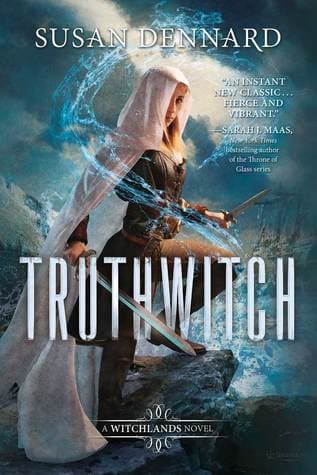
Susan Dennard (2016)
Genre
Fantasy / Young Adult / Romance
Reading Time
8-10 hours
Key Themes
See below
Sign in to track this book
In a continent nearing war, a runaway Truthwitch and her Threadsister navigate dangerous empires, ruthless Bloodwitches, and unexpected alliances, all while trying to outrun a destiny that could either save or shatter their world.
Safiya fon Hasstrel, a Truthwitch, and Iseult det Midenzi, a Threadwitch, try to steal a map from a Cartographer's Guildmaster. Their plan fails when a Bloodwitch, Aeduan, ambushes them. Safi's Truthwitchery is accidentally revealed, making her a target. The girls escape, but their homes are now compromised, forcing them to flee. This incident starts a chain of events that will entangle them in international politics and war.
After their failed heist, Safi and Iseult hide in Veñaza City. Safi, needing passage out, attends a ball and meets Prince Merik Nihar of Nubrevna, a Windwitch and captain of a merchant ship. Merik, initially hostile, needs a dowry Safi is supposed to possess to save his country from famine. They form a reluctant alliance: Merik will transport them to safety in exchange for Safi's promise to secure the dowry once they reach Nubrevna. This alliance is tense, given the political climate.
The *Jannafire*, captained by Prince Merik, sails with Safi and Iseult aboard, bound for Nubrevna. Their journey is not peaceful. Aeduan, the Bloodwitch, pursues them, tracking their scent across the sea. The ship also faces pirate attacks, forcing Merik, Safi, and Iseult to fight together. During these fights, Iseult begins to show Threadwitch abilities, sensing emotions, though she struggles to control them. Safi, meanwhile, grapples with her feelings for Merik, complicating their strained alliance.
After a battle at sea, Safi and Iseult are separated from Merik and captured by Empress Vaness of Marstok. Vaness reveals her goal: she knows Safi is a Truthwitch and plans to use her power to expose lies and secure her political position, especially regarding a treaty. Vaness treats Safi as a valuable asset, not a prisoner, but her intentions are manipulative. Iseult, feeling isolated and worried for Safi, begins to understand the depth of their predicament and the danger Safi's magic poses.
Empress Vaness brings Safi to a treaty negotiation between the empires, forcing Safi to use her Truthwitchery to verify statements. During the tense proceedings, Safi uncovers a truth: a high-ranking official is secretly working against the treaty, planning to start a war. This revelation destabilizes the political landscape further and highlights the immense power and danger of Safi's magic, making her an even more sought-after prize for all factions.
As political tensions grow, Aeduan, the Bloodwitch, reappears. He helps Safi and Iseult escape from Empress Vaness's custody. His reasons are complex; while he still seeks Safi, he seems to operate under a different agenda than the Empress. The escape is chaotic and dangerous, forcing Safi and Iseult to again rely on their wits and their bond. This unexpected alliance with their former captor adds another layer of intrigue and distrust to their perilous journey.
Meanwhile, Merik, having lost Safi and Iseult, returns to Nubrevna to find his country collapsing. His sister, Vivia, the empress, struggles to maintain control amid political schemes and the threat of war. Merik is desperate to find Safi, not only for the dowry that could save his people but also due to his growing concern for her safety. He mobilizes his resources, using his Windwitchery and connections to track her, knowing that time is short for both Safi and Nubrevna.
A mysterious magical contagion, the 'Sightwitch's Curse,' begins to spread, affecting witches and their powers. Iseult, meanwhile, discovers more about her heritage and the ancient curses affecting her people, the Nomads. She learns that her Threadwitch abilities are linked to a powerful, often misunderstood, magic. This revelation forces her to confront her past and the prejudices she has faced, while hinting at a greater destiny and responsibility. The contagion adds urgency and danger to the volatile world.
The paths of Safi, Iseult, Merik, and Aeduan meet in a confrontation. Merik, having tracked Safi, finds her in Aeduan's reluctant care. The various factions—Empress Vaness's forces, Merik's allies, and Aeduan's patrons—clash, each seeking to control Safi and her Truthwitchery. Loyalties are tested, and alliances shift. Safi and Iseult must navigate this dangerous web, relying on their bond and their growing powers to survive the political and magical crossfire.
In the chaos, Safi makes a difficult choice. To protect Iseult and Merik, and to prevent war, she uses her Truthwitchery strategically. This decision has personal consequences, forcing her to sacrifice her desires and potentially her freedom. The climax involves betrayals and desperate maneuvers, where Safi's ability becomes both her greatest asset and her biggest liability. The resolution of this immediate crisis leaves many questions unanswered and sets the stage for future conflicts.
Following the confrontation, Safi and Iseult are separated. Safi chooses a path that leads her deeper into the empires' political schemes, believing it is the only way to protect her loved ones and prevent a wider war. Iseult, feeling the weight of her own growing powers and the need to understand her heritage, embarks on a journey to find answers about the Sightwitch's Curse and her Nomad ancestry. Their separation is painful but necessary, each taking on new, challenging roles in a world nearing war.
The Protagonist
Safi begins as a rebellious noble seeking freedom but evolves into a reluctant leader, accepting the responsibility and danger of her powers for the greater good.
The Protagonist
Iseult starts as a loyal companion struggling with her identity and develops into a more confident Threadwitch, embracing her unique powers and heritage.
The Supporting
Merik begins as a rigid, duty-bound prince and evolves to question his rigid beliefs, learning to trust and rely on others beyond his immediate circle.
The Antagonist/Supporting
Aeduan maintains his enigmatic nature, but his actions shift from pure antagonism to reluctant, temporary alliances, hinting at a more complex moral compass.
The Antagonist
Vaness is a static antagonist, serving as a primary obstacle for Safi by attempting to exploit her Truthwitchery.
The Supporting
Vivia's arc is less prominent in this book, but she grapples with the immense pressure of leadership and her complex relationship with Merik.
The Supporting
Matthias remains a steadfast protector, his loyalty to Safi unwavering despite the escalating dangers.
The Supporting
Kullen maintains his role as a loyal and reliable first mate, supporting Merik through his trials.
The bond between Safi and Iseult is the novel's core. Their loyalty to each other goes beyond political allegiances, magical differences, and constant danger. They are each other's 'soulmates,' a concept explored through Iseult's Threadwitchery, showing their deep emotional connection. Their willingness to sacrifice for one another, as seen when Safi makes a choice to protect Iseult, highlights this theme. Even when separated, their thoughts constantly return to each other, emphasizing their enduring bond.
““You are my heart, Safi. You are my everything. I will not let you be destroyed.””
The novel explores how unique magical abilities, especially Safi's Truthwitchery, can be both a gift and a curse. Safi's power makes her a target for every empire and faction, robbing her of freedom and forcing her into dangerous situations. Similarly, Iseult struggles with her Threadwitchery, finding it overwhelming and sometimes isolating. Merik's Windwitchery ties him to his royal duties and his country's fate. The characters grapple with the responsibility and danger that come with their powers, often wishing for a 'normal' life, but ultimately learning to use them for survival and the greater good.
““Truthwitchery was a weapon, and like all weapons, it would only ever bring pain.””
The continent is nearing war, with empires constantly maneuvering for power through treaties, alliances, and betrayals. The struggle for control is a constant backdrop, directly impacting the protagonists' lives. Safi and Iseult are drawn into this complex web, becoming pawns in a larger game. Merik fights to save his country from famine and war, while Empress Vaness manipulates events for her own gain. The novel shows the corruption and ruthlessness in political power, where individuals are often sacrificed for national interests.
““In this world, there were no loyalties, only alliances.””
Iseult's struggle with her Nomad heritage and her Threadwitchery is central to this theme. She feels like an outsider, often judged and mistrusted due to her people's reputation. Her journey involves understanding and embracing her unique identity and powers. Safi, despite her noble background, wants a sense of belonging and freedom from her title and powers. The characters search for their place in a world that often seeks to define or control them, striving to forge their own paths and identities.
““She was a Nomad, cursed and blessed, and she would not be ashamed.””
Safi's rare and coveted ability to discern truth from lies.
Truthwitchery is Safi's unique magical ability to tell when someone is lying. This power is incredibly rare and highly sought after by political factions, as it can expose deceit in treaties, negotiations, and personal statements. It serves as the primary catalyst for the plot, making Safi a valuable target and forcing her into dangerous situations. The device directly drives the conflict, as various characters and empires attempt to capture or control Safi to exploit her power, thus fueling the political intrigue and her constant flight.
Iseult's ability to see and interpret emotional 'threads' and 'senses'.
Threadwitchery allows Iseult to perceive the emotional connections between people as colorful 'threads' and to sense the 'feel' or 'sense' of places and events. This ability makes her incredibly empathetic and observant, providing crucial insights into characters' true intentions and the history of locations. It functions as a narrative tool to deepen character understanding and foreshadow events, often revealing truths that go beyond spoken words. It also highlights Iseult's unique perspective and her role as Safi's emotional anchor.
A mysterious magical contagion affecting witches.
The Sightwitch's Curse is a spreading magical contagion that affects witches, causing various unpredictable and often debilitating symptoms. This device introduces an element of widespread magical threat and mystery to the world. It serves to raise the stakes, as its origin and cure are unknown, adding a sense of urgency and fear. For Iseult, it directly connects to her Nomad heritage and her burgeoning powers, suggesting a deeper, ancient magical conflict at play and pushing her towards a quest for understanding and a possible cure.
A crucial political agreement that drives much of the political conflict.
The treaty between the empires of Marstok and Nubrevna is a central political plot device. Its negotiation and potential failure are the driving forces behind much of the political intrigue and the actions of characters like Empress Vaness and Prince Merik. Safi's Truthwitchery becomes vital in verifying the terms and exposing betrayals related to this treaty. The treaty symbolizes the precarious peace in the continent, and its fate directly impacts the lives of millions, making it a high-stakes backdrop for the personal journeys of the protagonists.
“There are no easy paths in this life. Only ones you choose to walk.”
— Safi often reflects on the difficult choices she and Iseult face.
“Your magic is a part of you, but it is not all of you.”
— Iseult reminds Safi that her Truthwitchery doesn't define her entirely.
“Sometimes, the only way out is through.”
— A common sentiment when characters are facing seemingly insurmountable obstacles.
“You can't save everyone, but you can save someone.”
— A lesson learned about the limits of one's power and the importance of focused effort.
“Fear is a powerful weapon, but hope is stronger.”
— Safi and Iseult often grapple with fear but find strength in their bond and goals.
“A witch's power is only as good as the wit that wields it.”
— Safi's cleverness and quick thinking are often as important as her magic.
“Some bonds are stronger than blood, stronger than magic.”
— Refers to the deep friendship between Safi and Iseult, a central theme.
“The world is not fair, but that doesn't mean you have to accept it.”
— Characters often challenge the injustices of their world.
“Trust is a fragile thing, easily broken, hard to mend.”
— Many characters struggle with trust and betrayal throughout the story.
“Even the smallest act of kindness can change the course of a life.”
— Moments of unexpected compassion often have significant ripple effects.
“Sometimes, the truth is the most dangerous weapon of all.”
— Safi's Truthwitchery is both a gift and a curse, often putting her in peril.
“A Threadwitch can see the threads of destiny, but not always change them.”
— Iseult's magic gives her insight but doesn't grant omnipotence.
“The greatest battles are often fought within oneself.”
— Characters frequently face internal conflicts and moral dilemmas.
“To be truly free, one must first be true to oneself.”
— A theme explored as characters try to escape societal expectations and forge their own paths.
Ready to see how well you understood this book? Take our interactive quiz with 10 questions.

Biography coming soon.







