“The truth will set you free, but first, it might just kill you.”
— A chilling thought that recurs throughout the book, encapsulating the central theme of danger in revealing secrets.

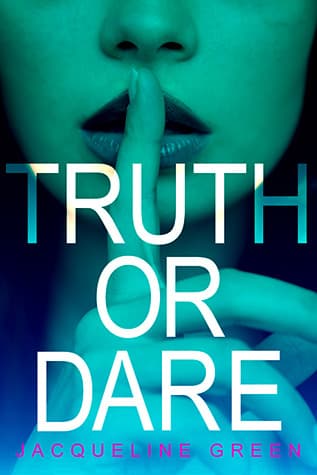
Jacqueline Green (2013)
Genre
Thriller / Mystery / Young Adult
Reading Time
389 min
Key Themes
See below
Sign in to track this book
In the isolated town of Echo Bay, a seemingly innocent game of truth or dare becomes a sinister blackmail plot, forcing three girls to confront their darkest secrets or face deadly consequences.
Tenley Reed, struggling with her social standing after a past incident, hosts a party at her family's beach house in Echo Bay, hoping to regain popularity. Among the guests are Caitlin 'Angel' Thomas, the seemingly perfect and smart girl, and Sydney Morgan, an observant loner who prefers to photograph events rather than join in. During the party, Tenley starts a game of truth or dare to liven things up and assert herself. The game quickly escalates, revealing minor secrets and creating tension, especially between Tenley and Caitlin, and involving other classmates. This seemingly innocent party game is about to take a sinister turn, becoming the start of terrifying events that will tie the three girls together in a dangerous mystery.
Days after Tenley's party, the three girls—Tenley, Caitlin, and Sydney—start receiving anonymous messages with increasingly unsettling dares. These are not simple party dares; they are specific, personal, and imply exposure if not completed. Tenley is dared to do something that further harms her fragile social standing, while Caitlin, who prides herself on her perfect image, is pushed to act out of character. Sydney, initially an observer, also gets pulled into the game, finding her private life targeted. The messages arrive through various means, suggesting a clever and watchful perpetrator. The girls are confused and frightened, realizing someone knows their secrets and is using them to manipulate them, turning a casual game into a real-life nightmare with high stakes.
As the dares intensify, Tenley, Caitlin, and Sydney discover the tasks are not random. Each dare is designed to expose a specific vulnerability or a dark secret they've been hiding, often linked to a shared, suppressed incident from their past. They grudgingly start talking, realizing they are all targets of the same person. They put clues together, remembering details of a particular night or event they had all hoped to forget. This shared history, at first a source of discomfort, becomes the key to understanding why they are being targeted. The anonymous harasser seems to know every detail, suggesting someone close to them or someone with intimate knowledge of their lives and guarded secrets.
Frustrated and terrified by the escalating demands, Tenley, Caitlin, and Sydney reluctantly form an uneasy alliance to identify their tormentor. They begin to suspect various classmates and acquaintances, examining their interactions, motives, and any possible connections to their shared secret. They review past events, check text messages, and observe the behavior of those around them in Echo Bay, a town with its own secrets and misfortunes. Each potential suspect brings new layers of paranoia and distrust among the girls, making it hard to know who to trust. The investigation is full of tension, as they risk exposing more secrets with every step, while the dares continue to push them to their limits, demanding dangerous and morally compromising actions.
The anonymous dares become increasingly dangerous and public. What started as personal challenges now involves actions that could ruin their reputations, academic futures, or even put them in physical danger. Tenley is forced into a humiliating public spectacle, Caitlin's carefully built image is threatened with complete destruction, and Sydney's photography, once a shield, is twisted into a weapon against her. The perpetrator starts leaving physical clues or manipulating social media, ensuring the girls' struggles are not entirely private. The pressure mounts, forcing them to make difficult choices and confront the consequences of their past actions. The girls realize the game is no longer just about secrets; it's about survival and preventing their entire lives from unraveling in front of their community.
As the girls look deeper into the mystery, they begin to uncover Echo Bay's dark history. The town is known for its isolation and a series of past misfortunes, giving it a somewhat cursed reputation. They learn about old local legends, unsolved mysteries, and the interconnectedness of families within the community. This broader context suggests their tormentor might not just be a disgruntled classmate, but someone deeply rooted in the town's fabric, possibly with a long-standing grudge or a desire for revenge linked to Echo Bay's past. The girls start to see how their own secrets and the current game might be tied to the town's deeper, darker side, adding another layer of complexity and danger to their investigation.
The relentless pressure of the dares pushes one of the girls to her breaking point. Overwhelmed by fear, guilt, and the constant threat of public humiliation, she considers telling the authorities or even making a public confession. This creates a significant rift within their fragile alliance. The other girls, desperate to keep their shared secret buried and fearing wider implications, try to stop her, leading to heated arguments and accusations. This internal conflict adds another layer of tension, as they not only have to contend with their external tormentor but also with the potential collapse of their own group, which could expose them all to even greater danger. The stakes are higher than ever, and trust becomes an even more precious commodity.
Through Sydney's sharp observational skills, Tenley's social connections, and Caitlin's logical deductions, the girls finally identify their tormentor. They plan to confront this person, leading to a tense and dramatic showdown. During the confrontation, the mastermind reveals their identity and, more importantly, their motive. The revelation is shocking, as the person is unexpected, and their reasons are deeply rooted in the past, often connected directly or indirectly to the shared secret of the three girls, or to a separate injustice they felt was caused or enabled by the girls. The mastermind's intricate plan and intimate knowledge of the girls' lives are finally explained, tying together all the threads of the menacing game.
Despite their efforts, the truth about the girls' shared secret, or at least a significant part of it, is ultimately exposed to the community of Echo Bay. The consequences are immediate and far-reaching, affecting their reputations, relationships, and future prospects. Tenley faces renewed social ostracism, Caitlin's perfect image is shattered, and Sydney deals with the fallout of her involvement. The town reacts with a mix of judgment, gossip, and some understanding, but life for the three girls is irrevocably changed. They must navigate rebuilding their lives after public scrutiny, dealing with the judgment of their peers and families, and coming to terms with the moral implications of their past actions and the game they were forced to play.
After the ordeal, Tenley, Caitlin, and Sydney are changed. The experience forced them to confront their own flaws, the nature of friendship, and the true cost of secrets. While their individual paths forward are uncertain, there is a sense of growth and a tentative hope for the future. They learned difficult lessons about responsibility, trust, and honesty. Their relationships with each other are complex, forged in shared trauma but also marked by new understanding. They must now decide how to move forward, whether to rebuild their old lives or create entirely new identities, having survived a game that tested their limits and revealed the darkest corners of their town and themselves.
The Protagonist
Tenley evolves from a popularity-obsessed girl to someone who confronts her past mistakes and learns to value authenticity over social status.
The Protagonist
Caitlin's arc involves shedding her perfect facade, accepting her imperfections, and learning to trust others and herself beyond external validation.
The Protagonist
Sydney transforms from a detached observer to an active participant, finding her voice and learning the importance of connection and direct engagement.
The Antagonist
The Mastermind's arc is revealed through the unraveling of their plan, culminating in their exposure and the justification of their vengeful actions.
The Supporting
Liam's arc involves navigating the fallout of the girls' secrets and understanding his own feelings amidst the chaos.
The Supporting
Mrs. Reed's arc involves coming to terms with Tenley's secrets and supporting her through the aftermath.
The Supporting
Mr. Thomas's arc involves confronting the reality of his daughter's life beyond her academic achievements.
The Mentioned
Their collective arc is to serve as the social backdrop against which the main characters' drama unfolds and is judged.
This theme explores how secrets, especially those from the past, can fester and lead to destructive consequences. The book's entire premise relies on the girls' shared secret, which the anonymous tormentor uses as leverage. Each dare forces them to confront a lie or hidden truth, showing the immense psychological toll of concealment. For example, Caitlin's carefully crafted 'perfect' image is a lie she maintains, which the dares systematically dismantle, showing the fragility of a life built on pretense. The story suggests that while secrets can protect in the short term, they inevitably demand a heavy price.
“How far will Tenley, Caitlin and Sydney go to keep the truth from surfacing?”
The novel looks at the struggle between who characters truly are and how they are seen by others, especially in a small, gossipy town like Echo Bay. Tenley desperately wants to reclaim her 'popular' identity, even if it means compromising her values. Caitlin tries to maintain her 'Angel' persona, believing it's essential for her future, despite internal conflict. Sydney, by contrast, hides behind her camera, preferring to observe rather than be observed. The dares force each girl to strip away their carefully built public identities, revealing their true selves and challenging their understanding of who they are apart from others' opinions. This theme highlights the pressure of social expectations and the journey towards self-acceptance.
“A chance for perfect Caitlin 'Angel' Thomas to prove she’s more than her Harvard application.”
At its core, the story examines the complex and often fragile nature of friendship, especially under extreme pressure. Tenley, Caitlin, and Sydney are not necessarily friends at the start, but they are forced into an uneasy alliance by the anonymous dares. Their individual secrets and distrust initially hinder cooperation, leading to accusations and betrayals. However, as they confront their tormentor, they must learn to rely on each other, forging a new, though complicated, bond. The theme explores whether shared trauma can truly unite people and if trust can be built amidst suspicion and fear, ultimately suggesting that genuine connection requires vulnerability and honesty.
“But when all three start receiving mysterious dares long after the party has ended, they’re forced to play along—or risk exposing their darkest secrets.”
The anonymous mastermind's actions are driven by a strong desire for revenge, stemming from a past wrong that is gradually revealed. This theme explores the line between seeking justice and enacting retribution. The mastermind believes they are correcting a wrong, using the 'truth or dare' game as their instrument of justice, but their methods are cruel and manipulative. The girls, as victims of this revenge, are forced to confront the consequences of their past actions and consider whether the punishment fits the crime. The story questions the morality of vigilante justice and the lasting impact of unresolved grievances, especially in a tight-knit community where history can linger.
“And who’s behind this twisted game?”
The primary mechanism for driving the plot and escalating tension.
The anonymous messages containing the dares serve as the central plot device. They create suspense by keeping the antagonist's identity hidden and by forcing the protagonists into increasingly uncomfortable and dangerous situations. Each dare is specifically tailored to exploit a character's deepest fears or secrets, ensuring maximum psychological impact. This device also allows for the gradual revelation of the characters' backstories and the shared secret, as the dares directly reference or push them towards confronting these hidden truths. The escalating nature of the dares keeps the pacing fast and the stakes high.
A small, insular town that amplifies the consequences of secrets.
Echo Bay acts as more than just a backdrop; it's a character in itself. Its isolated nature and history of 'misfortune' create an oppressive atmosphere where secrets are hard to keep and rumors spread quickly. This setting amplifies the girls' fear of exposure, as their actions and past transgressions will be judged by a small, interconnected community. The insularity means there's little escape from the social repercussions, making the stakes of the game much higher. The town's own dark history also provides potential motives and connections for the antagonist.
Technique used to slowly unveil the central mystery of the past.
The narrative employs flashbacks, often triggered by the dares or the girls' collaborative investigations, to gradually reveal the details of the central past event that binds them and serves as the mastermind's motivation. Instead of presenting the full story upfront, pieces of the past are doled out, building suspense and allowing the reader to piece together the puzzle alongside the characters. This device keeps the reader engaged in the mystery, making them question the characters' initial perceptions and the true nature of the 'secret' until the final confrontation.
Sydney's camera as a tool for observation, detachment, and ultimately, evidence.
Sydney's camera is a significant plot device. Initially, it represents her detachment and her preference for observing life from a distance rather than participating. However, as the mystery unfolds, the camera becomes a crucial tool for gathering evidence, documenting events, and uncovering clues that the others might miss. It also serves as a metaphor for truth and perception – what is captured, what is missed, and how images can be manipulated. In some dares, the camera itself might become a target or a means of exposure, turning Sydney's comfort zone into a weapon against her.
“The truth will set you free, but first, it might just kill you.”
— A chilling thought that recurs throughout the book, encapsulating the central theme of danger in revealing secrets.
“We all have secrets. Some we keep to protect ourselves, others to protect the ones we love.”
— A character's internal monologue reflecting on the motivations behind their own and others' hidden truths.
“Sometimes the biggest lies are the ones we tell ourselves.”
— A moment of self-realization for the protagonist as they confront their own denial.
“Fear has a way of making you do things you never thought you were capable of.”
— Describing the escalating desperation and actions of characters under duress.
“In a town built on secrets, everyone is a suspect.”
— Setting the atmospheric tone of the small town where the mystery unfolds, highlighting the pervasive mistrust.
“The game started with a dare, but it ended with a death.”
— A direct and impactful statement summarizing the tragic turn of events.
“You can run, but you can't hide from your past, especially when it's actively hunting you.”
— A character realizing the futility of escaping the consequences of past actions.
“There's a fine line between a game and a nightmare, and we've definitely crossed it.”
— A character's growing horror as the 'truth or dare' game turns deadly serious.
“Trust is a luxury we can no longer afford.”
— The protagonist's realization that betrayal is rampant and they can rely on no one.
“The silence was almost as loud as the screams that came before it.”
— Describing the eerie aftermath of a shocking event, emphasizing the lingering tension.
“Every answer only led to more questions, each one darker than the last.”
— Reflecting the escalating complexity and darkness of the mystery as more clues are uncovered.
“We were just kids playing a game. How did it all go so wrong?”
— A poignant reflection on the innocence lost and the tragic turn of events.
“Sometimes, the only way out is through the very thing that terrifies you.”
— A moment of courage and determination as a character decides to confront their fears head-on.
“The monster wasn't under the bed; it was sitting across from us at the dinner table.”
— A chilling realization about the true identity of the antagonist, highlighting betrayal by someone close.
Ready to see how well you understood this book? Take our interactive quiz with 10 questions.







