“It’s hard to be a person. It’s really, really hard.”
— Rosie musing on the complexities of life and relationships.

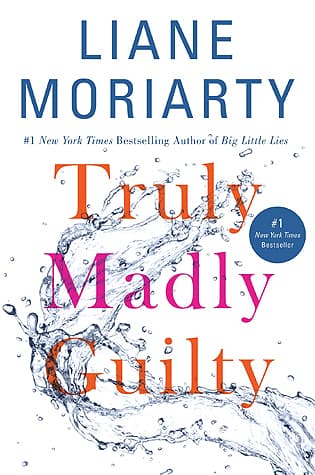
Liane Moriarty (2016)
Genre
Thriller / Mystery
Reading Time
500 min
Key Themes
See below
Sign in to track this book
A backyard barbecue among friends exposes buried secrets and guilt, changing the lives of six adults and showing the weaknesses beneath their perfect lives.
Two months after 'The Barbecue,' Clementine and Sam live with guilt and unspoken tension. Clementine, a cellist, cannot practice for her audition, haunted by the memory of that day. Sam, usually happy, is withdrawn and irritable. Their daughters, Holly and Ruby, also sense the change in their parents. The house feels damp, like their emotions. They avoid talking about the event, instead circling their trauma, each blaming themselves and, subtly, each other. Their marriage feels fragile, threatened by their secret and the fear of what might happen if they confront it.
The story often flashes back to Clementine and Erika's friendship, showing its deep roots and imbalances. Erika, having a difficult childhood with a distant mother, often looked to Clementine's family for stability. Clementine, while caring, often felt burdened by Erika's intensity and neediness. These flashbacks show Erika's social awkwardness, her careful nature, and her loyalty, sometimes obsessive, towards Clementine. Their dynamic has unspoken expectations and a pattern of Clementine feeling responsible for Erika, while Erika idealizes Clementine. This history sets up the complicated interactions at the barbecue.
The events leading to the barbecue start with Erika. After a chance meeting and an awkward exchange with her new, showy neighbors, Vid and Tiffany, Erika gets an invitation to their house. Erika, feeling a mix of worry and a wish to connect, invites Clementine and Sam at the last minute. Clementine, at first hesitant due to her audition and Sam’s work stress, agrees, seeing it as an escape from their routine. The decision to go, made casually, later becomes a source of regret and 'what ifs' for Clementine and Sam, setting the stage for the bad events that happen.
Clementine, Sam, and their daughters arrive at Vid and Tiffany's house, a large, slightly unusual property with a pool overlooking the ocean. Vid and Tiffany are striking: Vid, a charming, outgoing person who likes grand gestures, and Tiffany, his beautiful, quiet wife. Erika and her husband, Oliver, are already there. The first interactions are a mix of forced politeness and subtle awkwardness. Clementine notices Erika's usual intensity, while Sam finds Vid's loudness both entertaining and a bit much. The children, Holly, Ruby, and Harry (Erika and Oliver's son), quickly go to the pool, eager to swim, unaware of the adult tensions.
As the afternoon goes on, alcohol flows freely, and people relax. Vid, charming and attentive, flirts openly with Clementine, making Sam uncomfortable. Tiffany, quiet but observant, notices this. Oliver, Erika's husband, tries to talk to Sam. Erika becomes more withdrawn and watchful, especially of Clementine and Vid. Clementine, feeling flattered and a bit overwhelmed by Vid's attention, enjoys escaping her usual duties, but also feels uneasy. These interactions, seemingly harmless then, add to the growing tension and misunderstandings that lead to the accident.
Throughout the day, the children—Holly, Ruby, and Harry—are often in and out of the pool. Their play is a background to the adults' complicated interactions. Sam, at first watchful, gets distracted by adult conversations and drinks. Clementine also gets drawn into the social dynamics, sometimes checking on the children but not watching them constantly. Erika, always worried, expresses concerns about the children's safety around the pool. The others mostly dismiss or downplay this. The children's presence, though seemingly minor to the adult drama, is central to the coming tragedy, as their vulnerability in the unsupervised pool becomes a problem.
As evening comes, an argument starts between Sam and Clementine, fueled by alcohol and old resentments. Sam confronts Clementine about her flirting with Vid, accusing her of enjoying the attention. Clementine argues back, bringing up Sam's insecurities and their financial situation. This public argument creates an uncomfortable atmosphere for the other guests. During the argument, old resentments and frustrations about their life and duties come out, further distracting both of them from their surroundings and the children. This argument is a turning point, drawing everyone's attention away from the pool.
While the adults are distracted and arguing, the accident happens. At some point, one of the children, Harry, Erika and Oliver's son, is found unconscious in the pool. The discovery shocks everyone, instantly sobered by terror. Vid, with his medical background, immediately starts CPR while emergency services are called. The scene becomes chaotic and panicked, with Clementine, Sam, Erika, and Oliver horrified. The happy, carefree atmosphere of the barbecue is instantly broken, replaced by an agonizing wait for news, and the immediate, heavy weight of guilt and blame that falls on all of them.
At the hospital, the adults are consumed by fear and guilt as Harry fights for his life. The police start their investigation, asking questions about supervision and the events leading up to the incident. Each adult mentally reviews their actions, looking for who was responsible, and who was to blame. Erika is distraught, blaming herself for inviting everyone and for not being more careful. Oliver struggles to comfort her. Clementine and Sam are paralyzed by their own guilt, remembering their argument and their moments of inattention. The once-close group of friends is broken by suspicion and the desperate need to understand how such a tragedy could have happened under their watch.
Through fragmented memories, police interviews, and painful confessions, the full picture of the incident slowly comes out. It is revealed that Harry, a child with severe allergies, had an anaphylactic reaction to something he ate, causing him to fall into the pool. Erika had mistakenly given him a nut-containing snack, believing it was safe, a detail she had hidden due to overwhelming guilt. The lack of constant supervision by all adults contributed to the delay in discovery. After Harry's recovery, though with some lasting effects, the characters must face their individual and shared failures. Clementine and Sam begin rebuilding their marriage, finally talking about their trauma. Erika, burdened by her mistake, receives forgiveness from Oliver, and a fragile reconciliation with Clementine begins, acknowledging the complexities of their friendship and the shared guilt.
The Protagonist
Clementine moves from a state of denial and paralyzing guilt to confronting her role in the tragedy and rebuilding her marriage and self-worth.
The Protagonist
Sam initially retreats into anger and silence, but through painful honesty, he learns to forgive himself and reconnect with Clementine.
The Supporting
Erika grapples with immense guilt and the revelation of her own crucial mistake, eventually finding a fragile path towards self-forgiveness and a more balanced friendship.
The Supporting
Oliver endures the trauma with resilience, offering unwavering support to Erika and facilitating the path to forgiveness.
The Supporting
Vid is forced to confront the consequences of his actions and the fragility of life, revealing a more sober and responsible side.
The Supporting
Tiffany remains a steadfast, observant presence, offering quiet support and perspective amidst the chaos.
The Supporting
Holly experiences the aftershocks of the tragedy through her parents' emotional distance, eventually finding comfort as her family heals.
The Supporting
Ruby's innocence is temporarily overshadowed by her parents' distress, but she eventually thrives as their family recovers.
The Supporting
Harry is the innocent victim of the tragedy, his survival and recovery becoming the focal point for the adults' journey of atonement and healing.
The novel's main theme is the overwhelming nature of guilt and the blame that affects the characters' lives after the barbecue. Each adult feels a heavy burden, replaying their actions, trying to find who is responsible. Clementine and Sam's marriage is almost destroyed by their unspoken guilt; Erika feels consumed by self-blame. The book explores how guilt can paralyze people and relationships, and how assigning blame, even to oneself, can stop healing. It suggests that shared responsibility and forgiveness are needed to move past a traumatic event.
“What if we hadn't gone? What if we hadn't gone? It was the question that played on a loop in Clementine's head, an endless, agonizing refrain.”
Moriarty examines the delicate and often strained dynamics within both marital and platonic relationships. Clementine and Sam's marriage, seemingly strong, falls apart under the pressure of unspoken resentments and the trauma of the incident, showing their insecurities and communication problems. The long-standing, co-dependent friendship between Clementine and Erika is also severely tested, revealing its imbalances and the burden of expectation. The novel shows how a single, devastating event can expose weaknesses in even the most established bonds, forcing characters to face the true nature of their connections.
“Sometimes the most innocent of moments can do the greatest harm.”
The book looks deeply at the anxieties and responsibilities of parenthood, especially the constant watchfulness needed for child safety. The barbecue incident is a stark reminder of how easily disaster can happen when parental attention is divided. Each parent at the gathering feels deep guilt over their moments of distraction, showing the universal fear of failing to protect one's children. The story examines the pressure parents face to be perfect and the consequences when human error meets the vulnerability of children, making them confront the question of 'what if'.
“Every parent knew what it was like, that split second of terror, the moment you realized your child wasn’t where they were supposed to be.”
A theme is the destructive power of unspoken words, secrets, and assumptions in relationships. Clementine and Sam's inability to openly discuss the barbecue and their marital issues creates tension and resentment. Erika's long-held secret about her past and her confession about the nut allergy show how hidden truths can cause harm and contribute to tragedy. The novel argues that while some secrets are kept to protect, they often cause more damage, and true healing can only begin when difficult truths are spoken and acknowledged.
“It was the silence that was killing them. The silence was louder than any scream.”
The novel constantly plays with the idea that what appears on the surface is rarely the full truth. The seemingly perfect lives of the adults, the 'normal weekend' at a beautiful house, quickly turns chaotic, revealing the messy realities underneath. Clementine's view of her friendship with Erika, Sam's view of his marriage, and the collective memory of the barbecue are all challenged as the story unfolds. The fragmented narrative, shifting perspectives, and delayed revelations emphasize how individual perceptions can be flawed and how a shared experience can be interpreted very differently by those involved, making it hard to find a single 'truth.'
“Everyone had their own version of the barbecue. Their own memories, their own guilt.”
Alternating between the present aftermath and the past events leading to the tragedy
The novel employs a non-linear narrative structure, constantly shifting between the 'present' (two months after the barbecue) and 'the past' (the day of the barbecue itself, and earlier flashbacks to Clementine and Erika's history). This device creates suspense and intrigue, gradually revealing details of the fateful day while simultaneously showing the devastating impact of the event on the characters' present lives. The fragmented glimpses of the past heighten the mystery, forcing the reader to piece together the truth alongside the characters, and underscoring how trauma distorts memory.
A seemingly ordinary event that ignites and exposes deep-seated issues
The barbecue itself functions as a powerful plot device. It is not just the setting for the tragedy, but a catalyst that forces all the underlying tensions, insecurities, and unspoken resentments within the characters' lives and relationships to surface. The casual, social setting allows for inhibitions to drop, leading to flirtations, arguments, and moments of distraction that directly contribute to the incident. It becomes the central, defining event that forever alters the trajectory of their lives, transforming a normal weekend into an indelible nightmare.
The story is told through the subjective, often guilt-ridden, viewpoints of various characters
While not strictly an unreliable narrator in the traditional sense, the story is filtered through the highly subjective and often guilt-ridden perspectives of Clementine, Sam, Erika, and other characters. Their memories of the barbecue are fragmented, biased by their own anxieties and desire to assign blame or avoid it. This device highlights the theme of perception versus reality, as the reader slowly pieces together the 'truth' from conflicting accounts. It also emphasizes how trauma can distort memory and how difficult it is to achieve a single, objective understanding of a complex event, especially one tinged with personal culpability.
The persistent rain and the pool symbolize cleansing, sorrow, and the tragic event
Water imagery is pervasive and symbolic throughout the novel. The persistent, gloomy rain in the present-day narrative mirrors the characters' emotional state of sorrow, guilt, and stagnation. It creates a damp, oppressive atmosphere that reflects their inability to move on. Conversely, the swimming pool, initially a symbol of carefree enjoyment and summer fun, becomes the site of the tragedy. It transforms into a terrifying symbol of danger, guilt, and the near-fatal incident, forever tainting the idea of water and cleansing with the memory of drowning and near-loss.
The recurring hypothetical question that drives the characters' torment
The constant refrain of 'What if we hadn't gone?' or 'What if I had done X instead of Y?' is a crucial plot device. This hypothetical question haunts Clementine and Sam, driving their guilt and preventing them from moving forward. It underscores the theme of regret and the agonizing human tendency to replay past events, searching for a different outcome. This device effectively conveys the psychological torment of the characters and the inescapable nature of their self-recrimination, making the reader acutely aware of the weight of their choices.
“It’s hard to be a person. It’s really, really hard.”
— Rosie musing on the complexities of life and relationships.
“It was just a barbecue. Just a normal Sunday barbecue. Nothing really happened.”
— The recurring internal monologue of characters trying to downplay the incident.
“Sometimes the things you don't say are the most important.”
— Erika reflecting on unspoken truths and their impact.
“Guilt was a dark, heavy blanket, suffocating them all.”
— Describing the pervasive feeling of guilt among the characters after the event.
“The past wasn't dead. It wasn't even past.”
— Characters realizing that the events of the past continue to haunt their present.
“You can never really know what goes on behind closed doors, can you?”
— A general observation about the hidden lives of others, especially neighbors.
“Sometimes good intentions paved the road to hell.”
— Characters grappling with how their seemingly innocent actions led to disaster.
“Everyone had a story they told themselves, and it wasn't always the truth.”
— Rosie contemplating the subjective nature of memory and self-deception.
“It was a perfect storm of tiny, insignificant moments.”
— Describing how a series of small events culminated in the catastrophic barbecue.
“The weight of what they hadn't said, what they hadn't done.”
— Referring to the burden of inaction and silence in the face of escalating tension.
“Marriage was a long, slow peeling away of layers.”
— Erika's reflection on the evolving nature of her relationship with her husband.
“How could one day change everything?”
— The characters' disbelief and struggle to comprehend the impact of a single event.
“They were all truly, madly, guilty of something.”
— The overarching theme of the novel, suggesting shared culpability.
“Children had a way of seeing right through the veneer.”
— Rosie observing her children's innocent yet piercing insights into adult behavior.
Ready to see how well you understood this book? Take our interactive quiz with 10 questions.

Biography coming soon.







