“Everyone is a puzzle. If you can solve them, you can control them.”
— Ellingham's philosophy on people and power.

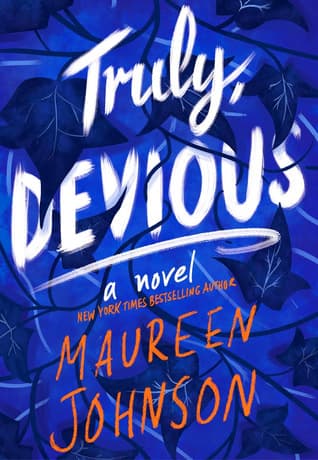
Maureen Johnson (2018)
Genre
Thriller / Mystery / Young Adult
Reading Time
450 min
Key Themes
See below
Sign in to track this book
A true-crime obsessed teenager enrolls in a bizarre, riddle-filled boarding school to solve a decades-old kidnapping and murder, only to find herself embroiled in a dangerous new mystery when the killer, Truly Devious, resurfaces.
Stevie Bell, a teenager obsessed with true crime, arrives at the Ellingham Academy, a remote boarding school in Vermont. The school, founded by Albert Ellingham, is known for its students and for an unsolved crime: the 1936 kidnapping of Ellingham's wife, Iris, and daughter, Alice, and Iris's later murder. Stevie has been admitted to solve this cold case. She lives in Minerva House with other students: Hayes Major, a famous YouTuber; Janelle Franklin, an artist; Nate Fisher, a writer; and David Eastman, a mysterious and often rude person. Stevie immediately begins studying the school's history and the Truly Devious case, which sometimes amuses or annoys her housemates.
Stevie starts her investigation by looking through the school's archives and the Ellingham estate for details about the 1936 case. She learns about the riddles left by 'Truly Devious' and the cryptic notes that came with the kidnapping. At the same time, tensions rise in Minerva House. Hayes Major, an internet celebrity, argues with David, who seems to dislike Hayes's fame. Stevie also starts a complex relationship with David, marked by their intelligence and witty conversations, despite his initial unfriendliness. Her interest in the old case is a constant background to her attempts to fit in and understand her unique housemates.
During a school game called Assassin, Hayes Major disappears from Minerva House. At first, everyone thinks it is part of the game or a prank. But when Hayes does not reappear, worry grows. The situation gets serious when a new 'Truly Devious' riddle, like the original 1936 notes, appears and mentions Hayes. This confirms Stevie's fears: the past has returned to Ellingham Academy. The police are called, and the school is locked down. Stevie realizes her cold case investigation has become a real danger, connecting the past and present mysteries.
The search for Hayes gets more intense, with police and students involved. Stevie, using her observation skills and knowledge of the Ellingham estate, focuses on certain areas. Her deductions are correct when Hayes Major's body is found in the lake, tied to a large stone. The discovery shocks the school, confirming that the new 'Truly Devious' riddle was a real threat and that a murderer is on campus. This event strengthens Stevie's resolve to solve both the historical and current mysteries, believing they are connected. The police investigation begins, but Stevie is determined to follow her own leads.
Stevie immediately starts investigating Hayes's murder, using her true-crime methods. She looks into his online life, his relationships, and his recent activities. She learns about his popularity, the pressure he faced, and his conflicts with other students, including David. Stevie finds a hidden camera in Hayes's room, which, while not showing the murder, suggests he was paranoid or keeping secrets. She also finds a mysterious flash drive with encrypted files, hinting at a secret Hayes might have been protecting or exposing. Her investigation leads her to suspect several people at the school, including some of her housemates, as possible killers.
As Stevie continues her two investigations, she starts to notice connections between the 1936 Truly Devious case and Hayes's murder. She uncovers details about the original kidnapping, including that Albert Ellingham was having an affair with Dottie Epstein, and that Iris Ellingham was pregnant when she disappeared. She learns about George Marsh, an Ellingham student in 1936, who was suspected but never proven to be involved. Stevie thinks the current 'Truly Devious' is not just a copycat but someone directly linked to the original crime, possibly seeking revenge or protecting a secret. This deepens the mystery and raises the stakes.
Stevie's investigation into Hayes's murder leads her to a discovery about David Eastman. It turns out that David is Edward Ellingham, Albert Ellingham's grandson and the son of Alice Ellingham, who was thought to have died in the 1936 kidnapping. Alice had not died but had been hidden by her father after the kidnapping, for unknown reasons. David/Edward had returned to Ellingham Academy using a different name to investigate his family's past and his mother's fate. This explains David's secretive behavior and his dislike for Hayes, who he thought might have been interfering with his own investigation into the Ellingham mysteries.
Through analysis, profiling, and deduction, Stevie understands the truth about Hayes's murder. She discovers that Hayes had found a secret about David's identity and the Ellingham family, possibly through old documents or his own YouTube investigations. The killer is David's own father, Alice Ellingham's son, who had also been living under a different name as a staff member at the school. He had murdered Hayes to protect his and David's true identities and to prevent the Ellingham scandal from resurfacing, fearing it would expose his family's hidden history and Alice's trauma after the kidnapping. He saw Hayes as a threat to their anonymity.
Stevie confronts David's father, showing her evidence and deductions. He confesses to Hayes's murder, driven by a need to protect his family's privacy and what he saw as Alice's legacy. The police are called, and David's father is arrested. This solves the current murder at Ellingham Academy, but the original 1936 Truly Devious case is still unsolved. Stevie has found out details about Albert Ellingham's personal life, including his affair, and Alice's fate, but the true identity of 'Truly Devious' and the full story of Iris's death remain a mystery. The ending sets up Stevie's continued investigation in later books.
The Protagonist
Stevie evolves from a purely academic investigator to someone directly involved in a live murder case, learning to balance her intellectual pursuits with real-world dangers and personal relationships.
The Supporting/Love Interest
David's arc involves the revelation of his true identity and his personal quest for truth intertwining with Stevie's investigation, leading to a vulnerable and honest relationship.
The Mentioned/Historical Figure
His historical actions and hidden secrets are gradually revealed, reshaping the understanding of the original crime.
The Mentioned/Historical Victim
Her story is slowly uncovered through historical documents and Stevie's investigation, revealing her personal life and the tragedy that befell her.
The Mentioned/Historical Figure
Her fate is a major revelation, shifting the entire understanding of the 1936 case and connecting it directly to the present.
The Supporting/Victim
His sudden death transforms him from a background character into the central figure of the modern murder mystery, driving Stevie's immediate investigation.
The Supporting
Janelle provides a steady source of friendship and emotional support for Stevie, remaining largely consistent in her role.
The Supporting
Nate provides comic relief and a cynical perspective, but also proves to be a loyal friend to Stevie as the mysteries unfold.
The Mentioned/Historical Figure
Her historical role is revealed as a crucial piece of information that challenges initial assumptions about the Ellingham family dynamics.
The novel shows how compelling true crime and cold cases are, especially through Stevie Bell. Her interest in the Truly Devious case brings her to Ellingham Academy, showing how the unknown can motivate people. The story looks at the ethics of studying real tragedies for intellectual reasons, comparing Stevie's passion with the actual pain of victims and their families. The school, with its riddles and secrets, embodies this theme, presenting learning as a game of discovery, like the appeal of the unsolved.
“"The great thing about unsolved mysteries, of course, is that they are unsolved. They are puzzles for the mind, and the mind loves a puzzle."”
A main theme is how historical events and secrets affect current lives. The 1936 Truly Devious kidnapping and murder are not just old stories; they directly lead to Hayes Major's murder and shape characters like David Eastman (Edward Ellingham). The story shows how unresolved trauma, hidden identities, and old secrets can reappear decades later with bad results. Ellingham Academy, with its preserved history and the shadow of its past, is a physical example of this theme.
““The past has crawled out of its grave. Someone has gotten away with murder.””
The novel deals with identity, both found and hidden. Stevie Bell struggles with her own identity as an anxious, true-crime-obsessed teenager in a new social setting. More importantly, David Eastman's real identity as Edward Ellingham and the discovery of Alice Ellingham's survival and hidden life show how people can live under false names to escape or uncover the past. The 'Truly Devious' name itself is a hidden identity, and the killer's reasons often come from protecting or revealing these concealed truths.
““Everyone has a secret, and everyone is trying to figure out everyone else’s.””
Through Stevie's investigation, the book explores how truth is subjective and how stories are made. Stevie constantly questions official reports, newspaper articles, and personal stories, understanding that history is often incomplete or biased. The difference between the public story of the Truly Devious case and the complex, hidden realities of the Ellingham family shows this theme. Stevie's job as a detective is to remove false stories and put together a more accurate, though often darker, truth.
““History is a story, and the story is often told by the winners.””
Alternates between Stevie's modern investigation and historical accounts of the 1936 case.
The novel employs a dual timeline, seamlessly shifting between Stevie Bell's present-day investigation at Ellingham Academy and detailed flashbacks or historical documents pertaining to the 1936 Truly Devious kidnapping and murder. This structure allows the reader to experience both mysteries concurrently, building suspense and revealing connections between past and present events. The historical segments, often presented as excerpts from letters, police reports, or news articles, provide crucial context and clues for Stevie's modern deductions, highlighting the enduring impact of the original crime.
A recurring textual clue that drives the central mysteries.
The 'Truly Devious' riddle is a central plot device, appearing first in 1936 as a mocking list of murder methods and later in the present day, signaling the return of the killer. These cryptic notes serve as direct challenges from the killer, taunting the authorities and Stevie. They are not merely decorative but contain veiled clues, psychological insights into the perpetrator, and a chilling connection between the two time periods. Stevie's analysis of the language and intent behind these riddles is key to her understanding of the killer's mind and motives.
The school itself is a labyrinthine, riddle-filled setting integral to the plot.
Ellingham Academy is more than just a setting; it functions almost as a character in itself. Designed by Albert Ellingham to be a place of riddles and secret passages, its unique architecture, hidden rooms, and sprawling grounds are integral to both the historical and modern mysteries. The school's isolation, its eccentric rules, and its deep connection to the original crime create an atmospheric and claustrophobic environment that influences the characters' actions and the unfolding of the plot. Its secrets are literally built into its foundations.
Misleading clues and suspects designed to divert the reader and protagonist.
Maureen Johnson masterfully employs red herrings throughout the narrative to keep both Stevie and the reader guessing. From initial suspicions about various students in Minerva House to the complex web of Albert Ellingham's personal life (like his affair with Dottie Epstein) in the past, numerous clues and characters are introduced that appear to be significant but ultimately lead to dead ends or secondary revelations. This device builds suspense and makes the eventual reveal of the true killer in both timelines more surprising and impactful, constantly challenging assumptions.
“Everyone is a puzzle. If you can solve them, you can control them.”
— Ellingham's philosophy on people and power.
“The greatest trick the devil ever pulled was convincing the world he didn't exist. The greatest trick a human can pull is convincing you they don't exist, and then they're gone.”
— Stevie reflects on the disappearance of Truly Devious.
“The past is never dead. It's not even past.”
— A general reflection on how historical events impact the present.
“Secrets are like puzzles. They’re meant to be solved.”
— Stevie's driving motivation for attending Ellingham Academy.
“There are no ordinary people. Everyone has a story, a secret, a reason for being.”
— Stevie's observation about her peers at Ellingham.
“Sometimes the most obvious answer is right in front of you, but you refuse to see it.”
— A common pitfall in detective work.
“Ellingham Academy was a gilded cage, beautiful and dangerous.”
— Stevie's initial impression of the prestigious school.
“You can’t solve a mystery without getting your hands dirty.”
— Stevie embracing the practical side of her detective work.
“The truth is rarely simple and never convenient.”
— A general statement about the nature of truth in complex cases.
“Every lock has a key, and every puzzle has a solution.”
— Stevie's optimistic and determined approach to mysteries.
“People lie. Even to themselves.”
— A cynical but realistic view on human honesty.
“The only way to truly understand a place is to dig into its past.”
— Stevie's method for understanding Ellingham Academy.
“Sometimes the greatest monsters are the ones we least suspect.”
— A classic mystery trope relevant to the Ellingham case.
“Curiosity can be a dangerous thing, but it’s also the only way to find answers.”
— Stevie's justification for her relentless pursuit of the truth.
Ready to see how well you understood this book? Take our interactive quiz with 10 questions.

Biography coming soon.







