“You must pay for everything in this world, one way or another. There is nothing free except the grace of God.”
— Mattie Ross reflecting on the costs of life and justice.

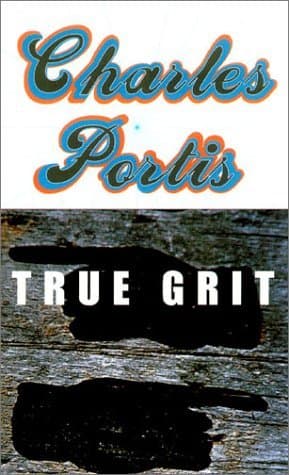
Charles Portis (1968)
Genre
Historical Fiction
Reading Time
240 min
Key Themes
See below
Sign in to track this book
A determined 14-year-old girl with a steely will hires a boisterous, one-eyed U.S. Marshal to track down her father's killer deep in the unforgiving 1870s American West.
Fourteen-year-old Mattie Ross tells about her father, Frank Ross, being murdered by his hired hand, Tom Chaney, in Fort Smith, Arkansas. Chaney shot Frank after an argument over a gold piece, then robbed him of money and two California gold pieces before running into Indian Territory. Mattie, a self-possessed and determined girl, travels alone from Yell County to Fort Smith to get her father's body and settle his affairs. She shows her business sense by selling her father's ponies at a fair price, refusing to be cheated by the horse trader, Colonel Stonehill. Her main goal is to find Tom Chaney and bring him to justice.
In Fort Smith, Mattie learns that Tom Chaney has fled into the Indian Nations, outside local law. She asks about the toughest U.S. Marshals and is directed to Reuben 'Rooster' Cogburn, a one-eyed, heavy-drinking, and violent lawman. Despite Cogburn's dismissive attitude, Mattie is impressed by his reputation for courage and his willingness to pursue outlaws into dangerous territory. She confronts him, offering a large fee to track Chaney. She even watches him in court, observing his harsh but effective testimony against other criminals.
While Mattie makes arrangements with Cogburn, a Texas Ranger named LaBoeuf arrives in Fort Smith. LaBoeuf is also tracking Tom Chaney for a different crime: the murder of a Texas senator. He plans to capture Chaney and return him to Texas for a reward. LaBoeuf tries to get Cogburn to join him, offering a share of the reward, but Mattie insists Cogburn is already hired by her. An argument follows between Mattie and LaBoeuf, with Mattie refusing to give up her claim on Chaney or Cogburn's services. She is determined that Chaney must face justice for her father's murder in Arkansas.
Despite Cogburn and LaBoeuf trying to leave her behind, Mattie follows them across the river into Indian Territory. Her persistence makes them let her come along, though reluctantly. The trio sets off, tracking Chaney through the rugged land. They meet a small group of outlaws led by Emmett Quincy and Moon. Cogburn, using a trick, gets the drop on them. In the fight, Moon is wounded and tells them where Chaney is and that he is with the outlaw Lucky Ned Pepper.
Cogburn questions Moon and Quincy, trying to get information about Lucky Ned Pepper's gang and Chaney. Moon, dying, says Chaney is with Ned Pepper and gives a general location. Quincy, trying to take advantage, tries to kill Cogburn, but the Marshal is too fast, shooting Quincy dead. This violent event shows Mattie the harsh frontier and Cogburn's brutal efficiency. The information gained helps them find Ned Pepper's hideout.
Following Moon's directions, Cogburn, LaBoeuf, and Mattie find Lucky Ned Pepper's camp. Cogburn decides to ambush the gang alone, telling LaBoeuf and Mattie to wait. He charges into the camp, shooting, killing two of Pepper's men. However, Ned Pepper and Chaney escape, and Cogburn retreats after being wounded. The ambush partly succeeds, reducing Ned Pepper's men, but Tom Chaney escapes, and the pursuit must continue, with Cogburn now hurt.
After the fight, Cogburn, LaBoeuf, and Mattie are separated. Mattie, looking for water, finds Tom Chaney by a stream. She confronts him with her father's old pistol. When Chaney mocks her, Mattie shoots him, wounding him, but the pistol misfires on the second shot. Chaney, angry, captures Mattie and takes her back to Lucky Ned Pepper's camp. Mattie is now in danger, a hostage of the outlaws she sought to capture, and her companions do not know her situation.
Cogburn and LaBoeuf, realizing Mattie is missing, track her to Ned Pepper's camp. In a rescue, Cogburn rides into the gang, fighting them. LaBoeuf provides cover fire, and Mattie escapes Chaney. However, during the escape, Mattie falls into a pit, finding it is a den of rattlesnakes. One snake bites her, injecting venom. LaBoeuf saves her from a second snake, but the bite is serious, and her life is at risk.
With Mattie badly hurt by the snakebite, Cogburn knows time is short. He puts Mattie on his horse, Little Blackie, and begins a ride to find a doctor. Tom Chaney reappears, trying to stop them. LaBoeuf, despite his own injuries, intervenes, hitting Chaney with his rifle butt, briefly stopping him. Chaney recovers and shoots LaBoeuf, killing him, but LaBoeuf's actions bought Cogburn and Mattie precious time to escape. Cogburn, alone with the dying Mattie, continues his ride through the night.
Cogburn rides hard, finding a doctor and getting Mattie medical help. Her arm is badly affected by the venom, and she has a long recovery. Cogburn stays with her for a time, ensuring her well-being. Once Mattie is safe and her family arrives, Cogburn, a wanderer, leaves. Mattie never sees him again, though she respects and cares for the man who helped her avenge her father and saved her life.
The story ends with an adult Mattie Ross, a one-armed woman who never married, thinking about her youth. She becomes a successful businesswoman, showing the same courage she had as a teenager. She recalls trying to find Cogburn years later, hearing of his death and burial in a pauper's grave. Mattie arranges for his body to be moved to her family plot. She expresses her admiration for Cogburn, acknowledging his flaws but celebrating his courage and his impact on her life. She visits his grave, paying her respects to the man who showed true grit.
The Protagonist
Mattie transforms from a naive but resolute girl into a hardened survivor who achieves her vengeance, carrying the physical and emotional scars of her journey into a successful, independent adulthood.
The Supporting/Anti-hero
Cogburn, initially a reluctant mercenary, develops a protective bond with Mattie, revealing a hidden layer of compassion and responsibility, though his core nature remains unchanged.
The Supporting
LaBoeuf evolves from a mercenary seeking a reward to a selfless ally, culminating in his sacrifice for Mattie.
The Antagonist
Chaney remains a consistently villainous and cowardly figure, serving primarily as the object of Mattie's revenge, and meets a deserved end.
The Supporting/Antagonist
Ned Pepper remains a consistent, dangerous antagonist, a foil to Cogburn, and a significant obstacle to Mattie's quest, ultimately meeting his demise.
The Mentioned
His death is the inciting incident, and his memory fuels Mattie's entire journey, influencing her values and determination.
The Supporting
Stonehill serves as an early antagonist who underestimates Mattie, revealing her shrewdness and setting the stage for her interactions with other tough characters.
The Mentioned
Moon's brief appearance and death serve as a plot device, providing key information that propels the story forward.
The Mentioned
Quincy's brief, violent role establishes the danger of the outlaws and Cogburn's ruthless efficiency.
The novel explores the line between lawful justice and personal vengeance. Mattie seeks justice for her father's murder, but her actions often become personal retribution, especially when she shoots Tom Chaney. Cogburn, a U.S. Marshal, works under the law, but his brutal methods and high body count suggest he often delivers his own justice, which aligns with vengeance. The legal system is slow in the territories, forcing individuals like Mattie to act on their own, raising questions about 'justice' on the frontier. The ending, where Mattie achieves her goal but loses an arm, shows the high cost of such a pursuit.
“You must pay for everything in this world one way or another. There is nothing free except the grace of God.”
The central theme, in the title, is unwavering courage in the face of hardship. Mattie Ross shows courage through her pursuit of Tom Chaney, her refusal to be intimidated, and her resilience in surviving a snakebite and adapting to her disability. Cogburn, despite his flaws, also shows courage in confronting dangerous outlaws and his relentless pursuit. The harsh frontier demands such qualities for survival, highlighting the strength of will needed to navigate a lawless world. This theme is clear in Mattie's refusal to leave Fort Smith without hiring Cogburn and her continued presence on the trail despite dangers.
“I was not a person to be trifled with.”
Mattie's journey is a coming-of-age story. At fourteen, she enters a brutal adult world of violence, death, and moral complexity. Her experiences on the trail, witnessing shootouts, death, and suffering a severe injury, remove her youthful innocence. She learns about frontier justice, human character (especially Cogburn's), and the cost of her quest. The loss of her arm is a physical sign of her lost innocence, but she emerges as a strong, independent woman, shaped by her adventure. Her adult narrative voice reflects a mature understanding of her past.
“I had left my girlhood there in the Indian Nation. I was a woman.”
The novel clearly shows the unwritten rules and realities of the American West in the late 19th century. Justice is often outside formal legal channels, and survival depends on self-reliance, physical skill, and a willingness to use violence. Characters like Cogburn operate within this code, where a man's word and his ability to defend himself are important. The Indian Territory setting, beyond official jurisdiction, emphasizes this theme, showing a land where individual action and personal codes determine outcomes. The interactions between lawmen and outlaws, and the methods used to resolve disputes, reflect this unique and often brutal society.
“I had never seen a man shot before. It was a terrible thing to see.”
Loyalty is important, especially in Mattie and Cogburn's relationship. Despite his gruffness, Cogburn shows loyalty to Mattie, risking his life to save her from outlaws and the snakebite. LaBoeuf also proves his loyalty through his sacrifice. Conversely, betrayal starts the story, with Tom Chaney betraying Frank Ross's trust by murdering him. The shifting alliances and sacrifices show the importance of trust and the impact of its absence in a dangerous world. Mattie's loyalty to her father's memory drives her quest.
“I was not thinking of the reward money, but of my dear father's blood.”
The story is told by an adult Mattie Ross looking back on her youth.
The entire novel is narrated by Mattie Ross as an elderly woman, reflecting on the events of her fourteenth year. This narrative choice allows for a mature, analytical, and often sardonic perspective on her youthful adventures. It provides insight into Mattie's character development and the lasting impact of her experiences, as she can comment on events with the wisdom of hindsight. It also allows for foreshadowing and a deeper understanding of the characters' motivations and outcomes, as the narrator already knows the full story.
Tom Chaney serves as the primary object of pursuit, driving the plot forward.
Tom Chaney functions as a MacGuffin in the narrative. While his capture is Mattie's explicit goal and the driving force for the plot, his actual character is less developed than those of Mattie, Cogburn, or LaBoeuf. He exists primarily as the target, the catalyst for the journey, and the reason for the interactions and conflicts between the main characters. His pursuit allows the exploration of themes like justice, grit, and the complexities of the frontier, rather than being a deeply complex villain himself.
A sudden, life-threatening event that serves as a climax and turning point.
The snakebite is a classic plot device, an unexpected twist that intensifies the climax and serves as a major turning point. It places Mattie in immediate, mortal danger, shifting the focus from vengeance to survival. This event forces Cogburn to demonstrate his deepest loyalty and care, as he embarks on a desperate race against time to save her life. It also results in Mattie's physical disfigurement (the loss of her arm), a permanent scar that symbolizes her loss of innocence and the high cost of her adventure.
Mattie's adult narration, though seemingly factual, is filtered through personal memory and perspective.
While Mattie is generally a straightforward and honest narrator, her retrospective account is subtly influenced by her own biases, affections, and the passage of time. Her descriptions of Cogburn, for instance, are clearly colored by her deep respect and affection for him, potentially overlooking some of his harsher aspects. The 'unreliability' is not in fabricating facts, but in the subjective interpretation and emphasis of events, providing a personal, rather than purely objective, historical record. This adds depth to her character and the story's emotional resonance.
“You must pay for everything in this world, one way or another. There is nothing free except the grace of God.”
— Mattie Ross reflecting on the costs of life and justice.
“I had not seen the last of him. He was not a man to leave a debt unpaid.”
— Mattie describing her first encounter with Tom Chaney.
“I would not have thought it possible for a man to be so ugly.”
— Mattie's initial impression of Rooster Cogburn.
“You will find I am not a person to be trifled with.”
— Mattie asserting herself to Stonehill about her father's horses.
“I aim to see justice done.”
— Mattie's unwavering resolve to pursue Tom Chaney.
“If you want to get paid, you better come back.”
— Mattie's practical and shrewd dealings with Stonehill.
“I do not care what your age is, Mattie, you are a very determined young woman.”
— Rooster Cogburn's reluctant admiration for Mattie's tenacity.
“A man's character is not only in what he does, but in what he refuses to do.”
— Mattie's observation on the moral complexities of the characters she meets.
“I had no doubt that what I was doing was right.”
— Mattie reflecting on her conviction to avenge her father.
“He was a man who did not care what people thought of him, and that was a rare thing.”
— Mattie describing the independent nature of Rooster Cogburn.
“I was never one to let a little thing like the law stand in my way.”
— Rooster Cogburn's pragmatic and often lawless approach to his duties.
“There is no rest for the wicked, and no peace for the righteous.”
— A general reflection on the harsh realities of life and justice in the Old West.
“Time makes fools of us all.”
— Mattie's older self reflecting on the passage of time and its effects.
“I was a little thing and a girl, but I had a will of iron.”
— Mattie's self-assessment of her own unwavering resolve.
Ready to see how well you understood this book? Take our interactive quiz with 10 questions.

Charles Portis was an American novelist best known for his Western novel "True Grit." Published in 1968, the book was adapted into two acclaimed films. His writing is characterized by its distinctive narrative voice and sparse, evocative prose, earning him a dedicated following among critics and readers alike.







