“Trout Fishing in America is a book, but it is also a feeling. It is a feeling of being alive and of being in the world.”
— The narrator's reflection on the multifaceted nature of 'Trout Fishing in America' itself.

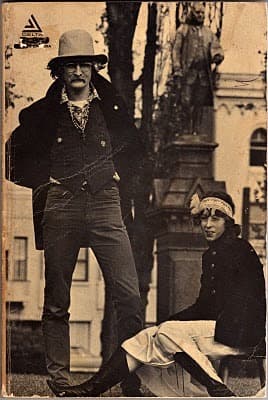
Richard Brautigan (1967)
Genre
Literary Fiction
Reading Time
90 min
Key Themes
See below
Sign in to track this book
A bizarre and often funny journey through an America where fishing for trout becomes a stand-in for everything from mayonnaise to the hard-to-pin-down American dream.
The narrator starts by telling about a childhood experience where he saw a man peeing in a creek, which his father called 'trout fishing in America.' This early, strong image becomes tied to the abstract idea of the book's title. He then describes the actual book cover, a photo of a man in a hat by a waterfall, which he finds both fitting and strange given the many, often conflicting, meanings he gives to the phrase 'Trout Fishing in America.' This first part sets a tone of playful uncertainty and introduces the main, elusive idea that will run through the whole work, hinting at its many sides.
The narrator introduces a character he calls 'Trout Fishing in America Shorty,' a small, quiet man who embodies the spirit of 'Trout Fishing in America' as a person. Shorty is shown as a gentle, almost mythical figure who moves through life with quiet dignity, representing a simpler, perhaps more real, part of American life. He often meets Shorty in everyday places, such as a grocery store, where Shorty's presence subtly reminds him of the widespread, yet often missed, beauty and oddness of daily life. Shorty's character is a recurring symbol of the book's main idea, making the abstract real.
The narrator visits The Cleveland Wrecking Yard, a place where old items are given new, often silly, names and prices. He describes a section where old bathtubs are sold as 'trout streams' for a dollar each. This highlights how nature is turned into goods and redefined in a city, consumer-driven world. This scene shows the book's playful challenge to old values and its look at how meaning is given and changed in modern society. The wrecking yard becomes a symbol for America itself, a place where the past is reused and rethought, often with a touch of strange humor, blurring the lines between what is natural and what is man-made.
Instead of a usual history, the narrator offers a series of short, often separate stories that touch on the idea of 'Trout Fishing in America' through different historical periods. These 'historical' moments are less about facts and more about capturing the feeling of the idea as it changes. He might describe a frontier settler fishing, then jump to a modern city person's desire for nature. This chapter emphasizes the timeless and changing nature of the phrase, showing how it adapts and transforms across different situations and times, always keeping a core, though undefined, meaning related to a longing for something real or lost.
The narrator describes a specific trout he meets, notable for its hunched back. This deformed fish, instead of being pitied, is presented with a kind of respect, showing a unique and unconventional kind of beauty. The hunchback trout is a symbol for the book's appreciation of the imperfect and the odd, challenging common ideas of what is beautiful or valuable. This scene shows the narrator's ability to find deep meaning and wonder in the everyday and the unusual, reflecting a broader idea of accepting the odd parts of life and nature.
In a strange twist, the narrator imagines 'Trout Fishing in America' as a woman, describing her looks and personality. This personification further expands the already wide and fluid meaning of the main idea, showing its ability to go beyond abstract ideas and take on real forms. The woman is shown with a mix of natural beauty and a certain elusive quality, mirroring the many sides of the phrase itself. This imaginative leap allows the narrator to explore the emotional and relational parts of 'Trout Fishing in America,' showing it as something that can interact and connect, though in a dreamlike, symbolic way.
The narrator details how live trout are shipped from a hatchery, carefully describing the boxes, the ice, and the destination. This seemingly simple account of a practical task carries the deeper symbolic weight of 'Trout Fishing in America.' The act of shipping live fish becomes a real example of the broader idea, representing the movement, spread, and perhaps even the selling of an ideal. The contrast of the everyday details of shipping with the abstract title creates a funny and thought-provoking comment on how ideals and nature are handled in modern society, often with a mix of care and detachment.
The narrator tells about a conversation with a man who is truly interested in 'trout fishing in America' in the literal sense. This interaction brings the abstract idea back to its real-world beginnings, highlighting the difference between the narrator's broad, symbolic understanding and the man's practical approach. The narrator concludes by suggesting that 'Trout Fishing in America' has become so vast and all-encompassing that it is almost impossible to grasp, constantly changing and redefining itself. This final thought reinforces the book's main idea of uncertainty and that true meaning is often found in personal experience rather than in objective definition, leaving the reader with a sense of wonder and open interpretation.
The narrator tells a story about a jar of mayonnaise left in a refrigerator for a long time, which eventually turns into a strange, almost living substance. This seemingly odd and unrelated story is a typical Brautigan diversion, where the ordinary becomes strange. The mayonnaise, in its change, becomes a symbol for the unexpected and often strange beauty found in decay and the passing of time. It shows the book's general tendency to find deep, if unsettling, insights in the most common objects and situations, challenging usual ideas of reality and beauty.
The narrator describes a post office, but instead of focusing on its daily operations, he sees it as a natural river. The lines for stamps become currents, the counters become banks, and the people become parts of a flowing system. This imaginative change is a prime example of the book's surreal style, where ordinary places are rethought with a poetic and often funny sensibility. It shows the narrator's ability to find the extraordinary in the ordinary, suggesting that nature's patterns and beauty can be seen even in the most man-made places, if one just looks with a fresh view.
The Protagonist
The narrator's arc is less about traditional character development and more about an evolving exploration and understanding of the central motif, culminating in an acceptance of its inherent ambiguity.
The Supporting
Shorty doesn't have a traditional arc; rather, he serves as a consistent, evolving symbol that deepens the narrator's understanding of the central motif.
The Supporting
As a symbolic creature, the hunchback trout's 'arc' is in its symbolic transformation from a mere fish to a profound metaphor for beauty in imperfection.
The Mentioned
Functions as a static character whose actions drive a specific thematic exploration.
The Supporting
As an imagined entity, her 'arc' is purely symbolic, deepening the metaphorical scope of the central theme.
The Mentioned
A static figure whose initial naming act serves as the foundational catalyst for the entire narrative.
The Mentioned
A static character who serves as a foil to the narrator's complex interpretation of the title.
The main idea is that meaning, especially for big concepts like 'Trout Fishing in America,' is fluid, personal, and always changing. The narrator constantly redefines and rethinks the phrase, applying it to everything from a peeing man to a hunchback trout, a woman, and even a wrecking yard. This shows how language and perception shape what we understand, and how trying to find a single, fixed definition is pointless. The book enjoys this uncertainty, inviting the reader to accept the many sides of reality instead of looking for clear answers. The Cleveland Wrecking Yard scene, where bathtubs become 'trout streams,' is a perfect example of this playful redefinition.
“Trout Fishing in America is a nice title, but I am not going to be able to use it. I'm going to have to make it up as I go along.”
Brautigan constantly blurs the lines between the natural world and things made by people, often with funny and thought-provoking results. The 'bathtub trout streams' in the Cleveland Wrecking Yard, the idea of shipping live trout, or the narrator's imagining a post office as a river, all highlight this idea. The book suggests that our view of nature is increasingly shaped by human ideas and consumerism, yet it also implies that the essence of nature can still be found or imagined even in the most artificial places. This idea criticizes modern society's effect on the environment while also celebrating the human ability for imaginative change.
“I was standing in front of the Cleveland Wrecking Yard, looking at a lot of old bathtubs. They were selling them for a dollar apiece. They called them 'trout streams.'”
Beneath the quirky surface, there is a subtle feeling of longing for a simpler, perhaps more real, America. The narrator's childhood memory of his father's definition of 'trout fishing in America' hints at a lost innocence. The recurring idea often brings a sense of wanting unspoiled nature and a time when life felt less complex. While not openly sad, the book subtly regrets the loss of natural places and the selling of experiences. This longing is not sappy, but rather a quiet recognition of what has been changed or lost as things have progressed, contrasting with the strange present.
“I got out of the car and stood in the sun for a while, just breathing the air that was moving down the valley from the mountains. It smelled like the past.”
Brautigan finds deep meaning and humor in the most everyday and seemingly unimportant details of life. From a jar of mayonnaise changing into a strange substance to the specific details of shipping trout, the book raises the ordinary to the extraordinary. This idea encourages readers to look beyond the surface of daily life and find wonder, strangeness, and beauty in unexpected places. The narrator's unique view turns common experiences into strange observations, showing that life itself is a constant source of both absurdity and deep insight, if one is open to seeing it.
“There was a jar of mayonnaise in the refrigerator that had been there for a long time. It had turned into something else. It was mayonnaise, all right, but it was also something else.”
The use of illogical or dreamlike juxtapositions and events.
Brautigan employs surrealism to create a world where the ordinary is constantly recontextualized into the extraordinary. Objects and concepts are given new, often absurd, identities (e.g., bathtubs as 'trout streams,' mayonnaise as a sentient being). This device challenges the reader's conventional understanding of reality, forcing them to engage with the narrative on a metaphorical and imaginative level. It allows for a playful exploration of meaning, demonstrating that truth can be found in the illogical and the unexpected, and that the world is far stranger and more beautiful than it often appears.
The book self-consciously refers to itself as a work of fiction.
The narrator frequently breaks the fourth wall, directly addressing the reader and commenting on the act of writing the book itself. The very first section, 'The Cover of Trout Fishing in America,' discusses the book's physical cover and title. This metafictional approach highlights the constructed nature of narrative and invites the reader into the creative process. It underscores the theme of the elusiveness of meaning, as the narrator grapples with defining his own creation. This device adds layers of self-awareness and intellectual playfulness, making the reader an active participant in the book's ongoing deconstruction and reconstruction of meaning.
The central phrase serves as a multifaceted, evolving symbol.
The phrase 'Trout Fishing in America' is not a literal activity but a constantly shifting, overarching symbol. It represents everything from natural beauty, American identity, freedom, innocence, loss, and the very act of seeking meaning itself. Its meaning is never fixed, allowing the narrator to apply it to a wide range of disparate objects, people, and experiences. This fluid symbolism is the core of the book's structure and thematic exploration, inviting readers to project their own interpretations onto the phrase. It functions as a vessel for complex ideas about life, art, and the American experience, always remaining just beyond definitive grasp.
The story is told through a series of disconnected vignettes and anecdotes.
Instead of a linear plot, 'Trout Fishing in America' is composed of numerous short, often unrelated chapters and anecdotes. These fragments jump through time and space, featuring different characters and scenarios, all loosely connected by the overarching motif of 'Trout Fishing in America.' This narrative structure mirrors the elusive and multifaceted nature of the central theme, suggesting that meaning is found in disparate observations rather than a grand, unified story. It allows for a wide range of explorations without being constrained by conventional plot development, reflecting the chaotic yet interconnected nature of life itself.
“Trout Fishing in America is a book, but it is also a feeling. It is a feeling of being alive and of being in the world.”
— The narrator's reflection on the multifaceted nature of 'Trout Fishing in America' itself.
“All of them were on their way to Trout Fishing in America. All of them had been there, were there, or were going to be there.”
— Describing various people encountered, all seemingly connected to the elusive concept of Trout Fishing in America.
“It was a beautiful day, a day to be alive and to be doing something, even if it was only looking at a stream.”
— The narrator observing a stream, finding beauty and purpose in simple observation.
“He didn't have any money, but he had Trout Fishing in America, and that was something.”
— A character's sense of wealth derived not from money, but from the spiritual or conceptual 'Trout Fishing in America'.
“Sometimes I’d feel like a fly fishing for people.”
— A poignant metaphor reflecting the narrator's feeling of observation and interaction with others.
“There was a time when I thought I was Trout Fishing in America.”
— The narrator's past belief that he embodied or was synonymous with the concept.
“I had a feeling that I had been there before, but it was a feeling that had no memory attached to it.”
— A sense of déjà vu or a primal connection to a place or idea.
“The creek was like a beautiful woman with a broken arm.”
— A vivid, slightly unsettling simile used to describe the condition of a creek.
“It was a nice day to have a beer and think about Trout Fishing in America.”
— A simple, everyday scenario where the grand concept of Trout Fishing in America is a casual thought.
“I wondered if Trout Fishing in America was like a great big movie that was being shown everywhere at once.”
— The narrator's musing on the pervasive, almost cinematic quality of the concept.
“He had a face like a trout that had just been caught.”
— A distinctive, slightly humorous physical description of a character.
“Trout Fishing in America was a place where people went to do whatever they wanted to do.”
— Defining Trout Fishing in America as a space of freedom and self-determination.
“The wind was blowing through the trees, making a sound like someone walking very slowly on dry leaves.”
— A sensory description of the natural environment.
“Sometimes you just have to give up and let the world go on without you.”
— A moment of resignation or acceptance from the narrator.
“I always felt like I was in a foreign country, even when I was home.”
— The narrator's persistent feeling of alienation or otherness.
Ready to see how well you understood this book? Take our interactive quiz with 10 questions.
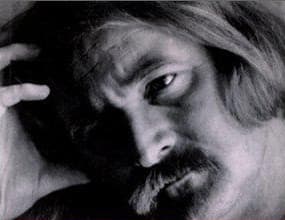
Richard Gary Brautigan was an American novelist, poet, and short story writer. A prolific writer, he wrote throughout his life and published ten novels, two collections of short stories, and four books of poetry. Brautigan's work has been published both in the United States and internationally throughout Europe, Japan, and China. He is best known for his novels Trout Fishing in America (1967), In Watermelon Sugar (1968), and The Abortion: An Historical Romance 1966 (1971).







