“The world is a cancer, and my body is the tumor. I am dying of the world.”
— A bleak reflection on existence and the protagonist's place within it.

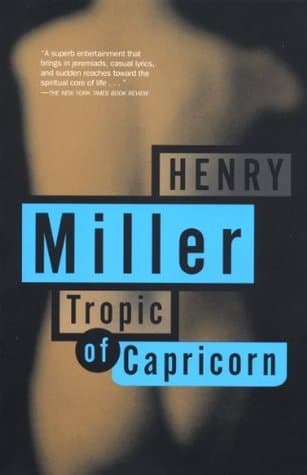
Henry Miller (1939)
Genre
Thriller / Mystery
Reading Time
9-12 hours
Key Themes
See below
Sign in to track this book
This book tells the story of a man adrift in 1920s Brooklyn, where explicit desires and the gritty pulse of New York's underbelly clash in a literary work that defied the nation.
The story begins with Henry Miller in Paris, looking back at his life in Brooklyn and New York during the 1920s. He tells of his early struggles, his unhappiness with traditional life, and his constant search for a meaningful existence outside of social norms. He thinks about his failed first marriage and the deep impact of his second wife, June Mansfield, often called Mara. Miller describes his early attempts at writing, often driven by desperation and a wish to escape the ordinary. He works various low-paying jobs, including a period at the Cosmodemonic Telegraph Company, which he uses to observe the absurdities of modern life. This time is marked by a deep feeling of being alone and a desire for an authentic self, which he believes can only be found through art and a full embrace of life's raw experiences.
Henry details his job at the Cosmodemonic Telegraph Company, a thinly disguised version of Western Union. Here, he sees the boring routines, the small power struggles, and the soul-crushing nature of corporate work. He meets many interesting colleagues, each adding to his growing disappointment with the American Dream. Miller often makes fun of the company's poor organization and the workers' quiet acceptance of their fate. This period is more than just a means to an end for Miller; it becomes a rich source for his writing. He uses his experiences to criticize the industrial age and its dehumanizing effects, all while keeping a dark humor and a desire to escape the dullness around him.
The story explores Henry Miller's intense and often damaging relationship with June Mansfield, known as Mara. Their connection is marked by strong emotional and sexual closeness, as well as constant conflict and jealousy. Mara is shown as a captivating, mysterious person who inspires and troubles Miller equally. She is a dancer, an aspiring actress, and a woman who lives by her own rules, always pushing against conventional morality. Their life together is a chaotic mix of bohemian ideas, poverty, and artistic ambition. Miller shows their relationship as a test that shapes him as a writer, drawing heavily on their shared experiences, arguments, and deep connection to fuel his creativity. Their dynamic is the emotional heart of this time in his life, shaping his personal and artistic path.
Miller immerses himself in Brooklyn's diverse and often rough ethnic neighborhoods, looking for an honest experience he feels is missing from mainstream American society. He visits bars, speakeasies, and brothels, interacting with prostitutes, homeless people, and working-class individuals. These encounters are not just for pleasure but are shown as a type of study, a way for Miller to understand the raw, unfiltered parts of human existence. He finds a sense of life and truth in these overlooked communities that he believes is absent from more respectable parts of society. This period shapes him as a writer, as he gathers material and insights into the human condition, rejecting superficiality for a deeper, though often darker, understanding of life.
The book contains explicit descriptions of Miller's sexual encounters. These are presented not just as acts of pleasure but as part of his philosophical exploration of freedom, desire, and the human spirit. He sees sex as a basic, freeing force, often linked to his artistic and intellectual pursuits. These encounters are frequently shown with raw, unromantic honesty, challenging social taboos and traditional ideas of morality. Miller uses these experiences to examine human nature, to understand the link between the physical and the spiritual, and to assert his own radical individuality. His sexual experiences are shown as a rejection of strict rules and a celebration of life in all its messy, physical glory, contributing to his overall search for authenticity.
Miller describes his interactions with a group of aspiring writers, artists, and intellectuals in New York. These friendships give him important intellectual and emotional support. They meet in cafes, apartments, and bars, having intense discussions about literature, philosophy, and the state of the world. These talks often share a feeling of disappointment with conventional society and a collective desire for artistic and personal freedom. Miller finds friends who understand his unusual view of the world and who encourage his writing dreams. These relationships are important for his development, offering both intellectual stimulation and a sense of belonging within a community that accepts his quirks and supports his radical artistic vision, even as they deal with their own difficulties.
Mara's departure for Europe, often for periods to pursue her own artistic goals or to escape their turbulent life, leaves Miller in deep emotional distress. Her absence highlights how dependent he has become on her, despite their constant conflicts. He struggles with loneliness, jealousy, and an intense longing for her return. These separations force Miller to face the instability of their relationship and his own emotional weaknesses. Her trips abroad often involve other relationships, further fueling Miller's worries and his complex feelings for her. Her absence, though painful, also helps his writing, as he puts his emotional distress into his literary work, further solidifying her role as his muse and tormentor.
Throughout this time, Miller is consumed by his goal to become a writer, yet he faces constant rejection and financial hardship. He dedicates himself to his craft, writing a lot but finding little success in getting his work published. He describes the frustrations of trying to navigate the literary world, which he often sees as fake and resistant to his unusual style and subject matter. Despite the setbacks, Miller's determination remains strong. He sees rejection not as failure, but as more proof of the need for his radical voice. His struggles to establish himself as a writer are deeply connected to his personal experiences, as he draws inspiration from his poverty, his relationships, and his observations of the world around him, always refining his unique literary voice.
New York City becomes a powerful, almost living, character in Miller's story. He describes its constant energy, its sharp contrasts between wealth and poverty, and its ability to both inspire and crush the human spirit. The city's varied landscape, from Manhattan's busy streets to Brooklyn's grittier neighborhoods, becomes the setting for his personal and artistic changes. Miller sees New York as a small version of modern life, a place where he can observe humanity in all its complexity. Its anonymity allows him some freedom, while its harsh realities force him to confront life's darker aspects. The city shapes his worldview and provides endless material for his writing, solidifying its deep and lasting impact on his identity.
Toward the end of the story, there is a growing sense of an upcoming departure. Miller expresses deep dissatisfaction with American society and culture, feeling increasingly stifled and unfulfilled. He longs for a new environment, a place where he believes he can truly thrive as an artist and as an individual. This desire to escape is not just a wish to move physically but a spiritual search for freedom from the limits he sees in America. The story hints at his eventual move to Paris, suggesting that his experiences in New York, though important, are ultimately a preparation for a new chapter in his life. This feeling of an imminent break marks a transition, showing his readiness to embrace the unknown in pursuit of ultimate freedom and artistic expression.
The Protagonist
Miller transforms from a restless, unfulfilled individual into a more self-aware artist, embracing his unconventional path and solidifying his unique literary voice.
The Supporting
Mara remains a largely static, enigmatic figure, her primary role being to catalyze Miller's personal and artistic development through their intense relationship.
The Supporting
MacGregor's arc is less defined than Miller's, serving primarily as a consistent intellectual foil and companion.
The Supporting
O'Mara, like MacGregor, serves primarily as a supporting character who reinforces the bohemian community and Miller's intellectual environment.
The Mentioned
These characters serve as static representations of a societal critique, without individual arcs.
The Mentioned
These characters are largely static, serving as elements of the environment and sources of Miller's philosophical and social observations.
The Mentioned
Mrs. Glouckner is a static, symbolic character, serving as a contrast to Miller's lifestyle.
Miller's story is a constant search for an authentic life, free from social limits and fakery. He rejects traditional jobs, marriage, and morality, seeking truth in raw experience, sexual freedom, and artistic expression. This theme appears in his immersion in Brooklyn's rough areas, his explicit sexual encounters, and his thoughts on the self. He believes true freedom comes from shedding social conditioning and embracing one's basic desires and artistic drive, as seen in his refusal to conform at the Cosmodemonic Telegraph Company and his dedication to writing despite poverty.
“My mind was a turbulent chaos, a maelstrom of thoughts and feelings, a vast, unexplored continent of desires and aspirations. I was searching for the root of myself, for that which was primal and irreducible.”
Miller shows deep disappointment with the American Dream, seeing it as a false front of consumerism, corporate rules, and spiritual emptiness. His time at the Cosmodemonic Telegraph Company serves as a strong symbol for the soul-crushing nature of modern work and the stifling conformity of American society. He criticizes the pursuit of money and the loss of individual spirit, finding real life only in the overlooked and unconventional parts of New York. This theme is central to his decision to eventually leave America, looking for a place where his artistic and personal freedom can truly grow.
“America was a land of promise, but the promise had been broken. It was a land of plenty, but the plenty was rotten. It was a land of freedom, but the freedom was a lie.”
Despite his poverty and struggles, Miller sees writing as his ultimate salvation and the only path to meaning. His experiences, no matter how unpleasant or painful, are always rephrased as material for his art. His relationship with Mara, his sexual experiences, and his observations of urban life all feed his writing. Art gives him a way to rise above the ordinary, to make sense of chaos, and to state his individual truth. The act of writing itself is shown as a vital, almost spiritual, need for his survival and self-discovery, as he continually tries to capture life's raw essence on the page.
“I had to write. It was like a disease in me, a fever. I had to get it out, or I would burst.”
The novel explores love and desire in their rawest and most open forms, especially through Miller's turbulent relationship with Mara and his many sexual encounters. Love is shown not as a romantic ideal but as a complex, often destructive force linked with obsession, jealousy, and artistic inspiration. Sexual desire is presented as a fundamental part of human existence, a freeing force that challenges social taboos and offers a path to self-discovery. Miller examines the psychological and emotional complexities of these relationships, removing traditional sentimentality to reveal the visceral truths of human connection.
“Love, for me, was not a gentle thing. It was a conflagration, a devouring fire that consumed everything in its path.”
New York City is not just a background but a dynamic, living entity that deeply affects Miller's journey. Its diverse neighborhoods, from Manhattan's busy streets to Brooklyn's rough corners, are described with vivid sensory detail. The city's constant energy, its sharp contrasts between wealth and poverty, and its ability to both inspire and crush the human spirit are central to Miller's observations. He sees New York as a small version of modern life, a place where he can see humanity in all its complexity, providing endless material for his writing and shaping his identity as an artist.
“New York was a monster, a glorious, terrifying monster that consumed you and spat you out, but in the process, it transformed you.”
Miller's unfiltered thoughts, observations, and memories flow freely, mimicking the natural thought process.
The novel employs a stream of consciousness style, allowing Miller's thoughts, memories, and philosophical digressions to flow without strict chronological order or conventional plot structure. This device immerses the reader directly into Miller's mind, creating an intimate and unfiltered experience. It mirrors his rejection of societal norms by eschewing traditional narrative conventions, emphasizing his subjective experience and internal world. This technique allows for a rich tapestry of ideas, observations, and emotional states, reflecting the chaotic yet vibrant nature of his inner life and the world he inhabits.
The narrative blurs the lines between memoir and fiction, using real-life experiences as raw material.
Miller's 'Tropic of Capricorn' is a prime example of autobiographical fiction, where the author's real-life experiences, relationships, and philosophical reflections are presented as a narrative, though with elements of artistic embellishment and thematic shaping. This device lends an intense sense of authenticity and immediacy to the story, as readers feel they are getting a direct, unvarnished account of Miller's life. It allows him to explore deeply personal themes and controversial subjects with a unique blend of confessional honesty and literary artistry, making his own life the central subject of his work.
Miller uses humor and exaggeration to critique modern society, particularly American corporate culture and puritanical values.
Satire and social commentary are pervasive throughout the novel. Miller uses his experiences at the Cosmodemonic Telegraph Company as a primary vehicle for satirizing corporate bureaucracy, the monotony of modern work, and the absurdities of the American Dream. He also employs satire to critique puritanical morality and the hypocrisy he perceives in society's attitudes towards sex and art. This device allows Miller to express his profound disillusionment with the status quo while also injecting dark humor and intellectual bite into his narrative, making his critiques both entertaining and thought-provoking.
Miller's subjective, often exaggerated, and highly personal perspective shapes the events and characters.
While autobiographical, Miller often functions as an unreliable narrator, presenting events and characters through his highly subjective, emotional, and sometimes exaggerated lens. His perceptions are colored by his desires, prejudices, and philosophical agenda, meaning the reader is constantly aware that they are experiencing the world through Miller's unique, often biased, perspective. This device reinforces the themes of individuality and the subjective nature of truth, inviting the reader to question and engage critically with his interpretations, rather than simply accepting them as objective reality. It enhances the raw, confessional quality of the narrative.
“The world is a cancer, and my body is the tumor. I am dying of the world.”
— A bleak reflection on existence and the protagonist's place within it.
“I have no money, no resources, no hopes. I am the happiest man alive.”
— A paradoxical statement reflecting a sense of liberation through destitution.
“To sing you must first open your mouth. You must have a pair of lungs, and a little knowledge of music. It is not necessary to have an accordion, or a guitar, or a piano, or anything like that. The only thing you need is a voice.”
— Miller's metaphor for the essential elements of creation and self-expression.
“The earth is not a globe, but a flat disk, and New York is the center of it.”
— A hyperbolic statement illustrating the protagonist's self-centered view of the world and the importance he places on his environment.
“One’s destination is never a place, but rather a new way of looking at things.”
— A profound insight into the nature of personal growth and experience.
“I am looking for a new way to live. I am looking for a new way to be. I am looking for a new way to die.”
— A declaration of a restless spirit seeking fundamental change in all aspects of life.
“The greatest joy in life is to be loved for what you are, not for what you pretend to be.”
— A simple yet powerful statement about authenticity and genuine connection.
“My mind is a streetcar, and I am standing on the platform, watching the passengers get on and off.”
— A vivid metaphor for the constant flow of thoughts and observations in the protagonist's mind.
“The only thing that matters is the present moment. The past is gone, the future is uncertain.”
— A focus on living in the now, a common theme in Miller's work.
“I am not a writer. I am a man who writes.”
— A distinction highlighting Miller's view of his craft as an inherent part of his being, rather than a mere profession.
“Every man has his own destiny: the only imperative is to follow it, to accept it, no matter where it leads him.”
— An assertion of individual fate and the importance of embracing one's unique path.
“The world is an illusion, but it's an illusion that we have to live in.”
— A reflection on the nature of reality and the necessity of engaging with it despite its perceived artificiality.
“To be free, you have to give up everything.”
— A radical idea of freedom that demands detachment from material possessions and societal expectations.
Ready to see how well you understood this book? Take our interactive quiz with 10 questions.
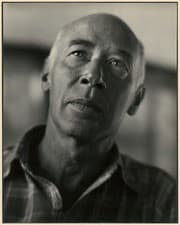
Henry Valentine Miller was an American novelist. He broke with existing literary forms and developed a new type of semi-autobiographical novel that blended character study, social criticism, philosophical reflection, stream of consciousness, explicit language, sex, surrealist free association, and mysticism. His most characteristic works of this kind are Tropic of Cancer, Black Spring, Tropic of Capricorn, and the trilogy The Rosy Crucifixion, which are based on his experiences in New York and Paris. He also wrote travel memoirs and literary criticism, and painted watercolors.







