“I have no money, no resources, no hopes. I am the happiest man alive.”
— Opening lines of the novel, setting the tone of destitute joy.

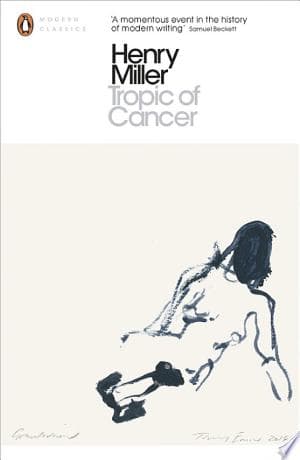
Henry Miller (2015)
Genre
Literary Fiction
Reading Time
360 min
Key Themes
See below
Sign in to track this book
In 1930s Paris, an American writer's hunger for life, art, and experience unfolds in a novel that redefined literature and challenged society.
The novel begins with the narrator, Henry Miller, describing his poor and aimless life in Paris. He is an American writer living day-to-day, often relying on friends for meals and a place to stay. His days involve wandering the city, observing people, and having frequent sexual encounters, especially with prostitutes. He disregards conventional societal rules, embracing a life of pleasure and intellectual pursuit, though without clear direction. This opening sets the raw, unfiltered, and stream-of-consciousness style of the book, focusing on immediate sensory experiences and internal thoughts rather than a structured plot.
Henry describes his on-again, off-again relationship with Tania, a prostitute for whom he feels a mix of affection and dislike. Their interactions are often tense, with arguments and passionate reconciliations. The story often returns to Henry's urgent need for food and money. He details elaborate ways to survive, such as borrowing from friends like Van Norden or Fillmore, or considering stealing. These scenes show the reality of his bohemian life, where basic survival is a daily struggle, contrasting with his intellectual goals and philosophical thoughts.
Henry's world includes many fellow expatriates, such as the crude Van Norden, the melancholic Fillmore, and other temporary figures. They visit cafes, bars, and brothels, having long philosophical discussions, drunken adventures, and sharing experiences of poverty and disillusionment. These interactions often turn into cynical observations about life, art, and sexuality. The companionship, though often superficial, gives Henry a sense of belonging in his otherwise solitary life, showing the shared struggles of their generation in a foreign country.
Much of the story focuses on Henry's explicit descriptions of his sexual encounters. These are presented without romance, often appearing strange or absurd, showing a raw, animalistic view of human desire. He interacts with various women, from prostitutes to casual acquaintances, often focusing on the physical act. Mixed with these accounts are Henry's philosophical thoughts on existence, the decline of Western civilization, the pointlessness of ambition, and the freedom of embracing primal urges. The sex is not just for shock but helps him examine broader societal and personal truths.
Fillmore, another American expatriate, is shown as a more thoughtful and fragile character than Henry. He is also a writer but struggles with his work and the harsh realities of Paris. Henry observes Fillmore's intellectual worries and his inability to fully engage in the chaotic, free-spirited life that Henry seems to enjoy. Fillmore's eventual departure from Paris, due to despair and lack of money, contrasts with Henry's continued, though aimless, presence, showing how different people cope with the bohemian ideal.
Carl, another American friend, arrives in Paris and quickly joins Henry in his poverty. Their shared lack of money leads to a series of often funny and desperate situations, like trying to find lodging, begging for meals, and navigating the city's less respectable areas. They talk about art, life, and their general disillusionment, reinforcing the idea of a lost generation. Carl's presence gives Henry a temporary companion in his wanderings, allowing for more dialogue and shared experiences, further illustrating the collective struggle of their artistic and bohemian community.
Throughout the story, Henry often thinks about his American background, comparing it with the perceived decline and history of Europe. He criticizes American materialism and puritanism but also acknowledges a certain energy and future potential that he feels is missing in the old continent. These thoughts are not necessarily patriotic but help Henry understand his own rootlessness and express his rejection of established societal norms, whether American or European. He sees himself as an observer caught between two worlds, belonging fully to neither.
Despite the constant cycle of poverty, hunger, and sexual encounters, Henry consistently returns to his identity as a writer. He sees his experiences, no matter how unpleasant, as material for his art. He believes in the need to experience life fully, however squalid, to create authentic art. This commitment to his craft, even without success, shows his belief in literature's power and his role as a recorder of the human condition, particularly its darker, unacknowledged parts. Writing is his anchor in a world of change.
In one memorable and surreal part, Henry describes meeting Ginette, a woman who works at a flea circus. This episode, like many others, is vivid and dreamlike, focusing on life's absurdities. The flea circus itself represents the trivial yet fascinating nature of human existence, with its small, controlled performances reflecting the larger, often meaningless dramas of everyday life. This section further shows Henry's ability to find interest and material for his observations in the most unexpected parts of Parisian life.
Toward the end of the novel, Henry finds a more stable, though still uncertain, living situation. This temporary break from immediate survival pressures allows him moments of deeper thought. He thinks about time, memory, and the repeating patterns of human experience. These parts focus less on immediate events and more on Henry's mind, showing his changing views on life, death, and his purpose as an artist. This period is a pause before the story's end.
The novel ends not with a solution or a clear plot conclusion, but with a restatement of life's continuous, cyclical nature of decay and renewal. Henry thinks about the impermanence of all things, the constant change of existence, and the certainty of death, but also the lasting force of life and creativity. He expresses acceptance for this ongoing process, seeing beauty in both creation and destruction. The ending reinforces the novel's main idea of embracing life completely, without judgment, and finding meaning in the act of living and observing.
The Protagonist
Henry's arc is less about transformation and more about an intensification of his existing worldview, embracing his role as a detached observer and chronicler of life's raw experiences.
The Supporting
Tania's presence in the narrative is more static, serving as a recurring embodiment of Henry's complex views on love and sex, rather than undergoing personal development.
The Supporting
Van Norden remains consistently focused on his carnal desires, serving as a static character who embodies a particular aspect of the expatriate lifestyle.
The Supporting
Fillmore's arc involves a gradual descent into despair and eventual retreat from Paris, highlighting the fragility of artistic ambition in challenging circumstances.
The Supporting
Carl's arrival and shared experiences with Henry reinforce the theme of collective struggle among expatriates, with no distinct personal arc.
The Mentioned
Boris is a static character, primarily serving as a philosophical interlocutor for Henry.
The Supporting
Claude's role is primarily to depict the harsh realities of the Parisian underworld, without a personal arc.
The Mentioned
Ginette is a minor character whose role is primarily to contribute to a surreal episode and showcase Henry's varied encounters.
The novel shows a strong belief in radical freedom, rejecting societal norms and traditional values. Henry Miller's main character chooses a life of poverty, promiscuity, and artistic pursuit outside of conventional work or relationships. This theme appears in his open embrace of sexual liberation, his disregard for materialism, and his intellectual criticisms of Western civilization. His life in Paris is a continuous act of rebellion against the 'cancer' of modern life and its perceived limits on the human spirit, shown by his refusal to work a steady job or conform to marital expectations.
““I have no money, no resources, no hopes. I am the happiest man alive.””
Sexuality is a main theme, presented in its rawest, most open form. Miller explores human desire as a basic, almost animalistic force, without romantic ideals or moral judgment. The many explicit encounters, especially with prostitutes like Tania, are shown with a direct honesty that challenges taboos. This theme is not just about physical acts but about understanding human nature at its most basic level, as seen in Van Norden's constant pursuit of women or Henry's own thoughts on the liberating power of unrestrained desire. It is an exploration of the body as a place of truth.
““The one thing we are not allowed to do is to be ourselves. We are born and bred to be a social creature, a cog in the machine.””
Despite the pleasure-seeking and poverty, the novel is about the purpose of art and the artist's role. Henry, as a writer, sees his chaotic life as essential material for his work. He believes in the need to experience life fully, however unpleasant, to create authentic art. This theme is clear in his constant observations, internal thoughts, and interactions with other struggling artists like Fillmore. His writing becomes a spiritual journey, a way to go beyond the ordinary and find meaning amidst decline, as he states his commitment to writing even when starving.
““I am not a man, I am a book.””
The novel explores the cyclical nature of decay and renewal, both personally and socially. Paris itself is shown as a city of ancient beauty and modern squalor, a representation of the broader decline of Western civilization that Henry often laments. Yet, within this decay, there is a constant, vital force of life and human spirit. This theme is clear in Henry's acceptance of his poverty and the temporary nature of his relationships, seeing them as part of a larger, ongoing process. He finds beauty in the unusual and life in the midst of death, suggesting that destruction is needed before new forms of existence can emerge.
““The world is a cancer, and my book is a surgical operation.””
Henry feels a deep sense of alienation, both from his American homeland and from the conventional society of Paris. He deliberately places himself as an outsider, a 'stranger' in the city, yet he also finds a unique sense of belonging among his fellow expatriates and the city's marginalized people. This theme is explored through his critiques of both American and European cultures, his rootlessness, and his observations of others who are similarly adrift. Despite his detachment, there is a longing for connection, often found in shared poverty, intellectual discussions, or temporary sexual encounters, forming a community of outsiders.
““I belong to no man, no country, no city, no love. I am a citizen of the world.””
Mimics the unfiltered flow of thoughts, feelings, and observations.
The novel is largely written in a stream of consciousness style, reflecting the narrator's raw, unfiltered thoughts, observations, and digressions. There is no traditional plot structure; instead, the narrative jumps between past memories, present experiences, philosophical musings, and explicit descriptions of encounters. This device immerses the reader directly into Henry's mind, capturing the chaotic, episodic nature of his bohemian life and allowing for a direct, unmediated expression of his perceptions and feelings, challenging conventional narrative linearity and creating a sense of immediacy and intimacy.
The entire story is told through the highly subjective and unfiltered voice of the protagonist.
The entire novel is presented as a first-person confessional, with Henry Miller as the explicit narrator. This device creates a deeply personal and subjective account, blurring the lines between author and character. The narrator directly addresses the reader, shares his innermost thoughts, desires, and judgments without reservation, and often offers meta-commentary on the act of writing itself. This confessional mode is crucial to the novel's impact, establishing an audacious, intimate, and often confrontational tone that directly challenges societal norms and literary conventions, making the reader a confidant in his scandalous life.
A series of loosely connected vignettes and anecdotes rather than a linear plot.
Instead of a traditional linear plot, 'Tropic of Cancer' employs an episodic structure, presenting a series of loosely connected vignettes, anecdotes, and character sketches. Each episode, whether a sexual encounter, a philosophical discussion, or a description of a meal, stands somewhat independently, contributing to a cumulative portrait of Henry's life and worldview rather than advancing a continuous storyline. This structure mirrors the aimless, wandering nature of the protagonist's existence and allows Miller to explore various themes and characters without being constrained by a conventional narrative arc, reflecting the chaotic reality of bohemian Paris.
Exaggerated and often disturbing depictions of the human body and its functions.
Miller employs grotesque realism, particularly in his descriptions of sexuality and bodily functions. This device involves exaggerated, often crude, and sometimes repulsive depictions of the physical, challenging romanticized notions of the human body and desire. By focusing on the raw, animalistic, and unglamorous aspects of sex, hunger, and decay, Miller aims to strip away societal hypocrisy and reveal a more fundamental, visceral truth about human existence. This serves to shock, provoke, and force the reader to confront uncomfortable realities, making the novel's explicit content integral to its philosophical aims rather than merely pornographic.
The narrator frequently comments on the act of writing and the nature of his own book.
The narrator, Henry, frequently engages in meta-commentary, breaking the fourth wall to reflect on the process of writing, the nature of his own book, and the role of the artist. He discusses his intentions, his struggles, and his philosophy of art directly with the reader. This device reinforces the idea of the novel as a conscious, deliberate act of creation and rebellion, rather than a mere recounting of events. It highlights the self-awareness of the narrator and the author, positioning the book itself as a character and a statement, directly engaging with its own form and purpose.
“I have no money, no resources, no hopes. I am the happiest man alive.”
— Opening lines of the novel, setting the tone of destitute joy.
“The world is a cancer, and man is a disease.”
— A bleak reflection on humanity and the state of the world.
“I belong to the race that makes the world go round. I am a poet, a musician, a dreamer, a philosopher.”
— Miller's self-perception amidst his bohemian lifestyle.
“To sing you must first open your mouth. You must have a pair of lungs, and a little knowledge of music. It is not necessary to have an accordion, or a guitar, or a piano, or anything like that. The music is in you, and with a little encouragement, a little nourishment, it will come out.”
— A metaphor for creative expression and finding one's inner voice.
“I am not a machine. I am a human being. I have a soul, and I have a body. And I have a mind, and I have a heart.”
— A declaration of individuality and humanity against dehumanizing forces.
“There is only one great adventure and that is to live your life as if it were your last.”
— A reflection on embracing life with urgency and passion.
“The moment one gives close attention to any thing, even a blade of grass, it becomes a mysterious, awesome, indescribably magnificent world in itself.”
— An observation on the power of mindfulness and detailed perception.
“I want to be able to look back and say, 'I lived fully, I loved much, I made a difference.'”
— A desire for a life lived with purpose and impact.
“The greatest prison people live in is the fear of what other people think.”
— A critique of societal conformity and the fear of judgment.
“The art of living is more like wrestling than dancing.”
— A realistic view of life as a struggle rather than effortless grace.
“I had a vision of a world without war, without hunger, without poverty. And I knew that it was possible.”
— A moment of idealistic hope for a better future.
“I prefer to be a dreamer among the humblest, with visions to be realized, than lord among those without dreams and desires.”
— Choosing the path of aspiration over stagnant power.
“I believe that the only way to get rid of a temptation is to yield to it.”
— A controversial philosophy on confronting desire.
“One's destination is never a place, but rather a new way of looking at things.”
— A profound statement on the nature of personal growth and perspective.
“I love everything that flows: rivers, sewers, lava, blood, bile, words, sentences. I love that which is fluid, elusive, evanescent.”
— An embrace of the chaotic, organic, and transient aspects of existence.
Ready to see how well you understood this book? Take our interactive quiz with 10 questions.
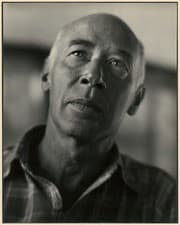
Henry Valentine Miller was an American novelist. He broke with existing literary forms and developed a new type of semi-autobiographical novel that blended character study, social criticism, philosophical reflection, stream of consciousness, explicit language, sex, surrealist free association, and mysticism. His most characteristic works of this kind are Tropic of Cancer, Black Spring, Tropic of Capricorn, and the trilogy The Rosy Crucifixion, which are based on his experiences in New York and Paris. He also wrote travel memoirs and literary criticism, and painted watercolors.







