“The past is never dead. It's not even past.”
— Reflection on how past crimes and secrets continue to haunt the present.

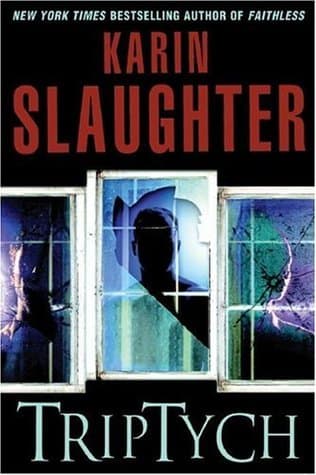
Karin Slaughter (2006)
Genre
Thriller / Mystery
Reading Time
450 min
Key Themes
See below
Sign in to track this book
A serial killer's gruesome methods grip Atlanta. A disgraced detective, his ex-lover, and an ex-con race to find the killer whose victims expose the city's dark secrets.
The novel opens with the discovery of a young woman's body in a deserted lot in Atlanta. The victim, Tiffany, a prostitute, has been brutally murdered and dismembered, with her eyelids cut off—a chilling signature. Detective Michael Ormewood, a seasoned but troubled Atlanta PD detective, gets the case. Ormewood is dealing with a failing marriage to Dani and a difficult relationship with his teenage son, Justin. The brutal crime scene suggests a serial killer, and the mutilation sends fear through the city and police department. Ormewood's initial investigation focuses on the victim's associates, but the lack of leads and the unique nature of the crime point to a more complex killer.
Leo, an ex-con recently out of prison, is working at a demolition site when he finds a second body, also mutilated with the eyelids removed. This victim is another prostitute, which confirms the serial killer theory. The discovery deeply troubles Leo, bringing back traumatic memories from his past, especially his time in prison and the horrors he saw. He starts to connect the current murders to similar crimes years ago, for which his former cellmate, "The Surgeon," was convicted. Leo's unique perspective and knowledge of the prison system make him an accidental, but important, informant for the investigation, though he is at first hesitant to come forward.
Vice detective Angie Polaski, Ormewood's former lover and current rival, starts her own investigation into the murdered prostitutes. Angie is known for her persistence and her ability to navigate the city's criminal underworld. She learns that the victims were all involved with a pimp named Ricky and frequented a specific strip club. As she investigates, she uncovers a network of prostitution, drug dealing, and corruption that reaches unexpected places. Unknown to Angie and Ormewood, their investigations are on a collision course, professionally and personally. Angie's past experiences and her understanding of the victims' world provide insights, but also put her in danger as she gets closer to the killer, bringing up old feelings and issues.
As more bodies appear and the killer's signature becomes clear, Ormewood and Polaski's investigations merge. Despite their professional rivalry and complicated personal history—they had an affair years prior that ended badly—they must work together. Their interactions are full of tension, mistrust, and unresolved emotions, yet their combined skills are effective. Ormewood's procedural experience and Polaski's street smarts and vice connections complement each other. They begin to piece together the victims' lives, looking for a common link beyond their profession. Their uneasy alliance forces them to confront the killer's gruesome reality and the ghosts of their shared past, adding personal drama to the high-stakes investigation.
Leo, disturbed by the serial killer's signature, decides to approach the police, though cautiously. He shares his suspicions about the connections between the current murders and the past crimes of "The Surgeon," Earl Carter. However, his ex-con status and criminal record make him an unreliable witness to many, including Ormewood. Despite this, Leo's specific knowledge of Carter's methods and his insights into the criminal mind prove valuable. He becomes an unofficial, and often unwelcome, consultant, providing cryptic clues and warnings that the detectives initially dismiss but eventually cannot ignore. Leo's involvement puts him in danger, as he suspects the killer might be someone from his own past, someone familiar with Carter's work.
As Ormewood and Polaski investigate further, they realize the current killer is either copying Earl Carter, or, more disturbingly, is connected to him. They focus on individuals who had access to Carter or his methods. The investigation shows that the killer is carefully planning the murders, choosing victims with specific traits. The detectives start to uncover a pattern of abuse and trauma in the victims' pasts, suggesting a motive beyond simple cruelty. This discovery shifts the focus from just finding a random killer to understanding a more complex, psychologically driven perpetrator. The killer's taunting nature, leaving specific clues, suggests a desire to send a message, further complicating the chase.
The intense pressure of the serial killer case, along with Ormewood's long-standing marital problems, pushes his relationship with Dani to its breaking point. His temper flares, he is often absent, and his emotional distance becomes unbearable for Dani. His son, Justin, also struggles with his father's behavior. The ongoing investigation forces Ormewood to confront his own flaws, his past affair with Angie, and his inability to connect with his family. A heated argument leads Dani to reveal her own secrets and fears, further damaging their fragile bond. The collapse of his personal life mirrors the escalating horror of the case, leaving Ormewood feeling increasingly isolated and desperate, both at work and at home.
Ormewood and Polaski, using Leo's insights and their own investigative skills, identify a strong suspect: Dale, a man who had a connection to Earl Carter in prison and held a deep grudge. They set up a sting operation to catch the killer. The plan goes wrong, leading to a tense and violent confrontation. During the chaos, the killer's true identity is revealed not as Dale, but as Angie Polaski. This twist is devastating, showing that Angie, driven by a traumatic past, has been carefully planning the murders, using Dale as a pawn and manipulating the investigation from the inside. Her motive is deeply personal and linked to the dark secrets of her own history.
In a final confrontation, Angie Polaski confesses to the murders. She reveals she was one of Earl Carter's victims during his original crimes, a young girl who survived his attack but was left deeply traumatized. The mutilation of the eyelids was not a copycat act, but her way of regaining power and symbolically blinding those who ignored her suffering. Her victims were chosen because they represented parts of her own past vulnerability or were connected to the system that failed her. Her goal was to expose the truth about Carter and the corruption that allowed him to thrive, using the current murders to draw attention to his past crimes and get her own justice. Her confession is a heartbreaking and chilling revelation of a victim turned perpetrator.
With Angie's confession and the full extent of her actions revealed, the case closes, but with lasting scars. Ormewood grapples with the betrayal of someone he once cared for and the realization of the trauma that drove her. His marriage is broken, and he faces the consequences of his own professional and personal failures. Leo, though cleared, remains a troubled figure, forever marked by his past and his closeness to such darkness. Atlanta reels from the exposure of its hidden side and the shocking truth behind the serial murders. The ending leaves a sense of tragedy, exploring the lasting impact of trauma and the complex nature of justice and revenge.
The Protagonist
Ormewood begins as a jaded, self-absorbed detective whose life is falling apart, but the case forces him to confront his past and the consequences of his actions, leading to a painful but necessary reckoning.
The Antagonist/Protagonist
Angie is initially presented as a driven detective, but her arc reveals her as a deeply traumatized victim who transforms into a cunning serial killer, seeking retribution for past injustices.
The Supporting
Leo begins as an outsider trying to escape his past, but his unique knowledge forces him to confront that past and become an integral, though dangerous, part of the investigation.
The Supporting
Dani's arc is one of increasing frustration and eventual liberation from a toxic marriage.
The Supporting
Justin experiences the breakdown of his family, becoming more withdrawn as the domestic conflict intensifies.
The Mentioned
Carter's arc is historical; his past crimes are the foundational trauma and inspiration for the current murders.
The Supporting
Dale is a pawn in a larger game, used and discarded by the true killer.
The Mentioned
Ricky's arc is limited to being a source of information about the victims' lives.
The novel explores how past trauma, especially childhood abuse, shapes people and their actions. Angie Polaski's change from victim to avenging serial killer is the clearest example, showing how her unaddressed past with Earl Carter controls her present. Leo's character also shows this theme; his prison experiences and connection to Carter leave him a haunted figure, unable to escape the darkness he witnessed. The lasting effect of violence and betrayal on the human mind is a central idea.
““Some things, once broken, can never be mended.””
A main theme is the unclear line between seeking justice and taking personal revenge. Angie Polaski's actions, though horrific, come from a desire to correct wrongs done to her and other victims, and to expose a corrupt system. Her methods, however, become brutal vigilantism. The novel asks readers to consider if her violent acts, born from deep suffering, can be understood, if not excused. Ormewood, as a detective, represents the traditional justice system, showing the difference between official legal processes and the strong, emotional drive for retribution.
““Justice and revenge are two sides of the same coin, but only one will bring you peace.””
The story is full of secrets, both personal and systemic. Michael Ormewood's failing marriage is built on lies and infidelity, while Angie Polaski's life is a carefully built facade to hide her traumatic past and her murderous plans. The novel exposes corruption within the justice system itself, particularly how Earl Carter operated for so long due to negligence or involvement. These secrets, when revealed, have devastating consequences for individuals and the community, showing their damaging power.
““The truth, once it’s out, has a way of burning everything in its path.””
Karin Slaughter fills 'Triptych' with morally complex and flawed characters. Ormewood is an unfaithful husband and often angry, yet he seeks justice. Angie is a skilled detective, but also a brutal serial killer driven by trauma. Leo is an ex-con, but also a source of important information and a victim of circumstances. The novel avoids simple heroes and villains, instead showing people caught in difficult choices, past mistakes, and deep psychological wounds. This makes readers consider their conflicted actions and motives.
““Nobody’s all good or all bad. We’re all just doing the best we can, or the worst we can, with what we’ve been given.””
The distinctive mutilation of victims' eyelids serves as a key identifier and plot driver.
The killer's signature act of cutting off the victims' eyelids is a central plot device. It immediately establishes the brutality and psychological nature of the crimes, creating fear and urgency. More importantly, it directly links the current murders to the past crimes of Earl Carter, 'The Surgeon,' whose victims suffered the same mutilation. This signature is crucial for Leo to recognize the pattern and for Angie Polaski to subtly guide the investigation, as it is a direct callback to her own trauma, making it a symbolic and deeply personal element of her revenge.
The story is told primarily through the alternating viewpoints of Michael Ormewood and Leo, with Angie Polaski's perspective gradually emerging.
The narrative structure primarily alternates between the perspectives of Detective Michael Ormewood and the ex-con Leo. This allows the reader to experience the investigation from both sides of the law, gaining insight into police procedure and the criminal underworld. As the story progresses, Angie Polaski's perspective subtly weaves in, though her true role is obscured until the climax. This device creates suspense, allows for dramatic irony, and provides a multi-faceted view of the complex moral landscape of the story, keeping the reader guessing about the killer's identity and motivations.
Characters like Dale are strategically placed to misdirect the reader and the investigators.
Several characters are introduced and developed in a way that makes them appear to be the primary suspect, serving as red herrings. Dale, with his criminal background and past association with Earl Carter, is the most prominent example. The narrative provides enough suggestive evidence and circumstances around these characters to plausibly point towards their guilt, effectively diverting attention from the true killer. This device enhances the mystery, builds suspense, and makes the eventual revelation of Angie Polaski's true identity all the more shocking and impactful.
Angie's perspective, though seemingly truthful, is subtly manipulative and conceals her true identity.
While not a first-person narrator, Angie Polaski's perspective is presented in a way that makes her an unreliable character in terms of her true role in the plot. Her internal thoughts and actions, as depicted through the third-person limited perspective, are designed to portray her as a dedicated detective, a victim of circumstance, or a professional rival. However, she is actively manipulating the investigation and other characters. This unreliability is key to the shocking twist, as the reader has been subtly misled by the information presented through her eyes, making the revelation of her true nature a profound betrayal of narrative trust.
“The past is never dead. It's not even past.”
— Reflection on how past crimes and secrets continue to haunt the present.
“Fear is a powerful motivator, but so is love.”
— Character discussing what drives people to extreme actions.
“Justice is a luxury not everyone can afford.”
— Commentary on the disparities in the legal system.
“Sometimes the monsters are the ones we invite into our homes.”
— Observation on how danger can come from trusted individuals.
“The truth doesn't set you free; it just gives you more to lose.”
— Character grappling with the consequences of uncovering secrets.
“In the dark, we are all the same.”
— Moment of vulnerability shared between characters in a tense situation.
“A lie is just a story we tell to survive.”
— Explanation for why characters conceal the truth.
“The dead don't speak, but they leave echoes.”
— Reflection on how victims' lives impact investigations.
“Trust is the first casualty of suspicion.”
— Describing the breakdown of relationships under pressure.
“We are all capable of terrible things, given the right circumstances.”
— Philosophical musing on human nature and morality.
“The line between hunter and prey is thinner than you think.”
— Warning about the shifting dynamics in a dangerous situation.
“Memory is a fragile thing, easily reshaped by time and trauma.”
— Discussion on how past events are remembered or distorted.
“Sometimes the only way out is through the fire.”
— Encouragement to face challenges head-on, no matter the risk.
“Guilt is a prison of your own making.”
— Character reflecting on the burden of past actions.
Ready to see how well you understood this book? Take our interactive quiz with 10 questions.
Biography coming soon.







