“The past is a country from which we are constantly being deported, and yet we keep trying to find our way back.”
— A reflection on memory and the inescapable pull of history.

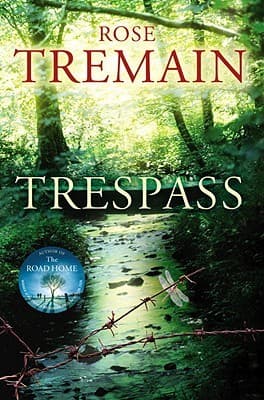
Rose Tremain (2010)
Genre
Literary Fiction / Thriller / Mystery
Reading Time
300 min
Key Themes
See below
Sign in to track this book
An Englishman's desire for a neglected French farmhouse unearths buried family secrets and resentments, threatening to destroy everyone involved.
Anthony Verey, a successful but tired London antiques dealer, arrives in the Cévennes region of France looking for a rural escape. He finds the isolated and ancient stone farmhouse, Mas Lunel, and is immediately drawn to its desolate beauty. The Mas belongs to Aramon, a man scarred by a traumatic past, who lives in neglect, letting his hunting dogs starve and the property fall apart. His sister, Audrun, lives nearby in a modern bungalow and resents Aramon and her life's perceived injustices, fueling a desire for vengeance. Anthony, unaware of the tension, asks about buying the property, starting a chain of events that will unravel everyone's lives.
Anthony Verey's first attempts to buy Mas Lunel face resistance and confusion because of Aramon's reclusiveness and the property's unclear legal status. Audrun, Aramon's sister, quickly sees an opportunity. She befriends Anthony, acting as a helpful go-between, while subtly manipulating the situation. She gives Anthony carefully chosen information about Aramon's instability and the Mas's history, hinting at secrets and difficulties that make the sale seem more complicated. Audrun's main goal is to get a large part of the sale price for herself, believing it is her due for a lifetime of perceived slights and sacrifices, and to punish Aramon.
As Anthony continues to pursue the Mas, the dark history of the property and its inhabitants slowly emerges. Aramon's catatonic state and inability to care for himself come from a childhood trauma. It is gradually revealed that Aramon witnessed his mother's brutal murder by his father, who then killed himself. This horrific event, which happened inside the Mas, has left Aramon deeply scarred, making him unable to process the past or engage with the present. The house itself becomes a silent witness to this tragedy, filled with the lingering echoes of violence and grief that have defined Aramon's life.
Audrun's manipulative nature is further shown through her cruel treatment of Aramon's hunting dogs. She deliberately withholds food and water from them, letting them starve, an act that shows her deep animosity towards her brother. She then uses the dogs' emaciated state to support her story to Anthony, portraying Aramon as completely incapable and irresponsible, reinforcing the idea that he is unfit to own the Mas. Audrun calculates that by showing Aramon's perceived neglect, she can strengthen Anthony's resolve to buy the property and solidify her position as the only rational and capable person in the transaction, while ensuring Aramon suffers.
Despite his initial excitement for the Mas Lunel, Anthony Verey starts to feel uneasy. Audrun's intense gaze, her possessive manner, and her increasingly demanding presence begin to disturb him. He finds her constant interference and thinly veiled animosity towards Aramon unsettling. The isolated valley, initially a haven, now feels oppressive, and the silence seems charged with unspoken history and tension. Anthony, used to the sophisticated world of antiques, finds himself increasingly caught in the raw, unresolved emotional landscape of the Mas and its inhabitants, questioning if buying it is a good idea.
Anthony, driven by a nagging suspicion and his growing discomfort with Audrun, starts to put the truth together. He learns that Audrun has been systematically poisoning Aramon's life, not only by neglecting his dogs but also by withholding financial support and isolating him. He discovers that her seemingly helpful actions were always designed to benefit herself and get revenge on her brother. The full extent of her cruelty and her long-standing desire for retribution becomes clear to Anthony, revealing her as a far more sinister figure than he first thought. This revelation shatters his trust in her and exposes the depth of the family conflict.
Despite his almost catatonic state, Aramon has brief moments of clarity. During these short periods, he shows a flicker of awareness, a glimpse into the profound pain and trauma that have paralyzed him. He might utter a fragmented word or make a symbolic gesture, hinting at the buried memories of his parents' deaths. These moments are poignant, revealing the intelligent and sensitive man trapped beneath layers of psychological damage. They also humanize Aramon for Anthony, changing him from a mere obstacle to a deeply suffering individual, further complicating Anthony's moral dilemma about buying the Mas.
Armed with the knowledge of Audrun's deceit, Anthony Verey finally confronts her. The confrontation is tense and charged, with Audrun initially denying everything before her anger and resentment erupt. The future of the Mas Lunel, and Aramon's fate, hangs in the balance. Anthony faces a moral choice: proceed with the purchase, knowing it would effectively dispossess a deeply traumatized man, or withdraw and leave Aramon vulnerable to Audrun's continued malice. The climax forces Anthony to choose between his personal desire for the property and a newfound sense of responsibility towards Aramon.
Following the intense confrontation, Aramon, perhaps sensing the upheaval or stirred by an instinct for survival, manages to escape the Mas Lunel. His disappearance adds another layer of complexity, leaving his whereabouts unknown and his future uncertain. Faced with this new development and the full understanding of Audrun's malevolence and Aramon's profound suffering, Anthony Verey makes a key decision. He withdraws his offer to buy the Mas, realizing that his desire for the property cannot justify the further disruption and potential harm it would inflict on Aramon. He recognizes that the Mas is deeply linked to Aramon's trauma.
In the aftermath, the Mas Lunel remains unsold, a silent, powerful reminder of unresolved traumas and past conflicts. Aramon's fate is unclear, his escape symbolizing a fragile hope for freedom from his past, or perhaps a descent into further isolation. Audrun is left to deal with the results of her failed schemes, her vindictive desires ultimately unfulfilled. Anthony Verey leaves the valley, giving up his dream of owning the Mas. He is deeply changed by his encounter with the raw human suffering and deep-seated animosity he witnessed, his initial desire for an idyllic escape replaced by a sober understanding of the past's lasting power.
The Protagonist
Anthony transforms from a detached observer seeking personal fulfillment into a morally engaged individual who prioritizes compassion over desire.
The Supporting
Aramon remains largely static in his trauma but experiences a brief, instinctual escape, hinting at a glimmer of agency.
The Antagonist
Audrun's arc is one of escalating malice, ultimately ending in her frustration and failure to achieve her vengeful goals.
The Supporting/Setting
The Mas remains a static, powerful symbol, its fate reflecting the unresolved human conflicts it contains.
The Mentioned/Symbolic
Their suffering remains constant, serving as a catalyst for Anthony's understanding of the situation.
The Mentioned
Her influence remains static, a fixed point of trauma.
The Mentioned
His impact is a fixed point of violence and its enduring consequences.
The novel shows how past traumas shape and dictate present lives. Aramon's entire existence is defined by the childhood horror of witnessing his mother's murder and father's suicide inside the Mas Lunel. This event has made him almost catatonic, unable to function. The house itself becomes a container of this trauma, its decaying state mirroring Aramon's internal collapse. Audrun's resentment, too, is rooted in perceived past injustices, showing how even secondary experiences of trauma can fester and lead to destructive behavior. The past is not just remembered; it actively 'trespasses' on the present.
“He knew that what had happened in the Mas Lunel had happened a long time ago, but for Aramon, it was still happening.”
Greed and vengeance are Audrun's main motivations, driving much of the plot's conflict. She wants financial gain from the Mas's sale, believing it is her rightful due, and also seeks to punish Aramon for a lifetime of perceived slights and sacrifices. Her actions, from neglecting the dogs to manipulating Anthony, are carefully planned to achieve both goals. This theme highlights the destructive nature of these emotions, showing how they can blind individuals to morality and lead to cruelty, ultimately leaving her unfulfilled.
“Audrun saw the Mas not as a home, but as a ledger, a place where debts were owed to her.”
Beyond individual trauma, the novel explores the burden of the past on places and families. The Mas Lunel is not just an old house; it is steeped in generations of history, secrecy, and violence. Its stones seem to absorb and emanate the events that happened within its walls. The family's inability to reconcile with or escape their history creates a closed, toxic environment. Anthony's arrival, an outsider seeking a fresh start, accidentally stirs this dormant past, bringing its ugly truths into the open and showing that some histories are too heavy to simply be bought and sold.
“The Mas Lunel had its own memory, a deep, silent memory that held fast to every scream and every tear.”
Isolation is a central theme, shown in the physical remoteness of the Mas Lunel and the emotional detachment of its inhabitants. Aramon is deeply isolated by his trauma, living in a world of internal suffering. Audrun, though living nearby, is isolated by her bitterness and resentment, unable to form genuine connections. Anthony Verey initially seeks isolation as an escape, but his journey teaches him the importance of human connection and moral responsibility. The novel suggests that while isolation can offer peace, it can also foster decay and malice, and that genuine connection, however difficult, is essential for healing or moral clarity.
“The valley held its secrets close, and its inhabitants even closer.”
The isolated farmhouse functions as a central repository of history, trauma, and conflict.
The Mas Lunel is not merely a backdrop but a crucial plot device. Its isolation and dilapidated state immediately establish a sense of mystery and decay. As a physical space, it literally contains the evidence of past trauma (Aramon's parents' deaths) and becomes the focal point of the characters' desires and conflicts. Its potential sale drives the narrative, while its inherent 'memory' and atmosphere act as a constant, subtle force influencing character actions and revelations. The house itself becomes a character, embodying the themes of the past's enduring power and the burden of history.
The story is primarily filtered through Anthony's limited perspective, initially obscuring the full truth.
While not strictly an unreliable narrator, the novel frequently uses Anthony Verey's limited perspective to control the flow of information and build suspense. Anthony, as an outsider, initially perceives Audrun as helpful and Aramon as merely incompetent. The reader's understanding of events and characters is filtered through his evolving realizations. This device allows for gradual revelations about Audrun's true nature and Aramon's past, creating a sense of unfolding mystery and surprise. It mirrors Anthony's journey from naive observer to someone more aware of the complex, dark realities.
Aramon's neglected hunting dogs symbolize his profound despair and Audrun's malicious intent.
The starving hunting dogs serve as a potent symbolic plot device. Their emaciated state immediately conveys Aramon's profound neglect and his deep psychological incapacitation. More significantly, Audrun's deliberate withholding of food from them is a clear, visceral demonstration of her cruelty and her active desire to cause her brother suffering. The dogs' plight acts as a tangible manifestation of the moral decay and malice permeating the Mas, and their suffering directly impacts Anthony's perception of both Aramon and Audrun, driving his growing unease and eventual understanding of the truth.
Gradual revelations of past violent events drive the plot's mystery and character motivations.
The novel uses a slow, piecemeal revelation of past events, particularly the violent deaths of Aramon's parents, as a key plot device. These 'flashbacks' or historical disclosures are not presented chronologically but are unveiled through fragmented memories, Audrun's manipulative accounts, and Anthony's investigations. This gradual uncovering of the past serves to build suspense, explain Aramon's catatonic state, and expose the deep-seated motivations behind Audrun's actions. The past is not merely recounted; it actively intrudes on the present, dictating the characters' choices and the story's direction.
“The past is a country from which we are constantly being deported, and yet we keep trying to find our way back.”
— A reflection on memory and the inescapable pull of history.
“Fear has a way of making the familiar seem utterly alien, even dangerous.”
— Describing the psychological impact of growing anxiety.
“It’s not just the things you do, but the things you don’t do, that define you.”
— A character contemplating the weight of their inaction and choices.
“Silence, when it’s truly deep, can be louder than any scream.”
— Referring to the oppressive quiet in a tense or isolating situation.
“Grief is a landscape you have to walk through, not around.”
— A character grappling with profound loss.
“Secrets are like seeds; once planted, they grow in unexpected directions.”
— Highlighting the unforeseen consequences of hidden truths.
“The greatest prison is often the one we build for ourselves, brick by brick, with our own thoughts.”
— A character's internal struggle with self-imposed limitations.
“Sometimes, the most ordinary places hide the most extraordinary darkness.”
— Pondering the sinister undercurrents in seemingly normal settings.
“Love, in its purest form, is also a kind of trespass.”
— Exploring the intrusive and boundary-crossing nature of deep affection.
“The truth is rarely simple, and never truly sets you free without first tearing something down.”
— A character facing a difficult revelation.
“We all carry ghosts, whether we admit it or not. They whisper in our ears, guide our steps.”
— A reflection on the enduring influence of past experiences and people.
“To forgive is not to forget, but to remember differently.”
— A character's journey towards processing past wrongs.
“The wind carries stories, if you only know how to listen.”
— A more poetic observation about the lingering presence of history in a place.
“Every house has a heart, and sometimes that heart beats with a terrible secret.”
— Referring to the hidden lives and histories within a seemingly ordinary dwelling.
Ready to see how well you understood this book? Take our interactive quiz with 10 questions.







