“You could not be a good man, even, if you did not believe in a good God.”
— Skip Sands reflects on morality and faith amidst the Vietnam War.


Denis Johnson (2007)
Genre
Literary Fiction / Thriller / Historical Fiction / Mystery
Reading Time
900 min
Key Themes
See below
Sign in to track this book
In the chaos of the Vietnam War, a new spy navigates a maze of lies and delusion, seeking meaning amidst the moral decay and psychological operations run by his uncle.
In 1963, Skip Sands, a young CIA operative in training for Psychological Operations (PSYOPs), arrives in the Philippines, assigned to work under his uncle, Colonel Sands. The Colonel is a legendary intelligence figure, known for his unconventional and often morally vague methods. Skip's first assignment involves a radio station, but he quickly realizes he is part of a larger, more secret network. He meets other operatives like Kathy Jones and Trung, and begins to understand the web of misinformation and manipulation that defines his uncle's world, where truth and fiction constantly blur. Skip wants to prove himself but also feels uneasy about their mission.
Meanwhile, the story introduces the Houston brothers, Bill and James, two young men from Arizona. Bill, the elder, is a former Marine, haunted by his past and struggling with drug addiction. James is a naive youth. They find themselves in Southeast Asia, moving from one odd job to another, looking for belonging or purpose. James eventually takes a job as a houseboy for a CIA operative, exposing him to the edges of the intelligence world without fully understanding it. Bill, on the other hand, gets involved with a group of mercenaries and black marketeers, further pulling him into the war's underworld, driven by a need for money and an escape from his inner demons.
Skip becomes more involved in the Colonel's most ambitious and ethically questionable project: creating a 'shaman' or 'oracle' to influence local populations in Vietnam. This involves using psychological manipulation, drugs, and staged supernatural events. The main subject is a young Vietnamese man named Trung, who is prepared to become the oracle. Skip, initially skeptical, finds himself drawn into the elaborate deception, seeing the power and danger of psychological warfare. He deals with the moral implications of their actions, especially as Trung's mental state seems to worsen under the pressure and manipulation, blurring the lines between performance and real delusion.
A major operation, code-named 'Hades,' is launched to spread misinformation and destabilize the Viet Cong. Skip is a key participant, but the operation is far more complex and chaotic than expected. Its success is doubtful, and its unintended consequences begin to affect those involved. The mission exposes the deep flaws and dangers of the Colonel's strategies. This period is a turning point for Skip, who sees the brutal realities of war and the devastating impact of their psychological games, leading to a growing sense of disillusionment and moral compromise. He begins to question the effectiveness and ethics of everything he has learned.
Bill Houston's path continues to decline. His drug addiction worsens, and he becomes more deeply involved with a violent group of mercenaries operating in the war's shadows. He participates in illegal activities, including smuggling, driven by a desperate need for money and a craving for the oblivion drugs provide. His moral compass erodes, and he often finds himself in dangerous situations, narrowly escaping death. His relationship with his brother James becomes strained as James tries to pull him back, but Bill seems determined to self-destruct amidst the conflict's chaos.
The Colonel, a central figure whose influence affects every part of the story, eventually dies. His death is ambiguous, reflecting the secretive nature of his life and operations. It is unclear if he was killed in action, betrayed, or simply succumbed to the pressures of his own elaborate schemes. His death leaves a significant void and impacts the intelligence community, forcing Skip and others to re-evaluate their positions and the Colonel's legacy. His absence also removes a key guiding force, leaving Skip to navigate the treacherous war with even less direction.
After losing contact with Bill, James Houston begins a desperate and dangerous journey across Southeast Asia to find his brother. His search takes him through war zones, refugee camps, and illicit underworlds, exposing him to the brutal realities of the conflict and widespread human suffering. James, initially naive, is forced to confront the harshness of the world, maturing quickly through his experiences. He meets various characters, some helpful, some dangerous, all of whom contribute to his growing understanding of the war's complexities and its deep human cost. His persistence is driven by a profound brotherly love and a refusal to give up on Bill.
Disillusioned and haunted by Operation Hades and the Colonel's death, Skip Sands withdraws from active duty. He finds refuge in a remote, isolated village in Vietnam, trying to distance himself from the psychological warfare he once orchestrated. In this solitude, he grapples with the moral weight of his past actions, the manipulation he engaged in, and the human cost of the war. He tries to find peace or understanding, but the ghosts of his experiences continue to haunt him. This period is marked by introspection, a search for meaning, and a deep sense of exhaustion and moral fatigue.
The separate paths of Skip Sands and the Houston brothers begin to meet. James, still searching for Bill, eventually crosses paths with individuals connected to Skip's former operations. The web of relationships and consequences from the Colonel's projects and Operation Hades draws them closer. While not a direct meeting for all characters, their stories intertwine through shared experiences, mutual acquaintances, and the war's lasting effects. This convergence shows how seemingly separate lives are connected in the vast, destructive machinery of conflict, demonstrating how individual actions have far-reaching and unforeseen consequences.
As the war moves towards its end, the characters are left to deal with its lasting impact. Skip continues his solitary existence, forever marked by his involvement in PSYOPs. Bill Houston, if he survives, is changed by his addiction and experiences in the underworld. James carries the burden of his search and the horrors he witnessed. The novel emphasizes that even when the physical fighting ends, the psychological and moral 'war' continues within each individual. The characters are left with trauma, disillusionment, and a deep understanding of human capacity for both cruelty and resilience amidst chaos.
The Protagonist
Skip transforms from an eager, if naive, recruit into a disillusioned, morally scarred individual haunted by the consequences of his actions and the war itself.
The Antagonist/Supporting
The Colonel remains largely static in his conviction, but his 'game' ultimately unravels, leading to his ambiguous demise, leaving a destructive legacy.
The Supporting
Bill's arc is one of deepening addiction and moral compromise, reflecting the corrosive effects of war and personal trauma.
The Supporting
James undergoes a profound coming-of-age, losing his innocence and gaining a grim understanding of the world through his search for Bill and exposure to the war.
The Supporting
Kathy evolves from a committed operative to a jaded survivor, marked by the disillusionment of the war and her involvement in its darker aspects.
The Supporting
Trung's arc is one of tragic manipulation and mental deterioration, becoming a symbol of the war's destructive impact on individuals.
The Mentioned/Supporting
The Librarian's role is static, serving as a symbolic representation of the information war.
The Supporting
Chang maintains his professional demeanor throughout, serving as a constant presence in the intelligence operations.
The novel constantly blurs truth and deception, especially in psychological warfare. Skip Sands is trained to create and spread misinformation, making him question reality. The Colonel's 'oracle' project, which manipulates a young man named Trung into believing he is a shaman, shows how easily beliefs can be manufactured and exploited. This theme appears in every character's struggle to tell what is real amidst the war's chaos and propaganda, showing how psychological operations not only deceive the enemy but also corrupt those who use them, leading to moral and existential crises.
“Once upon a time there was a war . . . and a young American who thought of himself as the Quiet American and the Ugly American, and who wished to be neither, who wanted instead to be the Wise American, or the Good American, but who eventually came to witness himself as the Real American and finally as simply the Fucking American. That’s me.”
Denis Johnson portrays the devastating impact of war, not just physically but morally and psychologically. The characters are all scarred by their involvement, whether directly in combat or in clandestine intelligence. Bill Houston's drug addiction and moral decline are a direct result of his experiences, while Skip Sands deals with guilt and disillusionment over the manipulation he orchestrates. The novel shows how war strips away innocence, blurs ethical lines, and leaves lasting marks on the human psyche, forcing individuals to confront their darkest capacities and the futility of their actions. The landscape of Southeast Asia itself reflects the turmoil within the human soul.
“He knew that if he could just get out of this war, he would never be the same. He would be someone else, someone he didn't know yet.”
Amidst the chaos and moral uncertainty, many characters search for meaning, purpose, or a stable identity. Skip Sands initially seeks to be the 'Wise American,' but his experiences force him to confront a more brutal reality. The Houston brothers, Bill and James, drift into the war, each looking for something to anchor them – Bill in the oblivion of drugs, James in loyalty to his brother. The war, instead of providing answers, often removes existing identities, leaving characters adrift. This theme explores the human need for belonging and understanding, even when faced with overwhelming destruction and loss of self.
“He was a man who had lost his way, and the war was just a bigger version of his own lostness.”
A deep sense of spiritual despair fills the novel, as characters deal with their actions in a world without a clear moral compass. Many seek solace or redemption, whether through fleeting connections, drug-induced stupors, or a desperate hope for divine intervention. Skip's internal struggle is spiritual, as he questions good and evil in his work. Bill's addiction is a form of self-punishment and an attempt to escape his inner demons. The novel suggests that while redemption might be hard to find, the search for it, even in the darkest places, is a fundamental human drive, often seen through suffering and a yearning for grace.
“He saw God in the faces of the dying, and he saw God in the faces of the killers, and he saw God in the faces of those who merely watched.”
The novel highlights the absurdity and often counterproductive nature of the large military and intelligence bureaucracy during wartime. Operations, like the Colonel's 'oracle' project or 'Hades,' are planned but often descend into chaos, showing the futility of trying to control unpredictable human elements and external forces. The endless reports, coded messages, and layers of command create a system that is both rigid and fractured, ultimately failing to grasp the realities on the ground. This theme underscores the disconnect between strategic planning and the messy, human experience of war, revealing how attempts at absolute control often lead to greater disorder and unforeseen consequences.
“The war was a machine, and they were all just cogs, grinding away at nothing.”
The story jumps through time and perspectives, reflecting the fragmented nature of memory and war.
The novel employs a non-linear narrative structure, moving back and forth in time and shifting between the perspectives of various characters. This fragmentation mirrors the disorienting experience of war and the subjective nature of memory. It allows Johnson to reveal information gradually, building suspense and forcing the reader to piece together the complex tapestry of events. This device also emphasizes the lasting impact of past events on the present, showing how characters are perpetually haunted by their history and the unresolved traumas of the conflict, making the narrative itself a reflection of the characters' psychological states.
The story is told through the eyes of various characters, offering a kaleidoscopic view of the war.
By shifting between the viewpoints of Skip Sands, the Houston brothers, Kathy Jones, and others, the novel provides a multifaceted and often contradictory understanding of the Vietnam War and its psychological operations. This device prevents a singular, authoritative interpretation of events, reflecting the inherent ambiguity and moral complexity of the conflict. It allows the reader to witness the same events from different angles, highlighting how individual experiences and beliefs shape perception, and underscoring the novel's theme of the elusive nature of truth in a world saturated with deception and personal biases.
The central plot driver, using deception and manipulation as weapons.
PSYOPs are not merely a backdrop but a core plot device, driving much of the narrative and character development. The detailed descriptions of how psychological warfare is conceived, planned, and executed—from the creation of false narratives to the manipulation of individuals like Trung—serve to illustrate the novel's central themes of truth, deception, and moral corrosion. This device highlights the insidious nature of a war fought not just with bullets but with minds, and how the very act of manipulating reality can destroy the manipulators themselves, blurring their own sense of what is real and ethical.
A recurring, enigmatic image representing the elusive nature of truth and the pervasive influence of the unseen.
While not explicitly named as a physical object, the 'Tree of Smoke' functions as a powerful symbolic device throughout the novel. It evokes images of obscured vision, ephemeral existence, and the lingering, almost spiritual, residue of conflict and deception. Smoke obscures, distorts, and eventually dissipates, much like the truths and lies within the narrative. The 'tree' aspect suggests roots, deep-seated origins, and an organic, pervasive influence. It represents the pervasive, intangible effects of war and psychological manipulation, suggesting that even after the flames die down, the 'smoke' of its consequences and the 'tree' of its origins continue to cast a long, shadowy presence over the characters' lives and the historical landscape.
A specific, elaborate psychological operation that serves as a microcosm of the war's deceptions.
The Colonel's project to create an 'oracle' or 'shaman' out of Trung is a crucial plot device. It is a highly specific, detailed example of psychological warfare that acts as a microcosm for the larger themes of the novel. This elaborate deception allows Johnson to explore the ethical boundaries of manipulation, the power dynamics between colonizer and colonized, and the devastating impact on the individual (Trung) who becomes a pawn in a larger game. It serves as a concrete manifestation of the novel's exploration of manufactured reality, the exploitation of belief systems, and the ultimate futility and moral cost of such operations.
“You could not be a good man, even, if you did not believe in a good God.”
— Skip Sands reflects on morality and faith amidst the Vietnam War.
“He knew that the world was still out there, that it had not ended, but it was just as if it had.”
— A character experiences the profound disorientation and trauma of war.
“What they were doing was playing a game, and the game was called being alive.”
— Reflecting on the nature of existence and survival in extreme circumstances.
“The past was a country from which you could never entirely emigrate.”
— A character grapples with the inescapable influence of past events.
“”
— A stark observation about the inherent brutality and lack of purity in conflict.
“”
— A character's sense of detachment and powerlessness.
“”
— The overwhelming and consuming nature of the Vietnamese jungle, both physically and psychologically.
“”
— Highlighting the personal and internal struggles that accompany external conflict.
“”
— Reflecting on the elusive nature of truth amidst espionage and uncertainty.
“”
— Describing a character's profound sense of unreality and impending doom.
“”
— Exploring the paradoxical path to self-discovery through disorientation.
“”
— A character's self-perception of inadequacy and struggle with life.
“”
— Describing the pervasive and visceral experience of fear in a dangerous environment.
Ready to see how well you understood this book? Take our interactive quiz with 10 questions.
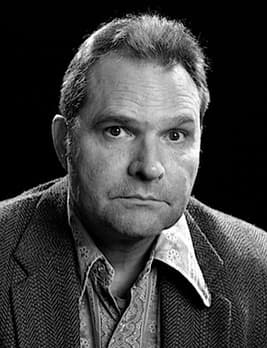
Denis Hale Johnson was an American novelist, short-story writer, and poet. He is perhaps best known for his debut short story collection, Jesus' Son (1992). His most successful novel, Tree of Smoke (2007), won the National Book Award for Fiction. Johnson was twice shortlisted for the Pulitzer Prize for Fiction. Altogether, Johnson was the author of nine novels, one novella, two books of short stories, three collections of poetry, two collections of plays, and one book of reportage. His final work, a book of short stories titled The Largesse of the Sea Maiden, was published posthumously in 2018.







