“Every word a tiny funeral.”
— A recurring thought about the act of removing words from the original text.

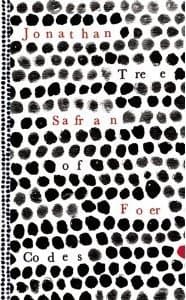
Jonathan Safran Foer (2010)
Genre
Literary Fiction / Creativity
Reading Time
139 min
Key Themes
See below
Sign in to track this book
Jonathan Safran Foer carves a new story from Bruno Schulz's *The Street of Crocodiles*, creating a physical book that explores the universal anxiety of life's final day.
The story begins with the unnamed protagonist waking up, feeling an inexplicable emptiness. He describes losing something vital, though he cannot say what it is. His father is present, but his presence is unsettling and fragmented, almost a ghost. The protagonist deals with the feeling that his father is both there and not there, and that his own identity is tied to this spectral figure. He questions his own existence and memory, sensing that something fundamental has been erased or altered, leaving him with a deep anxiety about the day ahead and his life's meaning.
Driven by an urgent need, the protagonist sets out to find his father, who seems to have vanished or become elusive. The city he navigates is surreal and decaying, filled with crumbling buildings and a sense of impending collapse. It is a labyrinthine space where familiar landmarks are distorted, and time itself seems fluid and fragmented. He encounters fleeting, indistinct figures and memories, all adding to the disorienting atmosphere. This search is not just physical; it is a quest for understanding, for a severed connection, and for a truth about his past and his father's being.
As the protagonist continues his search, he is assailed by vivid, yet often unsettling, memories of his childhood. These are not clear recollections but fragmented images and sensations: a specific room, a gesture from his mother, a forgotten toy. These memories are often tinged with sadness or a sense of foreboding, suggesting a past that is both cherished and traumatic. The line between what is real and what is imagined becomes increasingly blurred, as the city itself seems to manifest these internal landscapes. He feels a constant pull towards something he cannot fully grasp, a yearning for a clarity that remains just out of reach.
The central struggle for the protagonist is confronting absence. His father's physical presence is sporadic and often intangible, symbolizing a deeper, emotional or spiritual void. This absence extends to other parts of his life; he feels incomplete, a missing piece within himself. The story explores how absence shapes identity, how it can be a stronger presence than physical proximity. He considers memory and forgetting, and how things lost or unspoken continue to influence his present state and his perception of the world.
The city itself acts as a metaphor for the protagonist's internal state. Buildings are constantly described as crumbling, dissolving, or transforming, reflecting his fragmented memories and sense of identity. Streets are impassable, and familiar spaces become alien. This physical decay is not just background; it actively contributes to the story, creating an atmosphere of instability and impermanence. The protagonist navigates this collapsing world, his own steps echoing the disintegration around him, reinforcing the feeling that everything he knows, including himself, is about to disappear.
At various points, the protagonist encounters a mysterious 'other' figure, whose identity is ambiguous. This figure might be a distorted reflection of himself, a manifestation of his subconscious, or another lost soul wandering the decaying city. Their interactions are often brief, cryptic, and unsettling, marked by a shared sense of loss and confusion. These encounters deepen the protagonist's introspection, forcing him to confront aspects of himself he might prefer to ignore. The 'other' acts as a mirror, reflecting his anxieties and his fragmented understanding of his own existence and purpose within this surreal landscape.
Time in the story is not linear but subjective and oppressive. The protagonist experiences moments that stretch endlessly, while others vanish quickly. The idea of 'a last day' is central, yet the day itself seems to loop and fragment, making it impossible to know its true duration. This distortion of time adds to the pervasive sense of anxiety and disorientation. The past constantly intrudes upon the present, and the future feels both inevitable and perpetually out of reach, trapping the protagonist in a perpetual state of 'what if' and 'what was' without clear resolution.
A major theme throughout the story is the struggle with communication, or rather, the lack thereof. The protagonist often feels he has important things to say to his father, or to others, but the words remain unspoken, or are lost, or simply cannot bridge the gap between internal experience and external expression. This inability to articulate deep feelings contributes to his isolation and despair. The gaps in the text, literal and metaphorical, highlight the difficulty of conveying complex emotions and memories, leaving much to the reader's interpretation and the protagonist's silent suffering.
Despite the overwhelming sense of decay and loss, the protagonist is driven by a quest for meaning. He questions why he is experiencing this 'last day,' what purpose it serves, and what, if anything, will remain. This search for meaning is not presented as hopeful but as a desperate, almost futile, attempt to impose order on a chaotic existence. He scrutinizes every detail, every fleeting image, hoping to find a clue that will unlock the deeper significance of his fragmented reality and the strange, haunting journey he is undertaking.
Towards the end, the story hints at a perpetual cycle rather than a clear resolution. The 'last day' doesn't necessarily conclude with a clear end but rather seems to loop back or dissolve into an ongoing state. The protagonist's experiences of loss, confusion, and searching appear to be recurring, suggesting that true escape from his internal and external struggles might be impossible. This cyclical nature reinforces the book's themes of memory, trauma, and the enduring impact of the past, leaving the reader with a sense of unresolved, perhaps eternal, melancholy.
The Protagonist
The protagonist's arc is less about traditional development and more about an intensification of his internal struggle, culminating in a deeper, though unresolved, understanding of loss and the cyclical nature of existence.
The Supporting/Symbolic
The father's 'arc' is static, serving as a constant, yet shifting, anchor for the protagonist's internal journey, embodying the enduring presence of absence.
The Antagonist/Setting
The city's 'arc' is one of continuous decay and transformation, mirroring the protagonist's deepening descent into his fragmented consciousness.
The Supporting/Symbolic
The Other's 'arc' is static, serving as a recurring, enigmatic presence that highlights the protagonist's isolation and internal struggles.
The most pervasive theme is the profound sense of loss and the haunting presence of absence. The protagonist deals with losing something vital, though he cannot name it. His father is an absent presence, a spectral figure embodying what is missing. This theme extends to the decaying city, where familiar structures are gone or dissolving, mirroring the protagonist's internal void. The book explores how absence can be more impactful than presence, shaping identity and perception. For example, the protagonist's constant search for his father is a search for a void, a connection that is fundamentally missing, as seen in the fragmented encounters.
“I was empty. I felt as if I had lost something, but I didn't know what it was.”
The story explores the fragile and unreliable nature of memory and its link to identity. The protagonist's past is a collection of fragmented, often distorted, recollections. He struggles to piece together who he is in the face of these elusive memories, particularly concerning his father. The blurring of past and present, and the constant questioning of what is real versus imagined, highlights how identity is not fixed but a fluid construct dependent on often unreliable internal narratives. The decaying city itself mirrors this fragmentation, as familiar places become unrecognizable, challenging the protagonist's sense of self and belonging.
“My memory was like a broken mirror, reflecting only pieces.”
The book constantly blurs the lines between reality, dream, and hallucination. The city is surreal and constantly transforming, challenging the protagonist's perception of his surroundings. Events unfold in a non-linear, disorienting way, making it difficult to tell what is actually happening versus what is an internal experience. This theme explores how subjective reality is, especially under stress or strong emotional states. The protagonist's journey is as much an internal landscape as it is a physical one, forcing the reader to question the fabric of the world presented and the reliability of the narrator's perceptions, as seen in the constantly shifting architecture and the spectral figures.
“The city was dissolving, like a dream that melts when you try to grasp it.”
The story is deeply imbued with the lingering weight of the past, suggesting an unresolved trauma that underpins the protagonist's 'last day.' While never explicitly stated, the fragmented memories of his father and family, the sense of an unfixable wrong, and the pervasive melancholy point to a past event or condition that continues to exert a powerful influence. The decaying city can be seen as a manifestation of this internal trauma, crumbling under the burden of history and unspoken pain. The protagonist's inability to fully grasp his past or communicate his deepest feelings highlights the enduring, oppressive nature of unaddressed psychological wounds.
“A silence had grown between us, vast and unbridgeable, a silence that held all the unsaid things.”
The literal holes cut into the pages of the book.
The most prominent plot device, the die-cut text, is integral to the book's meaning. By physically removing words and phrases from Bruno Schulz's 'The Street of Crocodiles,' Foer creates a new narrative. These 'holes' symbolize absence, memory gaps, and the unspoken. They force the reader to actively engage in filling in the blanks, mirroring the protagonist's own struggle to make sense of his fragmented memories and the elusive presence of his father. The physical act of reading through the cuts emphasizes the theme of what is lost and what remains, and how meaning can be found in what is deliberately omitted.
A narrative style that mimics the protagonist's unfiltered thoughts and feelings.
The narrative employs a stream of consciousness style, immersing the reader directly into the protagonist's fragmented and anxious mind. This device allows for a highly subjective experience of the story, reflecting the protagonist's internal turmoil, his non-linear memories, and his disoriented perception of reality. Thoughts, observations, and feelings blend without clear transitions, mirroring the dreamlike quality of the narrative and the protagonist's struggle to maintain coherence. This style creates an intimate, yet often confusing, connection with the protagonist's deeply personal and unsettling journey.
The decaying, surreal city functions as a metaphor for the protagonist's internal state.
The city is not merely a backdrop but a powerful symbolic setting. Its constant state of decay, fragmentation, and transformation directly mirrors the protagonist's internal landscape of loss, fragmented memories, and psychological disarray. Buildings crumble, streets dissolve, and familiar spaces become alien, reflecting the protagonist's eroding sense of self and the unreliability of his reality. The city amplifies the themes of impermanence, trauma, and the impossibility of finding solid ground, making the external environment an active participant in the protagonist's internal struggle for meaning and connection.
The narrator's reliability and the nature of the events are left deliberately unclear.
The narrative maintains a high degree of ambiguity, particularly regarding the reliability of the protagonist's perceptions and the objective reality of the events. It is unclear if the 'last day' is literal, metaphorical, a dream, or a hallucination. The identities of other characters, especially the father and the 'other' figure, are also left vague. This ambiguity forces the reader to inhabit the protagonist's confused state, challenging them to interpret the meaning without clear answers. It reinforces the themes of memory's unreliability and the subjective nature of truth, making the reading experience an act of constant interpretation.
“Every word a tiny funeral.”
— A recurring thought about the act of removing words from the original text.
“I was looking for a way to say goodbye to something I hadn't yet said hello to.”
— Reflecting on the nature of anticipation and pre-emptive grief.
“The past is a foreign country; they do things differently there.”
— A direct quote from L.P. Hartley's 'The Go-Between' that Foer uses by carving it out, highlighting intertextuality.
“Some things are too important to be true.”
— A paradoxical statement about the nature of belief and significance.
“I wanted to make a book that was also a sculpture.”
— Foer's stated artistic intention behind the physical creation of 'Tree of Codes'.
“The story is not in the words, but in the spaces between them.”
— A meta-commentary on how the book's meaning is derived from what is removed and what remains visible.
“To forget is to remember.”
— A concise paradox about the relationship between memory and forgetting.
“The world is not what it is, but what it has become.”
— A philosophical reflection on the evolving nature of reality and perception.
“A book is never finished, only abandoned.”
— An idea about the continuous potential for interpretation and re-creation of a text.
“What is left is more powerful than what was there.”
— A core principle of the book's creation, arguing for the strength of absence and suggestion.
“The absence of a thing is a thing itself.”
— Emphasizing the tangible nature of what is missing or removed.
“Every reader completes the book.”
— Highlighting the active role of the reader in constructing meaning from the fragmented text.
“This is a story about what remains.”
— A self-referential statement about the book's central theme of distillation and endurance.
Ready to see how well you understood this book? Take our interactive quiz with 10 questions.

Jonathan Safran Foer is an American novelist. He is known for his novels Everything Is Illuminated (2002), Extremely Loud & Incredibly Close (2005), Here I Am (2016), and for his non-fiction works Eating Animals (2009) and We Are the Weather: Saving the Planet Begins at Breakfast (2019). He teaches creative writing at New York University.







