“It is not the things that happen to us that make us happy or unhappy, but the way we take them.”
— Annette learns about resilience and perspective from her grandmother.

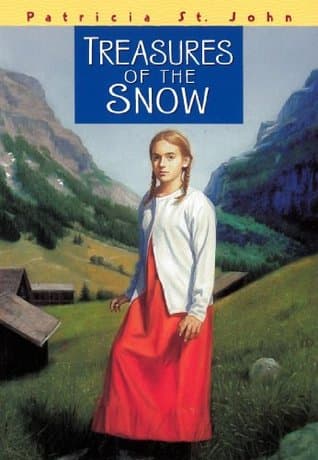
Patricia St. John (2001)
Genre
Children's / Historical Fiction / Young Adult
Reading Time
240 min
Key Themes
See below
Sign in to track this book
In a snow-dusted Swiss village, childhood revenge leads to a devastating accident. Two young enemies must confront their rage and find forgiveness through Christ amidst the unforgiving Alps.
In a small Swiss mountain village, Annette Burnier, a spirited but often unkind girl, plays a prank on Lucien, a quiet and sensitive boy, by hiding his lunch. Lucien, annoyed and hungry, retaliates by chasing Annette's younger brother, Dani, with a snowball down a steep path. Dani, only five years old, slips on the icy path near the Burnier's cottage and falls over a cliff edge. He is found alive but severely injured, paralyzed from the waist down. The accident shatters the Burnier family's peace and fills Annette with a burning hatred for Lucien, whom she blames for her brother's condition. The entire village knows about the tragedy and the animosity between the two children.
After Dani's accident, Annette dedicates herself to making Lucien's life miserable. She spreads rumors, openly mocks him, and encourages other children to shun him. She constantly reminds him of his role in Dani's paralysis, often within earshot of others, ensuring he feels the full weight of his guilt. Lucien, already a timid boy, retreats further into himself. He is plagued by nightmares and a deep sense of responsibility for Dani's condition. His parents, though sympathetic, struggle to help him, and his isolation deepens as Annette's cruel campaign ostracizes him from the village children. He tries to avoid Annette and her cutting remarks.
Dani's recovery is slow and difficult. He remains paralyzed and confined to his bed or a specially made wheeled chair. Despite his suffering, Dani shows patience and sweetness that contrasts sharply with Annette's bitterness. He often expresses concern for Lucien, much to Annette's annoyance. Annette, meanwhile, takes on much of Dani's care, pushing his chair, feeding him, and reading to him. While she loves Dani deeply, this responsibility, along with her anger towards Lucien, weighs heavily on her. She resents the changes to her own life and sees it as another consequence of Lucien's actions, further fueling her desire for revenge.
A new pastor, Pastor Paul, arrives in the village. He is a kind and gentle man who preaches messages of forgiveness, love, and turning to God. His sermons begin to resonate with some of the villagers, including Lucien's grandmother, who encourages Lucien to attend church. Pastor Paul also visits the Burnier home, bringing comfort to Dani and trying to gently guide Annette. His teachings, especially those on unconditional love and overcoming bitterness, indirectly challenge Annette's hardened heart, though she initially resists them. He becomes a quiet, steady influence in the community, offering a different perspective on the tragedy.
Tormented by his conscience, Lucien tries repeatedly to show his remorse and help Dani. He brings Dani flowers, carves him small wooden toys, and even tries to help with chores around the Burnier house. Each time, Annette intercepts his efforts, rejecting the gifts, making sarcastic remarks, or physically blocking him from Dani. She sees his actions not as genuine repentance but as further attempts to intrude upon their lives, reminding her of the pain he caused. Her unwavering hostility makes it impossible for Lucien to find any relief from his guilt through direct apology or acts of kindness towards the family.
Lucien often seeks solace by visiting an old, wise man who lives alone higher up the mountain. This old man, known for his deep faith and understanding, listens patiently to Lucien's struggles. He tells Lucien the parable of the unforgiving servant (from Matthew 18), emphasizing God's boundless forgiveness and the importance of extending that same grace to others. This story deeply resonates with Lucien, helping him understand that true repentance involves not only seeking forgiveness but also forgiving those who wrong him, and trusting in God's mercy. It marks a turning point in Lucien's spiritual journey, strengthening his resolve to seek reconciliation.
Annette's obsessive hatred for Lucien begins to take a toll on her own life. Her constant negativity and unkindness push away her friends, who grow tired of her bitterness. She finds little joy in life, constantly brooding over the past and plotting new ways to spite Lucien. Even her parents are concerned by her hardened heart, though they struggle to reach her. She feels increasingly alone, despite being surrounded by her loving family, because her heart is closed off to the possibility of forgiveness and peace. The playful girl she once was is now overshadowed by anger and resentment.
One day, Annette is caught alone high on the mountain during a sudden, violent snowstorm. She becomes disoriented and is in great danger. Lucien, who had seen her heading up the path earlier, realizes her peril. Despite Annette's continuous cruelty towards him, Lucien, without hesitation, bravely sets out into the blizzard to find her. He eventually locates her, cold and terrified. Risking his own life, he guides her back down the treacherous, snow-covered path to safety. This selfless act of courage and kindness, performed for the person who had made his life a misery, shows his changed heart.
Lucien's heroic rescue has a strong impact on Annette. As they huddle together, fighting for survival, and then later, as she recovers, the selflessness of his actions finally shatters her wall of hatred. She realizes that Lucien, despite her cruelty, genuinely cared for her safety. Overwhelmed by gratitude, shame, and a dawning understanding of true forgiveness, Annette breaks down. She confesses her terrible bitterness and cruelty to Lucien, asking for his forgiveness. Lucien, with compassion, readily forgives her. This moment marks the emotional climax of the story, as both children experience the liberating power of forgiveness.
With forgiveness now exchanged, a change comes over both Annette and Lucien. Annette's heart softens, and she begins to show kindness towards Lucien and her family. Lucien, relieved of his immense burden of guilt, becomes more outgoing and joyful. The two children, once enemies, begin to form a true friendship. Their reconciliation brings peace not only to themselves but also to their families and the wider community, who witness the power of God's love and forgiveness. While Dani's physical condition remains unchanged, the spiritual healing within the families brings a new sense of hope and joy to the village.
The Protagonist
From a vengeful, bitter child, Annette transforms into a forgiving, compassionate girl through the realization of Lucien's selfless love and the power of God's grace.
The Protagonist
Lucien evolves from a guilt-ridden, timid boy into a courageous and forgiving young man, finding peace through faith and demonstrating unconditional love.
The Supporting
Dani's physical state remains unchanged, but his unwavering kindness serves as a constant, gentle influence on Annette and Lucien.
The Supporting
He remains a consistent source of spiritual wisdom and guidance, his teachings slowly transforming the hearts of the villagers.
The Supporting
He remains a consistent source of wisdom and comfort, guiding Lucien on his spiritual journey.
The Supporting
She endures the family's suffering, finding quiet strength in her faith and witnessing the eventual healing of her children.
The Supporting
He remains a constant, supportive figure, witnessing the eventual reconciliation and healing within his family.
The Supporting
She consistently provides spiritual encouragement to Lucien, witnessing his transformation.
This is the central theme of the novel. Annette's inability to forgive Lucien for Dani's accident consumes her with bitterness, while Lucien is crippled by guilt. The story details the destructive power of unforgiveness and the liberating, healing power of true forgiveness, both given and received. Lucien's selfless act of saving Annette in the storm finally breaks through her hardened heart, leading to their reconciliation and showing that true healing can only begin with forgiveness.
“For years she had been hugging her anger and hatred, but now, at last, she knew how evil it was. It had made her miserable, and it had made her unkind to everyone.”
Lucien is burdened by guilt over Dani's paralysis, which drives him to seek atonement. His journey explores how guilt can be a destructive force if unaddressed, but also a motivator for change. Through the guidance of the Old Man and Pastor Paul, Lucien learns that true redemption comes not just from trying to 'make up' for his mistake, but from embracing God's grace and extending love, even to those who hurt him. His eventual act of saving Annette is the ultimate expression of his changed character.
“He knew that he had done wrong, terribly wrong, and the thought of it never left him.”
Annette's character arc shows how bitterness and an unforgiving spirit can poison one's own life and relationships. Her hatred for Lucien isolates her from her friends, makes her unkind to her family, and prevents her from finding any joy or peace. The novel shows that holding onto resentment harms the one who harbors it more than the target of that anger, emphasizing the misery caused by an unforgiving heart.
“Her heart was hard and cold, and the joy had gone out of her life.”
The novel is rooted in Christian teachings, especially unconditional love, forgiveness, and the transforming power of God's grace. Pastor Paul's sermons and the Old Man's wisdom provide the spiritual framework for the characters' journeys. Lucien's ability to forgive Annette and risk his life for her, despite her cruelty, is presented as an embodiment of Christ-like love. The conflict's resolution is linked to the characters opening their hearts to God's love and embracing Christian principles.
“It was God who had helped him to be kind to Annette, when she had been so unkind to him. It was God who had helped him to forgive.”
Dani's character shows this theme. Despite his severe and permanent paralysis, he exhibits patience, sweetness, and a lack of self-pity or bitterness. His quiet endurance and concern for others, even Lucien, contrast sharply with Annette's anger and provide an example of finding grace and inner peace amidst physical suffering. His presence shows that true strength can be found in acceptance and a gentle spirit.
“Even in his pain, Dani never complained. He was always gentle, always smiling, and sometimes he would ask after Lucien.”
A symbolic backdrop for isolation, challenge, and spiritual ascent.
The Swiss mountain village and its surrounding peaks serve as more than just a backdrop. The mountains symbolize the challenges faced by the characters, the isolation of their struggles, and the arduous path to redemption. The dangerous paths and sudden storms underscore the peril and difficulty of their emotional and spiritual journeys. Climbing the mountain to visit the Old Man represents Lucien's pursuit of wisdom and spiritual understanding, while Annette being caught in a storm on the mountain is the literal and metaphorical climax of her journey towards vulnerability and rescue.
A biblical story used to illustrate the core theme of forgiveness.
This biblical parable, recounted by the Old Man to Lucien, serves as a crucial teaching moment and a direct plot device for Lucien's spiritual growth. It explicitly lays out the Christian principle of forgiveness, emphasizing that just as God forgives us our great debts, we must forgive others their smaller offenses. Hearing this story helps Lucien understand the depth of God's grace and strengthens his resolve to forgive Annette, even while she continues to torment him. It is a clear thematic anchor for the entire narrative.
A constant, unwavering moral compass and catalyst for conflict and resolution.
Dani, despite being the victim, acts as a pivotal plot device. His unwavering innocence, sweetness, and lack of bitterness serve as a constant, silent reproach to Annette's vengeful spirit and a source of deep remorse for Lucien. His presence forces Annette to confront her own hardening heart and provides a tangible focus for Lucien's attempts at atonement. His enduring gentle nature highlights the transformative power of forgiveness when it finally arrives, affecting not only the main characters but also the mood of the entire Burnier household.
A literal and symbolic climax, forcing reconciliation.
The sudden, dangerous mountain storm in which Annette is caught and subsequently rescued by Lucien is a critical plot device. It serves as the physical climax of the story, placing Annette in mortal peril and providing Lucien with the opportunity for a selfless, heroic act. Symbolically, the storm represents the turbulent emotional state of both characters, and Lucien's rescue breaks through Annette's emotional defenses, forcing her to confront her hatred and acknowledge Lucien's genuine goodness. It is the catalyst for her profound change of heart and the subsequent reconciliation.
“It is not the things that happen to us that make us happy or unhappy, but the way we take them.”
— Annette learns about resilience and perspective from her grandmother.
“Hate is a heavy load to carry, and it makes the heart sick.”
— Lucien reflects on his bitterness after his accident.
“God's love is like the sunshine—it shines on everyone, good and bad.”
— A village elder explains divine grace to the children.
“When you forgive, you set a prisoner free, and that prisoner is you.”
— Annette struggles to forgive Lucien for his cruelty.
“The snow covers everything, making it clean and new, just like God's forgiveness.”
— Observing a fresh snowfall after a conflict.
“Sometimes the hardest thing and the right thing are the same.”
— Annette decides to help Lucien despite her anger.
“A kind word can melt the coldest heart, just like the sun melts the snow.”
— A small act of kindness begins to change Lucien.
“We are all like broken pots, but God can put the pieces back together.”
— Reflecting on human flaws and redemption.
“Pride builds walls, but humility builds bridges.”
— Lucien learns to let go of his pride after his injury.
“The treasures of the snow are not in its beauty, but in what it teaches us about purity and peace.”
— The title phrase explained in a moment of reflection.
“Every act of love, no matter how small, is never wasted.”
— Annette's grandmother encourages her persistent kindness.
“You cannot change the past, but you can choose how it shapes your future.”
— Advice given to Lucien as he faces his limitations.
“True strength is not in never falling, but in getting up every time you do.”
— Inspired by Lucien's physical and emotional recovery.
“The heart that gives, gathers.”
— A proverb shared during a community gathering.
Ready to see how well you understood this book? Take our interactive quiz with 10 questions.

Biography coming soon.

Dan Gemeinhart
4.5

Kate O'Hearn
4.4

Jeanne Birdsall
4.4

Jen Wang
4.4

Wendelin Van Draanen
4.3

John Marsden
4.3

Chris Van Allsburg
4.3
Jennifer A. Nielsen
4.2