BookBrief
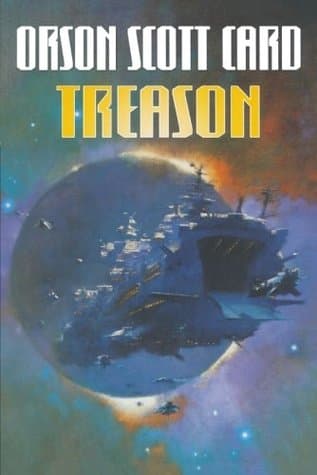
Treason cover
Archivist's Choice

Treason

Orson Scott Card (1979)

Genre

Fantasy / Young Adult / Romance

Reading Time

12 Minutes

Key Themes

See below

Track Your Reading

Sign in to track this book

A young man with a unique biological gift must navigate a treacherous political landscape and a conspiracy that threatens his planet's very survival, all while battling a brutal offworld regime for the iron that represents freedom.

Synopsis

Lanik Mueller, an heir on the planet Treason, is a 'rad' with extreme regenerative abilities, making him an outcast in a society where regeneration is common and extra body parts are traded to Offworlders for iron – a scarce and powerful resource. His birthright is jeopardized by his unique condition and the political machinations surrounding the planet's desperate race to build a spacecraft for freedom. As Lanik is sent on a mission of 'conquest and exile,' he uncovers a deep-seated conspiracy and devises a daring plan to break the cycle of rivalry and bloodshed that has long plagued his people, a struggle more profound than the Offworlders' oppression.
Difficulty
Medium
Pacing
Moderate
Mood
Intriguing, adventurous, hopeful, slightly dark

Plot Summary

The Radical Heir

The story begins with Lanik Mueller, a 'rad' or radical regenerative. People on Treason have regenerative abilities, but Lanik's are extreme; he can regrow entire bodies, constantly struggling to control his own growth. His father, the powerful Mueller family head, exiles Lanik to the rival Deso tribe. This is a tradition of exchanging heirs, but it is also a death sentence. The Deso are known for their cruelty and for exploiting regeneratives by harvesting their body parts for iron. Lanik's abilities make him a prime target. He understands his father's decision is political, meant to remove an uncontrollable heir and secure an alliance.

Arrival at Deso

At the Deso compound, Lanik faces their brutal customs. They harvest his body parts, trading them to Offworlders for iron, the planet's most valuable resource. His extreme regeneration quickly replaces what is taken, astounding his captors and making him even more valuable. He meets Diko, the Deso heir, a manipulative individual who sees Lanik as a way to increase his family's power and iron supply. Lanik quickly learns to navigate the Deso's politics, knowing his survival depends on outwitting those who exploit him.

The Training and the Betrayal

Despite his value, Lanik is not treated well. He trains rigorously as a warrior, learning Deso combat styles. He sees Diko's ruthless ambition and willingness to betray even family members for an advantage. Lanik also forms a bond with other exploited regeneratives. He starts to understand the iron trade and Offworlder influence, realizing that the families' constant conflict is driven by their need for metal. He begins to plan not only to survive but to disrupt the entire system.

A New Alliance

Lanik's observations lead him to a secret: the Deso ruler, Diko's father, is not as cruel as he seems and has a hidden plan about the Offworlders. The ruler recognizes Lanik's intellect and abilities and confides in him. He reveals his long-term goal of uniting the tribes against the Offworlders and breaking their control over Treason. This unexpected alliance changes Lanik's focus from survival to a larger mission. He realizes his exile might have been a test or a strategic move by his own father, who could have similar goals for the planet's freedom.

The Offworlder's True Intentions

Through his new alliance and investigations, Lanik uncovers the Offworlders' true intentions. They are not just traders but oppressors who keep Treason technologically stagnant. They control the iron supply and prevent space travel. The Offworlders fear that if Treason's people leave their planet, they might spread their regenerative abilities to other worlds, which the Offworlders see as a threat. This revelation strengthens Lanik's resolve to unite the tribes and break free, turning his personal quest into a fight for his planet's liberation.

The Confrontation with Diko

As Lanik gains influence among the Deso and his unification plans develop, Diko sees him as a threat to his own succession. A power struggle begins, with Diko trying to undermine Lanik and regain control. Lanik, using his intelligence and the respect he has earned, outmaneuvers Diko. He exposes Diko's cruel, short-sighted leadership to the Deso. This confrontation forces the Deso to choose between Diko's ambition and Lanik's vision for a united, free Treason, changing the power dynamics within the tribe.

The Unification Plan

With the Deso ruler's support, Lanik proposes a daring plan: to unite all of Treason's warring tribes. His vision is to end internal conflicts and combine resources and knowledge to build a spaceship. This would break the Offworlders' monopoly on space travel and achieve true independence. The plan requires unprecedented cooperation and trust among tribes that have been enemies for generations. Lanik's unique ability to regenerate and his understanding of the Offworlder threat make him the ideal leader, as he can show their collective strength.

The Mueller's Response

Lanik, now a respected Deso leader, returns to his original tribe, the Mueller, to convince his father and people to join the unification effort. This return is tense, given his previous exile. He must overcome deep-seated animosity between the tribes and prove his plan is not a trick or a way for the Deso to gain power. He presents evidence of Offworlder manipulation and explains his vision for a free Treason, appealing to their shared desire for autonomy and peace. His father, initially doubtful, begins to see the wisdom and necessity of Lanik's proposal.

Forging Alliances

Lanik embarks on a diplomatic mission, visiting Treason's various tribes, each with its own customs, fears, and grievances. He uses his abilities, growing reputation, and arguments to persuade them to set aside differences and join the cause. He shows the benefits of cooperation and the goal of escaping Offworlder control. This hard process involves countless negotiations and trust-building, slowly forming a fragile coalition for a common future. He faces doubt, hostility, and prejudice but continues his mission.

The Spacecraft Project

With many tribes allied, the huge task of building a spaceship begins. This project requires pooling all available iron, resources, and skilled labor from across Treason. Lanik oversees the construction, bringing together engineers, scientists, and workers from formerly warring groups. The process is challenging, with technical difficulties, disagreements, and the constant threat of discovery by the Offworlders. The spaceship becomes a symbol of their unity and hope for freedom, showing what can be achieved when old feuds are set aside for a greater purpose.

Offworlder Intervention

As the spaceship nears completion, the Offworlders, suspicious of the unusual peace and cooperation on Treason, discover the project. They intervene, sending forces to destroy the ship and regain control. This leads to a major confrontation. The newly united tribes must defend their dream of freedom against the technologically superior Offworlders. Lanik leads the defense, using his strategic mind and his people's collective strength. The battle is fierce, testing their unity and resolve, and deciding if Treason will finally break free or remain enslaved.

The Sacrifice and the Ascent

In the conflict's final moments, Lanik makes a sacrifice. He uses his radical regenerative abilities in an unprecedented way to ensure the spaceship's launch and the escape of a select group of Treason's people. This act shows his leadership and the true power of regeneration when used for the common good. The spaceship successfully launches, carrying the hope of a new future for Treason, free from Offworlder oppression. Lanik's actions secure his legacy as his people's savior, bringing in an era of independence and exploration.

Principal Figures

Lanik Mueller

The Protagonist

Lanik transforms from an exiled, exploited 'freak' into the visionary leader who unites the warring tribes of Treason and engineers their liberation from Offworld control.

Diko

The Antagonist

Diko remains largely static, his ambition leading to his eventual downfall and the rejection of his leadership by his own people.

Mueller Father

The Supporting

He evolves from a seemingly cold ruler who exiles his son to a supportive ally who recognizes and backs Lanik's revolutionary vision for Treason.

Deso Ruler

The Supporting

He transitions from a perceived antagonist to a key mentor and ally for Lanik, revealing his true intentions to liberate Treason.

Offworlders

The Antagonist

The Offworlders' role remains consistently antagonistic, serving as the ultimate external threat that unifies the people of Treason.

Themes & Insights

Freedom vs. Control

This theme explores the human desire for freedom against outside and inside control. The Offworlders control Treason by monopolizing iron and preventing technological advancement, effectively enslaving the planet. Internally, the warring tribes are controlled by centuries of rivalry and ambition, preventing their collective freedom. Lanik's journey is a quest to break these chains of control, from both the Offworlders and his people's self-destructive patterns, to achieve true autonomy for Treason.

Iron is power. Iron is freedom. But only if we use it to break their chains, not forge our own.

Lanik Mueller

The Nature of Power

The novel explores different forms of power: physical, political, technological, and biological. On Treason, power is initially defined by iron accumulation and the ability to exploit regeneratives. The Offworlders have technological superiority. Lanik, however, shows that true power is in intellect, unity, and a shared vision. His 'radical' regenerative ability, initially a weakness, becomes a symbol of ultimate biological power when used strategically. The story questions if power corrupts or if it can be used for liberation and progress.

They thought our flesh was their resource. They never imagined it was our weapon.

Narrator

Unity vs. Division

A central theme is the harm of internal division and the potential for unity. Treason's tribes are in constant conflict, fueled by old feuds and the Offworlders' manipulative trade. This division prevents them from addressing the larger threat. Lanik's mission is to overcome these hostilities, forming alliances and inspiring cooperation among different groups. The spaceship's building is a strong metaphor for this unity, showing that collective effort and a shared purpose can overcome even the biggest challenges.

We are brothers in our chains, yet we fight each other over the scraps they drop. Until we stand together, we will fall alone.

Lanik Mueller

Identity and Otherness

Lanik's identity as a 'rad' sets him apart, making him an 'other' and a target for exploitation. His extreme regenerative abilities, while amazing, are also seen as monstrous or uncontrollable. This theme explores how society treats those who are different and how individuals accept unique aspects of themselves. Lanik initially struggles with his nature, but eventually, his 'otherness' becomes his greatest strength, allowing him to see solutions and act in ways ordinary people cannot. He redefines 'radical' from a curse to a blessing.

They called me a freak, a monster. But my difference, I realized, was the key to their freedom.

Lanik Mueller

Plot Devices & Literary Techniques

Radical Regeneration

Lanik's unique and extreme biological ability.

Lanik's ability to regenerate entire bodies from a single cell is a central plot device. It is initially a source of his exploitation and exile, as it makes him an inexhaustible source of body parts for the iron trade. However, it later becomes his greatest asset, allowing him to survive brutal treatments, endure immense physical challenges, and ultimately devise a unique solution for Treason's liberation. It also serves as a biological mystery that the Offworlders fear, driving their oppressive policies and providing the core conflict of the story.

Iron as Currency/Power

The scarcity of metal drives Treason's economy and conflict.

The extreme scarcity of hard metals, particularly iron, on Treason makes it the ultimate currency and symbol of power. The Offworlders exploit this scarcity, trading iron for regenerative body parts, which perpetuates the cycle of exploitation and inter-tribal conflict. The desire for iron drives the actions of the ruling families and is the primary reason for the exploitation of regeneratives. The ultimate goal of building a spaceship, which requires vast amounts of iron, symbolizes the breaking of this economic and political dependency.

The Exile of Heirs

A tradition of exchanging heirs to rival tribes.

The tradition of exiling heirs to rival families, as Lanik experiences, is a pivotal plot device. It serves multiple functions: it's a political maneuver to secure alliances or remove problematic heirs, a method of intelligence gathering, and a brutal test of survival. For Lanik, it forces him out of his comfort zone, exposes him to the full extent of the Offworlders' oppression, and allows him to gain a unique perspective on the various tribes and their customs. It is the catalyst for his transformation from an heir to a revolutionary leader.

Critical analysis

Notable Quotes

Quiz

Test Your Knowledge

Ready to see how well you understood this book? Take our interactive quiz with 10 questions.

10
Questions
~5
Minutes
?
Best Score

Key Questions (FAQ)

The book follows Lanik Mueller, a 'rad' who cannot regenerate like others on his planet. He uncovers a conspiracy and is tasked with a mission that could free his people from oppression and a cycle of violence, but it involves a dangerous quest.

About the author

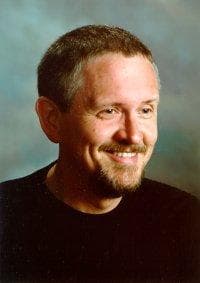
Orson Scott Card

Orson Scott Card is an American writer known best for his science fiction works. He is the first and only person to win both a Hugo Award and a Nebula Award in consecutive years, winning both awards for both his novel Ender's Game (1985) and its sequel Speaker for the Dead (1986). A feature film adaptation of Ender's Game, which Card co-produced, was released in 2013. Card also wrote the Locus Fantasy Award-winning series The Tales of Alvin Maker (1987–2003).