“It's a mistake to think you can make a good story out of a bad life.”
— Henry Pulling reflecting on his life and Aunt Augusta's adventures.


Graham Greene (1969)
Genre
Literary Fiction / Lifestyle
Reading Time
300 min
Key Themes
See below
Sign in to track this book
A retired bank manager's quiet life changes forever when his eccentric aunt takes him on a global adventure through a world of smugglers, spies, and free spirits, pushing him to leave his old life behind.
Henry Pulling, a dull, retired bank manager, attends his mother's funeral with his usual politeness. To his surprise, a flamboyant, seventy-year-old woman claims to be his Aunt Augusta, someone he hasn't seen since childhood. Aunt Augusta, with her dyed red hair and bold manner, is a stark contrast to Henry's orderly world. She tells a scandalous, exaggerated story of his mother's life, implying a romance with a Mr. Visconti, a man Henry had only known as a 'benefactor.' Augusta's presence immediately disrupts Henry's calm life, hinting at a family past far more colorful than he imagined.
After the funeral, Aunt Augusta convinces Henry to go with her to her flat in Brighton. There, she shows him a large urn, claiming it holds the ashes of her recently deceased lover, Giuseppe. She asks for Henry's help to smuggle the urn to Paraguay, which immediately makes Henry question his morals. He is further confused by Wordsworth, a young Black man Augusta introduces as her 'boy' and servant, despite his adult age. Wordsworth's quiet competence and Augusta's casual disregard for social norms begin to challenge Henry's rigid views, as he finds himself a reluctant helper in her plans.
In Brighton, Henry meets Augusta's unconventional friends, including an American named Tooley, who seems to have a mysterious link to Augusta's past. Augusta continues to tell elaborate stories about Giuseppe, hinting at his criminal activities. During their stay, Henry discovers the urn does not contain ashes, but hundreds of thousands of counterfeit notes. This revelation deeply disturbs Henry, forcing him to face Augusta's illegal dealings. He also learns of Augusta's long affair with a man named Visconti, a name that connects to his mother's past, further blurring his family history.
The counterfeit money in the urn leads to a tense encounter with customs officials, which Augusta skillfully handles with charm and quick thinking. Henry, horrified, finds himself involved in the deception. After this incident, Augusta decides they must leave England at once. They start a spontaneous trip to Paris, with Henry becoming more and more involved in Augusta's chaotic life. In Paris, Augusta reconnects with old friends, showing parts of her bohemian past, and Henry, despite his initial reluctance, begins to enjoy the new experiences, slowly letting go of his inhibitions.
Their travels take them to Istanbul, a city that further disorients Henry. There, Augusta meets her former lover, a charming but dangerous man named Mr. O'Toole, who is involved in various illegal activities. The plot thickens with the arrival of a CIA agent, Mr. Tooley (a different one from Brighton), who is tracking O'Toole. Henry, now used to constant drama, finds himself mediating between Augusta and her complicated relationships. He observes Augusta's resilience and resourcefulness, starting to admire her ability to navigate such a risky world with an almost childlike innocence.
As their journey continues, Augusta begins to share more personal details of her past. She eventually confesses that Mr. Visconti, the man she loved and the subject of many of her stories, was not only her lover but also Henry's biological father. This revelation shatters Henry's view of his entire life, his mother, and his own identity. The careful facade of his suburban existence crumbles, replaced by a confusing new reality. He grapples with the implications of this secret, realizing the extent of Augusta's sacrifices and the complex love that connected his family.
With the truth about Visconti revealed, the reason for their trip to Paraguay takes on new meaning. It is not just about smuggling counterfeit money, but about fulfilling Augusta's promise to Visconti and facing the legacy of their shared past. In South America, Henry fully embraces Augusta's adventurous spirit, taking a more active part in her plans. He sees her unwavering loyalty and love for Visconti, despite his criminal activities. The wild, lawless landscape of Paraguay reflects the wildness of Augusta's life, and Henry finds himself more at home in this unconventional world.
Upon arriving in Paraguay, Henry finds himself drawn to the country's chaotic charm and Augusta's community of ex-pats and minor criminals. He helps Augusta with her dealings, which now include smuggling and other small illicit ventures. He discovers a sense of purpose and excitement he never knew existed in his quiet English life. The appeal of adventure, along with his new understanding of his family's history, convinces Henry to leave his old life behind entirely. He sheds his suburban inhibitions, finding freedom in the danger of his new surroundings.
Henry, completely changed by his experiences, eventually marries a young local woman named Tooley (not related to the other Tooleys) in Paraguay. He embraces his new life, working alongside Augusta in her various schemes, which now include small-scale smuggling and other minor illegal activities. He finds a deep sense of contentment and belonging, something entirely missing from his previous existence. His dahlias and the Major next door are distant memories, replaced by the vibrant, unpredictable reality of his life with Augusta, a life he now values for its excitement and genuine human connection.
Aunt Augusta, true to her nature, remains restless and eager for new adventures. Despite her age, she always plans the next escapade, the next grand scheme. She decides to go on a potentially dangerous journey to Paraguay, implying a final, large criminal enterprise. Henry, now a full member of her world, supports her decision. Her endless energy and refusal to follow social expectations continue to inspire him. The novel ends with Augusta's constant motion, leaving Henry to reflect on the great impact she has had on his life, changing him from a dull, retired bank manager into a man who has truly lived.
The Protagonist
Transforms from a repressed, conventional individual into an adventurous, liberated man who embraces an unconventional, even illicit, life.
The Protagonist/Catalyst
Remains consistently true to her adventurous, unconventional nature, but her journey allows her to finally share her true history and find a lasting companion in Henry.
The Supporting
Remains a steadfast and loyal companion, his character is consistent in his devotion to Augusta.
The Mentioned/Pivotal
His past actions and hidden identity are gradually revealed, leading to a complete re-evaluation of Henry's understanding of his own origins.
The Supporting
No significant arc; he serves as a plot point to introduce danger and further reveal Augusta's past.
The Supporting
No significant arc; he is a recurring minor antagonist who fails to capture his target.
The Mentioned
Her character is revealed through Augusta's stories, undergoing a posthumous re-evaluation by Henry.
The Supporting
Her marriage to Henry marks the culmination of his transformation and acceptance of his new life.
The novel explores breaking free from a conventional, predictable life. Henry Pulling, initially a dull retired bank manager, represents suburban conformity. His journey with Aunt Augusta forces him to shed his inhibitions and embrace adventure, minor crime, and bohemian freedom. This freedom is not just travel but a deep internal change, as seen when Henry leaves his old life to settle into a happy, though illicit, life in Paraguay. The story celebrates the joy and energy found in rejecting social expectations.
“I had left my dahlias and the Major next door for good. I had left all that behind me for the sake of Aunt Augusta.”
Greene explores the changing nature of truth and identity. Aunt Augusta's stories are often exaggerated, her 'facts' shift, and her past is mysterious. Henry's entire understanding of his family, his mother, and himself is shattered by the revelation that Visconti, a known criminal, is his biological father. This theme questions whether a 'true' identity exists or if it is a story we constantly create. Henry's journey involves dismantling a false identity and building a new one based on the chaotic, yet real, truths Augusta reveals.
“One day, when you are old enough, you will understand that a man's life is a long, long story, and it's not always easy to tell the truth. Sometimes the truth is too simple, and sometimes it's too complicated.”
The novel examines different forms of love and loyalty that go against traditional social norms. Augusta's strong devotion to the deceased criminal Visconti, despite his illegal activities, is a main example. Her love is fierce and unconditional, driving her actions throughout the story. Similarly, Wordsworth's quiet, steady loyalty to Augusta, serving as her protector and confidant, shows a bond beyond mere employment. Henry's changing relationship with Augusta, from initial embarrassment to deep affection and partnership, shows a family love that goes beyond conventional definitions, proving that real connection can grow in unexpected situations.
“Love, Henry, is a form of attention. And attention, my dear, is a form of love.”
The narrative contrasts Henry's ordinary English life with the vibrant, often illicit, world Augusta lives in. The exotic locations—Brighton, Paris, Istanbul, Paraguay—are not just settings but active parts of Henry's change, each offering new experiences and challenges. The appeal of smuggling, counterfeit money, and associating with criminals gradually draws Henry in, revealing a part of himself he never knew existed. This theme suggests that excitement and vitality can be found outside legal and respectable bounds, offering a critique of middle-class complacency.
“I had never imagined a world where one could be so happy and so illegal at the same time.”
A seemingly innocent container holding a dark secret, driving the initial plot.
The urn, initially presented as containing the ashes of Augusta's deceased lover, Giuseppe, serves as a crucial MacGuffin. Its true contents—counterfeit money—propel Henry and Augusta on their initial journey and introduce Henry to the illicit nature of Augusta's life. It acts as a physical manifestation of Augusta's secrets and the hidden dangers of her world, forcing Henry to confront uncomfortable truths and drawing him into her schemes. The urn's deceptive nature mirrors the theme of hidden truths and appearances versus reality throughout the novel.
Aunt Augusta's penchant for embellishment and selective truth-telling.
Aunt Augusta's character functions as an unreliable narrator, particularly concerning her own past and the details of her life. Her stories are often exaggerated, romanticized, or outright fabricated, forcing Henry (and the reader) to constantly question what is true. This device creates a sense of playful mystery and suspense, as Henry gradually uncovers the 'real' story behind Augusta's tales. It also highlights the theme of truth's fluidity and how personal narratives are constructed, serving to keep the reader engaged in discerning fact from fiction within her colorful anecdotes.
The physical journey across continents mirrors Henry's internal transformation.
The extensive travels from England to Brighton, Paris, Istanbul, and finally Paraguay are more than just a plot device; they serve as a powerful metaphor for Henry's internal journey. Each new location and cultural encounter chips away at his rigid, conventional persona, forcing him to adapt and expand his worldview. The physical movement across geographical boundaries directly reflects his psychological and emotional transformation from a repressed bank manager to a liberated, adventurous individual. The journey symbolizes the shedding of old identities and the embrace of a new, more authentic self.
The revelation of Henry's true parentage as a major turning point.
The gradual revelation that Mr. Visconti, Augusta's criminal lover, is Henry's biological father is a pivotal plot device. This secret shatters Henry's foundational understanding of his identity and his family history, forcing him to re-evaluate his entire existence. It provides a profound personal motivation for his continued involvement with Augusta and justifies his eventual embrace of her unconventional life. This device not only drives the emotional core of the narrative but also connects Henry intimately to the very illicit world he initially resisted.
“It's a mistake to think you can make a good story out of a bad life.”
— Henry Pulling reflecting on his life and Aunt Augusta's adventures.
“There are some people who can't bear to be alone, and others who can't bear to be with anyone else.”
— Aunt Augusta discussing different types of people and companionship.
“My aunt had a way of looking at life as though it were a series of happy accidents.”
— Henry observing Aunt Augusta's optimistic and unconventional worldview.
“One doesn't have to be a criminal to enjoy a little illegality.”
— Aunt Augusta's casual attitude towards bending rules and laws.
“I had never considered before that life could be anything but a slow preparation for death.”
— Henry's realization about his stagnant life before meeting Aunt Augusta.
“The great thing about travel is that it makes you realize how little you need.”
— Aunt Augusta's philosophy on the liberating nature of travel.
“He had a way of speaking as though the world had been created solely for his convenience.”
— Henry's description of a self-important character they encounter.
“There are no bad people, only people who are sometimes bad.”
— Aunt Augusta's nuanced view on morality and human behavior.
“I had always lived a life of cautious respectability, and it had been, in its way, a kind of death.”
— Henry reflecting on the emptiness of his conventional past.
“One must be careful with memories. They can be more dangerous than facts.”
— Aunt Augusta's warning about the deceptive nature of memory.
“The unexpected is always more interesting than the planned.”
— Aunt Augusta's preference for spontaneity over rigid plans.
“It was as though my aunt carried her own climate with her, a climate of perpetual surprise.”
— Henry's observation of Aunt Augusta's unpredictable personality.
“Youth is a wonderful thing, but it's a pity to waste it on children.”
— Aunt Augusta's humorous and slightly cynical view on youth.
“I began to understand that her life was a continuous improvisation, a series of inspired guesses.”
— Henry's growing appreciation for Aunt Augusta's unconventional life choices.
Ready to see how well you understood this book? Take our interactive quiz with 10 questions.
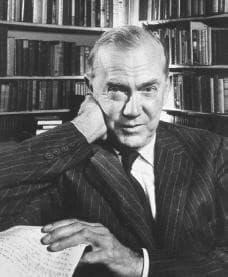
Henry Graham Greene was an English writer and journalist regarded by many as one of the leading English novelists of the 20th century.







