“The wind howled like a banshee, tearing at their flimsy clothing.”
— Describing the harsh Antarctic weather faced by the expedition.

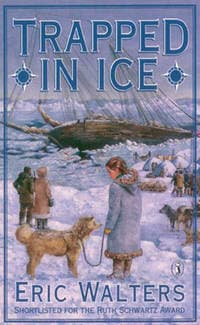
Eric Walters (1997)
Genre
Thriller / Children's / Historical Fiction / Young Adult
Reading Time
240 min
Key Themes
See below
Sign in to track this book
Helen's diary becomes a chilling record of survival as her family and the crew of the Karluk abandon their ice-bound ship, battling blizzards, polar bears, and shifting floes in a desperate trek across the Arctic.
After their father's death, thirteen-year-old Helen and her younger brother, Michael, accompany their mother, Mrs. MacGregor, on the Karluk, an Arctic expedition ship. Mrs. MacGregor has been hired as a seamstress for the journey. Helen is worried about leaving her life in Victoria, British Columbia, and spending six months in the harsh Arctic, especially since she likes a boy named Bob back home. Michael, however, is excited by the adventure. The ship is captained by Robert Bartlett, and their destination is the Beaufort Sea, where the expedition plans to conduct scientific research. Helen begins to record her experiences in a diary, a habit her father encouraged.
As the Karluk sails deeper into the Arctic, the initial excitement lessens. The ship encounters heavy ice, and despite Captain Bartlett's navigation, it eventually becomes trapped. The ice pack freezes solid around the hull, making the ship immobile. The expedition's scientific goals are immediately in doubt, and the crew, along with Helen's family, realize they are in for a long, cold, and uncertain winter. The ship's engines are shut down to save coal, and life aboard the frozen vessel settles into a routine of waiting. Helen continues to record the details in her diary, noting the growing tension and boredom among the crew.
Life aboard the ice-bound Karluk becomes a test of endurance. The expedition leader, Vilhjalmur Stefansson, leaves the ship with a small party to hunt, promising to return, but he never does. Captain Bartlett takes full command, implementing strict rationing of food and fuel. Helen observes the various personalities among the crew, including the cook and the Inuit hunters, Kataktovick and Keruk. Michael, always an adventurer, finds ways to entertain himself, often exploring the ice around the ship, which worries Helen. Scurvy and starvation are threats as the months pass with no sign of rescue or thaw.
After months of being trapped, the pressure of the shifting ice pack becomes too great for the Karluk. The ship's hull groans and shudders under immense force. Despite the crew's attempts to reinforce it, the ship is slowly crushed. Captain Bartlett gives the order to abandon ship, and everyone salvages supplies and establishes a camp on the ice. Helen, Michael, and Mrs. MacGregor watch as the Karluk, their only shelter and connection to civilization, slips beneath the frigid water. The sinking of the ship changes their ordeal from an inconvenience into a life-threatening struggle for survival.
With the Karluk gone, the survivors are stranded on a vast, unforgiving expanse of ice. Captain Bartlett organizes the group, distributing remaining supplies and mapping a route towards Wrangel Island, their only hope for land and potential rescue. The journey is hard, with brutal blizzards, treacherous pressure ridges, and the constant threat of open leads in the ice. Helen struggles with the physical demands, pulling a heavy sled alongside her mother and Michael. The group faces starvation, frostbite, and the psychological toll of their situation. Helen's diary entries become more stark, reflecting the grim reality of their daily struggle.
The harsh conditions take a toll on the survivors. Several men, including some of the Inuit hunters, die from the cold, exhaustion, or illness. Food supplies dwindle further, and morale drops. In a decision, Captain Bartlett, seeing the need for a faster journey, splits the group. He takes the strongest men, including Kataktovick, and sets off to reach land and seek help, leaving the remaining, weaker members, including Helen's family, under the command of another officer. This separation is a difficult moment for Helen, as it shows the desperation of their situation and the lessening hope of survival for all.
Left with the smaller, more vulnerable group, Helen, Michael, and Mrs. MacGregor continue their trek. Helen sees her mother's quiet strength and determination, as Mrs. MacGregor tirelessly pulls her share of the sled and comforts Michael. Michael, despite the hardships, keeps a sense of wonder and optimism, often pointing out wildlife or finding small joys amidst the desolation. His innocence and resilience provide an emotional anchor for Helen. They face terrifying encounters with polar bears, which are both a threat and a potential source of food, and struggle to keep warm and fed with diminishing resources.
After weeks of relentless travel and facing incredible odds, Helen's group finally sights land: Wrangel Island. The relief is immense, but the island itself offers little comfort. It is barren and windswept, providing only marginal shelter and very scarce food. They establish a camp, huddling together against the elements. The hope of rescue is rekindled, but the reality of their isolation quickly sets in. They are still thousands of miles from civilization, and their survival now depends entirely on Captain Bartlett's success in reaching the mainland and sending help. Helen records the mix of exhaustion and cautious optimism in her diary.
Life on Wrangel Island becomes a long test of patience and resilience. The survivors battle scurvy, hunger, and the cold. They hunt what little game they can find, primarily seals and birds, to supplement their meager rations. Helen, Michael, and Mrs. MacGregor huddle together for warmth and comfort. Weeks turn into months, and the hope of rescue begins to lessen for some, leading to despair and arguments. Helen continues her diary, detailing the monotony, the increasing weakness of the group, and her internal struggle to maintain hope, often drawing strength from her mother and Michael's spirit. They scan the horizon daily, desperate for any sign of a ship.
Just as despair threatens to overwhelm the remaining survivors on Wrangel Island, a ship appears on the horizon. It is the rescue vessel, the King and Winge, chartered by Captain Bartlett, who, against all odds, successfully reached the Siberian mainland and organized the rescue mission. The emotional reunion is overwhelming. Helen, Michael, and Mrs. MacGregor are weak but alive, and relieved. They are brought aboard the rescue ship, where they receive medical attention and proper food. The journey home is a mix of relief and sorrow for those who were lost. Helen's final diary entries reflect her gratitude for survival and the impact of her Arctic ordeal.
The Protagonist
Transforms from a sheltered, self-centered teenager into a resilient and compassionate young woman capable of enduring extreme hardship.
The Supporting
Maintains his adventurous spirit and optimism throughout the ordeal, acting as a beacon of hope for his family.
The Supporting
Reveals immense inner strength and resilience, surprising Helen and becoming a pillar of support for her children.
The Supporting
Demonstrates unwavering leadership and an indomitable will to save his crew, ultimately succeeding in a heroic rescue.
The Mentioned
Abandons the Karluk, leaving its crew and passengers stranded, and is not seen again in the narrative.
The Supporting
Serves as an essential guide and hunter, demonstrating the vital role of Indigenous knowledge in Arctic survival.
The Supporting
Contributes his hunting and survival expertise to the group, aiding in their desperate quest for sustenance.
The Supporting
Provides a brief sense of normalcy and cheer aboard the ship before the full extent of the disaster unfolds.
The most prominent theme is the human will to survive against overwhelming odds. The MacGregor family, Captain Bartlett, and the crew face starvation, extreme cold, blizzards, and the loss of their ship, yet they continue to fight for their lives. Helen's diary details the daily struggles and the measures taken to stay alive, from rationing food to enduring grueling treks across shifting ice. Mrs. MacGregor's strength and Michael's optimism show different facets of resilience in the face of despair.
“We were not just surviving; we were living, fiercely and defiantly, in the face of certain death.”
The deep bond between Helen, Michael, and their mother is a central emotional anchor. Their shared trauma strengthens their familial ties, revealing the protective instincts of a mother and the mutual support between siblings. Helen's initial teenage self-absorption gives way to an appreciation for her mother's strength and Michael's joy. Their love for each other provides comfort and motivation to keep going, making their survival a collective effort driven by affection.
“In the vast, empty white, my mother's hand in mine, and Michael's small, brave smile, were all the warmth I needed.”
Helen's journey is a coming-of-age story. She begins as a typical teenager, concerned with small things, but the Arctic ordeal removes her innocence, forcing her to confront life-and-death situations. She sees death, starvation, and the realities of nature and human desperation. This experience matures her, shifting her perspective from self-centeredness to a deeper understanding of human endurance, courage, and the preciousness of life. Her diary entries reflect this transformation.
“The Arctic took so much from us, but it also gave me something – a strength I never knew I possessed.”
The Arctic environment itself is a formidable antagonist, showing nature's immense, indifferent power. The cold, the crushing ice, the blizzards, and the vast, barren landscape constantly threaten the characters' lives. The story shows how human ambition and technology (the Karluk) are no match for the forces of the natural world. It highlights both the terrifying beauty and the deadly indifference of the polar regions, a constant reminder of humanity's fragility.
“The ice was a living thing, breathing and groaning, slowly but surely consuming our world.”
The actions of Captain Bartlett show strong, sometimes harsh, leadership and the sacrifices required for the greater good. In contrast to Stefansson's abandonment, Bartlett takes full responsibility for his people, making difficult decisions like rationing and splitting the group to maximize survival chances. His personal courage in undertaking the journey for rescue highlights the theme of self-sacrifice for the well-being of others. The story explores the burdens and complexities of leadership in extreme circumstances.
“Captain Bartlett carried the weight of us all, every decision a burden, every life a responsibility.”
Provides an intimate, immediate, and emotional perspective on the events.
The entire story is told through Helen's diary entries. This device allows for an immediate and personal connection to the protagonist's thoughts, fears, and observations. It provides a raw, unfiltered account of the unfolding disaster, emphasizing Helen's emotional journey and maturation. The diary entries also serve as a chronological record, marking the passage of time and the progressive deterioration of the situation, making the reader experience the prolonged ordeal alongside Helen. It also highlights the importance of documentation and memory in extreme circumstances.
Represents human ambition, vulnerability, and the illusion of safety.
The Karluk, initially a symbol of scientific exploration and human ingenuity, quickly transforms into a symbol of vulnerability and ultimate loss. Its entrapment in the ice signifies humanity's limited control over nature, and its eventual crushing and sinking represent the shattering of hopes and the end of any illusion of safety. The ship's demise forces the characters into a direct, brutal confrontation with the elements, stripping away their technological comforts and leaving them utterly exposed. It is the catalyst for their true struggle for survival.
Acts as an antagonist, a character in itself, testing human limits.
The Arctic is not merely a setting but a powerful, active force that drives the plot and shapes the characters. Its extreme cold, vastness, shifting ice, blizzards, and scarcity of resources constantly threaten the survivors. It acts as a relentless antagonist, forcing the characters to adapt, endure, and confront their deepest fears. The environment strips away societal conventions, revealing raw human nature and the instinct for survival. It is a character that demands respect and punishes hubris, making every step of the journey a battle.
Helen's early reluctance and unease hint at the disaster to come.
From the very beginning, Helen expresses a strong sense of apprehension about the expedition, missing her home and a boy named Bob. This initial reluctance, contrasting with Michael's excitement, subtly foreshadows the difficulties and dangers that lie ahead. Her unease prepares the reader for the unfolding tragedy, making the eventual entrapment and sinking of the ship feel less like a sudden shock and more like the fulfillment of an unspoken dread. It grounds the fantastical adventure in a relatable sense of foreboding.
“The wind howled like a banshee, tearing at their flimsy clothing.”
— Describing the harsh Antarctic weather faced by the expedition.
“Every creak and groan of the ship was a reminder of their precarious situation.”
— The ship, The Majestic, is trapped in ice and its structural integrity is uncertain.
“Hope was a fragile thing, easily shattered by the endless white horizon.”
— The crew's morale is tested by the unchanging, desolate landscape.
“We're not just fighting the cold; we're fighting against time itself.”
— The realization that rescue might not come before supplies run out or conditions worsen.
“A leader isn't just someone who gives orders, but someone who inspires courage when there is none.”
— Reflecting on Captain Faulkner's leadership qualities in dire circumstances.
“The silence was the loudest sound of all, a constant reminder of their isolation.”
— The profound quiet of the frozen landscape emphasizing their distance from civilization.
“Sometimes, the greatest strength is found not in fighting, but in enduring.”
— A philosophical thought on the nature of survival in extreme conditions.
“Every day was a victory, no matter how small.”
— The mindset needed to maintain morale and progress during the long ordeal.
“The ice held them in its grip, a silent, powerful captor.”
— The ship's predicament, completely surrounded and immobilized by the pack ice.
“Fear can be a useful tool, if you don't let it become your master.”
— A character's internal reflection on managing their own anxieties.
“They were a small speck in a vast, unforgiving world, but they were together.”
— Emphasizing the importance of camaraderie amidst the overwhelming environment.
“The aurora borealis painted the sky with impossible colours, a cruel beauty in their desperate situation.”
— Observing the stunning natural phenomenon while still facing grave danger.
“To give up was to die. To keep going was to live, even if only for another hour.”
— The stark choice facing the characters as their situation becomes increasingly dire.
“The true test of character isn't when things are easy, but when all hope seems lost.”
— Reflecting on the challenges and how they reveal the true nature of individuals.
Ready to see how well you understood this book? Take our interactive quiz with 10 questions.

Biography coming soon.







