“The price of freedom is eternal vigilance.”
— Mitch Rapp often reflects on the sacrifices and constant threats faced by those protecting the nation.

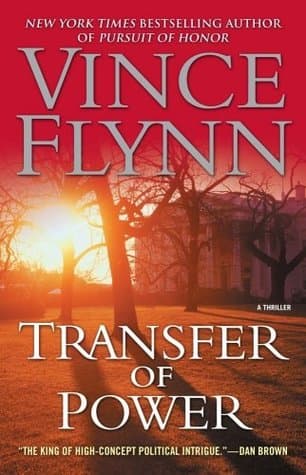
Vince Flynn (1999)
Genre
Thriller / Mystery
Reading Time
915 min
Key Themes
See below
Sign in to track this book
When terrorists seize the White House and hold the President hostage, CIA operative Mitch Rapp must navigate secret passages and political betrayals to rescue him before a sinister plot from within the government can succeed.
On a seemingly ordinary morning in Washington D.C., the White House is suddenly engulfed in chaos. A highly coordinated terrorist group, led by the ruthless Abu Sayed, storms the Executive Mansion. They gain entry through a meticulously planned assault, leaving dozens of Secret Service agents, staff, and tourists dead. President Alexander Sherman is quickly ushered into the Presidential Emergency Operations Center (PEOC) by his Secret Service detail, led by Mike Nash. Nearly one hundred people, including First Lady Betsy Sherman and Vice President Al Hirsch, are taken hostage. The terrorists, initially believed to want to release prisoners, quickly demonstrate a deeper agenda, demanding access to the President himself.
Amidst the panic and political infighting in the Situation Room, CIA Director Thomas Stansfield and National Security Advisor Dr. Irene Kennedy decide to deploy their top counterterrorism operative, Mitch Rapp, into the besieged White House. Rapp, known for his unconventional methods, is brought in discreetly. He uses his knowledge of the building's hidden passages and his tactical expertise to infiltrate the complex, avoiding detection by the terrorists. His initial assessment reveals a sophisticated, highly trained enemy, far more organized than the government's initial intelligence suggested. He quickly identifies key terrorist positions and begins to formulate a plan, while gathering crucial intel on their numbers and weaponry.
As negotiations falter, Abu Sayed demonstrates his resolve by executing several hostages, including a Secret Service agent, broadcasting the brutal act to the outside world. This shocking display of violence increases the tension and puts immense pressure on President Sherman's administration. Inside the White House, Rapp observes the terrorists' meticulous control and their psychological manipulation of the remaining hostages. He witnesses the courage of individuals like First Lady Betsy Sherman, who attempts to maintain morale among the captives despite the dire circumstances. Rapp realizes the terrorists are not bluffing, and a direct assault could lead to a catastrophic loss of life, making his covert operation even more critical.
While navigating the corridors, Rapp makes a discovery: the terrorists possess intimate knowledge of the White House's security systems and layout, far beyond what any external group could acquire. He finds evidence of internal assistance, suggesting a mole within the U.S. government. This revelation shifts the entire dynamic of the crisis, indicating that the attack is not merely a foreign terrorist operation but a sophisticated plot with domestic complicity. Rapp suspects that the terrorists' true objective extends beyond just the hostages, possibly aiming to extract President Sherman from the PEOC, and that the mole is actively working to ensure their success, sabotaging rescue efforts from within.
Rapp, communicating sporadically with Stansfield and Kennedy, relays his suspicions about an inside man. This intel throws the Situation Room into disarray, as they grapple with the idea of treason at the highest levels. Rapp begins a dangerous cat-and-mouse game, not only with the terrorists but also with the unknown traitor who is actively working against him. He uses his tactical skills to gather more evidence, narrowing down the potential suspects. His efforts are hampered by the terrorists' constant movement and their increasing desperation as the government considers a military assault. Rapp knows he must act quickly to expose the mole before their machinations lead to a complete catastrophe.
Rapp manages to corner Abu Sayed in a tense confrontation within the White House. During their deadly exchange, Rapp gleans crucial information about Sayed's true identity and his fanatical motivations. Sayed, a highly educated and ideologically driven individual, reveals his deep hatred for American foreign policy and his desire to destabilize the U.S. government. He also alludes to the support he receives from powerful figures who share his disillusionment. Rapp realizes Sayed is not just a mercenary but a dangerous ideologue, making the situation even more perilous. The encounter is brutal, with both men sustaining injuries, but Rapp manages to escape, gathering more intelligence on the terrorists' remaining forces and their plans.
Despite the Secret Service's best efforts, the terrorists, guided by the mole's information, manage to breach the PEOC's defenses. President Sherman, Vice President Hirsch, and the remaining staff are now directly threatened. Mike Nash and his agents engage in a fierce firefight, but they are outmatched by the terrorists' superior numbers and knowledge of the bunker's weak points. President Sherman is faced with an impossible choice: surrender and risk becoming a pawn in the terrorists' game, or resist and potentially sacrifice everyone in the bunker. Rapp, aware of the breach, redoubles his efforts, knowing that time is running out to save the President and prevent a national disaster.
Through deduction, intercepted communications, and his own observations, Rapp finally unmasks the traitor: Deputy National Security Advisor Roger Cross. Cross, disillusioned and seeking to reshape American foreign policy through extreme measures, had been feeding intelligence to Abu Sayed, believing that a crippled presidency would allow for a new order. Rapp confronts Cross in a tense standoff within the White House, forcing him to admit his treachery. The revelation sends shockwaves through the command center, as Stansfield and Kennedy grapple with the betrayal from within their own ranks, realizing the depth of the conspiracy and the danger it posed to the nation.
With the mole exposed and the PEOC compromised, Rapp launches a daring, high-stakes counterattack. He rallies the remaining Secret Service agents and any available personnel, leveraging his knowledge of the White House to strike at the terrorists from unexpected angles. It becomes a brutal, close-quarters battle throughout the historic building, with Rapp leading the charge. He prioritizes saving the First Lady and Vice President, recognizing their strategic importance. The terrorists, now desperate and cornered, fight fiercely, but Rapp's relentless assault and tactical brilliance begin to turn the tide, pushing them back and creating opportunities for the hostages to escape.
Rapp, with the help of the surviving Secret Service, ultimately eliminates Abu Sayed and his remaining forces, securing the White House and rescuing President Sherman and the remaining hostages. The nation breathes a collective sigh of relief, but the fallout is immense. Roger Cross is apprehended, and the full extent of his treason and the conspiracy he was involved in begins to unravel. While the immediate threat is neutralized, the events of the siege expose vulnerabilities within the government and highlight the insidious nature of internal threats. Rapp, though successful, is left with the somber realization that the battle against terrorism and betrayal is far from over, leaving him with a deeper sense of vigilance and distrust.
The Protagonist
Rapp's arc reinforces his role as an indispensable, albeit morally ambiguous, protector, further solidifying his distrust of political maneuvering.
The Supporting
President Sherman endures the terror of the siege, emerging as a stronger, more resolved leader, but also more aware of the hidden dangers within his own government.
The Antagonist
Sayed's arc is one of escalating violence and determination, culminating in his defeat, but his actions expose deep vulnerabilities in American security.
The Supporting
Kennedy's arc strengthens her role as a critical, discerning leader who champions Rapp's unique skills despite political opposition.
The Supporting
Stansfield's arc reinforces his role as a steadfast mentor, facing the ultimate betrayal from within his own government.
The Antagonist
Cross's arc is one of a trusted official revealing his true colors as a traitor, driven by a twisted ideology, leading to his exposure and downfall.
The Supporting
Nash's arc showcases his unwavering courage and dedication to duty, facing insurmountable odds to protect the President.
The Supporting
Betsy Sherman endures the horrors of captivity with remarkable composure, symbolizing the human cost of the attack and inspiring hope among fellow hostages.
The Supporting
Hirsch's arc highlights the vulnerability of high-ranking officials and the broader implications of the terrorist attack on national leadership.
The novel explores the evolving nature of terrorism, moving beyond simple hostage-taking to examine deeply ideological motives. Abu Sayed is portrayed not as a mere criminal, but as a highly intelligent and fanatical individual driven by a hatred for American foreign policy. The attack on the White House is a symbolic act, aimed at destabilizing the U.S. government and forcing a radical shift. This theme is evident in Sayed's detailed planning and his willingness to execute hostages, demonstrating a cold, calculated commitment to his cause rather than mere negotiation. The book suggests that countering such radicalism requires unconventional and often brutal methods, as embodied by Mitch Rapp.
““They don't want money. They want to tear down everything we stand for.””
A central theme is the devastating impact of internal betrayal. The conspiracy reveals a mole, Roger Cross, within the U.S. government. This betrayal amplifies the danger of the external terrorist threat, as Cross provides critical intelligence that allows the terrorists to breach the White House's most secure areas, including the PEOC. The theme explores how trust, especially within the highest echelons of power, can be exploited and shattered, leading to great vulnerability. Mitch Rapp's inherent distrust of bureaucracy is validated by this discovery, highlighting the insidious nature of enemies from within. The revelation of Cross's motives—a twisted desire to reshape the nation—shows the complexity of threats.
““The greatest danger isn't always from outside. Sometimes, it's the person you least expect, sitting across the table.””
The novel explores the immense pressure and moral dilemmas faced by leaders during a crisis. President Sherman is forced to make agonizing decisions, balancing the lives of hostages, including his own family, against national security and the need to project strength. The theme highlights the isolation of leadership, as Sherman navigates conflicting advice from advisors and the terrifying reality of his own vulnerability. The political infighting and bureaucratic inertia in the Situation Room further emphasize the challenges of effective leadership under extreme duress, contrasting with Mitch Rapp's decisive, if controversial, actions. The personal toll on the President and First Lady is clear.
““Every decision I make means someone lives or dies. And sometimes, it means both.””
This theme is embodied by Mitch Rapp, whose character constantly challenges conventional notions of morality in the fight against terrorism. Rapp operates in a grey area, employing brutal and often extra-legal methods to achieve his objectives. The novel implicitly questions whether traditional rules of engagement are effective against enemies who adhere to no such rules. His actions, though effective, are often violent and uncompromising, leading to friction with more by-the-book officials. The story suggests that in the face of extreme evil, extreme measures might be necessary, forcing readers to confront uncomfortable truths about what it takes to protect national security.
““Some fights aren't won by playing fair. They're won by being faster, smarter, and willing to do what the other guy won't.””
A constant sense of urgency drives the narrative.
The ticking clock is a crucial device, evident from the moment the White House is breached. The terrorists' deadlines for hostage executions, their escalating demands, and the constant threat of them reaching President Sherman's bunker create an unbearable tension. This device forces Rapp to act quickly, making his infiltration and counter-operations a race against time. It also pressures the government to make rapid decisions, often leading to mistakes or desperate measures, intensifying the drama and the feeling that every second counts.
A hidden traitor within the government aids the antagonists.
The discovery of Roger Cross as the mole is a pivotal plot device. It transforms the crisis from a purely external terrorist attack into a complex internal conspiracy, adding a layer of paranoia and distrust. The mole's actions provide the terrorists with critical intelligence, making them far more effective and dangerous than they would have been otherwise. This device raises the stakes significantly, as Rapp must not only fight the visible enemy but also uncover and neutralize the invisible one, who is actively working against his efforts.
Rapp's sporadic and difficult communication with command.
Rapp's limited and intermittent communication with Dr. Kennedy and Thomas Stansfield is a key device that heightens suspense and emphasizes his isolation. Operating deep within enemy territory, Rapp is often cut off, forcing him to make critical decisions independently without immediate backup or validation. This lack of real-time information flow creates dramatic tension, as the command center struggles to understand the true scope of the threat and Rapp's progress, while Rapp faces life-or-death situations with minimal external support. It underscores his self-reliance and the inherent risks of his mission.
The White House itself as a character and symbol.
The White House serves as more than just a setting; it is a powerful symbolic character in the narrative. Its status as the heart of American power and democracy makes its violation particularly shocking and impactful. The terrorists' ability to breach it represents an attack on the very core of the nation. Rapp's intimate knowledge of its secret passages and historical significance contrasts with the terrorists' destructive presence, highlighting the struggle to reclaim and protect what the building represents. The siege transforms a symbol of stability into a battleground, amplifying the stakes.
“The price of freedom is eternal vigilance.”
— Mitch Rapp often reflects on the sacrifices and constant threats faced by those protecting the nation.
“There are no rules when it comes to saving lives.”
— Rapp's philosophy when making tough decisions that often bend or break conventional protocols.
“Terrorism isn't just about killing people; it's about breaking their will.”
— A character's insight into the psychological warfare aspect of terrorism.
“Sometimes you have to do bad things to bad people to keep good people safe.”
— Mitch Rapp's justification for his often brutal methods against terrorists.
“The worst kind of enemy is the one you don't know you have.”
— A cautionary thought about the nature of covert threats and intelligence failures.
“Fear is a powerful weapon, but it can also be a powerful motivator.”
— Reflecting on how fear can either paralyze or spur action in times of crisis.
“In this business, trust is a luxury you can rarely afford.”
— A seasoned operative's cynical view on the importance of skepticism and self-reliance.
“When the rules fail, you make your own.”
— Rapp's independent and often rogue approach to problem-solving when official channels are insufficient.
“The line between patriot and terrorist can sometimes blur, depending on whose side you're on.”
— A discussion highlighting the subjective nature of political labels in conflict.
“Every decision has a consequence, and some consequences are irreversible.”
— A somber reflection on the weight of choices made under extreme pressure.
“You can't negotiate with fanatics. You can only defeat them.”
— A core tenet of Mitch Rapp's strategy when dealing with extremist groups.
“The greatest weapon against chaos is order, even if it's an order you have to impose yourself.”
— Rapp's drive to restore control in chaotic situations, often through decisive action.
“Power is never given; it is taken.”
— A character's observation on the nature of political and strategic power dynamics.
“Sometimes, the hardest thing to do is nothing at all.”
— A moment of reflection on the difficulty of restraint or waiting in a high-stakes situation.
Ready to see how well you understood this book? Take our interactive quiz with 10 questions.

Biography coming soon.







