“We are not defined by our origins, but by the choices we make.”
— Ehd reflects on his journey from a primitive man to a more evolved being.

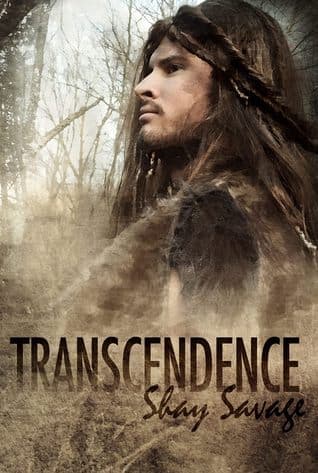
Shay Savage (2014)
Genre
Fantasy / Historical Fiction / Science Fiction / Romance
Reading Time
7 hr
Key Themes
See below
Sign in to track this book
Stranded in a prehistoric world, a modern woman's struggle to communicate with a determined caveman who sees her as his mate sparks an unlikely romance that transcends the barriers of language and time.
Elizabeth, a woman from modern times, experiences a disorienting flash of light and a sensation of falling. She wakes up in an unfamiliar, rugged wilderness, dressed in strange, torn clothing. Disoriented and terrified, she soon realizes she is not just lost, but has somehow traveled through time to a prehistoric era. Her initial attempts to understand her surroundings fail, and her modern sensibilities are completely out of place. She struggles to comprehend the harsh reality of her new environment, which has no familiar structures or technology. She quickly faces the immediate challenge of survival in a world filled with unknown dangers.
Ehd, a strong and resourceful caveman living alone, checks his hunting traps and finds a strange sight: a female caught in one of his pits. Unlike any woman he has ever seen, she wears odd, brightly colored clothes and makes peculiar, high-pitched noises. Despite her unusual appearance and behavior, Ehd's instincts take over. He immediately sees her as a potential mate, an answer to his loneliness. He pulls her from the pit, ignoring her cries and struggles, and starts bringing her back to his cave, determined to make her his own, despite her obvious distress.
At Ehd's cave, Elizabeth's attempts to explain her situation or even voice her discomfort are met with blank stares or misunderstandings. Ehd, who has no concept of spoken language beyond basic grunts and gestures, cannot understand her words. He sees her struggles and protests not as communication, but as a challenge or female coyness. Elizabeth, in turn, is terrified by his size, his possessive nature, and his inability to grasp her pleas. Their first interactions are marked by deep misunderstandings. Elizabeth feels trapped, and Ehd feels frustrated by his new mate's resistance to his attempts to provide and protect.
Despite her fear and anger, Elizabeth quickly realizes that her survival depends on Ehd. She observes his hunting skills, his knowledge of edible plants, and his ability to navigate the dangerous wilderness. When confronted by a predatory animal or the harsh elements, she instinctively seeks his protection. Ehd continues to provide for her, bringing her food and ensuring her safety, even as he struggles to understand her. A reluctant coexistence begins to form, driven by the immediate needs of survival. Elizabeth starts to learn from Ehd's actions, observing his methods for gathering food and preparing their shelter.
As days turn into weeks, Elizabeth and Ehd slowly begin to bridge the communication gap, not through words, but through actions and shared experiences. Ehd shows his care by bringing her flowers, sharing his kill, and protecting her from harm. Elizabeth, in turn, begins to see past his primitive exterior, recognizing his genuine affection and loyalty. She starts teaching him simple gestures and sounds, and he learns to recognize her moods. A turning point happens when Elizabeth is injured, and Ehd's devoted care for her deepens her understanding of his protective nature. This shared vulnerability creates trust between them.
Elizabeth, having observed Ehd's hunting techniques, starts to contribute to their survival in small ways, eventually joining a hunt. While initially hesitant and unsuited for the physical demands, she uses her intelligence to help Ehd strategize. Her ability to spot details or distract prey proves unexpectedly valuable. This joint effort is an important moment, as it shows Elizabeth's growing acceptance of her situation and her willingness to adapt. For Ehd, it confirms his perception of her not just as a mate, but as a capable and intelligent partner, deepening his respect and appreciation for her unique qualities.
Initially, Ehd's physical advances were driven by instinct and Elizabeth's fear. However, as trust grows, their intimacy begins to change. Elizabeth, no longer purely terrified, starts to feel a complex mix of emotions towards Ehd – affection, gratitude, and even a nascent attraction to his strength and unwavering devotion. Their physical acts become less about dominance and more about shared comfort and connection. Ehd, though still non-verbal, expresses his love through gentle touches and protective gestures, and Elizabeth responds with growing warmth, recognizing the deep love he has for her that crosses the language barrier.
As autumn transitions to a brutal winter, the challenges of prehistoric life intensify. Food becomes scarce, and the cold is relentless. Ehd works tirelessly to ensure their cave is protected and they have enough provisions, often risking his own safety. Elizabeth, though unused to such hardship, helps by conserving resources, finding ways to make their shelter more comfortable, and offering emotional support. This period of extreme adversity tests their bond, but ultimately strengthens it. They learn to truly depend on one another, finding warmth and solace in their shared struggle and growing affection, proving their partnership can withstand any storm.
After several months, Elizabeth realizes she is pregnant. This discovery is momentous, bringing a mix of trepidation and acceptance. The pregnancy signifies her complete integration into this prehistoric world and a definitive end to any lingering hopes of returning to her own time. While initially overwhelming, the idea of carrying Ehd's child fills her with a new sense of purpose and a deeper connection to him. Ehd, sensing the change in her and instinctively understanding the implications, becomes even more protective and attentive, his joy clear in his actions. This shared anticipation of a child further strengthens their unique and powerful bond.
As spring returns and Elizabeth's pregnancy progresses, she fully accepts her life with Ehd. The initial fear and longing for her own time have lessened, replaced by a deep love for Ehd and an acceptance of her destiny. She has adapted well, learning to thrive in the wilderness and understanding Ehd's non-verbal communication perfectly. Their love story, once difficult, has crossed language and time, showing that genuine connection can grow under extraordinary circumstances. They look forward to raising their child together, building a future in a past that has become their present.
The Protagonist
From a bewildered and resistant captive, Elizabeth transforms into a resilient and loving partner, embracing her new life and finding happiness in the prehistoric era.
The Protagonist
Ehd evolves from a solitary, instinct-driven caveman to a loving and understanding partner, whose capacity for affection deepens beyond primal needs.
The central theme explores how two individuals from vastly different times and cultures, one with modern language and the other without, can form a deep connection. Elizabeth and Ehd's relationship develops through gestures, shared experiences, empathy, and observation. This shows that love and understanding can exist beyond verbal communication. This theme points to the power of non-verbal cues and the basic human need for connection.
“He didn't need to speak to tell her he loved her. She just knew.”
Elizabeth's journey from a modern woman to a prehistoric survivor shows human adaptability. She must learn entirely new ways of living, from finding food and shelter to fending off predators. This theme also appears in Ehd's constant struggle for survival in a harsh environment, and their combined efforts to prepare for winter. It shows the strength of the human spirit when faced with extreme circumstances.
“She had survived. She was surviving. And in a strange way, she was thriving.”
The core of the story is the unlikely romance between Elizabeth and Ehd, bridging millennia and different societal norms. Their love story challenges common ideas of compatibility, showing that genuine affection, respect, and devotion can overcome seemingly impossible barriers of time, technology, and cultural understanding. It shows the universal nature of love.
“Their love was a bridge built across time, stronger than any words could ever be.”
Elizabeth initially struggles with her lost identity and displacement. As she adapts to her new life with Ehd, she gradually redefines who she is, finding a new sense of purpose and belonging not in her past world, but in the prehistoric era with the man who loves her. This theme explores how environment and relationships shape one's sense of self and where one truly belongs.
“This was her home now. This cave. This man. This time.”
The inexplicable transportation of Elizabeth from the modern world to the prehistoric era.
This is the primary catalyst for the entire plot. Elizabeth's sudden displacement from her own time into the Stone Age creates the central conflict and sets up all subsequent events. It establishes the immense communication and cultural barriers between her and Ehd, and forces her into a fight for survival, making her journey of adaptation and love truly 'transcendent'.
The complete inability of Elizabeth and Ehd to verbally communicate with each other.
The language barrier is a critical plot device that drives much of the initial tension, humor, and eventual emotional depth of the story. It forces the characters to rely on non-verbal communication, gestures, shared experiences, and intuition to understand each other, highlighting the power of connection beyond words. This device makes their developing bond feel earned and profound.
Elizabeth's experience as a modern woman in a primitive, dangerous environment.
This device creates both comedic moments and serious challenges. Elizabeth's modern sensibilities, knowledge, and expectations are completely at odds with the prehistoric world. Her struggle to adapt to basic survival, her shock at Ehd's primitive ways, and her gradual acceptance of her new reality are central to her character arc and provide a constant source of narrative interest.
The contrast between Ehd's instinct-driven actions and Elizabeth's rational thought processes.
This device highlights the fundamental differences and eventual harmony between the two protagonists. Ehd's actions are often guided by basic needs and instincts (survival, mating, protection), while Elizabeth attempts to apply logic and reason. The story explores how these two vastly different approaches can complement each other, with Elizabeth learning from Ehd's primal wisdom and Ehd benefiting from Elizabeth's foresight and problem-solving skills.
“We are not defined by our origins, but by the choices we make.”
— Ehd reflects on his journey from a primitive man to a more evolved being.
“Love is not a weakness; it is the greatest strength of all.”
— Beh argues with another character about the power of emotional bonds.
“In the silence of the wilderness, I found the voice of my soul.”
— Ehd describes his solitary experiences in the prehistoric landscape.
“Time is a river that flows in both directions, if you know how to swim.”
— A philosophical discussion about the nature of time travel in the story.
“To transcend is to become more than the sum of your parts.”
— Beh explains the concept of transcendence to Ehd.
“The heart remembers what the mind forgets.”
— Ehd struggles with fragmented memories of his past lives.
“Civilization is built on stories, not stones.”
— Beh teaches Ehd about the importance of narrative in human history.
“Fear is the shadow of the unknown; step into the light.”
— Ehd encourages Beh to face her fears about their future.
“We are all travelers between worlds, seeking a home.”
— Reflection on the characters' journeys across time and dimensions.
“The past is a ghost that haunts, but the future is a dream to build.”
— Beh comforts Ehd during a moment of regret over past actions.
“Strength lies not in domination, but in understanding.”
— Ehd learns a lesson about leadership from Beh.
“In every end, there is a beginning waiting to be born.”
— Narration at a pivotal turning point in the plot.
“To love is to see the divine in the ordinary.”
— Ehd describes his feelings for Beh in a tender moment.
“The universe whispers its secrets to those who listen.”
— Beh shares her insights gained from her scientific and mystical knowledge.
Ready to see how well you understood this book? Take our interactive quiz with 10 questions.

Biography coming soon.







