BookBrief
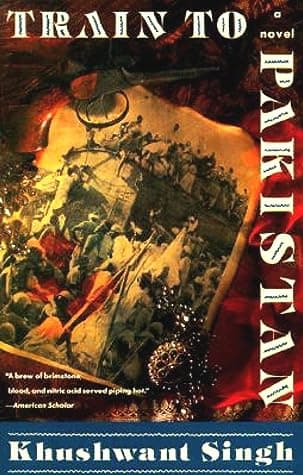
Train to Pakistan cover
Archivist's Choice

Train to Pakistan

Khushwant Singh (1956)

Genre

Historical Fiction

Reading Time

240 min

Key Themes

See below

Track Your Reading

Sign in to track this book

During the brutal 1947 Partition of India, a remote village where Sikhs and Muslims have coexisted for centuries is shattered by a ghost train, forcing its inhabitants to confront escalating religious hatred and forbidden love.

Synopsis

In the summer of 1947, as India is partitioned, the isolated village of Mano Majra, where Sikhs and Muslims have coexisted peacefully for centuries, loses its calm. A 'ghost train' arrives, filled with the massacred bodies of refugees. This event makes villagers face the brutal communal violence happening across the nation. It starts tensions and suspicion among the once-friendly community. The story follows Juggut Singh, a local Sikh 'badmash' (hooligan), and Nooran, a Muslim girl he loves. Their personal story unfolds against a background of increasing religious hatred. When the government decides to evacuate all Muslims from Mano Majra, Sikh youths plot revenge against the departing Muslims. Juggut Singh, despite his past, faces a moral choice. This leads to a desperate sacrifice to save Nooran and the innocent Muslims on the train. He gives his life to prevent a massacre and uphold the love that goes beyond the growing division.
Reading time
240 min
Difficulty
Medium
Pacing
Moderate
Mood
Somber, Tragic, Reflective, Intense
✓ Read this if...
You want a raw, unflinching look at the human cost of the Partition of India, told through a micro-lens.
✗ Skip this if...
You prefer narratives with clear-cut heroes and villains, or shy away from graphic depictions of violence.

Plot Summary

Mano Majra: A Village Untouched

The novel opens by introducing Mano Majra, a remote village on the border of India and Pakistan. Sikhs and Muslims have lived together peacefully for generations, sharing a gurdwara and a mosque, and relying on the rhythm of the trains for their sense of time. Life is simple, marked by agricultural seasons and daily routines. Juggut Singh, known as Jugga, a local dacoit (bandit) with a criminal record, has a secret affair with Nooran, a Muslim girl. Their relationship, though disapproved, reflects the village's underlying tolerance. This initial calm contrasts sharply with the coming violence of the Partition of India, which has not yet reached their isolated community.

The Murder of Lala Ram Lal

One night, a gang of dacoits, led by Malli, murders Lala Ram Lal, the village moneylender, and robs his house. The murder is brutal, and the dacoits escape. The police, led by Inspector Iqbal Singh, arrive to investigate. Because of his past and his presence near the crime scene, Juggut Singh is immediately suspected and arrested. The police also arrest Iqbal, a foreign-educated Sikh social worker who just arrived in Mano Majra, mistakenly believing him to be a Muslim League agent or communist agitator due to his urban look and political interests. These arrests disturb the village's peace and bring in outside authority and suspicion.

Iqbal's Arrest and Reflection

Iqbal, a young, educated Sikh man, arrives in Mano Majra to do social work and perhaps awaken political awareness among villagers. However, his sophisticated appearance and the timing of his arrival make him suspicious to the police, who are already on high alert due to escalating communal violence elsewhere. He is arrested shortly after Jugga, and both are held in the local lock-up. During his imprisonment, Iqbal thinks about how useless his political ideals are against such raw, unthinking violence and the deep prejudices now appearing. He feels detached and helpless, questioning his ability to change the situation.

The Ghost Train Arrives

The first real sign of the Partition's horror reaches Mano Majra as a 'ghost train.' This train, usually a symbol of routine and connection, arrives silently. Its wagons are filled with the mutilated bodies of Sikhs massacred in Pakistan. The sight of the dead, along with their looted belongings, deeply shocks the villagers. This event destroys their illusion of safety and isolation, planting seeds of fear, anger, and a desire for revenge among the Sikh population, and fear among the Muslims. Mano Majra's innocence is lost, replaced by the grim reality of communal violence.

Rising Tensions and Communal Divide

After the ghost train, the communal harmony in Mano Majra quickly worsens. Sikh refugees from Pakistan start arriving, bringing terrible stories of atrocities against their community. These stories fuel the anger and desire for retribution among local Sikhs, who begin to view their Muslim neighbors with suspicion and hostility. The traditional bonds of friendship and shared life start to break. The Muslims, in turn, become fearful, sensing the change in atmosphere and expecting attacks. The village is no longer peaceful but a small example of the larger, violent conflict.

The Evacuation of Muslims

As tensions rise and the government struggles to keep order, an official decision is made to evacuate all Muslims from Indian villages to refugee camps, from where they will eventually go to Pakistan. This order reaches Mano Majra, forcing Muslim residents, who have lived there for centuries, to leave their homes and possessions. It is a heartbreaking scene, as families prepare to leave, carrying only what they can. Sikhs watch, some with regret, others with grim satisfaction or indifference. This forced migration marks the end of Mano Majra's diverse community and further solidifies the communal divide.

The Plan for Revenge

After the Muslim evacuation, a group of angry young Sikh men from Mano Majra and nearby areas, inflamed by stories of violence against Sikhs and urged on by a visiting Sikh leader, plan a brutal act of revenge. They plan to ambush a train carrying Muslim refugees from India to Pakistan, specifically targeting the one that will carry the former Muslim residents of Mano Majra. Their gruesome plan involves using a rope to trip passengers as the train crosses a bridge, making them fall into the river below, where others will be waiting to kill them. This plot shows the depth of hatred that has consumed the region.

Nooran's Fate and Jugga's Release

While Jugga and Iqbal are still in custody, Nooran visits Jugga in jail and tells him she is pregnant with his child. This news adds a personal aspect to the unfolding tragedy for Jugga. Meanwhile, the police, having failed to find concrete evidence against Jugga for the moneylender's murder and needing to deal with the escalating communal violence, release him. Iqbal is also released. Jugga is now free, but unaware of the specific, horrific plan made by the Sikh youths against the train carrying his beloved Nooran and the other Muslim villagers to Pakistan.

Iqbal's Moral Dilemma

Upon his release, Iqbal learns about the planned massacre of Muslims on the upcoming train. He is horrified by the plot's barbarity and feels he must intervene. However, he is an outsider, an intellectual, and recognizes his helplessness against the immense power of communal frenzy. He struggles with whether to risk his life to stop the mob, or if such an attempt would be useless and self-destructive. His internal conflict highlights how reason and individual morality can be paralyzed in the face of mass hysteria and violence.

Jugga's Sacrifice

As the train carrying Muslim refugees approaches the bridge where the ambush is planned, Jugga, having learned of the plot, realizes Nooran is on that train. Overcoming his past and his fears, he rushes to the bridge. The Sikh youths have strung a thick rope across the tracks to trip passengers. In a desperate act of love and self-sacrifice, Jugga climbs the steel span of the bridge, hacking at the rope with his kirpan (Sikh dagger). He cuts through most of the rope, but the train is too close. He is shot by the mob, but with his last bit of strength, he severs the final strands, allowing the train to pass safely. He saves hundreds of lives, including Nooran's, at the cost of his own.

Principal Figures

Juggut Singh (Jugga)

The Protagonist

From a feared criminal to a selfless martyr, Jugga redeems his past through an ultimate act of love and sacrifice.

Nooran

The Supporting

From a carefree lover, she becomes a pregnant refugee, symbolizing the personal cost of communal violence.

Iqbal Singh

The Supporting

Starts as an idealistic activist, becomes a disillusioned observer, recognizing the limits of individual action against mass hysteria.

Meet Singh

The Supporting

From a preserver of peace, he becomes a witness to its destruction, reflecting the loss of traditional values.

Mullah Imam Baksh

The Supporting

From a respected community leader, he is forced into exile, symbolizing the uprooting of an entire population.

Deputy Commissioner (D.C.)

The Supporting

Struggles to maintain order amidst chaos, ultimately highlighting the failure of institutional control during Partition.

Sub-Inspector

The Supporting

His actions reflect the often-ineffective and biased nature of law enforcement during the Partition.

Malli

The Antagonist

His act of violence is a catalyst, but his personal arc is not central to the main narrative.

Themes & Insights

The Brutality of Partition

The novel clearly shows the devastating human cost of the 1947 Partition of India. It goes beyond political talk to show the raw, senseless violence that erupted between communities that once lived peacefully. The 'ghost train' arriving in Mano Majra, filled with massacred bodies, is a stark symbol of this brutality. The forced displacement of Muslims from their homes and the subsequent revenge plot by Sikh youths highlight how quickly humanity can turn savage when driven by hatred and fear. The story emphasizes the loss of innocence and the deep wounds inflicted on everyone.

The summer of 1947 was not like other Indian summers. Even the weather had a different feel. It was not as hot as usual, and the dust storms were less frequent. But the air was heavy with an undefinable something, which the villagers called 'kali hawa'—the black wind.

Narrator

Communal Harmony and Its Erosion

Khushwant Singh first shows Mano Majra as an ideal village where Sikhs and Muslims have lived in deep harmony for centuries, sharing resources, traditions, and daily life. This harmony is clear in the friendship between Granthi Meet Singh and Mullah Imam Baksh, and even in the forbidden love between the Sikh Jugga and Muslim Nooran. However, this peace is fragile and quickly breaks under the external pressure of Partition. The arrival of refugee trains and inflammatory rumors systematically destroy trust, replacing it with suspicion, fear, and eventually, a desire for revenge. The theme explores how easily deep communal bonds can be shattered by political and religious extremism.

Muslims and Sikhs have always lived together in Mano Majra. The village is like a family. We have no quarrels.

Mullah Imam Baksh

Love and Sacrifice Amidst Hatred

At the novel's heart is the lasting love between Juggut Singh and Nooran. This love stands as a powerful contrast to the widespread hatred and violence. Their relationship, at first forbidden, becomes a symbol of hope and humanity. Jugga's ultimate act of self-sacrifice, where he risks and loses his life to save the train carrying Nooran and other Muslims, goes beyond the communal animosity. This theme shows how individual acts of compassion and love can defy the dehumanizing forces of war. It suggests that even in the darkest times, the human spirit's capacity for good can prevail, offering a glimmer of redemption.

He thought of Nooran, who was on that train. He had to save her. He had to save them all.

Narrator (referring to Jugga's thoughts)

The Failure of Law and Order

The novel critically examines how ineffective and often corrupt the state was in controlling communal violence. The police are shown as either inept, like the Sub-Inspector who falsely arrests Jugga and Iqbal, or overwhelmed, like the Deputy Commissioner who struggles to keep control. Law and order completely break down as the violence grows, leaving individuals and communities vulnerable. The justice system fails to protect the innocent or punish the truly guilty, adding to the atmosphere of lawlessness and despair. This theme underscores the devastating results when state authority collapses and mob rule takes over.

The police were helpless. They were just as confused as the villagers. They had no idea what to do.

Narrator

Plot Devices & Literary Techniques

The Train

A central symbol representing connection, time, and ultimately, the devastating impact of Partition.

The train is a multi-faceted symbol in 'Train to Pakistan.' Initially, it represents the routine and rhythm of life in Mano Majra, with villagers setting their clocks by its passing. It signifies connection to the outside world. However, it quickly transforms into a harbinger of death and destruction, first as the 'ghost train' carrying massacred bodies, then as the vehicle for forced displacement of Muslims, and finally as the target for a revenge massacre. It embodies both the hope of passage and the horror of the journey, becoming a powerful metaphor for the irreversible changes brought by Partition.

The Bridge

A physical and symbolic crossing point where destinies converge.

The railway bridge over the Sutlej River serves as a critical geographical and symbolic locus in the novel. It is the point where the trains pass, marking the boundary between one state and another, and eventually, between life and death. The bridge becomes the site of the planned massacre and Jugga's heroic sacrifice. Symbolically, it represents a threshold—the crossing from peace to violence, from life to death, and for Jugga, from a life of crime to one of ultimate redemption. It is where the forces of hatred and love clash in a climactic confrontation.

The Moneylender's Murder (Lala Ram Lal)

A catalyst that introduces external authority and sets the initial plot in motion.

The murder of Lala Ram Lal, the village moneylender, by Malli's gang acts as a crucial inciting incident. While seemingly disconnected from the larger Partition narrative, this event directly leads to the arrest of Juggut Singh and Iqbal. Their imprisonment removes them from the immediate village dynamics, allowing the communal tensions to escalate in their absence. It also brings the police into Mano Majra, introducing an external authority figure that further disrupts the village's insular peace and foreshadows the larger societal breakdown.

The Monsoon

A natural cycle that contrasts with the unnatural human-made chaos.

The monsoon season serves as a recurring backdrop, symbolizing the natural order of life and the cyclical nature of time, contrasting sharply with the chaotic and unnatural violence of Partition. The arrival of the monsoon is typically a time of renewal and growth, but in the novel, it coincides with the escalating human tragedy. The rain often accompanies significant events, like the arrival of the ghost train or the mounting tensions, underscoring the disjunction between the predictable rhythms of nature and the unpredictable savagery of human conflict. It provides a timeless, indifferent witness to human folly.

Critical analysis

Notable Quotes

The summer of 1947 was not like other Indian summers. It was a particularly hot summer, and a particularly dry one. And the people of India were particularly hot and dry.

Opening lines, setting the historical and environmental stage for the partition.

Hindus are like that. If they are not exploiting someone, they feel lost.

Iqbal's cynical observation about communal relations.

The only thing that gave him a feeling of importance was the uniform of a police sub-inspector.

Describing the character of Hukum Chand, highlighting his desire for authority.

Religion is not important. The important thing is to be a good man.

Juggut Singh's simple philosophy, contrasting with the communal violence.

For the first time, the people of Mano Majra felt that they were not Hindus or Sikhs or Muslims, but just people.

Describing the initial communal harmony in the village before the violence escalates.

There are no good men, there are no bad men. There are only men.

A philosophical reflection on human nature amidst the violence.

The bullets were not hitting anyone in particular. They were just hitting people.

Depicting the indiscriminate nature of the violence during the riots.

He knew that he was going to die. But he also knew that he was going to save her.

Juggut Singh's final moments, sacrificing himself to save Noora and the train passengers.

The partition of India was not just a political division, it was a division of hearts.

A broader commentary on the emotional and psychological impact of partition.

A country divided by religion, a people united by sorrow.

Reflecting on the paradoxical outcome of the partition.

What is the use of being alive if you cannot live with dignity?

A character's reflection on the loss of self-respect during the chaos.

The world was going mad. And Mano Majra, a tiny village, was caught in the madness.

Illustrating how even remote places were engulfed by the widespread violence.

The police were there to maintain law and order, but they were also part of the problem.

Critique of the role of authority figures during the communal riots.

Life, like a train, has its stations. Some are happy, some are sad. Some are permanent, some are temporary.

A philosophical metaphor about life's journey, tying into the book's central image.

Quiz

Test Your Knowledge

Ready to see how well you understood this book? Take our interactive quiz with 10 questions.

10
Questions
~5
Minutes
?
Best Score

Key Questions (FAQ)

'Train to Pakistan' is set against the backdrop of the 1947 Partition of India, specifically focusing on the communal violence and displacement that erupted between Hindus, Sikhs, and Muslims. The novel illustrates how this large-scale historical event impacted individual lives and communities, particularly in remote villages like Mano Majra.

About the author






