“He thought of himself as a man who could be anywhere, and that was a comfort, a kind of freedom.”
— Reflecting on his transient nature and the vastness of the American West.

Denis Johnson (2006)
Genre
Literary Fiction / Historical Fiction
Reading Time
90 min
Key Themes
See below
Sign in to track this book
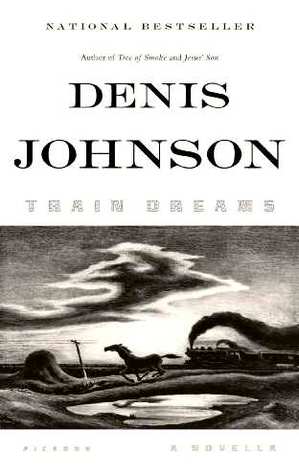
In the American West of the early 20th century, a laborer named Robert Grainier deals with personal loss and a changing world, as he sees the frontier disappear and progress take over.
The story begins in 1917, showing Robert Grainier, a logger and day laborer in remote Idaho. He lives a simple, isolated life, often in the deep woods, known for his quiet way of living. One day, while working on a bridge, Grainier and his coworkers meet a 'wild man'—a feral person who comes from the woods, tries to steal their food, and is caught. The event affects Grainier, who sees a reflection of humanity's basic state in the wild man, an unsettling sign of the disappearing wilderness and changing times. This event creates a feeling of unease and hints at the disruption of Grainier's own life.
Grainier leaves the logging camp to go back to his small cabin near the Moyea River, where his wife, Gladys, and infant daughter, Kate, live. He travels through the vast, wild landscape, looking forward to seeing them. But as he nears his home, he finds complete destruction. A large, uncontrolled forest fire, later called the Great Fire of 1910, has gone through the area, leaving only ashes. His cabin is destroyed, and there is no sign of Gladys or Kate. The realization that his family died in the fire breaks Grainier's world, leaving him with deep grief and a sense of loss that will define the rest of his life. He is left entirely alone in the burned landscape.
After the fire, Grainier searches the ruins of his cabin and the surrounding area for any trace of his wife or daughter. He sifts through the ashes, calling their names, his hope fading. He finds a charred tin cup and a doll's head, reminders of what he lost, but no bodies. The lack of remains leaves him in a state of painful uncertainty, unable to fully mourn or find closure. This search is marked by a deep sense of unreality and a lasting question of how his family died, a question that will stay with him for decades. He is left with only memories and the large, empty space where his life once was.
After the fire, Grainier becomes a lonely wanderer, unable to stay in one place. He takes various jobs across the American West, working as a logger, a railway laborer, a miner, and a handyman. His movements are determined by available work and a restless sadness. He travels by train, often in boxcars, seeing the quick industrialization and changing landscape of America. He rarely forms close relationships, his grief keeping him separate from others. His travels take him through Montana, Idaho, and other western states, each new place offering only a temporary escape from his deep inner sadness.
As the decades pass, Grainier sees the steady advance of progress. He sees more automobiles, the arrival of airplanes, and the increasing modernization of the once-wild West. These changes, while exciting to some, often make him feel alienated and nostalgic for a simpler time. He sees the wilderness he knew being tamed and used. One instance involves seeing an early airplane, an almost miraculous sight that further shows the difference between his past and the accelerating future. These encounters show his position as someone from an earlier time, a man out of step with the present.
During his travels, Grainier has a memorable meeting with a wolf trapped in a cage, part of a traveling circus. He is drawn to the animal, recognizing its wildness. Its forced confinement reflects his own inner isolation and the taming of the American frontier. He feels a connection with the wolf, a creature that represents the disappearing wilderness. Later, he watches the circus performers and the audience, feeling a deep sense of separation from the joyful show. This episode highlights his constant loneliness and his connection to the wild parts of nature that are slowly being removed by human expansion.
Despite his great loss, Grainier keeps a deep appreciation for nature and finds moments of quiet comfort. He enjoys fishing, watching wildlife, and spending time in the remaining wilderness. He sometimes helps others, offering a hand or a kind word, though he rarely seeks company himself. These small acts of connection and his time in nature give him some peace amidst his lasting sorrow. He lives simply, needing little, finding quiet dignity in his solitary life, always carrying the memory of his lost family as an invisible burden.
As Robert Grainier gets older, his memories of Gladys and Kate become clearer, often blending reality and dreams. He often remembers the days before the fire, replaying conversations and moments with his family. These memories are both a comfort and a pain, keeping his loved ones alive in his mind but also emphasizing their absence. He often dreams of them, sometimes seeing them whole and healthy, sometimes as ghost-like figures. These 'train dreams'—vivid, often unsettling visions—become a main part of his inner world, a way of dealing with his grief and the passage of time.
In his very old age, Grainier lives alone in a small, isolated shack. He is frail and mostly forgotten. One day, a figure like the 'wild man' from his youth appears at his cabin. This figure is described as an old, thin man, possibly the same person or just a symbol of the lasting wildness that mirrors Grainier's own journey. The meeting is brief and unsettling, leaving Grainier to think about existence, memory, and the untamed spirit. This final, unclear event shows the repeating nature of life and the lasting effect of the wilderness on Grainier's soul.
Robert Grainier eventually dies alone in his shack, a quiet death that reflects his solitary life. His death marks the end of an era, symbolizing the final disappearance of the frontier spirit and a way of life connected to the American West. He lived long enough to see great changes, from the raw wilderness to the start of the modern age, carrying his personal tragedy throughout.
The Protagonist
Grainier begins as a content family man, is shattered by loss, and spends the rest of his life grappling with grief and the changing world, ultimately finding a quiet dignity in his solitude.
The Supporting
Gladys's arc is tragic; she is a symbol of lost happiness and the past for Grainier, existing primarily as a memory.
The Supporting
Kate's arc, though brief, symbolizes the fragility of life and the crushing weight of lost potential for Grainier.
The Supporting
The wild man's arc is static; he is a symbolic figure representing the wildness that exists both outside and within humanity, appearing at the beginning and end of Grainier's story.
The Mentioned
Corbin is a static, minor character, serving to provide context for Grainier's early working life.
The Mentioned
The circus people are a collective, static presence, serving as a backdrop against which Grainier's isolation is highlighted.
The lasting nature of loss is a main idea of 'Train Dreams.' Robert Grainier's life is defined by the sudden destruction of his family in a forest fire. His later decades show how grief can become a part of who someone is. Johnson explores different parts of grief: the initial shock, the useless search for remnants, the blending of memory and dream, and the long, solitary process of living with an empty space. The lack of bodies for his wife and daughter leaves him in constant, unresolved sorrow, shown in his travels and his inner world.
“He never knew how the fire had taken them. He never knew where their bodies had gone. He only knew they were gone, and he was left.”
The novella clearly shows the quick change of the American West from a wild area to a modern, industrialized one. Grainier, as a logger and a man connected to nature, sees this change directly. The building of railroads, more automobiles, and the taming of large forests all represent the loss of a certain way of life and the arrival of civilization. The 'wild man' and the captive wolf are strong symbols of this disappearing frontier, reflecting Grainier's own feeling of being from another time in a new world.
“The world was changing faster than he could keep up with it, and he was changing with it, but not in the same direction.”
Memory, especially of his lost family, and dreams are central to Grainier's inner life. As he gets older, the line between his waking memories and his dreams often blurs, creating a rich, often haunting inner world. His 'train dreams'—vivid, sometimes unsettling visions—are a way for him to deal with his grief and keep his loved ones alive. These mental constructs are not just recollections but active engagements with his past, shaping his present and offering a way to connect with what he lost. They show how time is subjective and how powerful the mind is at reconstructing and reinterpreting experience.
“His dead wife and child often came to him in his sleep, and sometimes, in the borderland between sleep and waking, he heard their voices.”
After his great loss, Robert Grainier lives a life of deep isolation and solitude. While he works with others, he rarely forms close relationships, his grief acting as an unseen barrier. His wandering life and his preference for the quiet of nature over human company highlight this theme. His solitude is not always a burden; it also allows him a unique view of the changing world and deep thought. However, it also shows the deep loneliness that comes with such a singular, steady sorrow, ending in his solitary death.
“He lived alone, and he was alone, and that was the way he preferred it.”
Represents untamed nature, primal humanity, and the encroaching loss of the frontier.
The 'wild man' encountered by Grainier early in the story serves as a powerful symbol. He embodies the raw, untamed wilderness that is rapidly disappearing from the American West. He also represents a primal, almost pre-human state, a reflection of humanity stripped of civilization. His appearance deeply affects Grainier, foreshadowing the disruption of his own life and the loss of his connection to a simpler, more natural existence. His reappearance, or a similar figure, at the end of Grainier's life, suggests a cyclical nature and the enduring presence of the wild spirit, even as the world modernizes.
Represents progress, industrialization, and the relentless march of time, as well as Grainier's journeys.
Trains and railroads are central to the novella, not just in the title but throughout Grainier's life. They symbolize the relentless march of industrialization and progress that transforms the American West. Grainier often travels by train, riding in boxcars, making them a literal vehicle for his itinerant life. The 'train dreams' themselves are vivid, often unsettling visions that blend memory and reality, suggesting the powerful, unstoppable force of time and change. They represent both connection and alienation, a means of movement and a symbol of the world leaving Grainier behind.
A historical event serving as the central catalyst for Grainier's personal tragedy and the destruction of the old West.
The Great Fire of 1910 is a pivotal historical event that functions as the central plot device. It is not just a backdrop but the direct cause of Robert Grainier's profound personal loss, destroying his family and home. On a broader symbolic level, the fire represents the destructive forces of nature and, metaphorically, the 'burning away' of the old American frontier. It marks a clear dividing line in Grainier's life and in the history of the West, ushering in an era of rapid change and permanent loss, both personal and environmental.
A series of vignettes and observations reflecting Grainier's wandering life and fragmented memories.
The novella employs an episodic narrative structure, presenting Robert Grainier's life through a series of vignettes, observations, and brief encounters rather than a continuous, linear plot. This structure mirrors Grainier's itinerant existence and his fragmented memories, particularly after his traumatic loss. Each 'episode' offers a glimpse into his internal state, his interactions with the changing world, or a specific memory, allowing the author to cover decades of time and thematic development without a rigid plot. It emphasizes the quiet, observational nature of Grainier's life and the lasting impact of individual moments.
“He thought of himself as a man who could be anywhere, and that was a comfort, a kind of freedom.”
— Reflecting on his transient nature and the vastness of the American West.
“The world was a place of constant, low-level dread, and the only way to get through it was to keep moving.”
— His general outlook on life's hardships and the need for perseverance.
“It was as if the landscape itself had a memory, a long, slow sigh of time passing.”
— Observing the ancient, unchanging quality of the wilderness around him.
“He was a man who lived by his hands, and his hands knew things his mind couldn't articulate.”
— Describing his practical skills and intuitive understanding of the physical world.
“The wind was a language he understood, full of warnings and promises.”
— His deep connection to the natural elements and their subtle communications.
“Everywhere he looked, there was something to be afraid of, and something to be amazed by.”
— His dual perception of the world as both dangerous and wondrous.
“He carried his past with him like a burden, but also like a map.”
— Reflecting on how his personal history shaped his journey and identity.
“The silence of the woods was not empty, but full of unseen lives.”
— His awareness of the vibrant, hidden activity within the seemingly quiet forest.
“A man's life was a series of choices, most of them wrong, but all of them leading somewhere.”
— Philosophizing about the nature of human decisions and their consequences.
“He had seen enough of the world to know that it was mostly indifferent to human suffering.”
— His grim realization about the harsh realities of existence.
“The fire was a living thing, hungry and beautiful, and he was its keeper.”
— His role in tending the fire, seeing it as a vital, almost sentient entity.
“Dreams were just another kind of weather, passing through the mind, leaving traces.”
— His pragmatic view on the transient and impactful nature of dreams.
“He felt the vastness of the country pressing in on him, a weight and a promise.”
— His experience of the immense American landscape, both daunting and full of possibility.
Ready to see how well you understood this book? Take our interactive quiz with 10 questions.
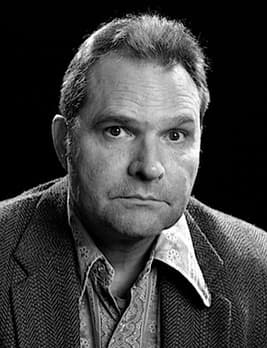
Denis Hale Johnson was an American novelist, short-story writer, and poet. He is perhaps best known for his debut short story collection, Jesus' Son (1992). His most successful novel, Tree of Smoke (2007), won the National Book Award for Fiction. Johnson was twice shortlisted for the Pulitzer Prize for Fiction. Altogether, Johnson was the author of nine novels, one novella, two books of short stories, three collections of poetry, two collections of plays, and one book of reportage. His final work, a book of short stories titled The Largesse of the Sea Maiden, was published posthumously in 2018.







