“To infinity and beyond!”
— Buzz Lightyear's iconic catchphrase, expressing boundless optimism and adventure.

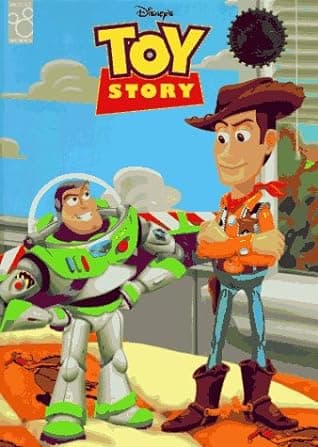
Walt Disney Company (1995)
Genre
Fantasy / Children's
Reading Time
15 min
Key Themes
See below
Sign in to track this book
Join Woody and Buzz Lightyear in a pop-up adventure that brings the classic tale of friendship, rivalry, and the journey home to three-dimensional life.
As Andy's birthday approaches, his toys, led by Woody, are worried. Each year, new toys mean they might be replaced or put at the bottom of the toy box. Woody, a pull-string cowboy doll and Andy's favorite, tries to calm everyone during their 'staff meeting' about the upcoming presents. He sends out the Green Army Men, led by Sarge, to report on the new gifts. Despite his calm front, Woody secretly worries about his own place as Andy's most loved toy, a role he has had for years.
The Green Army Men report that Andy's new birthday gift is a Buzz Lightyear action figure. Buzz is a new toy with a laser, karate chop action, and pop-out wings. He truly believes he is a real space ranger on a mission to get back to his home planet. Andy immediately likes Buzz, moving Woody from his usual spot on the bed. Woody's jealousy starts right away as Buzz becomes the new favorite, completely unaware he is a toy and convinced he must protect the galaxy.
Full of jealousy, Woody plans to get Buzz out of the way before Andy and his family move. He intends to use RC to knock Buzz behind Andy's desk, making him 'disappear' for a short time. But his plan goes wrong. RC accidentally knocks Buzz out the window and into the bushes. The other toys see this and think Woody tried to harm Buzz on purpose. They turn against him, accusing him of attempted murder and pushing him out of the group.
As Andy's family goes to Pizza Planet, Woody finds Buzz at the gas station where they stopped. Before Woody can explain or apologize, Andy's car leaves, leaving both toys stranded. Woody is glad he found Buzz, but Buzz still thinks he's a real space ranger and blames Woody for their situation. They are now alone outside, far from Andy's room, and must find a way to get back to their owner before the big move.
Woody sees a Pizza Planet truck and convinces Buzz it is a spaceship that will take him home. They sneak into the restaurant, where Buzz is drawn to a crane game, thinking it is a 'Claw' that will take him to his planet. Woody follows, trying to get him. Unfortunately, Sid Phillips, Andy's neighbor known for breaking toys, wins Buzz from the crane game. Woody, trying to save Buzz, is also grabbed by Sid. Both toys end up in Sid's scary bedroom.
Inside Sid's house, Buzz is shocked to find the 'mutant toys' – Sid's creations from broken toy parts. He tries to escape by flying out the window but crashes and breaks his arm. His sadness grows when he sees a TV commercial for Buzz Lightyear toys. This shows him he is not a real space ranger but a toy made in a factory. This news shatters Buzz's identity, making him depressed and unresponsive, as he believes his whole life has been a lie.
With Andy's moving day close, Woody knows he must save Buzz and themselves from Sid's destructive ways. He tries to get the other toys in Sid's room to help, but they are at first scared of Sid and their own changed looks. Woody eventually learns that these 'mutant toys' are not bad; they are just trying to survive and fix themselves. He plans to scare Sid into never hurting toys again, but first, he needs to get Buzz out of his depression.
Woody reminds a sad Buzz about the joy he brings to Andy and that being a toy is a good thing. Inspired, Buzz gets his confidence back and accepts being a toy. Together, they gather Sid's mutant toys. Under Woody's lead, they put on a scary show when Sid tries to blow up Buzz with a rocket. They show Sid they are alive, scaring him so much that he promises to never hurt toys again. Woody and Buzz then make a dramatic escape from Sid's backyard.
After escaping Sid's yard, Woody and Buzz see Andy's moving van driving away. They chase it, facing several problems. Woody uses RC to catch up, but the other toys in the van, still thinking Woody tried to get rid of Buzz, throw him out. Buzz, seeing Woody in danger, jumps onto RC to help him. They manage to get back to the van, but RC's batteries die, leaving them stuck again, with the van speeding away.
With RC's batteries dead, Woody remembers the rocket Sid taped to Buzz. He lights the fuse, and the rocket sends them into the air. Buzz, now fully accepting his role as a toy, flies well, guiding their fall. They fly through the air, landing perfectly inside Andy's car, right next to him. Andy is happy to find his two favorite toys, thinking they were just misplaced during the move. Woody and Buzz are finally home.
It is Christmas morning in Andy's new house. The toys are back to their old routine, nervously waiting for new presents. Woody and Buzz, now good friends, share a look. The Green Army Men are again watching. They report that Andy has a new puppy, which at first alarms the toys. But Woody and Buzz just smile, ready for whatever new adventures and friends their lives with Andy will bring. Their rivalry is gone, replaced by a strong bond.
The Protagonist
Woody transforms from a jealous leader who fears replacement to a selfless friend who prioritizes the well-being of others over his own status.
The Protagonist
Buzz undergoes a journey of self-discovery, moving from delusional heroism to accepting his identity as a toy and finding new purpose in his role.
The Supporting
Andy remains consistently loving towards his toys, serving as the unchanging anchor for their world.
The Antagonist
Sid remains destructive until a supernatural encounter with the 'alive' toys scares him into respecting them.
The Supporting
Bo Peep remains a supportive and loving figure for Woody throughout the story.
The Supporting
He remains skeptical and often critical, but ultimately part of the toy family.
The Supporting
Slinky Dog's loyalty to Woody remains steadfast throughout the story, even when others doubt him.
The Supporting
Rex remains anxious but participates in the group's efforts, showing moments of courage when needed.
The Supporting
Hamm maintains his sarcastic and observant personality, contributing to the group dynamic.
The Supporting
They consistently perform their duties as a disciplined unit, serving as the eyes and ears of the toy community.
The main theme is the toys' understanding of their own existence and purpose. Buzz Lightyear's journey from thinking he is a real space ranger to accepting he is a toy is an exploration of identity. Woody also deals with his identity as 'Andy's favorite toy' and fears losing his purpose when Buzz arrives. The story concludes that a toy's greatest purpose is to be loved and played with by a child, finding joy and meaning in their role.
“You are a toy! You are not a space ranger! You are an action figure!”
Woody's strong jealousy when Buzz arrives causes much of the first conflict. His fear of being replaced by a newer toy leads him to make bad choices, ending with Buzz accidentally falling out the window. But their shared experience outside forces them to rely on each other, changing their rivalry into a deep friendship. The film shows how overcoming jealousy can create stronger bonds.
“I'm a lost toy! I'm a lost toy!”
The toys' biggest fear is being replaced or outgrown by Andy, meaning they become useless. Andy's birthday and the family move are big reasons for this worry. Buzz Lightyear's arrival shows this fear for Woody. The film explores the problems of dealing with change and the emotional effect of feeling unwanted. Ultimately, it suggests that while change happens, true value is in lasting connections and finding new purpose.
“Andy's got a new toy! A new toy!”
A basic theme is that toys have a secret, conscious life when humans are not around. This idea creates a rich inner world for the characters, with emotions, fears, and complex social interactions. It makes the audience imagine the hidden lives of their own things and adds magic to everyday objects. This secret life is the basis for all the plot's problems and solutions.
“We're not alive, so we can't talk. Right?”
Loyalty is important to the toys' community. They are loyal to Andy, and their main goal is to return to him. Within the group, Slinky Dog's loyalty to Woody stands out, even when other toys accuse him. The wish to belong, both to Andy's collection and to each other, drives their actions. The film emphasizes the importance of sticking together and supporting each other through hard times, showing them as a family.
“You are a toy! You can't fly!”
Giving human characteristics and emotions to inanimate objects (toys).
The entire premise of 'Toy Story' rests on anthropomorphism. All the toys in Andy's room possess distinct personalities, emotions, fears, and the ability to move and speak when humans are not present. This device allows for complex character development and thematic exploration, such as identity and purpose, that would otherwise be impossible. It creates a magical secret world hidden from human perception, driving all the narrative's conflicts and resolutions.
Placing characters in an unfamiliar environment to create conflict and character development.
The 'fish-out-of-water' device is central to Woody and Buzz's adventure. Both characters, accustomed to the safe and predictable environment of Andy's room, are thrust into the dangerous and unknown outside world (the gas station, Pizza Planet, Sid's house). This unfamiliarity forces them to adapt, work together, and confront their preconceived notions, directly leading to Buzz's identity crisis and the eventual forging of their friendship.
A classic narrative element where toys are separated from their owner.
The 'lost toy' trope is a fundamental plot device, creating the primary goal for Woody and Buzz: to return to Andy. This separation generates suspense, danger, and emotional resonance, as the audience understands the toys' desperate need to be reunited with their child. It highlights the theme of loyalty and belonging, and the journey to return home becomes a quest for purpose and safety, intensifying the stakes for the characters.
A specific location that functions as a dark mirror and a crucible for character transformation.
Sid's room serves as a critical plot device, acting as a 'dark mirror' to Andy's room. It's a place where toys are not cherished but destroyed and mutated. This environment forces Buzz to confront the reality of his toy nature, leading to his breakdown and subsequent re-evaluation of his identity. For Woody, it's a place where he must overcome his jealousy and take on the role of a true leader, uniting the 'mutant toys' to escape, thus becoming a crucible for both protagonists' growth.
A narrative focus on a character's special status and the challenges it creates.
The concept of being Andy's 'favorite toy' is a significant plot device, particularly for Woody. His status as the 'chosen one' fuels his pride but also his deep insecurity and jealousy when Buzz arrives. This dynamic creates the initial conflict and drives Woody's actions to try and remove Buzz. It explores the pressures and fears associated with privilege and the struggle to share affection, ultimately leading to Woody learning a lesson in humility and shared love.
“To infinity and beyond!”
— Buzz Lightyear's iconic catchphrase, expressing boundless optimism and adventure.
“You are a toy!”
— Woody reminds Buzz Lightyear of his true identity as a toy, not a space ranger.
“The word I'm searching for, I can't say, because there's preschool toys present.”
— Mr. Potato Head expresses frustration in a humorous, child-friendly way.
“Reach for the sky!”
— Woody's catchphrase as a cowboy toy, encouraging boldness and confidence.
“You've got a friend in me.”
— From the song, highlighting the enduring bond between Woody and Andy.
“This isn't flying. This is falling with style.”
— Buzz Lightyear describes his controlled descent, showing creativity and resilience.
“I can't stop Andy from growing up, but I wouldn't miss it for the world.”
— Woody reflects on accepting change and cherishing moments with Andy.
“The toys are alive!”
— A central revelation in the story, that toys have secret lives when humans aren't around.
“You're not a space ranger. You're an action figure!”
— Woody confronts Buzz about his delusions, emphasizing truth over fantasy.
“We toys can see everything.”
— Woody explains how toys observe the world from their hidden perspective.
“I'm not a toy. I'm a collector's item.”
— Stinky Pete the Prospector distinguishes himself, showing pride and elitism.
“Andy's coming!”
— A warning cry among toys to freeze and avoid being discovered as alive.
“Being a toy is a lot better than being a space ranger.”
— Buzz Lightyear comes to accept his role and finds joy in it.
“You must be bonkers.”
— Slinky Dog expresses disbelief at a risky plan, adding lighthearted skepticism.
Ready to see how well you understood this book? Take our interactive quiz with 10 questions.

Biography coming soon.







