“The world would not be saved by the powerful, but by the clever.”
— Yrene's internal thought about the nature of solutions.

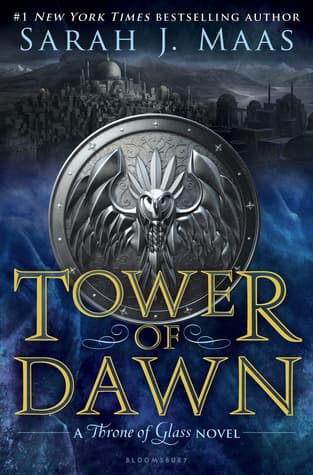
Sarah J. Maas (2017)
Genre
Fantasy / Young Adult / Romance
Reading Time
12-15 hours
Key Themes
See below
Sign in to track this book
A crippled captain, a skilled healer with a haunted past, and a fierce warrior travel to a southern continent. There, politics and ancient magic mix with their desperate search for alliances and healing, all while a looming war threatens their world.
Chaol Westfall, the former Captain of the Royal Guard, and Nesryn Faliq, a captain in the Adarlanian army, arrive in Antica, the Southern Continent's capital. Their main goal is to get an alliance with the Khagan of the Southern Continent to help Aelin Galathynius in her war against Maeve and Erawan. Chaol also seeks healing for his paralyzed legs at the famous Torre Cesme, a school for healers. Nesryn, meanwhile, must handle the Khaganate's complex politics and impress the Khagan's children to get their support for the alliance. They immediately enter Antica's rich, politically charged culture.
Yrene Towers, a talented healer at the Torre Cesme, is assigned to Chaol Westfall. She resents Adarlan deeply because Adarlanian soldiers massacred her family and destroyed her village years ago, which she survived as a child. Despite her personal feelings, Yrene is bound by her healer's oath to help those in need. Chaol, in turn, initially resists Yrene's methods and struggles with his own inner problems and self-pity about his injury. Their first interactions are full of tension and dislike, as both carry significant emotional burdens and preconceived ideas about the other.
Nesryn begins her diplomatic mission, meeting the Khagan's six children, each competing for their father's favor and the heir's position. She learns about their distinct personalities and political views, quickly seeing the powerful Crown Prince Arghun as a possible obstacle and Princess Duva as surprisingly clever. She also meets Prince Sartaq, the commander of the Rukhin, the legendary ruk riders, who at first seems distant but shows a strong interest in the political situation and the threat from Erawan. Nesryn's skills as a strategist and her sharp observations are tested as she tries to navigate the difficult political scene.
Yrene's healing methods include not just physical therapy but also confronting Chaol's emotional and psychological wounds. She pushes him to admit his guilt over the Rifthold massacre, his role in the king's tyranny, and his self-blame for his injury. Chaol resists, often lashing out, but Yrene's persistence and quiet strength slowly break through his defenses. He starts to make small but important progress in regaining movement and feeling in his legs, a process that is both physically painful and emotionally draining. Their sessions become a painful but necessary journey of self-discovery for Chaol.
Nesryn finds herself increasingly drawn to Prince Sartaq, who, unlike his siblings, seems genuinely worried about the larger threats facing their continent. He offers to take Nesryn to the Ruhkin mountains, where his people, the Rukhin, live, to show her their strength and possibly get their direct help. This journey is important for Nesryn to understand the true power of the Southern Continent's forces beyond the Khagan's court. During their travels, they face dangers and share personal stories, deepening their bond and mutual respect. Nesryn learns about the ancient history of the Ruhkin and their connection to the continent's magic.
A mysterious illness begins to spread through Antica, affecting several members of the Khagan's court and eventually the Khagan himself. Yrene discovers that this illness is not natural but a form of dark magic, like the Valg. She suspects a larger conspiracy is at work. Her healing abilities are tested as she tries to understand and fight this new threat. Chaol, despite his own ongoing healing, helps Yrene in her investigations, using his tactical mind and knowledge of dark magic from his time in Adarlan. The urgency of their mission grows as the Khagan's life hangs in the balance, putting the alliance at risk.
Through extensive research in the Torre Cesme's archives and Yrene's unique magical abilities as a healer, she and Chaol uncover the truth: the sickness is caused by a Valg prince, one of Erawan's siblings, who has been manipulating events in Antica. This prince is revealed to be hiding within the Khagan's court, subtly draining his victims' life force. Yrene discovers that her healing magic, inherited from her family, can not only heal but also destroy Valg. This revelation changes their mission from just securing an alliance to actively fighting a hidden Valg threat.
During her time with Sartaq and the Rukhin, Nesryn discovers ancient texts and stories that reveal truths about Maeve, the Fae queen, and her origins. She learns that Maeve is not Fae, but a Valg queen who betrayed her kin and fled to Erilea, where she established her rule. Nesryn also uncovers information about ancient agreements between the Rukhin and other powerful entities, and the strategic importance of the Southern Continent in the coming war. This knowledge is crucial, confirming the threat from Erawan and Maeve, and stressing the urgency of the alliance.
The Valg prince, revealed to be a member of the Khagan's family, makes his move, trying to fully possess the Khagan. Yrene, with Chaol's support and tactical guidance, confronts the Valg prince, using her new power to attack the Valg's very essence. Nesryn and Sartaq return to Antica at a critical moment, bringing the Rukhin's full strength and their knowledge of the Valg. In a climactic battle, the Valg prince is defeated, and the Khagan is saved. Seeing the true nature of the threat and the bravery of Chaol, Yrene, Nesryn, and Sartaq, the Khagan pledges his full support and the Southern Continent's armies to Aelin's cause.
After the Valg prince's defeat, Yrene fully heals Chaol, restoring sensation and strength to his legs. He can walk again, a moment of physical and emotional freedom. This healing is not just physical; Chaol has faced his past, forgiven himself, and found a new purpose. He is no longer defined by his guilt or his injury. The Khagan, impressed by his leadership and integrity, names him Hand of the King, giving him the responsibility of leading the Southern Continent's forces to Erilea. Chaol accepts, ready to face the war not as a broken man, but as a leader committed to a greater cause.
With the alliance secured and the Valg threat in Antica gone, Chaol and Yrene declare their love and marry in a quiet ceremony. Yrene, now fully embracing her power as a healer of Valg, chooses to go with Chaol to Erilea to fight alongside him. Nesryn and Sartaq, having grown close during their adventures, also strengthen their relationship, with Nesryn choosing to stay with Sartaq and the Rukhin to lead their forces into battle. The book ends with the different groups preparing to leave for Erilea, ready to join Aelin's war, with new allies, new love, and important knowledge about the true enemy.
The Protagonist
Chaol transforms from a guilt-ridden, broken man to a healed and purposeful leader, finding love and a new role as the Hand of the King.
The Protagonist
Yrene embraces her full magical potential as a Valg-destroying healer, confronts her past trauma, and finds love and purpose with Chaol.
The Supporting
Nesryn evolves from Chaol's loyal subordinate to an independent leader and diplomat, forging a new life and love in the Southern Continent.
The Supporting
Sartaq finds a true partner in Nesryn and commits his forces to the larger war, stepping into a more prominent leadership role.
The Supporting
The Khagan moves from cautious neutrality to a committed ally against Erawan, recognizing the existential threat.
The Supporting
Arghun remains a self-serving and ambitious figure, ultimately sidelined by the larger threat and his father's decisions.
The Supporting
Duva is revealed to be a victim of the Valg prince, highlighting the insidious nature of the threat.
The Supporting
Hasar acts as a neutral, observant party who eventually supports the alliance after witnessing the Valg threat.
The Supporting
Falkan remains a steadfast and loyal companion to Nesryn throughout her journey.
This theme is central to Chaol's journey. His physical paralysis reflects his emotional and psychological wounds - his guilt over past actions as the King of Adarlan's Captain of the Guard, his role in the kingdom's tyranny, and his self-blame. Yrene's healing is not just about mending his body but forcing him to face these traumas and eventually forgive himself. The process is painful but necessary for his recovery and finding a new purpose. It shows that true healing means facing one's inner problems and taking responsibility.
““You do not have to be chained to the past. You do not have to let it define you. You can choose to be free.””
Both Chaol and Yrene struggle with who they are. Chaol, stripped of his rank and physical abilities, must find a new identity beyond 'Captain of the Guard.' Yrene, haunted by her past and at first hesitant to use her full magical potential, must accept her role as a powerful healer. Nesryn also deals with her identity, moving from Chaol's subordinate to an independent diplomat and leader. Each character's journey involves letting go of old labels and embracing a new, self-chosen purpose, often found by serving a larger cause.
““It was not enough to survive. They had to live.””
The novel heavily features the Southern Continent's complex political landscape. Nesryn's mission to secure an alliance with the Khagan requires navigating the rivalries and ambitions of his six children, each with their own goals. The Khaganate's internal power struggles and some members' reluctance to get involved in Erilea's war highlight the complexities of international relations. The alliance's success depends not just on military strength but on careful diplomacy, understanding cultural differences, and finding common ground, especially when facing a shared threat.
““The game was never about the pieces, but the player.””
The true nature of the Valg and their subtle methods are further explored. The mysterious illness in Antica is revealed to be the work of a hidden Valg prince, showing their ability to corrupt and drain life subtly. This expands on the Valg lore from previous books, showing them as not just monstrous invaders but clever manipulators. Yrene's unique healing magic, which can destroy Valg, and Nesryn's discovery of Maeve's true Valg origins and ancient pacts, emphasize the world's deep, ancient magical history and the specific tools needed to fight this widespread evil.
““Magic was not inherently good or evil. It simply was. How it was wielded, that was the true measure.””
A physical manifestation of Chaol's emotional and psychological wounds.
Chaol's paralysis serves as a powerful symbol of his broken spirit and guilt. It forces him into a vulnerable position, compelling him to confront his inner demons and rely on others, particularly Yrene. The long, arduous healing process mirrors his emotional journey, making his eventual physical recovery a profound metaphor for his psychological and spiritual healing. It also grounds the fantastical elements of the story with a very human struggle, allowing for a deeper exploration of trauma and recovery.
A legendary school of healers and a repository of ancient knowledge.
The Torre Cesme is not just a place of healing but a vital narrative hub. It provides the setting for Chaol and Yrene's developing relationship and Yrene's growth as a healer. More importantly, its vast archives contain ancient texts and lore crucial to understanding the Valg, Maeve, and the continent's history. It functions as a source of exposition and discovery, allowing Yrene to uncover the true nature of the mysterious illnesses and her own unique magical abilities, which are pivotal to defeating the Valg prince.
A diverse group of heirs representing different political factions and challenges.
The Khagan's six children serve as a microcosm of the Southern Continent's political landscape and a series of diplomatic hurdles for Nesryn. Each child embodies different traits—ambition, cunning, honor, observation—forcing Nesryn to adapt her strategies. Their rivalries and individual perspectives provide insight into the Khaganate's internal dynamics and the challenges of forging a united front. They allow for the exploration of political intrigue and diplomacy, making the securing of the alliance a complex and earned achievement rather than a simple transaction.
Ancient ruk riders holding crucial historical and magical knowledge.
The Ruhkin, led by Prince Sartaq, and their majestic ruk mounts, represent a powerful military force and a repository of ancient wisdom. Nesryn's journey to their mountain home allows for the revelation of critical historical information, particularly regarding Maeve's true Valg origins and ancient pacts. This knowledge is not only vital for understanding the larger war but also showcases the depth of the world-building, connecting the Southern Continent's unique culture and magic to the overarching narrative of Erilea's struggle against the Valg.
“The world would not be saved by the powerful, but by the clever.”
— Yrene's internal thought about the nature of solutions.
“She was a healer. Not a fighter. And yet she had fought, and won.”
— Yrene reflects on her journey and unexpected strength.
“There was no such thing as a small act of kindness. Every ripple spread.”
— Yrene's philosophy on compassion and its impact.
“He knew what it was to be broken, and he knew what it was to be put back together again, piece by painful piece.”
— Chaol's reflection on his own recovery and understanding of pain.
“Love was not a thing to be earned, but a gift to be given, freely and without expectation.”
— Yrene's realization about the true nature of love.
“Sometimes, the bravest thing you could do was to ask for help.”
— Chaol grappling with his pride and need for assistance.
“The scars were not a mark of weakness, but a testament to survival.”
— Yrene's perspective on physical and emotional scars.
“Hope was a dangerous thing, but it was also the only thing that kept them going.”
— A character's internal thought about the necessity of hope in dire times.
“You could not truly heal others until you had begun to heal yourself.”
— A core theme for both Yrene and Chaol in their respective journeys.
“The greatest power was not in wielding a sword, but in wielding knowledge.”
— Yrene's belief in the power of her healing and learning.
“Every choice led to another, and every path had its own price.”
— A general reflection on the consequences of decisions.
“To truly live was to embrace the pain as much as the joy.”
— Yrene's understanding of a full and complex life.
“It was not about being fearless, but about acting despite the fear.”
— Chaol's definition of true courage.
“The heart knew what it wanted, even when the mind tried to deny it.”
— A reflection on romantic feelings and internal conflict.
Ready to see how well you understood this book? Take our interactive quiz with 10 questions.

Biography coming soon.







