“The truth, however ugly in itself, is always curious and beautiful to seekers after it.”
— Neville Strange reflects on the nature of truth during the investigation.

Agatha Christie (1944)
Genre
Thriller / Mystery
Reading Time
300 min
Key Themes
See below
Sign in to track this book
A meticulously orchestrated series of seemingly unrelated past events converges at a tense seaside house party, culminating in a precisely planned murder that leaves no one above suspicion.
The story opens with Superintendent Battle reflecting on the concept of 'zero' – the point from which a murder case truly begins. We are introduced to the central figures through their intertwined romantic lives. Neville Strange, a famous tennis player, is divorced from his first wife, Audrey, and now married to the beautiful Kay. This creates a tense dynamic, as Audrey, despite her quiet demeanor, still holds a significant place in Neville's past. The stage is set for a gathering at Gull's Point, the seaside home of Lady Tressilian, Neville's wealthy, elderly aunt. Lady Tressilian's invitation brings all the key players, including a family friend, Thomas Royde, and a younger woman, Mary Aldin, together for a holiday.
The house party at Gull's Point begins with tension. Neville Strange, his new wife Kay, and his ex-wife Audrey are all present, along with Lady Tressilian, her companion Miss Amabel Jessop, and family friends Thomas Royde and Mary Aldin. The atmosphere is strained, particularly between Kay and Audrey. Kay is openly affectionate with Neville, while Audrey remains reserved. Lady Tressilian, despite her age, is sharp and observant, aware of the dynamics at play. The guests engage in typical holiday activities, but the emotional friction between Neville, Kay, and Audrey becomes increasingly clear, hinting at brewing conflict and unresolved feelings.
Lady Tressilian, the matriarch of Gull's Point, confides in her companion, Miss Jessop, and others about a strange feeling she has that something 'wicked' is going to happen at the house. She doesn't specify what or why, but her premonition adds suspense to the already tense gathering. Her remarks are initially dismissed as the eccentricities of an old woman, but they heighten the reader's awareness that the peaceful facade of the holiday could be shattered. This foreshadowing sets a dark tone and suggests that the seemingly random interactions among the guests might be leading towards a predetermined, sinister outcome.
During a tennis match, Neville Strange breaks his racket in a fit of temper, an event that seems trivial but later takes on significance. More importantly, it is revealed that Audrey had a past suicide attempt years ago, which further complicates her image and Neville's feelings towards her. This history adds fragility to Audrey's character, and some characters wonder about the true nature of her relationship with Neville, past and present. These details, seemingly disparate, are woven into the narrative, suggesting that past events and personality traits are all contributing to the escalating tension at Gull's Point and the potential for tragedy.
The inevitable tragedy strikes: Lady Tressilian is found dead in her bed, having been brutally bludgeoned. The discovery sends shockwaves through Gull's Point. The initial investigation points to a robbery, but Inspector Leach, working under Superintendent Battle, quickly realizes that the situation is far more complex. The houseguests are all suspects, and their alibis and motives are scrutinized. The murder shatters the fragile peace of the house party, bringing the underlying tensions to the surface and forcing everyone to confront the possibility that one of them is a cold-blooded killer. The investigation begins, focusing on the relationships and interactions among the gathered individuals.
In a shocking turn of events, Thomas Royde, one of the seemingly innocuous guests, confesses to Lady Tressilian's murder. He claims he was in love with Audrey and killed Lady Tressilian because she stood in the way of his happiness with Audrey. Following his confession, Royde commits suicide. This appears to be a clear resolution to the case, and the police initially accept it. Superintendent Battle, with his keen understanding of human psychology, finds elements of the confession and suicide suspicious. He suspects a more intricate plot is at play, not willing to accept such a convenient and seemingly straightforward solution.
Before the dust can settle on Royde's supposed confession and suicide, another violent incident occurs. Kay Strange is attacked and severely injured, though she survives. This second violent act, despite Royde's death, convinces Superintendent Battle that the true murderer is still at large and that Royde was either framed or manipulated. The attack on Kay is a critical turning point, indicating that the killer is still active and that the earlier events were part of a larger, more complex design. The focus of the investigation shifts, and Battle begins to re-examine all the evidence and relationships with renewed suspicion.
Superintendent Battle, now convinced of a deeper conspiracy, focuses on the seemingly minor details and background stories. He eventually uncovers the true identity of Miss Amabel Jessop, Lady Tressilian's companion. It is revealed that 'Miss Jessop' is actually Mary Aldin's aunt, a woman with a history of mental instability and a past connection to a child's death. This revelation links back to the earlier, seemingly unrelated incident of a wrongful accusation of theft against a schoolgirl, which was orchestrated by the true mastermind to discredit Audrey many years ago. Battle realizes that the entire sequence of events, from the past to the present, has been meticulously planned.
Through careful deduction and piecing together the seemingly disparate clues, Superintendent Battle reveals the shocking truth: Audrey Strange is the true murderer. She orchestrated everything, including the murder of Lady Tressilian, the framing of Thomas Royde, and the attack on Kay. Audrey, driven by deep resentment and a desire to reclaim Neville, meticulously planned the entire scenario. Her quiet, unassuming demeanor served as a perfect disguise for her cunning and manipulative nature. Battle exposes her elaborate plot, showing how she used her knowledge of people and past events to set up a chain of events leading to murder and misdirection.
Audrey's motive is revealed to be a cold, calculated desire to eliminate Kay and regain Neville, combined with deep resentment towards Lady Tressilian, whom she perceived as a barrier. She manipulated Neville into bringing Kay to Gull's Point, knowing the tension this would create. She then murdered Lady Tressilian, making it appear as a robbery gone wrong. She also carefully orchestrated the 'suicide' of Thomas Royde, planting false evidence to frame him. The attack on Kay was intended to make it seem as though a vengeful Royde had lashed out, or to eliminate Kay once and for all. Audrey's meticulous planning and psychological manipulation are fully exposed, showing her as a truly devious killer.
Battle explains how Audrey masterminded the entire plot. She had a perfect alibi for Lady Tressilian's murder, having left a window open and returned to the house after the others were asleep. She used her knowledge of the house and the habits of its occupants to her advantage. She also manipulated Thomas Royde, subtly encouraging his feelings for her and knowing he would be a convenient scapegoat. The broken tennis racket was a pre-planned detail to provide a reason for Neville to be out of the house. The wrongful accusation against the schoolgirl in the past was a test run of her manipulative abilities and her capacity for cold calculation, demonstrating her long history of deceit.
With all the evidence meticulously laid out by Superintendent Battle, Audrey Strange is finally confronted and apprehended. Her carefully constructed facade crumbles, revealing the cold, calculating murderer beneath. The truth about Lady Tressilian's murder, Thomas Royde's framing, and Kay's attack finally comes to light. The events have caused immense pain and tragedy, but Battle's relentless pursuit of the truth ensures that justice is served. The 'zero' point of the crime, the initial, seemingly unrelated events, are all connected, revealing a complex web of malice that culminates in Audrey's downfall and the restoration of order.
The Protagonist
Battle starts by observing the complex relationships, then systematically unravels a meticulously planned murder, revealing the true mastermind.
The Antagonist
Initially appearing as a victim of circumstances, Audrey is gradually revealed to be the calculating and ruthless orchestrator of the entire murder plot.
The Supporting
Neville remains largely static, a figure of emotional conflict who is manipulated by Audrey without realizing it until the end.
The Supporting
Kay is initially a source of overt tension, then becomes a victim, surviving an attack and ultimately being freed from the dangerous entanglement.
The Victim
Lady Tressilian serves as the catalyst for the plot, her murder being the central mystery.
The Supporting
Thomas is manipulated into confessing to murder and committing suicide, serving as a significant red herring in the plot.
The Supporting
Initially a background figure, Miss Jessop's true identity and past are revealed to be crucial links in solving the overarching plot.
The Supporting
Mary acts as an observant bystander, providing an external perspective on the unfolding drama.
The Supporting
Leach begins by following standard police procedures, then learns from Battle's more nuanced approach to investigation.
The novel explores how evil can manifest not as a sudden outburst, but as a meticulously planned, long-term scheme. Audrey Strange's plot is not a crime of passion but a cold, calculated design stretching back years, involving the manipulation of multiple individuals and events. Lady Tressilian's premonition of 'wickedness' highlights the insidious nature of this premeditated malice. Christie demonstrates that the most dangerous criminals are often those who appear least threatening, meticulously working 'towards zero' – the starting point of their crime.
“A murder, like a play, must have a beginning, a middle, and an end. But in this case, the beginning was a long, long time ago...”
A central theme is the deceptive nature of appearances. Audrey Strange, seemingly fragile and quiet, is revealed to be a ruthless and cunning murderer. Thomas Royde, the 'confessed' killer, is an innocent pawn. The tranquil setting of Gull's Point belies the intense jealousy, resentment, and murderous intent simmering beneath the surface. Characters are frequently misled by what they see and hear, underestimating Audrey's true nature. Superintendent Battle's role is to peel back these layers of deception to expose the hidden truth, emphasizing that things are rarely what they seem.
“It was a very good performance. She acted the part of the distraught wife very well.”
The destructive power of obsession and unrequited love drives much of the plot. Audrey's obsessive desire to reclaim Neville and eliminate Kay fuels her murderous actions. Thomas Royde's unrequited love for Audrey makes him a perfect, unwitting pawn in her scheme, leading to his tragic downfall. These intense, often unhealthy, emotional attachments distort judgment and lead characters to commit extreme acts, highlighting how love, when twisted, can become a powerful force for destruction rather than connection.
“He loved her, you see. Loved her in that quiet, devoted way that's so easy to exploit.”
The novel champions a form of justice rooted in deep psychological understanding rather than mere circumstantial evidence. Superintendent Battle's unique approach, focusing on the 'zero' point of a crime and the motivations behind it, allows him to see beyond the obvious red herrings. He understands that a murder is not an isolated event but the culmination of a series of prior actions and psychological pressures. This theme shows Christie's belief that true detection requires an understanding of human nature and the complex interplay of relationships, not just forensic evidence.
“A murder is not an accident. It is a carefully planned sequence of events, leading to a certain end.”
The past plays a defining role in the present events. Audrey's childhood malice, her past suicide attempt, and the seemingly unrelated incident of a wrongful accusation against a schoolgirl are all meticulously woven into the fabric of the murder plot. The novel argues that past actions and unresolved resentments cast long shadows, ultimately dictating the course of future events. The killer's intricate plan relies heavily on exploiting past relationships and grievances, demonstrating that 'towards zero' also means tracing the origins of malice far back in time.
“The past, you see, is never really dead. It's just waiting for its moment.”
A philosophical concept for understanding the origin of a crime
Superintendent Battle's concept of the 'zero' point is a central philosophical and structural device. It refers to the seemingly innocuous, often distant, starting point of a crime, long before the actual murder. Battle believes that to truly understand a murder, one must trace it back to its fundamental origins – the initial motivations, relationships, or seemingly minor events that set the stage. This device allows Christie to build a complex narrative, connecting disparate past events (like the schoolgirl's accusation or Audrey's suicide attempt) to the present murder, illustrating that murder is rarely a sudden act but a culmination of a long process.
Misleading clues and characters designed to distract the reader
Christie masterfully employs red herrings to mislead both the characters and the reader. The most prominent example is Thomas Royde's confession and subsequent suicide, which appears to solve the case neatly. This provides a seemingly logical, albeit tragic, conclusion that distracts from the true killer. The strained relationships between Neville, Kay, and Audrey also serve as red herrings, making any of them appear capable of the crime. These diversions keep the reader guessing and allow the real murderer to operate in the background, making the eventual reveal more shocking.
The narrative subtly misdirects by focusing on surface appearances
While not a first-person narrator, the narrative perspective subtly misdirects the reader by presenting characters primarily through their outward appearances and the perceptions of others. Audrey, in particular, is consistently portrayed as fragile and sympathetic, making her eventual reveal as the killer deeply surprising. The narrative focuses on the obvious tensions between Neville and Kay, diverting attention from the true, deeper malice. This subtle unreliability in character portrayal is a key device that allows Christie to maintain suspense and deliver a powerful twist.
A meticulously constructed alibi that challenges investigators
The killer's use of a seemingly perfect alibi is a classic Christie device. Audrey meticulously plans her actions to ensure she appears innocent, constructing a watertight alibi for the time of Lady Tressilian's murder. This involves careful timing, manipulating the environment (like leaving a window open), and exploiting the assumptions of others. The challenge for Superintendent Battle is to deconstruct this perfect alibi, proving that what seems impossible is, in fact, the result of cunning and precise planning, pushing the boundaries of conventional detection.
The killer's use of psychological tactics to control others
Psychological manipulation is a pervasive plot device. Audrey doesn't just commit murder; she orchestrates events by playing on the emotions and vulnerabilities of those around her. She leverages Neville's indecisiveness, Thomas Royde's unrequited love, and the general tension among the guests. Her ability to subtly influence others and set them against each other, or to make them act in ways beneficial to her plan, is central to the complexity of the crime. This device highlights the killer's cunning intellect and the insidious nature of their evil, extending beyond mere physical violence.
“The truth, however ugly in itself, is always curious and beautiful to seekers after it.”
— Neville Strange reflects on the nature of truth during the investigation.
“It is a curious thing, but I have noticed that the people who are most convinced that they are going to be murdered are almost never murdered. It is the unsuspecting person who is suddenly struck down.”
— Superintendent Battle observes a pattern in murder cases.
“One must always be careful of the quiet ones. They are the ones who think.”
— A character warns about underestimating reserved individuals.
“The past is never dead. It's not even past.”
— Reflection on how past events and relationships influence the present mystery.
“There is nothing so dangerous for anyone who has something to hide as conversation!”
— A cautionary note about how talk can reveal secrets during the investigation.
“People who are fond of dogs are always nice people.”
— A light-hearted observation made by a character about others at the gathering.
“The impossible could not have happened, therefore the impossible must be possible in spite of appearances.”
— Superintendent Battle applies logical deduction to a puzzling aspect of the case.
“It is a pity that one cannot put the clock back.”
— A character laments past actions that led to the current situation.
“Fear is a very terrible thing. It can make people do things they would never dream of doing otherwise.”
— Discussion on how fear motivates characters' actions in the thriller.
“The most likely person is usually the guilty one. But in this case, the most likely person is the one person who couldn't have done it.”
— Superintendent Battle puzzles over the contradictions in the suspects.
“There is no detective like time.”
— Reflection on how time reveals truths that investigations might miss.
“A woman's intuition is a remarkable thing. It is often better than a man's reason.”
— A character praises intuitive insights during the mystery-solving.
“The mind is a curious machine. It works best when it is not trying too hard.”
— Observation on how insights often come when least expected in the investigation.
“In life, as in chess, forethought wins.”
— A character draws an analogy between strategic thinking in the mystery and chess.
Ready to see how well you understood this book? Take our interactive quiz with 10 questions.
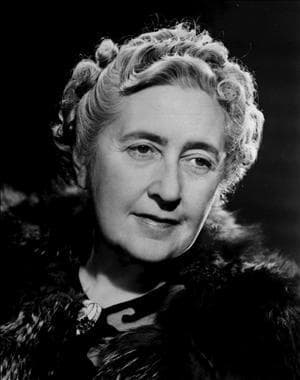
Dame Agatha Mary Clarissa Christie, Lady Mallowan, was an English writer known for her 66 detective novels and 14 short story collections, particularly those revolving around fictional detectives Hercule Poirot and Miss Marple. She also wrote the world's longest-running play, the murder mystery The Mousetrap, which has been performed in the West End since 1952. A writer during the "Golden Age of Detective Fiction", Christie has been called the "Queen of Crime". She also wrote six novels under the pseudonym Mary Westmacott. In 1971, she was made a Dame (DBE) by Queen Elizabeth II for her contributions to literature. Guinness World Records lists Christie as the best-selling fiction writer of all time, her novels having sold more than two billion copies.







