“The wind howled a mournful tune, rattling the windows of the old house as if trying to tear them from their frames.”
— Describing the weather and atmosphere at the beginning of the story.

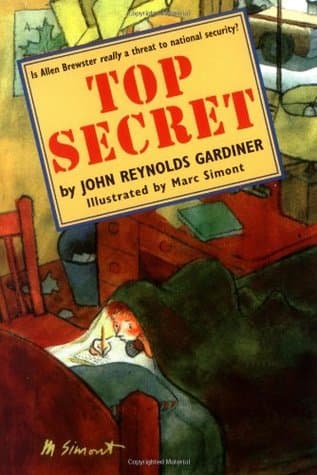
John Reynolds Gardiner (1984)
Genre
Fantasy / Children's / Mystery / Science Fiction / Young Adult
Reading Time
120 min
Key Themes
See below
Sign in to track this book
When nine-year-old Allen's human photosynthesis experiment turns him green, sprouts roots, and catches the attention of the President, he must protect his top-secret botanical transformation from both his skeptical science teacher and national security threats.
Allen, a nine-year-old boy, thinks about his upcoming science project. Unlike his classmates who choose common topics, Allen wants to explore human photosynthesis – the idea that humans could convert sunlight into food, like plants. He is inspired by a sudden thought and the wish to do something original. His parents, especially his mother, and his science teacher, Mr. Plum, are skeptical and try to convince him to choose safer, more traditional experiments. Allen is determined, driven by scientific curiosity and stubbornness. He starts researching and planning his unusual experiment, facing adult disapproval.
Allen ignores his parents' and Mr. Plum's warnings and starts his experiment. He believes that for human photosynthesis, he needs sunlight and a special nutrient source, like plants get minerals from soil. He buys what he thinks is nutrient-rich soil from a garden store, convinced it is the key. Allen begins his daily routine: sitting in direct sunlight for long periods and secretly eating small amounts of soil mixed with water. He carefully records his observations, hoping to find proof of his theory, all while trying to keep his activities secret from his family.
As weeks pass, Allen notices unusual changes in himself. His skin starts to turn green, especially after being in the sun for a long time. He loses his appetite for regular, cooked food, and instead wants raw vegetables and, more strangely, sunlight itself. He feels a strong urge to be outside, soaking up the sun's rays. His parents notice his changing skin color and his refusal to eat normal meals. They worry about his health, thinking it is an illness rather than his science project.
The most alarming symptom appears one morning: Allen finds small, fibrous roots growing from the bottoms of his feet. This physical change confirms his theory – he is turning into a plant. The realization is exciting and scary. He tries to hide these developments from his parents, fearing their reaction and possible interference with his experiment. The roots make walking uncomfortable, and his desire for sunlight grows, making it hard to stay inside. He now truly believes his human photosynthesis experiment is working, but the results are bigger than he imagined.
When Allen tries to explain his transformation to Mr. Plum, his science teacher dismisses it as an overactive imagination, a joke, or attention-seeking. Mr. Plum believes human photosynthesis is impossible and scolds Allen for not doing a 'real' science project. Allen's parents, seeing his green skin, lack of appetite, and strange behavior, worry more. They think about taking him to a doctor, convinced he is sick, and unwilling to believe his science project is causing his unusual symptoms.
News of Allen's condition, perhaps from an anonymous tip or school leak, reaches the government. To Allen's surprise, he gets a phone call directly from the President of the United States. Unlike his teacher and parents, the President takes Allen's claims of turning into a plant seriously, understanding the scientific and national security implications of human photosynthesis. The President is interested and concerned, realizing that Allen's discovery could change food production and human survival, but also brings new challenges.
The President sends a team of scientists and agents to Allen's home, setting up a secure, top-secret environment. Allen is now important to the nation. He is taken to a secret facility where his transformation can be watched and studied by top scientists. He learns that his condition is a matter of national security, and he must keep his abilities a complete secret. Allen is overwhelmed but also happy to finally have adults who believe him and take his science seriously, even if it means becoming a test subject.
The school science fair approaches, and Allen is still expected to present his project, despite his top-secret status. This creates a challenge for Allen and the government agents. How can he show his 'human photosynthesis' project without revealing his plant-like transformation to the public? The President's team plans to let Allen participate without compromising national security or exposing him to unwanted attention. Allen must find a way to subtly show his findings, perhaps through a general presentation on plant biology, while keeping his personal experience hidden.
At the science fair, Allen, with quiet help from the government agents, presents the theoretical ideas of photosynthesis and its possible uses, carefully avoiding any direct mention of his transformation. He uses diagrams and general scientific explanations, making his project sound smart and well-researched, but safely hypothetical. The judges, including a confused Mr. Plum, are impressed by his research and new approach, even if they do not fully understand the truth. Allen aces his science project, getting the recognition he wanted, while keeping his secret safe from public knowledge and securing his place as a scientific marvel in the eyes of the President.
The Protagonist
Allen transforms from a regular, imaginative boy into a scientific anomaly, learning to adapt to his new nature and the responsibilities of a top-secret discovery.
The Supporting
He remains largely unchanged in his scientific views, but is subtly challenged by Allen's unexpected success.
The Supporting
Her primary arc involves growing concern over Allen's health, ultimately accepting a vague explanation for his 'recovery' without knowing the full truth.
The Supporting
Like Allen's mother, his arc focuses on his growing worry for Allen's health, eventually accepting the cover story without full knowledge.
The Supporting
He transitions from being an informed leader to Allen's protector and a key figure in managing a scientific breakthrough of global importance.
The Supporting
They are initially tasked with understanding Allen's condition and transition to managing his public presence while maintaining national security.
The book explores the tension between new, unconventional ideas and standard scientific practices. Allen's idea of human photosynthesis is first met with disbelief and jokes from his teacher, Mr. Plum, and even his parents, who prefer traditional science projects. This theme shows the challenges innovators face when they think differently and the resistance they often encounter from those who stick to old ideas. Allen's eventual success, though secret, shows the value of questioning existing beliefs.
“''Human photosynthesis!' scoffed Mr. Plum. 'That's not science, Allen, that's fantasy! You need a real project.'”
As Allen turns into a plant-human hybrid, he deals with his changing identity. He experiences physical changes like green skin and roots, as well as new desires and a strong need for sunlight. This makes him consider what it means to be human and how his unique abilities make him different. The story is about Allen accepting his new self, even when others around him cannot understand it. His validation comes not from his immediate community, but from the President, allowing him to accept his extraordinary nature.
“He looked at his feet, and there they were, tiny, fibrous roots beginning to sprout. 'It's happening,' he whispered, a mix of fear and wonder in his voice.”
The story looks at how scientific discovery happens, from an initial idea to experiments and unexpected results. Allen's project, though strange, follows a basic scientific method. The book shows how big breakthroughs can come from unusual thinking and how the scientific community, first Mr. Plum and later the President's team, reacts to such discoveries. It also touches on the ethical concerns and the need for secrecy when a discovery has a large societal impact.
“Allen knew it was dangerous, but a true scientist had to take risks. He had to prove his theory.”
A main theme is the difference between those who believe Allen's claims and those who do not. His parents and teacher cannot accept his transformation, thinking his symptoms are illness or imagination. In contrast, the President immediately sees the seriousness and truth of Allen's situation. This shows how important open-mindedness is when facing the unknown and the isolation one can feel when their truth is met with disbelief, finding support from unexpected allies.
“No one believed him. Not his mom, not his dad, not even Mr. Plum. No one, that is, except the President of the United States.”
An item that drives the plot forward by initiating Allen's transformation.
The 'special soil' Allen obtains from the garden store acts as a MacGuffin. While its exact scientific properties or origin are not deeply explored, it serves as the catalyst for Allen's transformation into a plant-human hybrid. It's the tangible element that Allen believes is necessary for his experiment to work, alongside sunlight. Its mysterious nature allows the plot to progress quickly into the fantastic, focusing on the consequences of the transformation rather than the specifics of its botanical composition.
The audience knows Allen is turning into a plant, while most characters remain oblivious.
Dramatic irony is heavily utilized as the reader is privy to Allen's secret transformation and the reality of his human photosynthesis, while his parents and teacher, Mr. Plum, remain completely unaware. They interpret his green skin, cravings, and odd behavior as signs of illness or childish antics. This creates humorous and tense situations, as Allen tries to hide his symptoms and explain his condition to disbelieving adults, enhancing the reader's connection to Allen's unique predicament and highlighting the adults' inability to see beyond conventional understanding.
Allen's account of his transformation is disbelieved by adults, making him 'unreliable' in their eyes.
While Allen himself is a reliable narrator of his own experiences, the adults around him perceive his claims as unreliable. His parents think he's sick or imaginative, and Mr. Plum thinks he's making up a fantastical story. This device emphasizes the chasm between Allen's reality and the adults' conventional understanding. It forces Allen to navigate a world where his truth is dismissed, until the President's intervention, which validates his 'unreliable' narrative, proving him right and the adults wrong.
Mr. Plum's traditional views contrast sharply with Allen's innovative spirit.
Mr. Plum serves as a foil character to Allen. His rigid, conventional scientific views and skepticism directly contrast with Allen's imaginative, boundary-pushing approach to science. Mr. Plum's disbelief and insistence on 'real' science highlight Allen's originality and determination. This contrast underscores the theme of innovation versus convention, making Allen's eventual, albeit secret, success against Mr. Plum's initial dismissal more impactful. Mr. Plum represents the establishment that new ideas often have to overcome.
“The wind howled a mournful tune, rattling the windows of the old house as if trying to tear them from their frames.”
— Describing the weather and atmosphere at the beginning of the story.
“He knew, with a certainty that chilled him to the bone, that something was terribly wrong.”
— Protagonist's growing unease as he uncovers clues.
“The secret wasn't just hidden; it was buried under layers of dust and forgotten memories.”
— Referring to the deep-seated nature of the mystery.
“Sometimes, the most ordinary things hold the most extraordinary secrets.”
— A character's realization about the world around them.
“The old clock in the hall ticked with an ominous rhythm, counting down to an unknown event.”
— Building tension through environmental details.
“He felt a prickle of excitement mixed with dread, a common companion on the path to discovery.”
— Describing the protagonist's mixed emotions during his investigation.
“The truth, like a stubborn weed, would always find a way to push through the cracks.”
— A philosophical observation about the nature of truth.
“Every shadow seemed to hold a whispered secret, every creak of the floorboards a hidden message.”
— Illustrating the protagonist's heightened senses and paranoia.
“It wasn't just about finding answers; it was about understanding the questions.”
— Highlighting the intellectual depth of the mystery.
“The world was far stranger and more wonderful than he had ever imagined.”
— Protagonist's reflection after a significant discovery.
“Courage wasn't the absence of fear, but the decision to act in spite of it.”
— A character's internal monologue about facing danger.
“He realized then that some secrets were meant to be shared, not kept locked away.”
— A turning point for a character regarding trust and revelation.
“The faint glow of the moon cast long, dancing shadows, making ordinary objects seem otherworldly.”
— Setting a magical or mysterious nighttime scene.
“Even the smallest clue could unravel the biggest mystery.”
— Emphasizing the importance of details in solving the puzzle.
Ready to see how well you understood this book? Take our interactive quiz with 10 questions.

Biography coming soon.







