“For thirty-five years now I’ve been in a wastepaper an' that’s my life. I’m a compactor. I’m a papermasher. I live in a world of wastepaper, and I’m the king of it.”
— Hanta's self-introduction and his life's work.

Bohumil Hrabal (1992)
Genre
Literary Fiction / Philosophy
Reading Time
90 min
Key Themes
See below
Sign in to track this book
In a communist state, a wastepaper compactor secretly salvages forbidden books, becoming an accidental scholar whose mind is a chaotic library of others' thoughts, until automation threatens to silence his literary sanctuary forever.
Haňťa, an old man who has spent 35 years compacting wastepaper in a Prague cellar, introduces himself and his unusual life. He describes his job, feeding old books, newspapers, and other paper into a hydraulic press. However, Haňťa cannot bring himself to destroy beautiful or meaningful books, so he rescues them, often at the last moment. His small apartment above the cellar is overflowing with these salvaged treasures, creating a personal library that has shaped his intellect and worldview. He muses on the irony of his profession: a destroyer of books who has become deeply educated by them, blurring his own thoughts with those of the great philosophers and writers he has encountered.
Haňťa details his daily rituals, which involve coffee, beer, and deep thought inspired by the books he handles. He often drinks beer while working, finding solace and clarity in the simple act. He recounts an incident where he accidentally compacted himself into a bale with a statue of Hegel, a moment that shows his deep connection to the intellectual world he both destroys and preserves. He often reflects on knowledge, beauty, and the human condition, frequently quoting or paraphrasing the authors he has read. His musings are punctuated by the rhythmic thud of the hydraulic press, a constant reminder of his unique role.
Haňťa remembers his youth and an encounter with a young gypsy girl. He bought her a beer and tried to educate her with a book by Kant, but she dismissed it for practical concerns. This memory shows Haňťa's early, perhaps naive, idealism about the power of books and the different ways people engage with knowledge. He also recalls the bar where he spent much of his early life, observing the interactions and conversations of ordinary people, which further shaped his understanding of the world alongside his growing literary education. These early experiences set the stage for his later intellectual development.
The story changes with the arrival of a group of young, muscular, and efficient workers. These men represent the future: a new, fully automatic hydraulic press is being installed, designed to compact wastepaper with unprecedented speed and without human intervention. Haňťa observes them with disdain and resignation. Their methods are brutal and unthinking; they compact everything without a second glance, a stark contrast to Haňťa's careful, almost reverent, approach to books. He understands that this modernization will make his unique, humanistic role obsolete, signaling the end of his era.
The new automatic press is installed, a massive, impersonal machine that dwarfs Haňťa's old, familiar equipment. He watches as the young workers feed vast quantities of paper into it, including valuable books, without hesitation. The efficiency of the new press is undeniable, but it lacks the soul and discretion Haňťa brings to his work. He feels increasingly alienated and redundant; his practice of saving books is now irrelevant. The noise and speed of the new machine symbolize the relentless march of progress that threatens to crush not just paper, but also the individual spirit and the appreciation for culture.
Haňťa's apartment, filled to the brim with salvaged books, is more than just a living space; it is a sanctuary and a testament to his life's work. He describes the precarious stacks of books, reaching the ceiling, creating narrow pathways through his home. Each book represents a victory against destruction, a preserved fragment of human thought and beauty. This personal library is his true university, a chaotic yet meaningful collection that has shaped his identity. He finds comfort and intellectual stimulation within these walls, even as the outside world threatens to strip him of his purpose.
As the new press takes over, Haňťa spends more time with his old hydraulic press, treating it almost like a living thing. He cleans it, oils it, and remembers the countless bales of paper and books it has helped him process over the decades. This old machine is not just a tool; it is a partner in his unique form of resistance. He understands that his time is ending, and he contemplates his future without the work that has defined him. The impending loss of his job is not merely economic; it is an existential threat to his identity and purpose.
In his final days of work, Haňťa performs one last, significant act of preservation. He carefully selects a few more precious books, rescuing them from the new, impersonal press. These books represent the culmination of his life's philosophy: that beauty and knowledge, even when faced with overwhelming destruction, must be saved. He reflects on the cycle of creation and destruction, and the lasting power of ideas. He understands that while his physical role as a compactor is ending, the spirit of intellectual preservation he embodies will persist.
Haňťa's mind, full of centuries of wisdom, begins to blur the lines between reality and his vast literary knowledge. He experiences vivid, almost hallucinatory visions, particularly of angels or divine beings, often associated with the books he has read. These visions are not madness but a manifestation of his internal world, where philosophy, poetry, and everyday life are intertwined. He sees the world through the lens of his beloved authors, finding deeper meaning and beauty in the mundane, even as his own life approaches its perceived end.
Confronted with the obsolescence of his life's work, Haňťa makes a final, symbolic choice. He envisions himself entering the hydraulic press, not as a victim, but as a deliberate act of self-compacting, becoming one with the paper and books he has dedicated his life to. This act is not despair, but an affirmation of his identity as a preserver of culture. It is his way of 'going down with the ship,' a final, poetic gesture that ensures his legacy is intertwined with the essence of the written word he so deeply cherished. He becomes, in a sense, another bale of knowledge.
The Protagonist
Haňťa begins as a man resigned to his fate but finds profound meaning in intellectual rebellion; he ultimately embraces his identity as a keeper of culture, even in the face of his own obsolescence.
The Antagonists/Symbolic Figures
They remain static, serving as a catalyst for Haňťa's final reflections and actions rather than undergoing personal development.
The Mentioned/Symbolic Figure
Her role is to illustrate Haňťa's early understanding of knowledge and human interaction, not to develop herself.
The Supporting/Symbolic Figure
It remains a steadfast presence until replaced, serving as a mirror for Haňťa's own impending obsolescence.
The Antagonist/Symbolic Figure
It serves as the ultimate antagonist, bringing about Haňťa's professional and existential crisis.
Despite Haňťa's job to destroy books, the novel argues for the lasting power of the written word. Haňťa himself becomes a living example of this, absorbing the knowledge and beauty of the books he saves. Even as books are physically compacted, their ideas and essence persist, either in Haňťa's mind or in the salvaged copies that fill his home. The final image of Haňťa contemplating his own compaction into a bale of books suggests a symbiotic relationship where even in physical destruction, the individual becomes part of the larger, eternal body of literature. This theme is central to his entire life's work and his philosophical outlook.
“For thirty-five years I've been compacting old paper and I'm a scholar in my own right, though I never attended any university, because I attended a university of time and books, and I have compacted myself into a man who is proof against himself.”
The novel shows the tension between preserving culture and the relentless drive for efficiency and modernization. Haňťa represents the former, carefully sifting through paper to save valuable books, valuing their content above all else. The new automatic press and the young workers embody the latter, prioritizing speed and output over meaning or heritage. This conflict leads to Haňťa's obsolescence, as his thoughtful, humanistic approach is deemed inefficient. The book criticizes a society that discards its intellectual treasures in favor of unthinking industrial progress.
“And the young men, they don't give a damn about anything. They just throw it all in, books, pictures, everything, into the new press. They don't even look.”
Haňťa is an example of an autodidact, someone who gains a vast education through self-study. His 'university' is the mountains of wastepaper he processes, from which he extracts philosophical texts, poetry, and history. The novel explores how knowledge is acquired, not necessarily through formal institutions, but through passionate engagement and personal experience. Haňťa's mind becomes a melting pot of his own thoughts and the ideas of great thinkers, blurring the lines of authorship and showing how knowledge becomes deeply integrated into one's identity. His education is both accidental and deliberate, making him a unique intellectual.
“My education has been so unwitting that I can't quite tell which of my thoughts are my own and which come from my books.”
Haňťa's life is characterized by deep solitude, spent mostly in his cellar with his press and in his book-filled apartment. This physical isolation, however, creates a rich and active inner life. His mind is constantly engaged in philosophical discourse, debates, and reflections, drawing on the vast library he has internalized. His solitude is not lonely but a fertile ground for intellectual growth and self-discovery. The 'loud' solitude refers to the many ideas and voices within his mind, showing the power of internal experience over external interaction.
“I am a jug full of beer and wisdom, a jug that is constantly overflowing.”
The entire narrative is Haňťa's unfiltered thoughts and reflections.
The novel is told entirely through Haňťa's first-person stream of consciousness. This allows the reader direct access to his complex inner world, his philosophical musings, memories, and observations, often without clear chronological order. This technique blurs the lines between his own thoughts and the ideas he has absorbed from books, effectively demonstrating his unique intellectual state. It creates an intimate, subjective, and often poetic narrative voice, immersing the reader in Haňťa's unique perspective on life, literature, and his impending obsolescence.
The press represents both destruction and the transformative power of ideas.
The hydraulic press is a central symbol in the novel. On one hand, it represents destruction, the force that obliterates paper and, by extension, knowledge and culture. On the other hand, for Haňťa, it is an instrument of salvation and transformation. It allows him to 'rescue' books, and its rhythmic action becomes a backdrop to his philosophical contemplation. Ultimately, it symbolizes the cyclical nature of creation and destruction, and Haňťa's final vision of himself entering the press suggests a profound transformation, becoming one with the very essence of the written word.
Haňťa's narrative is rich with references to philosophical and literary works.
The novel is saturated with allusions to countless philosophers, writers, and literary works, including Kant, Hegel, Schopenhauer, Lao-tzu, and many others. These allusions are not merely decorative; they are integral to Haňťa's character and worldview. He quotes, paraphrases, and synthesizes these ideas, demonstrating how his mind has become a living library. This intertextuality highlights the novel's central theme of the enduring power of the written word and how knowledge shapes identity, making Haňťa a product of the very culture he works to save.
The discrepancy between Haňťa's job and his intellectual pursuits.
Irony is a pervasive plot device, primarily stemming from the central paradox of Haňťa's existence: he is employed to destroy books, yet he becomes profoundly educated and enriched by them. This creates a deep, often darkly humorous, irony in his daily life and philosophical reflections. The contrast between his humble, manual labor and his sophisticated intellectual life, or between the literal destruction of books and their symbolic indestructibility, underpins much of the novel's meaning and provides a critical lens through which to view societal values.
“For thirty-five years now I’ve been in a wastepaper an' that’s my life. I’m a compactor. I’m a papermasher. I live in a world of wastepaper, and I’m the king of it.”
— Hanta's self-introduction and his life's work.
“I’ve had a lot of education, so I know that when a man is alone, he is not alone, but is in the company of his thoughts.”
— Hanta reflecting on his intellectual life amidst his solitary work.
“My mind is a storehouse of all sorts of rubbish, because I am a rubbish collector.”
— Hanta connecting his profession to his mental landscape.
“I carry my whole library on my back, I have for thirty-five years, and I’m proud of it.”
— Hanta describing the books he rescues and compacts.
“I have never been able to read a book without spilling beer on it.”
— Hanta's routine of reading and drinking while working.
“Beauty and knowledge, knowledge and beauty, that’s my life, that’s my love, that’s my joy.”
— Hanta expressing his deep appreciation for the intellectual and aesthetic value of the books he handles.
“For thirty-five years I’ve been compacting paper, and in that time I’ve compacted everything there is to compact.”
— Hanta reflecting on the vast quantity and variety of waste he has processed.
“When I compact an especially beautiful book, I feel like I’m compacting a piece of myself.”
— Hanta's emotional connection to the books he destroys.
“My heart is a compactor too, it compacts all the beautiful things that come my way, and it keeps them safe.”
— Hanta describing how he internalizes and preserves the beauty he encounters.
“The more I learn, the more I realize how much I don’t know.”
— Hanta's humility despite his vast, albeit unconventional, education.
“I am a connoisseur of trash.”
— Hanta embracing his unique expertise and perspective.
“Every time I hear the compactor start up, I feel a pang in my heart, a pang for all the wisdom that’s about to be crushed.”
— Hanta's sadness at the destruction of knowledge.
“I don’t know if I’m destroying books or saving them. Maybe both.”
— Hanta grappling with the paradoxical nature of his work.
“The greatest truths are often found in the most unlikely places.”
— Hanta's realization that profound insights can emerge from discarded materials.
Ready to see how well you understood this book? Take our interactive quiz with 10 questions.
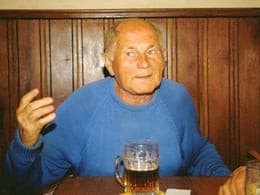
Bohumil Hrabal was a Czech writer, often named among the best Czech writers of the 20th century.







