“We are all children of the same, terrible Mother. We are all children of grief.”
— Spoken by Rake, reflecting on the nature of existence and suffering.

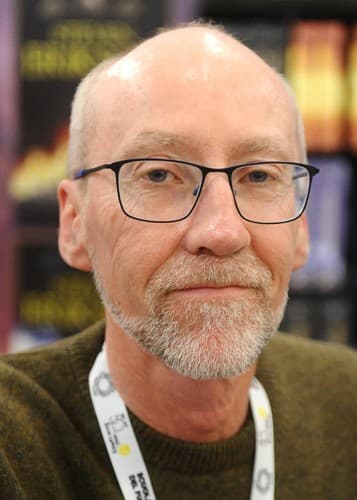
Steven Erikson (2008)
Genre
Fantasy
Reading Time
1680 min
Key Themes
See below
Sign in to track this book
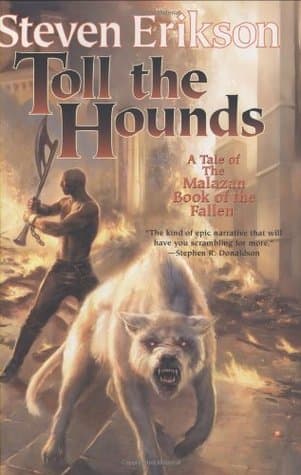
In Darujhistan's stifling summer, old crimes surface, assassins become targets, and love and death arrive together, marked by distant Hounds and the Son of Darkness's coming judgment.
Darujhistan, once a center of intrigue, now feels oppressive under summer heat and unease. Baruk, the alchemist, gets reports that the Crimson Guard, led by K'rul, is active in the city again. Kruppe, the nobleman, watches the T'orrud Cabal, a group trying to take advantage of the city's weaknesses. People are restless, with rumors and old complaints spreading. Bellurdan, a former assassin, returns to the city's underworld. The Bridgeburners, now disbanded, feel a storm coming. K'rul, an ancient being, uses his blood-oath with the Crimson Guard to prepare for a new conflict, aiming to restore balance by confronting powerful beings.
In Black Coral, Anomander Rake, Son of Darkness and ruler of the Tiste Andii, keeps a somber watch. He has lived through centuries of war and loss, carrying the burden of his people's survival and a threat to their existence. Rake considers justice and revenge, especially regarding Draconus, the Elder God he imprisoned in Dragnipur. He knows ancient powers are returning and a convergence is coming that could break reality. His captains, Spinnock Durav and Endest Silann, see his serious mood and the pressure he is under. Rake's secret plan begins to form, meant to confront the biggest threat to the Tiste Andii and perhaps all existence.
Hood, the God of Death, starts to act more directly in the mortal world. His reasons are unclear but linked to the events unfolding. His servant, Hood's Breath, a ghost-like figure, moves through Darujhistan, taking souls and causing fear. Meanwhile, the Cult of the Crippled God, though supposedly suppressed, gains followers among the poor and desperate. Their talk of suffering and divine help appeals to those who feel abandoned. This growing cult, controlled by hidden forces, becomes a powerful, unpredictable part of the brewing conflict, threatening Darujhistan and Black Coral. The Crippled God's distant influence is strong, subtly moving events toward a huge confrontation.
Gothos, the old Jaghut Tyrant and Icarium's father, wakes from his long sleep. Deeply saddened by endless violence and the suffering of those he loved, Gothos begins a terrifying ritual to break reality itself. His plan involves bringing together powerful beings and using Elder Warrens, promising an end to all pain, even if it means ending all life. His return causes fear and anticipation among those who know his power, especially Anomander Rake, who understands Gothos's intentions. The ritual's success would have terrible results, making Gothos a central, though tragic, opponent in the story.
Draconus, the Elder God of Light and Dragons, is imprisoned in Anomander Rake's sword, Dragnipur, which has caused tension for a long time. As events get worse, Draconus's potential release or escape becomes a big worry. His return promises not only great power but also a reckoning for past wrongs, especially his old feud with Tiam. The sword itself, a channel for vast power and a prison for souls, plays a larger part as Rake's plans near their end. Draconus's fate and what his freedom means are deeply connected to the final battle, adding another layer of old conflict to the already unstable situation.
The T'orrud Cabal, a criminal group in Darujhistan, becomes a major player in the city's increasing chaos. Their assassins, especially the skilled Seerdomin, first work to keep the Cabal in power. But as the larger, older conflicts unfold, Seerdomin and his group find themselves caught between loyalty to the Cabal and the huge forces at work. Their targets change, their alliances strain, and their work faces challenges from the scale of the coming war. The Cabal's internal struggles and its interactions with other groups, like the Crimson Guard, add a layer of mortal intrigue to the divine and Elder conflicts.
Even though they tried to live peaceful lives, several former members of the disbanded Bridgeburners are drawn back into Darujhistan's unfolding drama. Picker, Blend, and Rallick Nom, among others, see the growing unrest and the actions of various groups. Their skills and experience, gained from years of war, are valuable as they navigate the city's dangerous situation. While not officially reunited, their individual actions and shared past create a network of resistance, often working with Baruk and Kruppe to protect people and stop harmful plans. Their presence reminds people of past heroics and promises future defiance.
K'rul, the Elder God and patron of the Crimson Guard, carefully carries out his long-planned strategy to counter the Crippled God's growing influence and restore balance. Through his blood-oath with the Guard, he arranges events, including gathering powerful mages and using ancient energies. The Crimson Guard, led by K'rul's chosen, acts as a main force, challenging the T'orrud Cabal and other groups causing instability in Darujhistan. Their actions are not just about control but about preparing for a much bigger spiritual and magical fight, meant to cut the Crippled God's ties to the world and prevent creation from collapsing.
As Gothos's ritual nears its terrible peak and the Crippled God's influence grows, Anomander Rake makes his move. In a powerful and sacrificial act, he uses all the might of Dragnipur and the Warren of Starvald Demelain to move Black Coral and its Tiste Andii inhabitants to the skies above Darujhistan. This amazing arrival means all major players have gathered for the final battle. Rake's goal is clear: to confront Gothos, Draconus, and the Crippled God's influence directly, even if it means his own death. Black Coral hovering over the burning city creates awe and terror, signaling an era's end and a new one's start.
In the final confrontation, Anomander Rake carries out his last, devastating plan. Facing Dragnipur's destructive power, which threatens to pull all souls into Chaos, and Draconus's impending release, Rake confronts Hood, God of Death. In a pre-arranged duel, Rake lets Hood kill him, using his own death to trigger events. This sacrifice frees Draconus from Dragnipur, letting him return to the mortal world. More importantly, Rake's soul enters Dragnipur, taking the place of the millions of trapped souls, ending the sword's horrific purpose. His death, a selfless act, also reshapes the Tiste Andii and opens a path for their future, changing the cosmic balance and setting the stage for future events in the Malazan world.
After Anomander Rake's sacrifice, deep grief settles over Darujhistan and the surviving Tiste Andii. The city is damaged but not destroyed. Hood, having done his part in Rake's plan, leaves, leaving behind a changed world. Draconus, now free, deals with his new reality and Rake's sacrifice. The Crimson Guard, having met their goals, start to scatter, their mission changed. The T'orrud Cabal is broken, its power less. Some find peace, while others are left to rebuild, remembering Rake and the high cost of survival. The battle's echoes, both physical and spiritual, continue, hinting at future conflicts and the lasting impact of what happened.
The Protagonist
Rake moves from a weary, burdened leader to a self-sacrificing hero, achieving his ancient goal through his own death.
The Supporting
Kruppe continues his role as an observer and subtle influencer, guiding events without direct intervention, ensuring Darujhistan's survival.
The Supporting
Baruk remains a steadfast defender of Darujhistan, using his intellect and resources to counter threats.
The Antagonist/Supporting
Hood moves from a seemingly neutral, distant deity to an active, albeit unwilling, participant in Anomander Rake's ultimate sacrifice.
The Antagonist
Gothos returns to enact a devastating ritual, forcing the world to confront his extreme solution to suffering.
The Supporting
Draconus is freed from his millennia-long imprisonment in Dragnipur, returning to the world with renewed power and purpose.
The Supporting
Rallick is reluctantly pulled back into Darujhistan's conflicts, defending the city and his loved ones with his assassin skills.
The Supporting
Seerdomin navigates the treacherous politics of Darujhistan, adapting his methods and loyalties as the city's power structures crumble.
The Supporting
K'rul orchestrates the Crimson Guard's actions, working to restore cosmic balance and confront the Crippled God's influence.
The Supporting
Spinnock remains a loyal and steadfast protector of the Tiste Andii, grappling with the weight of Rake's sacrifice and the future of his people.
This theme is key to 'Toll the Hounds,' seen most clearly in Anomander Rake's final act. Rake sacrifices himself to free Draconus and many souls from Dragnipur, giving the sword a new purpose and opening a new path for the Tiste Andii. His death is not an end but an act of love and selflessness, showing that true redemption often costs a great deal personally. Hood's reluctant involvement in Rake's plan, despite his role, suggests a kind of redemption from the endless suffering he oversees. The story asks if some violent acts can be redeemed by their ultimate goal.
“What is it about sacrifice that we mortals find so... irresistible?”
The conflict between justice and vengeance runs through the story, especially in what drives Gothos and Draconus. Gothos seeks a drastic 'justice' by ending all suffering, even if it means ending all life, driven by his grief. Draconus, imprisoned for thousands of years, struggles with his desire for revenge against those who wronged him, including Tiam. Anomander Rake's actions, while seeming like justice for the souls in Dragnipur, also stop a greater vengeance from Draconus. The book questions if any act, even one seen as just, can truly be free of vengeful feelings, and the terrible results of uncontrolled retribution.
“Justice. A word that has been twisted into more shapes than any other. And none of them are fair.”
Many characters, especially Anomander Rake, Gothos, and Draconus, are ancient beings burdened by thousands of years of life. They carry the weight of countless wars, losses, and their people's slow decline. This theme looks at the mental cost of immortality, where love turns to grief, and power becomes a heavy duty. Rake's tiredness is clear, driven by a wish to end his and his people's suffering. Gothos's extreme solution comes from his inability to bear endless pain. The story suggests that even gods and Ascendants feel deep despair and a longing for peace, however it might be achieved.
“We are old, Spinnock. And the older we get, the heavier the weight becomes.”
Love and loss are strongly connected in 'Toll the Hounds,' often appearing together, as the book's description says. Rake's actions are driven by his love for the Tiste Andii and his wish to end their suffering. Gothos's destructive plan comes from deep grief for his son, Icarium, and the loss he has seen. The personal stories of characters like Rallick Nom, trying to protect his loved one, show how fragile love is in a world of great power and violence. The novel shows love not just as joy, but as a strong, often sad, reason that can lead to great sacrifice and terrible acts.
“Love and death, it is said, shall arrive dancing. And so they do, again and again.”
Kruppe is the main example of this theme, constantly watching, writing, and subtly influencing events. His narration often speaks directly to the reader, giving comments and thoughts on the story. This shows how important storytelling and memory are for understanding and preserving history. Even though he is an Ascendant, Kruppe chooses to be a chronicler, suggesting that observing and sharing stories is a powerful role. His presence reminds the reader that even in the biggest conflicts, someone is always watching and recording, making sure lessons are learned, or at least remembered.
“Ah, mortals. Such a delightful mess they make of things. And I, of course, am ever so fond of cleaning up after them.”
Anomander Rake's sentient sword, a prison for souls and a conduit to Chaos
Dragnipur is not merely a weapon but a central plot device, a sentient Elder God (Draconus) trapped within its blade, and a terrifying prison for countless souls, including Hood's wagon. It actively drains souls from those it kills, forcing them to pull a wagon that prevents Chaos from consuming the universe. Its purpose is both destructive and preservative. Rake's ultimate plan revolves around freeing Draconus and the souls, culminating in his own sacrifice to take their place. Dragnipur represents the ultimate burden, the cost of power, and the complex nature of sacrifice, as it is both a tool of destruction and a necessary evil for cosmic balance.
Gothos's cataclysmic ritual to sever all ties to the Warrens and end suffering
The Telas Ritual is a major plot device driving the climax of the novel. Orchestrated by Gothos, this ancient Jaghut ritual aims to completely sever the world from all Warrens, effectively ending all magic and, by extension, all life and suffering. Its activation forces a convergence of various powers, as many seek to either stop it or exploit its chaos. The ritual represents an extreme solution to profound grief and serves as a ticking clock, creating immense tension and forcing Anomander Rake to accelerate his own complex plans. It highlights the destructive potential of unchecked despair and the desperate measures some are willing to take to achieve their version of peace.
An ancient pact linking the Crimson Guard to the Elder God K'rul, guiding their actions
The blood-oath between the Crimson Guard and K'rul is a foundational plot device that explains the Guard's presence and actions in Darujhistan. This ancient pact allows K'rul to subtly guide the Guard's movements, transforming them from mere mercenaries into instruments of cosmic balance. The oath provides a supernatural justification for their enduring purpose and their fight against the Crippled God's influence. It demonstrates how ancient agreements can continue to shape mortal destinies and how divine will can be enacted through mortal agents, blurring the lines between military campaign and spiritual crusade. This device adds a layer of ancient, predetermined purpose to their otherwise mundane struggles.
A meta-narrative device where Kruppe directly addresses the reader and provides commentary
Kruppe's unique role as a self-aware narrator and chronicler is a significant meta-narrative plot device. He frequently breaks the fourth wall, directly addressing the reader, offering philosophical insights, humorous asides, and often foreshadowing events. This device allows the author to provide context, thematic depth, and a unique perspective on the unfolding drama without resorting to traditional exposition. Kruppe's commentary helps to deconstruct the epic scale of events, making them more accessible and personal. It also emphasizes the theme of storytelling and the importance of remembering history, as Kruppe literally records the events for posterity.
“We are all children of the same, terrible Mother. We are all children of grief.”
— Spoken by Rake, reflecting on the nature of existence and suffering.
“The price of wisdom is eternal doubt.”
— A philosophical observation about the nature of knowledge.
“There are no heroes left, for all have been consumed by the very causes they sought to champion.”
— A bleak assessment of heroism in a world filled with moral ambiguity.
“Love is a wound, and the wound is all that remains.”
— A melancholic reflection on the lasting impact of love and loss.
“To be human is to be a question mark. To be a god is to be an answer that makes no sense.”
— A commentary on the nature of humanity versus divinity.
“Hope is a coin, and it is spent too easily.”
— A cynical view on the fragility and cost of hope.
“The past is a beast, and it has teeth. And it will find you, sooner or later.”
— A warning about the inescapable consequences of past actions.
“Compassion is a burden. It is the weight of the world on your shoulders.”
— Examining the arduous nature of empathy and compassion.
“What is courage but a choice to stand in the face of what frightens you?”
— A straightforward definition of courage.
“Every soul is a universe, and every universe is dying.”
— A poetic and somber observation on individuality and mortality.
“We are all but shadows, dancing in the light of a fading sun.”
— A metaphor for the fleeting nature of life and existence.
“The heart, in its own way, is a weapon. And it can be sharper than any blade.”
— Reflecting on the power and vulnerability of emotions.
“There is no justice, only consequences.”
— A harsh realist perspective on the outcomes of events.
“To suffer is to live. To live is to suffer. There is no escape.”
— A stark statement on the inherent suffering in life.
“Sometimes, the only way to save a life is to take another.”
— A grim ethical dilemma faced by characters in the story.
Ready to see how well you understood this book? Take our interactive quiz with 10 questions.
Biography coming soon.







