“For in the midst of the inanimate world, as if a secret must be guarded, you have your being, and before you, in a glass, you see the mountains, and the sky, and the trees, and your own face.”
— Lily Briscoe's reflection on art and perception.

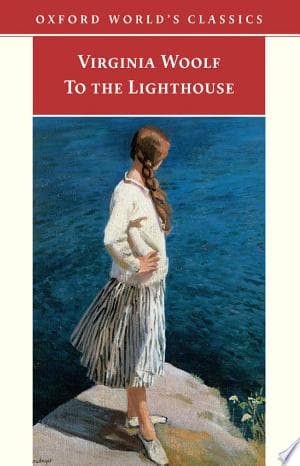
Virginia Woolf (2008)
Genre
Literary Fiction
Reading Time
8-10 hours
Key Themes
See below
Sign in to track this book
Through the fragmented perceptions of the Ramsay family and their guests, Woolf creates a meditation on loss, memory, and the elusive nature of truth against a Hebridean summer.
The novel begins at the Ramsay's summer home on the Isle of Skye, Scotland. Six-year-old James Ramsay looks forward to a trip to the lighthouse the next day. His mother, Mrs. Ramsay, a beautiful and empathetic woman, promises they will go, even as his father, Mr. Ramsay, a famous philosopher, says the weather will be too bad. This immediate conflict highlights Mr. Ramsay's intellectual honesty and Mrs. Ramsay's wish to protect her children's happiness. Lily Briscoe, a young painter staying with the Ramsays, observes this domestic scene, feeling admiration for Mrs. Ramsay and frustration with Mr. Ramsay's demanding nature. The tension around the lighthouse trip sets the stage for the family's internal dynamics and the overall theme of unfulfilled desires.
Lily Briscoe tries to paint Mrs. Ramsay and James, but struggles to capture her vision, especially the 'mass' in the center of her canvas. She feels the pressure of traditional expectations for women artists and the critical look of Charles Tansley, a young, insecure philosopher who often speaks poorly of women's intelligence and art. Tansley's statements, such as "women can't paint, women can't write," annoy Lily, yet she finds herself part of the Ramsay household's social life. She observes Mrs. Ramsay's easy charm and ability to create harmony, comparing it to her own artistic and social awkwardness. Lily thinks about her artistic purpose and her place in this intellectual, yet emotional, environment, made more complex by her unspoken feelings and artistic goals.
Mrs. Ramsay hosts a dinner party, a social event she organizes with great effort, aiming to create moments of collective harmony. As guests gather, their individual thoughts and worries appear through stream-of-consciousness narration. Mr. Ramsay feels self-pity, believing his intellectual work is failing. Lily Briscoe continues to observe, feeling out of place because of Tansley's comments and her own artistic struggles. Augustus Carmichael, an elderly poet, quietly watches. The conversation is broken, and true connections are often unspoken, existing in glances and shared silences. Mrs. Ramsay, despite being tired, feels a deep satisfaction in bringing these different people together, briefly overcoming the chaos of individual life and creating a fleeting sense of unity.
After the dinner party, Mrs. Ramsay sits alone, thinking about the evening and life and relationships. She feels very tired but also a deep peace and accomplishment for having created a moment of beauty and unity. She considers how fragile human life is and that death is certain, acknowledging that happiness does not last. Later, Mr. and Mrs. Ramsay share a quiet moment in the drawing-room. Though they say few words, a deep understanding and love pass between them. Mrs. Ramsay looks at her husband, recognizing his intellectual struggles and his need for her reassurance, and feels a strong surge of love and pity, solidifying their deep, unspoken bond. This intimate moment highlights the emotional core of their marriage and Mrs. Ramsay's role as a source of comfort.
Part II, 'Time Passes,' shows a big change in tone and narrative style. It describes ten years passing in a compressed, sad way, focusing on the summer house's decay and the effect of time. The house, once full of life, slowly falls apart, becoming overgrown and dusty. The narration quickly and sharply records the deaths of several main characters: Mrs. Ramsay dies unexpectedly in her sleep, Prue Ramsay dies giving birth, and Andrew Ramsay is killed in the First World War. These deaths are presented briefly, emphasizing time's relentless and uncaring march and how fragile human life is. The section is a meditation on loss, memory, and how human efforts do not last, leaving the house and the remaining characters with a profound sense of absence and change.
Ten years after Mrs. Ramsay's death, the remaining members of the Ramsay family and some of their original guests return to the now run-down summer house. Mr. Ramsay, with his children Cam and James, plans to finally make the long-delayed trip to the lighthouse. Lily Briscoe also returns, determined to finish the painting she started a decade earlier. The house itself is a strong symbol of memory and absence, bringing up a strong sense of the past. The characters are haunted by Mrs. Ramsay's absence, each dealing with their grief and memories differently. The return shows an attempt to get back or come to terms with the past, and to find meaning after significant loss. The atmosphere has a hint of sadness and the weight of unspoken emotions.
Lily Briscoe sets up her easel again, determined to finish her painting. She faces the same artistic challenges she had ten years before, especially how to integrate the 'mass' in the center of her canvas and how to represent Mrs. Ramsay's elusive presence. Mrs. Ramsay's memory is always with her, influencing Lily's thoughts and artistic process. Lily thinks about Mrs. Ramsay's unique ability to bring people together and create meaning, a skill Lily now tries to put on canvas. She fights self-doubt and the lingering voices of critics like Charles Tansley. Her artistic struggle becomes a metaphorical journey of dealing with grief and finding her own voice, a quest to understand the past and make permanent the woman who deeply affected her.
Mr. Ramsay, with his now-teenage children James and Cam, finally sails for the lighthouse. The journey is full of tension. James, still angry about his father's past harshness and critical nature, steers the boat, while Cam, watching her father's demanding behavior, feels a mix of fear and sympathy. Mr. Ramsay, consumed by his own grief and intellectual worries, is mostly unaware of his children's feelings. He seeks reassurance and company, often through demanding statements. The physical journey reflects the emotional distance between them. The lighthouse, once a symbol of childhood desire, now represents a destination that forces them to confront the past and their complex family relationships, especially without Mrs. Ramsay.
As the boat carrying the Ramsays gets close to the lighthouse, Lily Briscoe, back at the house, continues to struggle with her painting. She feels Mrs. Ramsay's strong, almost spiritual, presence, imagining her sitting in the window as she once did. This imagined presence gives Lily a moment of deep insight. She realizes that her painting is not about exact representation but about capturing the essence of a moment and a person. She suddenly sees how to integrate the 'mass' in the center of her canvas – a line, a stroke of purple, that brings the composition together. This artistic breakthrough is tied to her emotional processing of Mrs. Ramsay's loss, marking a moment of resolution and artistic success.
The boat finally reaches the lighthouse. Mr. Ramsay, having received a brief moment of quiet affection from James and Cam, finds a sense of peace and accomplishment. He steps onto the rocks, feeling a connection to his past and a sense of having kept a long-standing promise. At the same time, back at the house, Lily Briscoe makes the final stroke on her canvas. She has achieved her vision, creating a painting that, for her, captures Mrs. Ramsay's essence and life's complex beauty. With her artwork finished and the Ramsays at the lighthouse, both Lily and the family reach a form of resolution, a moment where art and life, past and present, come together, even if only briefly.
The Protagonist/Central Figure
Her arc is largely internal, reflecting on the meaning of life and her role within it; her death marks a turning point for all other characters.
The Protagonist/Patriarch
He gradually softens and shows vulnerability, particularly during the trip to the lighthouse, finding a measure of peace and connection with his children.
The Protagonist/Artist
She evolves from an insecure artist to one who achieves her artistic vision, finding resolution and meaning through her art.
The Supporting/Son
He moves from deep resentment towards his father to a grudging acceptance and fleeting moment of understanding during the lighthouse trip.
The Supporting/Daughter
She learns to navigate her father's personality and finds her own way of coping with his demands, achieving a moment of understanding.
The Supporting/Antagonist
He remains largely static, serving as a representation of conventional, often stifling, societal views.
The Supporting/Mentor
He achieves quiet renown as a poet, symbolizing the triumph of internal vision over external pressures.
The novel explores how human life, happiness, and even physical structures are temporary, contrasted with art's ability to capture and immortalize moments. 'Time Passes' clearly shows the summer house decaying and the sudden deaths of Mrs. Ramsay, Prue, and Andrew, emphasizing time's relentless march and inevitable loss. However, Lily Briscoe's painting, despite her difficulties, is a contrast. By finishing her vision, she believes she captures Mrs. Ramsay's essence and a specific moment, creating something lasting and meaningful that goes beyond death and decay. Her final stroke is a victory over transience, a way to hold onto what is lost.
“What is the meaning of life? That was all — a simple question; one that tended to close in on one and to be unanswerable. The great revelation had never come. The great revelation perhaps never would come. Instead there were little daily miracles, illuminations, matches struck unexpectedly in the dark; here was one.”
Woolf looks at the complexities of human connection, highlighting the often unspoken and deeply internal parts of relationships. Communication is rarely direct, instead shown through glances, silences, and shared understandings, especially between Mr. and Mrs. Ramsay. Mrs. Ramsay acts as a strong unifier, creating temporary moments of harmony at her dinner parties, yet even then, individuals remain isolated in their own thoughts. The tense relationship between Mr. Ramsay and his children, James and Cam, shows how hard it is to bridge emotional gaps, especially after Mrs. Ramsay's death. The novel suggests that true understanding often goes beyond words, existing in empathy and shared experience, even if these moments are brief.
“For she felt that he was very weak, and that he was very splendid. And there it was, all round them, the sea, and the sky, and the trees, all of it was coming together, all of it was meeting, and she felt that she had created it.”
The novel examines early 20th-century gender roles and their effect on women, especially through Mrs. Ramsay and Lily Briscoe. Mrs. Ramsay represents the traditional feminine ideal, finding purpose and power in nurturing, domestic life, and social organization. While she does well in this role, it also involves much emotional effort and tiredness. Lily Briscoe, an unmarried female artist, directly challenges these norms. She faces doubt and outright dismissal from men like Charles Tansley, who represent traditional male views. Her struggle to create her art is not just artistic, but also a fight against societal expectations that would limit her identity and stop her from pursuing her independent creative life.
“Women can't paint, women can't write... She had heard him say it.”
Loss and dealing with memory are central to the novel, especially in 'Time Passes' and 'The Lighthouse.' Mrs. Ramsay's death casts a long shadow over the surviving characters, making them deal with grief, absence, and the meaning of their past connections. The dilapidated summer house becomes a place for memories, bringing up Mrs. Ramsay's lively presence even when she is gone. Lily Briscoe's attempt to finish her painting is a direct engagement with memory, as she tries to capture Mrs. Ramsay's essence and the spirit of the past. The characters' individual journeys in Part III are all, in different ways, attempts to come to terms with loss and to find new meaning in a world changed by absence.
“And now she need not be anxious any longer. The Lighthouse was then a silvery, misty-looking tower with a light at the top of it, and that was all. It was there. It was there all the time.”
Woolf uses stream-of-consciousness to explore how reality is built through individual perception. The novel moves smoothly between the inner thoughts of various characters, showing their unique views on the same events and people. For instance, Mr. and Mrs. Ramsay often interpret the same situations very differently, highlighting that truth is subjective. The lighthouse itself is a prime example: for James, it's a desired place; for Mr. Ramsay, a symbol of intellectual truth; for Lily, a 'wedge-shaped core of darkness' in her painting. This technique emphasizes that there is no single objective reality, but many subjective experiences that together form existence.
“For at any rate, she was thinking, looking at the colour, she could make a match of it, and it would be a triumph. She would make a match of it, and so that would be a triumph. But then, she said, she could not, she could not.”
A narrative technique that directly reflects characters' internal thoughts and feelings.
Woolf extensively uses stream of consciousness, a narrative method that mimics the natural flow of a character's thoughts, feelings, and memories, often without traditional punctuation or logical transitions. This allows direct access to the characters' inner lives, revealing their complex psychologies, unspoken desires, and subjective perceptions of reality. It blurs the lines between internal monologue and external action, creating a rich, multi-layered tapestry of individual experience. For example, the reader experiences Mrs. Ramsay's profound reflections on life's meaning, Lily Briscoe's artistic struggles, and Mr. Ramsay's anxieties directly as they occur in their minds, rather than through external description.
The use of objects, places, or actions to represent abstract ideas or qualities.
The novel is rich in symbolism. The 'Lighthouse' itself is a multifaceted symbol: it represents the elusive nature of truth, the journey of life, a childhood desire, and a destination that brings a form of resolution. The 'Window' in Part I symbolizes the characters' individual perspectives and their isolation, looking out onto the world but not fully connected. Mrs. Ramsay's 'Shawl' represents her nurturing, protective nature and her ability to create warmth and comfort. Lily Briscoe's 'Painting' symbolizes the struggle and triumph of artistic creation, the attempt to capture beauty and meaning, and the enduring power of art against the transience of life. The 'Summer House' symbolizes memory, decay, and the passage of time.
A distinct narrative section that dramatically compresses and abstracts the flow of time.
The central section, 'Time Passes,' is a unique and experimental plot device. It condenses ten years into a few pages, narrated in an impersonal, almost poetic voice that describes the decay of the summer house and the deaths of several characters with stark brevity. This section functions as a powerful meditation on mortality, loss, and the indifference of time. It creates a profound sense of absence and irrevocably alters the emotional landscape of the novel, setting the stage for the surviving characters' attempts to reconcile with the past in 'The Lighthouse.' It highlights the novel's concern with the relationship between human life and the vast, impersonal forces of nature and time.
Hints or clues about future events, creating suspense or thematic resonance.
Foreshadowing is subtly woven throughout the novel. Mr. Ramsay's initial declaration that the weather will prevent the lighthouse trip, for instance, foreshadows the unfulfilled desires and deferrals that permeate the first section, and the eventual, more fraught journey in Part III. Mrs. Ramsay's frequent meditations on the transience of life and the inevitability of death, particularly her sense of the fragility of her own happiness, subtly foreshadow her sudden and unexpected demise in 'Time Passes.' These hints create a sense of melancholy and inevitability, reinforcing the novel's themes of loss and the relentless passage of time.
“For in the midst of the inanimate world, as if a secret must be guarded, you have your being, and before you, in a glass, you see the mountains, and the sky, and the trees, and your own face.”
— Lily Briscoe's reflection on art and perception.
“What is the great thing, then? she asked. To feel in unison with it all, she thought, to be part of the flow.”
— Mrs. Ramsay's internal musings on life's meaning.
“She had the oddest sense of being herself invisible, unseen, unknown, all unheeded, as if her mind were a mist that only she could see.”
— Mrs. Ramsay's feeling of isolation despite being surrounded by family.
“But what have I to give him? she thought, as if she were a hostess at a party, and the whole thing were a failure.”
— Mrs. Ramsay's anxiety about her husband's happiness.
“The great revelation perhaps never comes. Instead there are little daily miracles, illuminations, matches struck unexpectedly in the dark.”
— Lily Briscoe's thoughts on moments of insight.
“It was odd, she thought, how if one were alone, one could be alone, but if one were with other people, one was alone, and more alone.”
— Lily Briscoe's feeling of loneliness amidst company.
“For she felt that he was an old man, and that she was a young woman, and that there was nothing between them.”
— Lily Briscoe's observation of Mr. Ramsay.
“The world, it seemed, was a much larger place than she had thought, and full of things she did not understand.”
— Lily Briscoe's expanding worldview.
“Indeed, she had the feeling that all her friends and acquaintances were, in some way, her children.”
— Mrs. Ramsay's maternal instincts extending to her social circle.
“He wanted something, something he could not get, something he would never get.”
— Mr. Ramsay's internal struggle and dissatisfaction.
“It was so beautiful, so exciting, this world that was opening before her, so full of things she did not know.”
— Lily Briscoe's sense of wonder and anticipation.
“She would not say of any one in the world that they were her best friend.”
— Mrs. Ramsay's nuanced view of friendship.
“But she was not old yet. She was not old yet, she repeated, as if to convince herself.”
— Mrs. Ramsay's internal thoughts on aging.
“The Lighthouse was then a silvery, misty-looking tower with a light at the top of it, and that was all.”
— The children's initial perception of the Lighthouse.
Ready to see how well you understood this book? Take our interactive quiz with 10 questions.
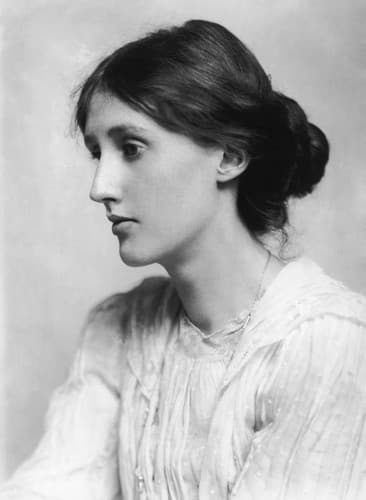
Adeline Virginia Woolf was an English writer. She is considered one of the most important modernist 20th-century authors and a pioneer in the use of stream of consciousness as a narrative device.







