“A man's got to stand for something, or he'll fall for anything.”
— Barnett's advice to Matt Brennan.

Louis L'Amour (1977)
Genre
Historical Fiction
Reading Time
360 min
Key Themes
See below
Sign in to track this book
Framed for stealing royal treasure, Barnabas Sackett races against Queen Bess's relentless pursuit, risking torture and the gallows to reclaim his American dream.
Barnabas Sackett, having established himself in the New World, returns to England to finalize his affairs and secure passage for his intended wife, Abigail. He lands in Bristol, a port familiar from his youth, but quickly discovers that his past actions have drawn the attention of Queen Elizabeth I. A royal warrant has been issued for his arrest, orchestrated by Lord Glencoe and his agents, who believe Sackett has a vast treasure of gold coins lost by King John. Sackett's earlier sale of some rare coins to finance his voyage to America is the reason for this misunderstanding. He must navigate a dangerous world of spies and informants while trying to secure his departure and protect Abigail.
Upon realizing the danger, Barnabas Sackett uses his senses and knowledge of the land to evade capture. He is pursued through the narrow streets of Bristol by Glencoe's men, led by figures like Sir Robert Carvell. Sackett uses disguises, his knowledge of secret passages, and the timely help of loyal friends and those who owe him favors to slip through the dragnet. His objective is clear: escape Bristol and make his way to London to understand the charges against him and, if possible, clear his name, or at least buy enough time to secure his passage back to America.
Barnabas Sackett makes his way towards London, traveling cautiously and often by night, avoiding main roads. During his journey, he encounters Lady Anne, a high-born woman with her own secrets and connections to the court. Lady Anne, intrigued by Sackett's reputation and his quiet strength, provides him with information about the political actions against him and the Queen's obsession with the lost treasure. Sackett learns that the Queen is convinced he knows the whereabouts of King John's gold, a belief fueled by Glencoe and other ambitious courtiers eager to gain favor by delivering Sackett to her.
Arriving in London, Barnabas Sackett moves through the city's underbelly, using his network of contacts from his younger days as a merchant and adventurer. He learns that the Queen's need for funds, coupled with Glencoe's personal vendetta and desire for power, is driving the hunt. Glencoe believes Sackett is holding out on the Queen, or has already found the treasure. Sackett realizes that simply proving his innocence regarding the treasure may not be enough. His very existence as a man who moves freely between worlds threatens the established order, making him a convenient scapegoat for the court's financial problems.
While Sackett is in London, his fiancée, Abigail, who has been waiting for him in a secluded village, is discovered and captured by Glencoe's men. They intend to use her as bait to lure Sackett into a trap. News of Abigail's abduction reaches Sackett, igniting a fierce determination to save her. He abandons his cautious plans and sets out to rescue her, knowing that walking into their trap is a strong possibility. This event shows Sackett's deep love and loyalty, demonstrating he will prioritize Abigail's safety above his own freedom or even his life.
Barnabas Sackett, using his wilderness skills and combat knowledge, infiltrates the stronghold where Abigail is being held. He confronts Glencoe's men, engaging in a series of skirmishes and strategic moves. He manages to free Abigail, but in the ensuing chaos, they are cornered. Sackett, with Abigail's help, executes a daring escape, often involving scaling walls, navigating secret passages, and fighting their way through guards. This escape is not without cost, as they are now even more deeply entrenched in the Queen's anger and must flee the capital with renewed urgency.
With Abigail by his side, Barnabas Sackett embarks on a flight across the English countryside. The pursuit intensifies, as Queen Elizabeth issues further decrees, offering rewards for Sackett's capture, dead or alive. They face numerous close calls, hiding in forests, using their knowledge of the land, and relying on the kindness of strangers and the loyalty of a few old friends. Their journey is fraught with danger, hunger, and exhaustion, as they constantly look over their shoulders, knowing that every village and every road could harbor an enemy.
Barnabas Sackett's goal is to reach a port and secure passage back to the New World, but every major port is under surveillance. He and Abigail move towards the western coast, seeking out smaller, less-guarded fishing villages and hidden coves. Sackett uses his knowledge of ships and the sea to find a vessel willing to risk carrying them across the Atlantic. He encounters old sea captains and smugglers, negotiating discreetly for passage, all while evading the Queen's coastal patrols and spies who are now actively searching every ship leaving England.
After weeks of pursuit and narrow escapes, Barnabas Sackett finds a suitable ship and a captain willing to take the risk. Under the cover of darkness, Sackett and Abigail make their final dash to the waiting vessel, dodging patrols and overcoming last-minute challenges. They board the ship just as Glencoe's men close in, witnessing their pursuers arrive at the dock as their ship pulls away. As the sails unfurl and the ship heads out into the open Atlantic, Sackett and Abigail finally find a moment of peace, leaving the dangers of England behind them, bound for the far blue mountains of their new home.
The Protagonist
Barnabas begins as a man returning to settle affairs, but is forced to become a fugitive, ultimately reaffirming his commitment to his chosen life in America and his love for Abigail.
The Supporting
Abigail transforms from a woman awaiting her beloved to a resilient partner in his escape, demonstrating her inner strength and unwavering devotion.
The Antagonist
Glencoe remains a consistent antagonist, his ambition and ruthlessness intensifying with each failed attempt to capture Sackett.
The Mentioned
The Queen's actions remain consistent, driven by her desire for the treasure and her authority.
The Supporting
Lady Anne acts as a temporary ally, offering insight and aid before disappearing from the narrative.
The Supporting
Carvell remains a persistent antagonist, embodying the relentless nature of the pursuit.
The Supporting
Captain Jem provides crucial assistance in the final act, fulfilling his role as Sackett's last hope for escape.
The Supporting
Her brief appearance serves to highlight the aid Sackett receives from unexpected sources.
The central conflict of the novel is the struggle between Barnabas Sackett's desire for personal freedom and self-determination in the New World, and the control exerted by Queen Elizabeth's monarchy and her agents. Sackett's flight from England symbolizes a rejection of inherited social structures and arbitrary power. He seeks a life where a man's worth is defined by his actions, not his birthright. The pursuit by Glencoe and the Queen's men represents the attempts of the Old World to reclaim and subjugate those who forge their own path.
“'He was a man who belonged to no one but himself, and that was a dangerous thing in England.'”
The pursuit of King John's lost treasure shows the corrupting influence of power and wealth. Queen Elizabeth's need for funds, coupled with Lord Glencoe's ambition, drives the entire plot. Glencoe manipulates the Queen's fears and desires, using Sackett to gain favor and consolidate his own power. This theme explores how those in positions of authority can be blinded by greed and how their actions can impact the lives of ordinary, albeit extraordinary, individuals.
“'Gold was a fever that gripped men's souls, and a queen's treasury was never full enough.'”
Throughout his ordeal, Barnabas Sackett encounters both loyalty and betrayal. His devotion to Abigail drives his most desperate actions, while her steadfastness gives him strength. Conversely, he faces constant betrayal from Glencoe's spies and informants. The novel explores various forms of loyalty – to loved ones, to principles, to the promise of a new life – and how these contrast with the treachery motivated by greed and ambition within the English court.
“'There were men who would sell their mothers for a shilling, and others who would die for a friend.'”
The 'Far Blue Mountains' of the title symbolize the promise and freedom of the American wilderness. This is a contrast to the dangerous confines of Elizabethan England. Sackett's skills as a frontiersman, honed in the New World, are what allow him to survive the traps of the Old. The novel romanticizes the idea of a fresh start, a place where a man can forge his own destiny away from the historical burdens and social hierarchies of Europe. It is a powerful yearning for a simpler, more authentic existence.
“'The salt wind in his face, the endless horizon... that was where a man could truly breathe.'”
The primary catalyst for Sackett's flight and the central conflict.
The royal warrant issued by Queen Elizabeth I serves as the inciting incident and the constant driving force behind the plot. It immediately establishes Sackett as a fugitive and sets the stakes – torture and death if caught. This device not only propels the narrative forward but also highlights the immense power of the monarchy and the precariousness of individual freedom in Elizabethan England. It transforms Sackett's routine return to England into a desperate struggle for survival and escape.
The MacGuffin that fuels the Queen's obsession and Glencoe's ambition.
King John's lost treasure, specifically the gold coins Barnabas Sackett once sold, acts as the central MacGuffin of the story. Its true existence or Sackett's knowledge of it is largely irrelevant to Sackett himself; he simply used some coins he found. However, the Queen's belief in its existence, and Glencoe's conviction that Sackett possesses or knows its location, is the primary motivation for the relentless pursuit. This device creates the illusion of a grander conspiracy and provides a tangible, albeit false, objective for the antagonists.
A character device showcasing Sackett's adaptability and unique abilities.
Barnabas Sackett's honed wilderness skills, acquired in the American frontier, function as a crucial plot device allowing him to repeatedly evade capture in a European setting. His ability to track, move silently, find sustenance, understand natural signs, and fight effectively in close quarters makes him an almost superhuman figure against the more conventional methods of his pursuers. This device emphasizes the contrast between the 'civilized' Old World and the 'wild' New World, demonstrating the superiority of practical survival knowledge over courtly intrigue.
The overarching narrative structure, focusing on constant evasion and escape.
The entire novel is structured as a relentless pursuit narrative. From the moment Sackett lands in Bristol until he sails away, he is constantly being hunted. This device creates sustained tension and a sense of urgency, forcing Sackett to be perpetually on the move and to think several steps ahead of his pursuers. The series of narrow escapes, disguises, and strategic maneuvers keeps the reader engaged in the immediate moment of survival, highlighting Sackett's resilience and resourcefulness.
“A man's got to stand for something, or he'll fall for anything.”
— Barnett's advice to Matt Brennan.
“The wilderness was a great teacher, and it taught its lessons hard.”
— Narrator reflecting on Matt's journey and experiences.
“There's no place a man can't go if he's got the guts and the will.”
— Matt's internal thought as he faces a difficult journey.
“It was the land that shaped a man, and the mountains that tried his soul.”
— Describing the influence of the Western landscape on its inhabitants.
“A good horse is half a man, and sometimes more.”
— Matt's appreciation for his trusty horse.
“Fear was a cold hand, but courage was a fire that could burn it away.”
— Matt confronting his anxieties in a dangerous situation.
“Every trail has its end, but a man's spirit can go on forever.”
— Contemplation on the journey of life and death.
“The wind carried tales, if you knew how to listen.”
— Matt's connection to the natural world and its subtle signs.
“You can lose everything but your name, and that's the one thing you can't afford to lose.”
— A warning about reputation and honor.
“There are some things a man just has to do, whether he wants to or not.”
— Matt facing an unavoidable responsibility or conflict.
“The past was like a shadow, always following, but never quite catching up.”
— Matt reflecting on his past and its lingering presence.
“Water was life, and finding it was often the difference between living and dying.”
— The critical importance of resources in the arid landscape.
“A man's word was his bond, and a broken word was a broken man.”
— Emphasizing the value of promises and trustworthiness.
“The stars were a map, and the wind was a compass, if you knew how to read them.”
— Matt using natural navigation skills in the vast wilderness.
Ready to see how well you understood this book? Take our interactive quiz with 10 questions.
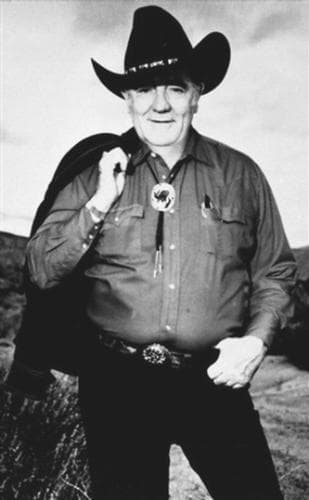
Biography coming soon.