“The greatest danger we face is not from the enemy, but from ourselves, from our own capacity for self-deception.”
— Ora reflecting on the nature of conflict and human psychology.

Genre
Literary Fiction / Historical Fiction
Reading Time
15-20 hours
Key Themes
See below
Sign in to track this book
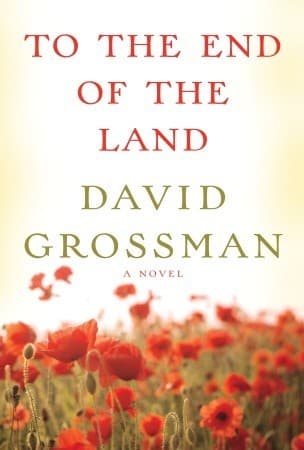
An Israeli mother, desperate to avoid news of her son's death in battle, hikes through the Galilee with her estranged former lover, telling him her son's life story to keep him alive through words.
The novel begins with Ora, a middle-aged Israeli woman, getting ready for her youngest son Ofer's upcoming release from army service. Her plans are ruined when Ofer is unexpectedly called back to the front lines for a major military offensive. Overwhelmed by dread and a belief that if she doesn't hear the news, it won't be true, Ora makes a drastic decision. She will leave her home in Jerusalem, cut off from all news, and go on a long hike in the Galilee. She intends to make herself unreachable by the 'notifiers' – army officials who deliver news of fallen soldiers – believing that if they can't find her, Ofer will stay safe. Her estranged husband, Ilan, remains behind, dealing with his own worries.
Before leaving, Ora finds Avram, a childhood friend of hers and Ilan's, and her former lover. Avram has lived as a recluse since his traumatic experience as a prisoner of war during the Yom Kippur War, where he was tortured. He has largely cut himself off from the world, including Ora and Ilan, and has never met Ofer. Ora, with desperation and a long-held affection, convinces a hesitant Avram to join her trek through the Galilee. She believes his presence, perhaps his detachment from their shared past and Ofer's existence, will somehow help her protective spell.
Ora and Avram begin their physically demanding journey, walking through the ancient landscapes of the Galilee. As they walk, Ora starts telling Avram Ofer's life story, carefully detailing every memory, milestone, and moment from his birth to his current age. This storytelling is central to Ora's way of coping; by speaking Ofer's existence, she feels she is keeping him alive and real. Avram, at first quiet and withdrawn, gradually becomes an active listener, his long-dormant emotions slowly stirred by Ora's vivid stories and her deep maternal love. The stories cover everything from the everyday joys of childhood to the worries of raising a child in Israel.
Mixed with Ofer's story are flashbacks to Ora, Ilan, and Avram's shared youth, especially their time in the army. Ora remembers the strong bond between the three of them, their youthful idealism, and the carefree days before war's weight fell upon them. A key memory is recounted: a seemingly simple game where Ora drew lots to decide which of Ilan or Avram would get a short leave from the army. Avram drew the short straw, sending him directly into the Yom Kippur War, where he was captured and tortured. This event permanently changed his life and their friendship, casting a long shadow over their current journey and showing the random cruelty of fate in wartime.
As Ora continues her story, Avram's own fragmented memories and the lasting effects of his torture as a POW emerge. He talks about the brutal physical and psychological torment he endured in Egyptian captivity, the feeling of being completely abandoned, and the difficulty of returning to normal life afterward. His reclusiveness, his inability to form deep connections, and his withdrawal from society are all results of this deep trauma. Ora's patient listening and her steady presence begin to break down the walls Avram has built around himself, offering him a rare space for vulnerability and shared understanding.
While Ora and Avram hike, the story occasionally shifts to Ilan, Ora's estranged husband. He stays in Jerusalem, consumed by the same worries about Ofer's safety. Ilan, a veteran himself, carries his own burdens from past wars and his complex relationship with Avram. He is torn between understanding Ora's desperate act and the practicalities of waiting for news. His perspective offers a different view on how conflict affects generations, showing the silent suffering and anticipation felt by those left behind, unable to control the fate of their loved ones on the battlefield.
During their journey, Ora and Avram's relationship changes. The shared physical hardship, the intimate act of storytelling, and the raw vulnerability each reveals create a powerful, renewed connection. Ora's unconditional love for Ofer, carefully explained, begins to melt Avram's hardened heart. He starts to see Ofer through Ora's eyes, developing an imagined relationship with the son he never met. Their conversations explore love, loss, memory, and the human capacity for both immense suffering and lasting hope, creating a unique rhythm to their interactions.
Ora and Avram eventually reach Israel's northern border, a symbolically important place. This geographical end marks the culmination of their physical journey and their intense emotional odyssey. The proximity to the border, a constant reminder of the ongoing conflict, increases the tension and the underlying dread that has driven Ora. Despite their efforts to remain isolated from the news, the reality of the war is an inescapable presence, even in the remote beauty of the Galilee. Their arrival prompts a moment of reflection on the arbitrary lines that define nations and conflicts.
As the military offensive ends, the feeling of impending news becomes unbearable for Ora. Her protective spell, while emotionally vital, cannot indefinitely hold back reality. The vastness of the land they have traveled feels both freeing and suffocating. Avram, now deeply invested in Ofer's story, shares Ora's agonizing anticipation. The bond formed between them, however, provides some strength and comfort. They face the inevitable return to civilization, where news, good or bad, will finally reach them, signaling the end of their self-imposed isolation and the test of Ora's magical thinking.
The novel concludes with Ora and Avram having completed their journey, but without definite news about Ofer's fate. The story leaves the reader in the same state of agonizing suspense as the characters. Ora's storytelling may not have changed external reality, but it has deeply changed her and Avram, creating a new space for connection and healing amid the trauma of war. The ending emphasizes the pervasive uncertainty and the lasting emotional toll of conflict on individuals and families, showing that 'waiting' is often as much a part of the war as the fighting itself. The legacy of war continues to shape their lives.
The Protagonist
Ora transforms from a woman consumed by preemptive grief and magical thinking into someone who has shared her deepest vulnerabilities and found a renewed connection with Avram, solidifying Ofer's existence through narrative.
The Supporting Character / Co-Protagonist
Avram moves from utter isolation and emotional numbness to a renewed capacity for connection and empathy, finding a surrogate bond with Ofer through Ora's stories and a rekindled friendship with Ora.
The Central Figure (primarily through narrative)
Ofer's 'arc' is told retrospectively through Ora's narrative, revealing his development from childhood to a young man on the cusp of adulthood and military service, constantly under the shadow of conflict.
The Supporting Character
Ilan remains largely static in the immediate narrative, representing the 'waiting' and the internal struggle of those left behind, but his past experiences with war are gradually revealed, shaping his character.
The Mentioned Character
Adam's character doesn't have a distinct arc within the novel, serving primarily to reinforce the thematic elements of military service and parental anxiety.
The Mentioned Characters
They serve as background figures, providing historical and generational context rather than individual arcs.
The novel explores the long-term psychological and emotional scars left by war, extending far beyond the battlefield. Avram's character shows this theme; his torture as a POW has made him a recluse, unable to form human connections. His story highlights how trauma can freeze a person in time, distorting their view of the world. Ora and Ilan, though not physically tortured, carry the invisible wounds of constant worry, loss, and the ever-present threat to their children. The generational impact is also clear, as the anxieties of one war affect the next, impacting the children and grandchildren of veterans. The novel suggests that even in peace, the echoes of war remain.
““They say that time heals all wounds, but they don't say that time also creates new ones.””
Ora's journey shows the intensity of maternal love and the desperate actions a mother might take to protect her child. Her decision to hike the Galilee, believing that by not receiving news, she can prevent it from being true, is a central example of magical thinking. This is not shown as irrational, but as an understandable, almost sacred, act of defiance against a reality she cannot control. Her storytelling, carefully recounting Ofer's life, is another form of this protective magic, an attempt to keep him alive through narrative. This theme explores the limits of human control in the face of fate and the deep emotions of parenthood in a conflict zone.
““If I don’t receive the news, it won’t be true.””
Storytelling is a central theme, acting as a way to preserve, connect, and heal. Ora's detailed recounting of Ofer's life to Avram serves multiple purposes: it keeps Ofer alive in her mind, allows Avram to form an imagined bond with him, and helps Ora process her fears and memories. Through this narrative act, the past is not just remembered but relived and reinterpreted, creating a new present. Avram's gradual re-engagement with his own memories and emotions through Ora's stories shows the therapeutic power of sharing and listening, suggesting that stories can bridge the deepest divides of trauma and isolation.
““She was giving him Ofer, word by word.””
The complex relationship between Ora, Ilan, and Avram explores the lasting nature of friendship, the unintentional betrayals that can happen, and the possibility of reconciliation. The shared history of their youth, the fateful lot-drawing that sent Avram to war, and the subsequent breakdown of their bond are central to the novel. Avram's self-imposed exile and his inability to forgive himself or others for his trauma created a deep rift. Ora's act of bringing him on her journey is an attempt to mend these old wounds, offering a space for understanding and a form of forgiveness, not just for Avram but for the circumstances that tore them apart. Their renewed connection highlights the resilience of human bonds.
““They had been three, and then they were two, and now, suddenly, they were three again, in a way.””
The novel shows the surreal contrast of everyday life with the constant backdrop of war in Israel. Ordinary events like raising children, having arguments, and going on a hike are filled with an underlying tension and dread. The military is an ever-present force, shaping personal choices, relationships, and even the landscape itself. The 'notifiers' represent the chilling reality of this existence, while Ora's magical thinking is an attempt to escape its absurdity. This theme highlights how individuals adapt, cope, and resist the psychological toll of living in a state of constant readiness for conflict, blurring the lines between the mundane and the existential.
““In this land, even the air you breathe is full of war.””
Ora and Avram's physical trek across the Galilee as a metaphor for their emotional and psychological journey.
The hike serves as a literal and metaphorical journey. Physically, it takes Ora and Avram away from the immediate threat of news, but emotionally and psychologically, it forces them to confront their pasts, their fears, and their relationship with each other. The changing landscape mirrors the shifts in their internal states, allowing for deep conversations and revelations. The arduous nature of the trek symbolizes the difficult emotional terrain they are navigating, and the act of moving forward, despite uncertainty, becomes a form of resilience.
Interweaving past memories with the present journey to reveal character motivations and historical context.
The novel frequently shifts between the present-day hike and detailed flashbacks to Ora, Ilan, and Avram's youth, their army service, and Ofer's childhood. This non-linear structure gradually reveals the complex layers of their relationships, the origins of Avram's trauma, and the historical context of the ongoing conflict. It allows the reader to understand the profound impact of past events on the characters' present actions and anxieties, creating a rich tapestry of personal and national history. The past is not merely prologue but an active, shaping force in their lives.
Ora's continuous recounting of her son's life as a protective spell and a means of connection.
Ora's relentless, detailed storytelling of Ofer's life to Avram is a central plot device. It serves as her personal 'anti-news' shield, a magical incantation to keep him alive. For Avram, it is a lifeline back to humanity, allowing him to form a surrogate bond with the son he never met. For the reader, it provides a comprehensive portrait of Ofer, making his absence and the threat to his life more poignant. This narrative act highlights the power of memory, the fierce love of a mother, and the human need to create meaning and connection, even in the face of despair.
A seemingly innocent game that irrevocably alters the course of Avram's life and the trio's friendship.
The scene where Ora playfully draws lots to decide which of Ilan or Avram gets leave from the army is a powerful moment of dramatic irony and a pivotal plot device. It symbolizes the arbitrary nature of fate in wartime and the devastating consequences of seemingly minor decisions. Avram's drawing of the 'short straw' directly leads to his capture and torture, forever scarring him and fracturing the trio's friendship. This event casts a long shadow over their present interactions, highlighting themes of guilt, responsibility, and the enduring impact of a single, chance moment on an entire lifetime.
“The greatest danger we face is not from the enemy, but from ourselves, from our own capacity for self-deception.”
— Ora reflecting on the nature of conflict and human psychology.
“She wanted to believe that if she just walked long enough, far enough, she could outrun the news, outrun fate itself.”
— Ora embarking on her journey, trying to outwit the army messengers.
“Memory is a treacherous thing. It takes what it wants, leaves what it doesn't, and often makes up the rest.”
— Avram contemplating the unreliability of his own wartime memories.
“How do you tell a story that has no end? A story that just keeps unfolding, day after day, year after year?”
— Ora's internal struggle with the continuous nature of her family's saga and the war.
“The world is full of people who are waiting for something to happen, and people who are making things happen. She was trying to be the latter.”
— Ora's active decision to embark on her journey rather than passively wait for news.
“Sometimes, the only way to hold onto someone is to let them go, to release them into the vastness of your imagination.”
— Ora's unique method of keeping her son alive in her narrative.
“Every war is a war against children. Against their future, against their innocence, against their very right to exist.”
— A powerful indictment of the impact of war on the younger generation.
“There are wounds that never heal, only scar over, and sometimes, even the scars ache.”
— Avram's reflections on the lasting impact of his past traumas.
“The silence between them was not empty, but filled with all the things they couldn't say, all the things they didn't need to.”
— Describing the profound connection and understanding between Ora and Avram.
“To love someone is to give them a story, to create a narrative in which they are the hero, the center of your world.”
— Ora's act of writing/telling her son's story as an act of love.
“He understood that some truths were too heavy to carry alone, and sometimes, the only way to lighten the load was to share the burden.”
— Avram's gradual opening up to Ora during their journey.
“The landscape itself seemed to hold its breath, waiting, just as she was, for an outcome that might never arrive.”
— Ora's perception of the natural world mirroring her own anxiety and anticipation.
“Perhaps the greatest act of defiance is to continue living, to continue loving, in the face of so much despair.”
— A concluding thought on resilience and the power of human spirit.
“You can't choose your battles, but you can choose how you fight them.”
— An underlying theme throughout Ora's journey, emphasizing agency within difficult circumstances.
Ready to see how well you understood this book? Take our interactive quiz with 10 questions.

David Grossman is an internationally acclaimed Israeli author known for his profound and emotionally resonant novels. His works, including "Someone to Run With" and "To the End of the Land," often explore themes of conflict, love, and the human condition with lyrical prose. Grossman has received numerous prestigious awards for his contributions to literature.







