“You never really understand a person until you consider things from his point of view... Until you climb into his skin and walk around in it.”
— Atticus Finch advising Scout on empathy.

Harper Lee (2004)
Genre
Historical Fiction / Young Adult
Reading Time
323 min
Key Themes
See below
Sign in to track this book
In the 1930s Jim Crow South, Harper Lee writes about racial injustice, moral growth, and the quiet courage of a lawyer father, Atticus Finch, as seen through his young daughter's eyes.
The story begins in Maycomb, Alabama, during the Great Depression. Six-year-old Jean Louise 'Scout' Finch narrates. She lives with her older brother, Jem, and their widowed father, Atticus, a lawyer. Their summer is made more interesting by Charles Baker 'Dill' Harris, a friend who stays with his aunt next door. The children become interested in their mysterious neighbor, Arthur 'Boo' Radley. He is a recluse no one has seen in years. They hear rumors about Boo, saying he is a bad person. Their interest leads them to try to make Boo come out of his house, even though Atticus tells them to leave him alone. They dare each other to touch the house and look through windows, but they get no response.
Scout starts school, which she finds disappointing. Her teacher, Miss Caroline Fisher, does not understand Maycomb's ways or Scout's reading ability. The children's interest in Boo Radley continues. They find small gifts in a knothole of an old oak tree on the Radley property: chewing gum, polished pennies, carved soap figures of themselves, more gum, a tarnished medal, and a pocket watch. They think Boo is leaving them, creating a secret way to communicate. But Nathan Radley, Boo's older brother, fills the knothole with cement, saying the tree is dying. This stops the connection, making the children confused and sad.
Winter brings snow to Maycomb, and Jem and Scout build a snowman. Later, Miss Maudie Atkinson's house burns down. During the fire, while Scout is outside in the cold, someone silently puts a blanket around her shoulders. She later realizes, with Atticus's help, that it was Boo Radley. This event changes how they think about Boo. Soon after, Atticus takes on a case defending Tom Robinson, a Black man accused of raping Mayella Ewell, a white woman. This decision immediately brings out anger and prejudice from the white community in Maycomb. It shows Jem and Scout the unfairness of racial injustice in their town.
Atticus and his children face the town's racial prejudice. Scout gets into fights at school defending her father. Atticus tells his children it is important to stand up for what is right, even if it is not popular. He teaches them about empathy. Jem and Scout also meet Mrs. Henry Lafayette Dubose, an elderly, ill-tempered woman. She often insults them, especially about Atticus defending Tom Robinson. Jem, in anger, destroys Mrs. Dubose's camellia bushes. As punishment, he has to read to her daily. After she dies, Atticus explains that Mrs. Dubose was fighting a morphine addiction and wanted to die free of the drug. Jem's reading helped her, teaching the children about courage.
As Tom Robinson's trial nears, tensions in Maycomb grow. Atticus, worried for Tom's safety, sits outside the jailhouse one night to protect him from a lynch mob. Jem, Scout, and Dill, worried about Atticus, sneak out and find him surrounded by angry men, including Mr. Walter Cunningham Sr. Scout, not fully understanding the situation, recognizes Mr. Cunningham. She starts talking to him about his son and their shared experiences, reminding him of his humanity. Her innocent conversation makes the mob ashamed, and they leave. This moment shows Scout's ability to connect with people and Atticus's commitment to justice.
The trial of Tom Robinson begins, with the entire town at the courthouse. Atticus presents his case, carefully questioning witnesses. The first witness is Bob Ewell, Mayella's abusive father. He testifies that he saw Tom Robinson raping his daughter. Atticus shows problems in Ewell's testimony, especially about which eye Mayella was bruised on and Ewell's left-handedness. Atticus suggests Ewell, not Tom, might have beaten Mayella. Ewell's aggressive behavior on the stand makes him less believable to objective observers. However, the deep-seated racial prejudices of the white jury remain a strong, unspoken factor.
Mayella Ewell takes the stand, looking afraid. She says Tom Robinson assaulted her, but her testimony has contradictions when Atticus questions her. She struggles to keep her story straight, especially when Atticus mentions her father's abuse and the lack of medical proof. Tom Robinson then testifies. He says he often helped Mayella with chores. On the day in question, she invited him into the house and tried to kiss him. When he refused, her father, Bob Ewell, saw them and started beating her. Tom, despite telling the truth, makes a mistake by saying he felt 'sorry' for Mayella. A Black man expressing pity for a white woman is seen as an unforgivable offense by the prejudiced jury.
Atticus makes a strong closing argument, appealing to the jury's sense of justice. He points out the clear evidence of Tom's innocence and the Ewells' lies. However, the all-white jury finds Tom guilty. The verdict upsets Jem, who cannot understand such injustice. Atticus is disappointed but remains calm. The Black community is sad but thankful for Atticus's efforts, sending him food. The trial's outcome shows the strong racial prejudice in Maycomb, proving that a Black man, no matter how innocent, could not win against a white person's word.
The injustice continues when Tom Robinson is shot and killed trying to escape from prison. The guards say he was fleeing, but Atticus believes it was a desperate act from a man who had lost hope. This news affects the children and the community, showing the terrible results of racial prejudice. Bob Ewell, despite winning the case, feels shamed by Atticus exposing his lies and abuse during the trial. He publicly threatens Atticus and his family, spitting in Atticus's face and promising revenge. These threats worry the Finch family, suggesting the conflict from the trial is not over.
On Halloween night, Maycomb has a pageant. Scout, dressed as a ham, misses her cue, causing a small commotion. On their way home through the dark woods, Jem and Scout are attacked. The attacker breaks Jem's arm and tries to hurt Scout. Scout's ham costume, bulky and protective, saves her from serious injury. Jem loses consciousness. In the dark, someone steps in, fighting off their attacker. Scout, confused, hears a struggle and sees a man carrying Jem back to their house, where Atticus and Aunt Alexandra are waiting, worried.
At the Finch house, Sheriff Heck Tate arrives and finds Bob Ewell dead, with a knife under the tree where the attack happened. It is clear Ewell attacked the children. Scout, still in shock, realizes that the rescuer who carried Jem home is Boo Radley. Atticus thinks Jem killed Ewell in self-defense. But Sheriff Tate, knowing the truth, says Ewell 'fell on his knife.' Tate's decision is a kind lie, meant to protect Boo Radley from public attention. He argues that bringing Boo into the spotlight would be wrong given his private nature.
Scout walks Boo Radley home, arm-in-arm. It is a quiet moment of connection. On his porch, Scout looks at the neighborhood, finally seeing it from Boo's perspective. She thinks about the past few years—the gifts in the tree, the blanket during the fire, his silent watching, and his saving her and Jem. She understands that Boo has been a protective figure, not the monster of childhood stories. This experience helps Scout grow morally and empathetically. It shows Atticus's lesson about understanding others. Boo then goes back into his house, out of public view, but he has left a lasting impression on Scout's understanding of people.
The Protagonist
Scout evolves from an innocent, often hot-headed child into a more empathetic and understanding young girl, internalizing her father's lessons on justice and compassion.
The Protagonist/Moral Compass
Atticus remains a steadfast figure of moral integrity, his character serving as an anchor of justice and reason against the prejudice of Maycomb.
The Supporting/Protagonist
Jem transitions from childhood innocence and a belief in inherent fairness to a more jaded, yet resilient, understanding of the world's injustices.
The Supporting/Symbolic
Boo remains largely static in his reclusiveness, but his actions reveal a hidden kindness and courage, shattering the children's monstrous perception of him.
The Supporting
Dill's initial childlike curiosity evolves into a heightened sensitivity to the world's cruelty, particularly during the trial.
The Supporting
Calpurnia remains a steadfast and wise presence, her role primarily to guide and nurture the Finch children.
The Supporting/Victim
Tom's arc is tragic; an innocent man, he is destroyed by the racial prejudice of his community, dying as a victim of injustice.
The Antagonist/Victim
Mayella's arc is tragic and static; a victim of her father's abuse and societal expectations, she perpetuates injustice, remaining trapped in her circumstances.
The Antagonist
Bob Ewell remains a villainous character throughout, driven by malice and prejudice, ultimately meeting a violent end due to his own actions.
The Supporting
Miss Maudie remains a consistent source of wisdom and moral support, embodying resilience and integrity.
The Supporting
Aunt Alexandra softens her rigid views somewhat, showing more understanding and affection towards the children, though her core beliefs in social order remain.
The Supporting
Heck Tate remains a steadfast figure of justice, demonstrating his moral flexibility and commitment to protecting the innocent, even if it means bending the law.
This is the most important theme, seen through Tom Robinson's trial. The book shows the deep racism of the Jim Crow South, where a Black man's word was automatically dismissed against a white person's, regardless of proof. Tom Robinson's unjust conviction and death show the terrible effects of prejudice and the system's failure to provide justice for Black people. This theme is explored through Atticus's defense, the town's reaction, and the children's growing awareness of unfairness, especially Jem's sadness over the verdict.
“''You never really understand a person until you consider things from his point of view . . . until you climb into his skin and walk around in it.'”
Atticus often teaches his children about empathy. He tells them to 'walk around in someone else's skin' before judging. This theme is key to Scout's growth. She learns to see the world from different views, whether it is Mrs. Dubose, Mayella Ewell, or Boo Radley. Her final act of walking Boo home, standing on his porch and seeing the neighborhood through his eyes, completes this lesson. It helps her move past childhood fears to understand human goodness and suffering.
“'Mockingbirds don't do one thing but make music for us to enjoy. They don't eat up people's gardens, don't nest in corncribs, they don't do one thing but sing their hearts out for us. That's why it's a sin to kill a mockingbird.'”
The novel is a coming-of-age story, following Scout and Jem's journey from childhood innocence to a more complex understanding of the world. The Tom Robinson trial, especially, forces them to face evil, injustice, and prejudice in their seemingly peaceful town. Jem's deep sadness at the verdict and Scout's realization about Boo Radley's true nature are important steps in their development. They must let go of naive views and deal with the complexities of human morality.
“'There are just some kind of men who—who're so busy worrying about the next world they've never learned to live in this one, and you can look down the street and see the results.'”
Atticus defines courage not as having a gun, but as 'when you know you're licked before you begin but you begin anyway and you see it through no matter what.' Atticus shows this by defending Tom Robinson, knowing he will likely lose and face criticism. Mrs. Dubose also shows courage in her fight against morphine addiction. The book contrasts this with mob behavior or Bob Ewell's violence. It shows that true strength is in upholding principles and fighting for justice, not in aggression or conforming to social pressure.
“'I wanted you to see what real courage is, instead of getting the idea that courage is a man with a gun in his hand. It's when you know you're licked before you begin but you begin anyway and you see it through no matter what.'”
Maycomb has both good people (Atticus, Miss Maudie, Calpurnia, Boo Radley) and bad people (Bob Ewell, the prejudiced jury, the lynch mob). The children's experiences show them this mix. The gifts from Boo Radley represent hidden goodness. His saving the children from Bob Ewell shows that good can come from unexpected places to confront evil. The novel suggests that while evil exists, acts of kindness, courage, and empathy can resist it, even if the fight continues.
“'As I made my way home, I thought of Atticus's advice to me. I would never understand people until I stood in their shoes and walked around in them.'”
Scout's innocent perspective offers a unique lens on complex social issues.
The story is told through the eyes of six-year-old (and later eight-year-old) Scout Finch. This narrative choice allows Harper Lee to present complex themes of prejudice, justice, and morality through an innocent, yet observant, lens. Scout's limited understanding and unfiltered reactions highlight the absurdity and cruelty of adult prejudices, making the social commentary more poignant. As she matures, her evolving perspective also reflects the novel's coming-of-age theme, showing her growing comprehension of the world's complexities. Her voice is both humorous and insightful, often capturing truths that adults overlook.
A central metaphor representing innocence harmed by evil.
The mockingbird is a powerful symbol throughout the novel. As Miss Maudie explains, mockingbirds do no harm, only bring joy through their song, making it a 'sin to kill a mockingbird.' This metaphor is applied to several characters, most notably Tom Robinson, who is an innocent man destroyed by the prejudice of others, and Boo Radley, a reclusive but benevolent figure who is misunderstood and harmed by societal rumors and expectations. Protecting Boo from public scrutiny at the end of the novel is explicitly framed as not 'killing a mockingbird,' reinforcing the idea of preserving innocence from a cruel world.
A gothic element representing fear of the unknown and societal judgment.
The Radley house, with its mysterious, reclusive inhabitant, Boo Radley, serves as a gothic element that introduces an initial sense of fear and fascination for the children. It represents the unknown and the power of rumor and gossip to create a 'monster' out of an innocent. As the story progresses, the house and Boo become a symbol of compassion and protection. The gifts in the knothole and Boo's ultimate act of heroism subvert the initial fear, demonstrating that appearances can be deceiving and that goodness can exist even in the most isolated and misunderstood individuals, challenging the children's preconceived notions.
A silent communication device symbolizing connection and hidden kindness.
The small gifts left by Boo Radley in the knothole of the oak tree are a crucial plot device. They serve as Boo's only means of communication with the outside world, particularly with Jem and Scout. These seemingly insignificant items—gum, pennies, soap carvings—symbolize Boo's hidden kindness, his silent watchfulness over the children, and his desire for connection. When Nathan Radley cements the knothole, it represents a cruel severing of this innocent bond, intensifying the children's sadness and sense of loss, and further highlighting Boo's isolation. It builds anticipation for Boo's eventual direct appearance.
The trial functions as a condensed representation of Maycomb's societal flaws.
The courtroom during Tom Robinson's trial acts as a microcosm of Maycomb society. All the town's prejudices, social hierarchies, and moral conflicts are brought to the forefront within its walls. The trial itself is a dramatization of the deep-seated racial injustice prevalent in the South. The jury, the witnesses (the Ewells, Mayella, Tom), the spectators, and Atticus's defense all represent different facets of the community's values and biases. The outcome of the trial, despite overwhelming evidence of innocence, reveals the inherent flaws and moral bankruptcy of a society governed by prejudice rather than true justice.
“You never really understand a person until you consider things from his point of view... Until you climb into his skin and walk around in it.”
— Atticus Finch advising Scout on empathy.
“Mockingbirds don't do one thing but make music for us to enjoy. They don't eat up people's gardens, don't nest in corncribs, they don't do one thing but sing their hearts out for us. That's why it's a sin to kill a mockingbird.”
— Miss Maudie explaining the symbolism of mockingbirds to Scout.
“The one thing that doesn't abide by majority rule is a person's conscience.”
— Atticus discussing moral integrity with Scout.
“People generally see what they look for, and hear what they listen for.”
— Judge Taylor reflecting on prejudice during Tom Robinson's trial.
“I wanted you to see what real courage is, instead of getting the idea that courage is a man with a gun in his hand. It's when you know you're licked before you begin but you begin anyway and you see it through no matter what.”
— Atticus explaining courage to Jem after Mrs. Dubose's death.
“Until I feared I would lose it, I never loved to read. One does not love breathing.”
— Scout reflecting on her appreciation for reading after school conflicts.
“It's not time to worry yet.”
— Atticus calmly reassuring his children during tense moments.
“I think there's just one kind of folks. Folks.”
— Scout expressing her simplistic view of equality to Jem.
“Bad language is a stage all children go through, and it dies with time when they learn they're not attracting attention with it.”
— Atticus responding to Scout's use of profanity.
“Things are never as bad as they seem.”
— Miss Maudie comforting the children after the trial.
“Simply because we were licked a hundred years before we started is no reason for us not to try to win.”
— Atticus explaining his determination to defend Tom Robinson.
“Neighbors bring food with death and flowers with sickness and little things in between.”
— Scout observing community rituals in Maycomb.
“Atticus, he was real nice.”
— Scout's innocent summary of Boo Radley's character.
“They're certainly entitled to think that, and they're entitled to full respect for their opinions... but before I can live with other folks I've got to live with myself.”
— Atticus defending his unpopular stance on the trial.
Ready to see how well you understood this book? Take our interactive quiz with 10 questions.
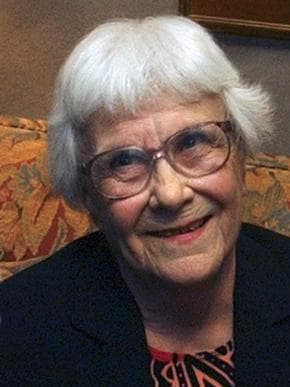
Nelle Harper Lee was an American novelist who wrote the 1960 novel To Kill a Mockingbird that won the 1961 Pulitzer Prize and became a classic of modern American literature. She assisted her close friend Truman Capote in his research for the book In Cold Blood (1966). Her second novel, Go Set a Watchman, has been confirmed to be an earlier draft of Mockingbird but was published in July 2015 as a sequel.







