“It is a strange thing to be an American. It is an immense journey.”
— Joseph Wayne reflecting on his new life and the land.

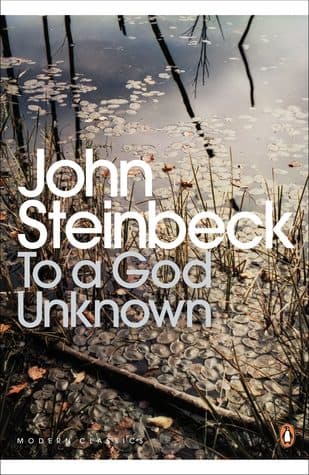
John Steinbeck (1933)
Genre
Literary Fiction / Historical Fiction / Spirituality
Reading Time
360 min
Key Themes
See below
Sign in to track this book
In California's fertile valleys, a man's deep respect for a tree, which he believes holds his father's spirit, conflicts with his brother's strict faith, leading to a devastating fight against nature and the unknown.
Joseph Wayne, the youngest son of an Irish Catholic family, leaves his Vermont farm for the fertile Jolon Valley in California. He feels a strong, almost spiritual, tie to this place. His father, John Wayne, gives his blessing, encouraging Joseph to follow his path. Joseph finds a beautiful, quiet ranch, mostly untouched, with a large oak tree and a spring. He feels an immediate, deep connection to the land, seeing it as alive. He asks his younger brother, Benjy, to join him and help start the new ranch, beginning his solitary, almost mystical, connection with the land.
Benjy arrives, at first unsure about Joseph's deep respect for the land, but he quickly adjusts to the hard work and the valley's beauty. Joseph starts farming, finding the land very fertile. He becomes convinced that the large oak tree near the spring holds the spirit of his father, John Wayne, who died soon after Joseph left Vermont. Joseph begins private rituals, offering wine and blood to the tree and land, believing this connection is vital for the ranch's success. This new, almost pagan, belief begins to quietly shape how he sees the world.
Joseph's other brothers, Thomas and Burton, with their families, eventually join him in the valley, setting up their own ranches nearby. Thomas, a practical and cheerful man, embraces the new life. Burton, however, is very religious and strict in his beliefs, bothered by Joseph's growing devotion to the oak tree and the land, which he sees as sacrilege. Joseph, meanwhile, falls in love with and marries Elizabeth, a kind and understanding woman who, despite her own traditional beliefs, accepts Joseph's unique spirituality without fully grasping it. Their marriage brings a time of great happiness and stability to Joseph's life.
Burton, increasingly upset by Joseph's rituals and what he sees as tree worship, acts on his own. Believing he is doing God's will and purifying the land, he cuts down the large oak tree. Joseph finds out with horror and sadness, feeling a deep loss as if his father had died again. Soon after, a terrible accident happens: Benjy, riding a horse, is caught in a rockslide and dies. Joseph is overwhelmed by grief and a sense of unfairness, believing the tree's destruction has brought evil forces upon his family and the land.
After Benjy's death and the tree's destruction, a severe drought hits the Jolon Valley. The once-fertile land dries up, the spring starts to disappear, and the cattle, essential to their ranches, begin to get sick and die. Joseph, his brothers, and their families struggle to survive. The drought is endless, and hopelessness settles over the community. Joseph, feeling personally responsible, continues his solitary rituals, trying hard to please the land and bring back the rain, but his efforts seem useless against nature's powerful forces.
As the drought gets worse, Joseph's spiritual connection with the land becomes more desperate. He spends nights alone, performing rituals, believing he must make a greater sacrifice to make the land fertile again. Elizabeth, worried about his mental and physical state, follows him one night to the dry spring. In a moment of deep, almost wild intensity, Joseph, consumed by grief and the land's suffering, can barely recognize her. She collapses, possibly from emotional stress and the harsh conditions, and dies in his arms. Her death pushes Joseph into even deeper despair and guilt, feeling he has lost everything he cared for.
After Elizabeth's death, Joseph's mind begins to break. He mostly withdraws from his remaining family, consumed by grief and his focus on the land. He wanders the drought-stricken ranch, talking to the dry earth and dying animals, his rituals becoming more basic and self-destructive. He believes the land is dying because he failed it and that he must somehow become one with it to restore its life. His brothers, especially Thomas, try to reach out to him, but Joseph is too deep in his own mystical world to connect with normal reality.
Driven by desperation, Joseph finds a local rainmaker, Juan, known for his spiritual connection to the land and his ability to bring rain. Juan confirms Joseph's belief that a sacrifice is needed, though his words are vague and mystical. Joseph takes this to mean he must offer himself as the ultimate sacrifice to the land to bring back life-giving water. He becomes more and more convinced that his own life is tied to the valley's health, and that only through his death can the land be reborn and fed.
With the drought at its worst, Joseph returns to the now completely dry spring, the symbolic heart of his ranch and where the oak tree once stood. He is thin and weak, his mind completely on his coming self-sacrifice. He remembers his father's words, the land's fertility, and the deaths of Benjy and Elizabeth; all these reinforce his belief that he must become one with the earth. He feels a deep connection to all living things and the cycle of life and death, believing his act will complete the cycle and bring renewal.
Joseph, at the dry spring, makes a final, desperate offering. He cuts his wrists, letting his blood flow into the dry earth, believing he is giving his life back to the land that sustained him. As he dies, a deep sense of peace and unity washes over him. At that exact moment, the sky, which had been clear for so long, darkens. A gentle rain begins to fall, slowly at first, then growing stronger, soaking the thirsty earth. Joseph's sacrifice, whether by chance or direct cause, is immediately followed by the longed-for rain, fulfilling his desperate hope for renewal.
The Protagonist
Joseph begins as a hopeful pioneer, establishing a farm and a family, but his increasing mystical devotion, combined with tragedy, leads him to self-destruction and a final, ultimate sacrifice for the land he loves.
The Supporting
Elizabeth provides Joseph with happiness and stability, but her death ultimately removes the last anchor he has to conventional reality, accelerating his descent.
The Antagonist/Supporting
Burton's rigid religious beliefs lead him to destroy Joseph's sacred tree, inadvertently triggering a chain of events that brings suffering to the family and the land.
The Supporting
Thomas endures the hardships of the drought and family tragedies with resilience, attempting to maintain normalcy and support Joseph despite his brother's increasingly erratic behavior.
The Supporting
Benjy's early death serves as a catalyst for Joseph's deepening despair and belief in the land's punitive power after the tree's destruction.
The Mentioned
Though deceased, John Wayne's spirit, as perceived by Joseph, becomes a central element of Joseph's spiritual journey and his connection to the land.
The Supporting
Juan serves as a catalyst for Joseph's final decision to sacrifice himself, by validating Joseph's mystical interpretation of the drought and the need for a 'sacrifice'.
This theme explores the deep, often spiritual, link between people and nature. Joseph Wayne shows this connection, seeing the land not just as something to use, but as a living, sacred being. His respect for the oak tree and the spring, and his belief that his father's spirit lives in them, points to a pagan, animistic view. The novel suggests that when this sacred bond breaks (like Burton cutting down the tree), nature fights back with drought and death, highlighting the delicate balance and humanity's duty to respect the natural world. Joseph's final sacrifice is an attempt to fix this balance.
“A man is not a man, until he is an ancestor...I will be the father of my land.”
The novel contrasts old, nature-based spirituality with traditional Christian beliefs. Joseph's changing belief system, which sees God in the land, sun, and elements, directly conflicts with Burton's strict, Old Testament-style Christianity. Burton's act of destroying the sacred oak tree is driven by religious fervor, an attempt to remove what he sees as pagan worship. The resulting famine and death can be seen as either God's anger or, from Joseph's view, the land's revenge, showing how destructive religious intolerance can be and the clash between different kinds of faith.
“He knew that the God was there, and that the God was in the tree, and he knew that the God was in the water.”
The idea of sacrifice, both real and symbolic, runs through the story. Joseph makes small offerings to the land, but as bad things happen, the idea of a greater sacrifice appears. Benjy's death, Elizabeth's death, and the dying cattle are all seen by Joseph as sacrifices the land demands. His final act of self-sacrifice at the dry spring is an effort to bring new life, to feed the dry earth with his own blood. This theme reflects old fertility myths and the cycle of life, death, and renewal, suggesting that great loss can come before new beginnings.
“He knew that he had made a promise to the land, and that the land had accepted it.”
Joseph Wayne's unique spiritual journey makes him more and more isolated from his family and society. While Elizabeth supports him at first, his growing involvement in his mystical world, along with the tragedies of Benjy's death, the drought, and Elizabeth's death, pushes him to the edge of madness. His inability to explain his deep connection to the land, or his understanding of its demands, separates him from his practical brothers. This isolation shows how hard it is to live outside normal ways and the mental cost of carrying a unique, very personal spiritual burden.
“He was alone, and the land was alone, and the two were one.”
A physical embodiment of Joseph's father's spirit and the land's vitality.
The majestic oak tree serves as a central symbol and a potent plot device. For Joseph, it is the physical manifestation of his deceased father's spirit and the focal point of his spiritual connection to the land. Its destruction by Burton is the catalyst for the subsequent tragedies – Benjy's death, the drought, and the dying cattle. This act symbolizes the desecration of the sacred and the breaking of a natural bond, driving the narrative towards its tragic conclusion and Joseph's ultimate sacrifice.
A prolonged period of aridity symbolizing nature's wrath and Joseph's despair.
The relentless drought is a major plot device, functioning as both a literal natural disaster and a symbolic manifestation of the land's suffering and anger. It directly causes the economic ruin of the Wayne family and the death of their livestock, intensifying their struggle for survival. For Joseph, the drought is a direct consequence of the oak tree's destruction, signifying the land's punishment and driving his increasingly desperate rituals and eventual self-sacrifice. It creates the oppressive atmosphere of despair and pushes the characters to their physical and psychological limits.
Joseph's repetitive actions to connect with and appease the land.
Joseph's rituals, ranging from offering wine to the tree to his final act of self-bloodletting, are key plot devices that drive his character arc and the story's mystical elements. These acts demonstrate his deepening spiritual connection to the land and his belief in its sentience. Each escalating sacrifice, culminating in his own death, is an attempt to restore balance and fertility to the land, reflecting ancient pagan practices. This device underscores the theme of man's symbiotic relationship with nature and the lengths one will go to in order to preserve it.
A remote, fertile valley that becomes a character in itself.
The Jolon Valley is more than just a backdrop; it functions as a character within the narrative. Its initial fertility and beauty draw Joseph to it, symbolizing promise and abundance. As the story progresses, the valley reflects the characters' fortunes, becoming parched and desolate during the drought, mirroring Joseph's despair and the family's suffering. The valley's isolation also contributes to Joseph's increasing detachment from conventional society, allowing his unique spirituality to flourish unchecked, and ultimately leading to his singular communion with the earth.
“It is a strange thing to be an American. It is an immense journey.”
— Joseph Wayne reflecting on his new life and the land.
“The earth is a mother, and the earth is a father, and the earth is a lover. And the earth is a friend. And the earth is a brother. And the earth is a sister. And the earth is a god. And the earth is a devil. And the earth is a heaven. And the earth is a hell. And the earth is a life. And the earth is a death. And the earth is a everything.”
— Joseph's deep, almost pantheistic connection to the land.
“His father, the old man, was a tree, a great oak tree, and he, Joseph, was a sapling growing from the roots.”
— Joseph's perception of his father and his own lineage.
“There are times when a man must go into himself to find himself. And there are times when a man must go out of himself to find himself.”
— Joseph contemplating his inner and outer journey.
“The land was not to be owned. It was to be loved and served, and it would give back what was given to it.”
— Joseph's philosophy on land ownership and stewardship.
“He felt that the sky was a roof, and the stars were holes in the roof, and the moon was a lamp shining through the holes.”
— Joseph's imaginative and simple view of the cosmos.
“A man can do anything if he knows what he wants.”
— Joseph's belief in determination and purpose.
“The little things were the great things, and the great things were the little things.”
— Joseph's perspective on the importance of details in life.
“The wind was a living thing, and it talked to him, and he understood its language.”
— Joseph's personification of nature and his deep connection to it.
“He knew that he was a part of the earth, and the earth was a part of him.”
— Joseph's profound sense of unity with the natural world.
“The tree was his father, and the tree was his god.”
— Joseph's intense, almost literal, worship of the ancient oak tree.
“He had gone to the new land, and the new land had taken him, and made him its own.”
— Joseph's complete assimilation into his new environment.
“It was not a thing to be understood, but a thing to be felt.”
— Joseph's approach to the mysteries of life and spirituality.
“The land was dry, and the land was thirsty, and the land was calling for rain.”
— The desperate need for rain, a central conflict in the story.
Ready to see how well you understood this book? Take our interactive quiz with 10 questions.
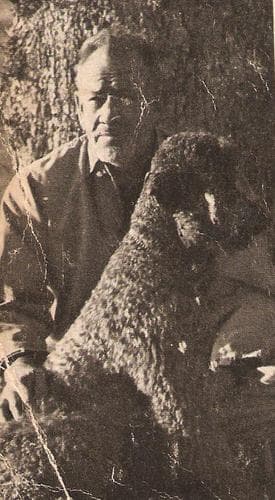
John Ernst Steinbeck was an American writer. He won the 1962 Nobel Prize in Literature "for his realistic and imaginative writings, combining as they do sympathetic humor and keen social perception". He has been called "a giant of American letters."







