BookBrief
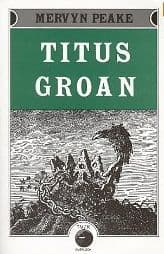
Titus Groan cover
Archivist's Choice

Titus Groan

Mervyn Peake (1946)

Genre

Fantasy

Reading Time

500 min

Key Themes

See below

Track Your Reading

Sign in to track this book

In Gormenghast castle, a newborn heir's first year unfolds amidst a grand sense of doom, as the cunning Steerpike weaves his ambition through its sterile rituals.

Synopsis

Titus Groan tells the story of its main character's first year, starting with his birth in the old, tradition-bound Gormenghast castle. Titus is an infant, so the story focuses on his family's decaying aristocracy: Lord Sepulchrave, a sad man obsessed with the castle's rituals; his wife, Countess Gertrude, a large woman who keeps to herself with her cats and birds; and their rebellious daughter, Fuchsia, who wants to leave. The main conflict comes from Steerpike, an ambitious kitchen boy. He plans an escape from his servitude. He tricks the simple-minded twins, Cora and Clarice, into setting fire to the library. This creates chaos, allowing him to rise in status and gain influence. As Steerpike's power grows, Lord Sepulchrave goes further into madness, troubled by the library's destruction and the castle's traditions. Steerpike's plans lead to the death of the Old Schoolmaster, Barquentine, and then to Sepulchrave's death. By Titus's first birthday, Steerpike has gained power in the castle, leaving a sense of doom over the old building. This sets the stage for Titus's future confrontation with this new order.
Reading time
500 min
Difficulty
Hard
Pacing
Slow
Mood
Atmospheric, Melancholy, Gothic, Darkly Humorous, Eccentric
✓ Read this if...
You crave richly descriptive prose, gothic atmosphere, and a deep dive into an eccentric, decaying world with complex characters.
✗ Skip this if...
You prefer fast-paced plots, clear-cut heroes, or straightforward fantasy narratives.

Plot Summary

The Birth of Titus Groan

The novel begins with the birth of Titus Groan, the seventy-seventh Earl of Gormenghast, in a remote, large castle full of old, meaningless rituals. His mother, Countess Gertrude, is a large woman who cares mostly for her white cats and birds, largely ignoring her human family. His father, Lord Sepulchrave, the 76th Earl, is a sad, scholarly man weighed down by tradition. While the castle prepares for the birth, the kitchen boy Steerpike, an ambitious, cunning youth with a distinct angular face, watches with disdain. He dreams of escaping his low position and manipulating the castle's people for his own gain. The birth is an important, though mostly overlooked, event in Gormenghast's otherwise unchanging world.

Steerpike's Escape and Ascendancy

Disgusted by his servant life in the foul-smelling kitchens under the cruel Chef Abiatha Swelter, Steerpike carefully plans his escape. He sets fire to part of the castle, creating a distraction that lets him leave the kitchens unnoticed. During the chaos, he meets the ill Dr. Prunesquallor and impresses the eccentric doctor with his quick mind and medical knowledge, pretending he wants to learn. Prunesquallor, charmed and somewhat easily fooled, takes Steerpike on as an assistant. This is Steerpike's first step toward more influence. He gains access to parts of the castle and its people he could not reach before, allowing him to watch and plan his next moves.

Fuchsia's Isolation and Lord Sepulchrave's Melancholy

Fuchsia Groan, Titus's older sister, is a wild, artistic, and very lonely girl. She finds comfort in her hidden attic room, filled with her own strange creations and items. She feels ignored by her parents and misunderstood by the castle's strict society. Lord Sepulchrave, meanwhile, becomes more withdrawn, burdened by endless, repeated rituals and the musty weight of the Groan library. He spends his days reading old books, often in deep sadness, troubled by the castle's past and his feeling of not being good enough as its keeper. His twin sisters, Cora and Clarice, two simple-minded, identical women, cling to him, adding to his burden with their constant, sad presence and unreasonable fears.

Steerpike's Manipulation of Cora and Clarice

Seeing how simple-minded and deeply resentful Cora and Clarice are, Steerpike begins to subtly manipulate them. He feeds their paranoia and sense of being wronged, convincing them that Lord Sepulchrave and his family are plotting against them and denying them their rightful place. He encourages their belief that they are overlooked and mistreated, slowly turning them against their own brother. His goal is to use them to discredit Sepulchrave and weaken the castle's power structure, clearing the way for his own rise. He gains their trust by pretending to be their only true friend, further separating them from the rest of the family.

The Ritual of the Bright Carvings

The annual Bright Carvings ritual takes place. This is a central event in the castle's year. During this ceremony, the Groan family and their servants gather to look at and think about the ancestral carvings that decorate the castle walls, showing the history of Gormenghast. The ritual is done with great seriousness and strict adherence to every old detail, despite its seemingly pointless nature. Lord Sepulchrave, though tired, performs his duties carefully. This event shows the castle's complete devotion to tradition and the past's strong hold on its people. Steerpike is determined to weaken this hold and use it for his own purposes. The carvings themselves clearly show the castle's long history.

Lord Sepulchrave's Descent into Madness

Steerpike's manipulation reaches a point when he encourages Cora and Clarice to set fire to the library, a place Sepulchrave values most. Though the fire is put out, the attack on his sanctuary, along with Steerpike's sly suggestions and the constant weight of his duties, pushes Lord Sepulchrave further into mental fragility. He starts to believe that the castle's owls are talking to him, and he retreats completely into delusion and sadness. His hold on reality weakens, making him an easy target for Steerpike's ongoing plans, as the Earl's authority and sanity slowly fall apart.

Steerpike's Promotion and Growing Influence

After the library fire and Sepulchrave's decline, Steerpike, having made himself seem helpful and essential, is promoted. He becomes Lord Sepulchrave's personal attendant, gaining direct access to the Earl and the Groan family's inner workings. This promotion is a direct result of his calculated efforts to appear loyal and capable. He impresses the naive Dr. Prunesquallor and even Countess Gertrude, who, in her detached way, finds him useful. This new position gives him great access and chances to further his agenda, letting him observe, listen, and subtly influence the remaining members of the Groan household.

The Death of Barquentine

Barquentine, the old, one-legged Keeper of the Groan Lore, is a strong traditionalist and a big obstacle to Steerpike's ambitions. Steerpike, now firmly in place as Sepulchrave's attendant, carefully plans Barquentine's death. He lures the old man into a secluded part of the castle, where he tries to murder him. During the fight, Barquentine manages to set Steerpike's leg on fire, but Steerpike wins, leaving Barquentine to die in the flames. This ruthless act removes a significant threat and a symbol of the old order, further strengthening Steerpike's power and removing a witness to his true nature, clearing the way for his continued rise.

Sepulchrave's Tragic End

Completely mad from his delusions and the weight of his responsibilities, Lord Sepulchrave believes he is an owl. He tries to join his feathered companions in the Tower of Flints, a desolate and dangerous part of the castle. He climbs the tower, only to be attacked and killed by the very owls he believes are his kind. His death is a sad end to a life defined by duty and sadness. It is a direct result of the psychological torment from Steerpike and the castle's oppressive atmosphere. His death leaves the Groan family line in a risky state, with only the infant Titus as the male heir.

Titus's First Birthday

The novel ends with the elaborate, ritualistic celebration of Titus Groan's first birthday. Despite Lord Sepulchrave and Barquentine's recent deaths, and Steerpike's ongoing plans, the castle follows its old customs. The celebration is grand, if somewhat empty. It shows the cyclical nature of Gormenghast's existence. Titus, still an infant, does not know about the complex power struggles and old traditions that define his world. The event symbolizes Gormenghast's unchanging, though stagnant, life. The infant Titus represents both hope for the future and the crushing weight of the past he is meant to inherit, while Steerpike continues to scheme.

Principal Figures

Titus Groan

The Protagonist

From a newborn, he exists as a symbol of the future, destined to navigate the complex world of Gormenghast.

Lord Sepulchrave Groan

The Supporting

From a weary and dutiful Earl, he descends into madness and ultimately dies, a victim of the castle's traditions and Steerpike's schemes.

Countess Gertrude

The Supporting

She remains a largely static, formidable, and detached figure, representing the unchanging, elemental force of Gormenghast.

Fuchsia Groan

The Supporting

She remains isolated and emotionally volatile, struggling to find her place and express her individuality within the restrictive castle.

Steerpike

The Antagonist

From an ambitious kitchen boy, he manipulates his way into a position of significant power and influence, leaving a trail of destruction in his wake.

Dr. Prunesquallor

The Supporting

He remains largely static, a well-meaning but often oblivious figure whose actions inadvertently aid Steerpike's rise.

Irma Prunesquallor

The Supporting

She remains a static, comedic, and socially anxious character, mirroring the eccentricities of the castle's upper echelons.

Cora Groan

The Supporting

From a resentful and overlooked twin, she becomes a victim of Steerpike's manipulation, leading to her tragic and deluded end.

Clarice Groan

The Supporting

Like her twin, she descends into delusion and becomes a pawn in Steerpike's game, ultimately facing a tragic end.

Barquentine

The Supporting

From a staunch guardian of tradition, he becomes a victim of Steerpike's ambition, dying in an attempt to protect the castle's integrity.

Themes & Insights

The Burden of Tradition and Ritual

Gormenghast is suffocated by centuries of meaningless rituals and traditions that dictate every aspect of life. These rituals, though empty of purpose, are rigidly adhered to, creating a stagnant and oppressive atmosphere. Lord Sepulchrave is crushed by their weight, while Steerpike seeks to exploit their rigidity for his own gain. The castle's inhabitants are prisoners of their past, unable to adapt or evolve, leading to decay and vulnerability.

For the Groans, the castle was not so much a place as a condition, a state of mind. It was the colour of their blood, the texture of their dreams, and the unalterable rhythm of their lives.

Narrator

Ambition and Manipulation

Steerpike embodies unchecked ambition and Machiavellian manipulation. From his lowly position, he meticulously plots his ascent by exploiting the weaknesses, naivety, and resentments of those around him. He uses cunning, deception, and even murder to achieve his goals, demonstrating how a singular, malevolent will can disrupt and corrupt an entrenched, complacent system. His rise is a central driving force of the narrative, highlighting the destructive potential of ruthless self-interest.

He had a mind that was quite different from the minds of those around him. He could see beyond the immediate, and plan beyond the present.

Narrator

Isolation and Loneliness

Many characters in Gormenghast experience profound isolation. Fuchsia is neglected by her parents and retreats into her private world. Lord Sepulchrave is isolated by his melancholy and the weight of his duties. Even Countess Gertrude, surrounded by her animals, remains detached from her human family. This theme underscores the lack of genuine connection and emotional warmth within the castle, contributing to the characters' vulnerabilities and making them susceptible to manipulation or despair. The vastness of the castle mirrors the emotional distance between its inhabitants.

She was a creature of a desolate freedom, her heart a room where no one ever came.

Narrator about Fuchsia

Decay and Stagnation

Gormenghast itself is a symbol of decay and stagnation. The castle is ancient, crumbling, and filled with dust and cobwebs, mirroring the spiritual and intellectual decay of its inhabitants. The Groan family adheres to rituals that have lost all meaning, and their lives are devoid of progress or true purpose. This pervasive sense of decline makes the castle ripe for Steerpike's destructive influence, as there is little vital force left to resist his machinations. The physical decrepitude reflects the moral and social rot within.

Gormenghast was not merely a castle; it was a universe, a world of its own, dying slowly, irrevocably.

Narrator

The Nature of Power

The novel explores various forms of power: the inherited, traditional power of the Groans, which is largely ceremonial and ineffectual; the elemental, almost unconscious power of Countess Gertrude; and the insidious, manipulative power of Steerpike. Steerpike's rise demonstrates that true power in Gormenghast lies not in hereditary right or ancient titles, but in cunning, intelligence, and the ability to exploit the system. The story questions the legitimacy and effectiveness of power derived solely from tradition in the face of active, malevolent will.

He knew that the castle was a hollow thing, filled with echoes and the dust of forgotten things, and that power lay not in its walls, but in the minds that moved within them.

Narrator about Steerpike

Plot Devices & Literary Techniques

Gothic Setting

The vast, decaying castle of Gormenghast creates an atmosphere of dread and mystery.

The castle of Gormenghast is more than just a setting; it is a character in itself, embodying the oppressive, decaying nature of the Groan lineage and its traditions. Its labyrinthine corridors, hidden rooms, and ancient, crumbling architecture contribute to a pervasive sense of foreboding and entrapment. The sheer scale and age of the castle emphasize the burden of history and the insignificance of individual lives within its walls, creating an atmosphere that is both grand and claustrophobic, characteristic of gothic literature.

Symbolism of Rituals

Meaningless, ancient rituals highlight the stagnation and absurdity of Gormenghast.

The countless, often bizarre, rituals performed in Gormenghast (such as the Bright Carvings, the birth ceremonies, and even the daily routines) serve as a central plot device. They represent the castle's absolute adherence to tradition and its inability to adapt or find new meaning. These rituals are depicted as empty, time-consuming, and ultimately suffocating, illustrating the stagnation of the Groan family and providing the fertile ground for Steerpike's rebellion against the established order. They are a physical manifestation of the burden of the past.

Character Foils

Contrasting characters highlight thematic elements and drive conflict.

The novel employs character foils to emphasize key themes. Steerpike, with his dynamic ambition and ruthlessness, is a direct foil to the static, melancholic Lord Sepulchrave, highlighting the contrast between active malevolence and passive decay. Fuchsia's wild, artistic nature contrasts with the rigid formality of the castle, emphasizing the theme of individuality versus tradition. These contrasts serve to illuminate the strengths and weaknesses of the characters and to propel the narrative forward by creating inherent conflict.

Grotesque Imagery

Exaggerated and often disturbing descriptions create a unique, unsettling atmosphere.

Peake's use of grotesque imagery is pervasive, from the physical descriptions of characters like the immense Countess Gertrude or the angular Steerpike, to the decaying grandeur of the castle itself. This device creates a distinctive, often unsettling atmosphere that is integral to the novel's unique tone. It emphasizes the strangeness and decay of Gormenghast, making the world feel both fantastical and darkly realistic, and underscores the psychological states of its inhabitants, contributing to the sense of a world out of balance.

Critical analysis

Notable Quotes

Gormenghast. For that is the name of the pile of stones and mortar, of the towers and quadrangles, of the arches and corridors. Gormenghast. The hereditary seat of the Groan family.

The very opening lines, introducing the sprawling, ancient castle.

The castle was a city in itself, a city of stone and wood, of shadow and light, of silence and echoes.

A description of the vastness and internal complexity of Gormenghast.

His face was a white wedge, and his eyes were like two chips of glinting flint, and his hair was as black as a raven's wing.

A vivid early description of Steerpike's physical appearance.

He was a man of ritual, of habit, of the dust and the cobwebs, of the very stone of Gormenghast itself.

Describing the Earl of Groan, Titus's father, as deeply entrenched in tradition.

The universe is what you think it is.

A philosophical musing from Flay, reflecting on subjective reality.

It was impossible to be alone in Gormenghast, for the castle itself was a living thing, breathing and sighing, whispering and murmuring.

Highlighting the pervasive, almost sentient presence of the castle.

For the Groans, change was the ultimate heresy.

Explaining the deeply ingrained resistance to any alteration within the castle's ancient ways.

There are some who can live without wildness and some who cannot.

A reflection on individual nature and the need for freedom, even within the confines of Gormenghast.

He was like a weasel, sleek and quick, with a mind like a maze and a heart like a stone.

Another description of Steerpike, emphasizing his cunning and coldness.

The air was thick with the dust of ages, and the smell of ancient wood and forgotten things.

Sensory detail contributing to the oppressive, historical atmosphere of Gormenghast.

A world of endless corridors and echoing halls, of vast, empty chambers and hidden, secret places.

Further detailing the labyrinthine and mysterious nature of the castle.

He was a boy who looked at the world with eyes that saw beyond the surface, beyond the dust and the ritual, to the strange, twisted heart of things.

Describing Titus's inherent curiosity and his different perspective compared to others in Gormenghast.

To be born in Gormenghast was to be born into a vast, intricate, and unchangeable pattern.

Emphasizing the predetermined and rigid existence for those within the castle's walls.

Quiz

Test Your Knowledge

Ready to see how well you understood this book? Take our interactive quiz with 10 questions.

10
Questions
~5
Minutes
?
Best Score

Key Questions (FAQ)

Titus Groan chronicles the birth and first year of Titus, the 77th Earl of Groan, within the sprawling, ancient castle of Gormenghast. It introduces a bizarre cast of characters, including the reclusive Lord Sepulchrave, the eccentric Countess Gertrude, and the ambitious kitchen boy Steerpike, as the castle's rigid traditions clash with its inhabitants' desires and the machinations of those seeking power.

About the author






