“Ah, wherefore dost thou urge the answere then?”
— Aaron questions Tamora's insistence on an answer when she already knows it.

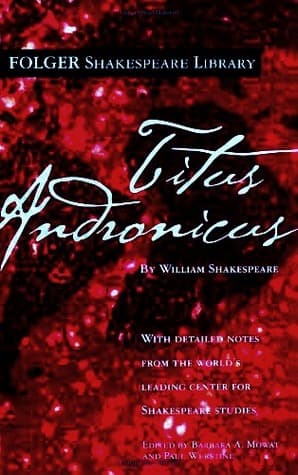
William Shakespeare (2017)
Genre
Historical Fiction
Reading Time
268 min
Key Themes
See below
Sign in to track this book
In ancient Rome, a decorated general's refusal of the emperorship ignites a brutal cycle of revenge that devours his family and plunges the city into a blood-soaked abyss.
General Titus Andronicus returns to Rome after a decade of war against the Goths. He brings Tamora, the Goth Queen, her three sons, and Aaron, a Moor, as captives. He performs a ritual sacrifice of Tamora's eldest son, Alarbus, to honor his own twenty-one sons lost in battle, despite Tamora's desperate pleas. The Roman people then offer Titus the emperorship, but he declines, citing his age. He nominates Saturninus, the eldest son of the late emperor. Bassianus, Saturninus's younger brother, disputes this, believing the people's choice should prevail. This creates immediate tension and a power struggle within the Roman elite, made worse by the grief and anger of the captive Goths.
Saturninus, now Emperor, immediately declares his intention to marry Lavinia, Titus's daughter. However, Lavinia is already engaged to Bassianus, and her brothers, Lucius, Quintus, Martius, and Mutius, intervene to prevent the forced marriage, asserting Bassianus's claim. In the chaos, Titus, angry at his sons' defiance and believing they disrespect his authority and the Emperor's, kills his own son Mutius. Saturninus, feeling insulted by the Andronici's actions, rejects Lavinia and, in a shocking move, chooses Tamora, the Goth Queen and his recent captive, as his empress. Tamora, now empowered, secretly vows revenge on Titus and his family for the sacrifice of her son, Alarbus, and begins to plot with her lover, Aaron the Moor.
The Roman court, including the newly married Saturninus and Tamora, and the Andronici, go on a hunting trip. Aaron the Moor, acting for Tamora, manipulates Tamora's sons, Chiron and Demetrius, to ambush Bassianus. They murder Bassianus in a secluded part of the forest, near a pit. Lavinia, who was with her husband, witnesses the murder and is then brutally raped by Chiron and Demetrius. To prevent her from identifying them, they cut out her tongue and chop off her hands, leaving her mutilated and speechless. Aaron then frames Titus's sons, Quintus and Martius, for Bassianus's murder by tricking them into falling into the pit where the body lies, ensuring they are found with the corpse.
Saturninus, influenced by Tamora and Aaron, orders the arrest of Quintus and Martius, accusing them of Bassianus's murder. Lucius, Titus's son, pleads for his brothers' lives, but it does no good. Aaron appears, claiming that if one of the Andronici cuts off a hand and sends it to the Emperor, Quintus and Martius will be pardoned. Titus, in a desperate act of paternal love and trust, allows Aaron to chop off his hand. However, a messenger soon arrives not with his sons, but with their heads and Titus's severed hand, mocking his sacrifice. This cruel deception shatters Titus's remaining hope and plunges him into deep grief and a growing desire for vengeance, especially after seeing his mutilated daughter, Lavinia.
Lavinia, unable to speak or write, uses a stick to write the names of her attackers, 'Chiron' and 'Demetrius,' in the sand, using her stumps to guide the stick. Titus, along with his surviving son Lucius and his brother Marcus, are horrified and finally understand the full extent of the cruelties committed against their family. This revelation ignites a fierce desire for vengeance in Titus. He begins to pretend madness, believing it will allow him to act more freely and subtly against his enemies. He sends strange letters and arrows with messages attached into the court, aiming to draw attention to the injustices and provoke a reaction from the gods and the Emperor.
Lucius, having openly defied Saturninus and spoken out against the injustices committed against his family, is banished from Rome. He flees to the Goths, the very people his father had conquered, and quickly gains their support. He forms an army with the intention of marching on Rome to depose Saturninus and avenge his family. Meanwhile, Aaron the Moor, fearing for his infant son's safety – a child he fathered with Tamora, a secret that would expose her infidelity to Saturninus – escapes with the baby. He is pursued by Lucius's Goth soldiers and eventually captured. He reveals his monstrous deeds and the full extent of Tamora's treachery in exchange for his son's life.
Tamora, Saturninus, Chiron, and Demetrius, along with Aaron, know about Lucius's approaching army. Tamora, still believing Titus is genuinely mad, decides to use his perceived insanity. She disguises herself as 'Revenge,' accompanied by Chiron and Demetrius disguised as 'Rape' and 'Murder,' and visits Titus, promising him vengeance against Saturninus if he will help them. Titus, pretending to comply, recognizes them through their disguises and plays along, agreeing to host a feast. He then instructs his servants to capture Chiron and Demetrius, setting the stage for his horrific plan of retribution, which he intends to carry out during the feast.
At the grand feast hosted by Titus, with Saturninus, Tamora, and Marcus as guests, Titus appears, dressed as a cook. He asks Saturninus if a father should kill his daughter if she is dishonored, to which Saturninus agrees. Titus then reveals he has killed Lavinia, a mercy-killing to end her suffering and shame. He then instantly stabs Tamora, revealing that he has baked her sons, Chiron and Demetrius, into a pie which she has just eaten. A horrified Saturninus stabs Titus in retaliation. In the ensuing chaos, Lucius, having entered with his Goth army, kills Saturninus, bringing the bloody cycle of vengeance to a gruesome end. Rome is in shock and horror.
After the horrific events of the feast, Lucius addresses the Roman people, explaining the full extent of Tamora and Aaron's villainy, and the injustices suffered by his family. Marcus Andronicus supports Lucius's claim, and the Roman tribunes and people, seeing the devastating consequences of the recent reign, proclaim Lucius the new Emperor. Lucius, now in power, delivers a final judgment. He sentences Aaron the Moor, who has confessed to his atrocities without remorse, to be buried alive up to his neck and left to starve to death, a fitting end for the architect of so much suffering. The play ends with a new, grim order established in Rome.
The Protagonist
Titus transforms from a stoic, honorable Roman general into a grief-stricken, vengeance-driven figure who orchestrates a horrific retribution.
The Antagonist
From a grieving captive, Tamora rises to power as Empress, using her position to exact a horrific and prolonged revenge.
The Antagonist
Aaron remains consistently evil and unrepentant, serving as the catalyst for much of the play's violence until his capture and confession.
The Supporting
Lavinia transforms from a chaste Roman maiden into a violated, mutilated victim, her suffering driving Titus's ultimate revenge.
The Supporting
Lucius evolves from a loyal son and soldier to a banished leader of an army, ultimately becoming the new Emperor of Rome.
The Antagonist
Saturninus ascends to the throne but proves to be a weak and easily swayed ruler, becoming a victim of the very machinations he allowed.
The Supporting
Marcus remains a steadfast, supportive figure, witnessing the family's destruction and helping to guide the new regime.
The Antagonists
They remain consistently evil, indulging in violence and lust, until they become the victims of Titus's ultimate retribution.
The main theme in 'Titus Andronicus' is the destructive nature of revenge, which spirals into an uncontrollable cycle of violence. The play begins with Titus sacrificing Tamora's son, sparking her desire for retribution. Her subsequent cruel acts against the Andronici, orchestrated by Aaron, then fuel Titus's own vengeful madness. Each act of violence leads to a more brutal counter-act, ending in the horrific feast where Titus serves Tamora her sons baked into a pie. The play shows how revenge, once started, consumes all involved, leading to an almost complete destruction of the main families and a descent into barbarism, illustrating that 'blood will have blood.'
“For every drop of blood that Titus shed, / A drop of blood in recompense must grow.”
The play constantly blurs the lines between justice and vengeance, questioning whether true justice can ever be achieved when personal retribution drives actions. Initially, Titus believes his actions (sacrificing Alarbus) are just according to Roman tradition. However, Tamora sees this as an injustice requiring vengeance. As the play progresses, the pursuit of 'justice' turns into increasingly barbaric acts of personal revenge, especially by Titus. His final, gruesome feast is presented as a form of 'justice' for Lavinia's suffering and his sons' deaths, yet it is clearly an act of extreme vengeance. The play suggests that when personal grievances override legal or moral frameworks, the outcome is chaos and further injustice; only a new order can begin to restore 'justice.'
“If there were reason for these miseries, / Then should I be a reasonable man.”
The corruption of power is clear throughout the play, particularly through Saturninus and Tamora. Saturninus, a weak and vain emperor, quickly abuses his authority, making impulsive decisions and proving easily manipulated by Tamora. His power allows Tamora, a former captive, to become Empress and use her elevated position to exact her revenge without consequences. The play shows how unchecked power, especially when combined with personal ambition and moral decay, leads to tyranny, injustice, and the breakdown of social order. Rome itself descends into lawlessness and brutality under their influence, showing the devastating consequences when those in power lack integrity.
“I am the Emperor's overseer, when I list. / A privy counsellor am I to him.”
'Titus Andronicus' looks at the nature of evil, most strikingly personified by Aaron the Moor. Aaron takes sadistic pleasure in orchestrating cruelties, expressing a deep and unrepentant delight in his own villainy. His evil is not driven by revenge or ambition in the same way as Tamora's, but by a pure, almost philosophical enjoyment of causing suffering. This portrayal of gratuitous evil, with no apparent redeeming qualities or complex motivations beyond malevolence itself, distinguishes him from other characters. His cold, calculated cruelty, and his final defiant boast of his wickedness, suggest that evil can exist as an inherent force, not just a reaction to circumstance, challenging the audience to confront its most extreme forms.
“If one good deed in all my life I did, / I do repent it from my very soul.”
Physical disfigurement serves as a stark visual representation of violated innocence and profound trauma.
The brutal mutilation of Lavinia (her tongue cut out, her hands chopped off) is a central and shocking plot device. It not only prevents her from identifying her attackers but also serves as a powerful visual symbol of the play's themes: the silencing of truth, the destruction of innocence, and the utter dehumanization inflicted by unchecked violence. Her inability to speak or write forces her family to interpret her gestures, highlighting the struggle for communication and justice in a world where conventional means have failed. The physical trauma mirrors the moral and social decay of Rome.
Titus's pretense of insanity allows him to operate outside social norms and execute his elaborate revenge.
Titus's feigned madness is a crucial plot device that allows him to execute his horrific revenge plot. By appearing insane, he is dismissed as harmless and irrational, enabling him to plan and perform actions that would otherwise be impossible or immediately suspicious. His bizarre letters and arrows, seemingly nonsensical, subtly draw attention to the injustices while keeping his true intentions hidden. This 'madness' provides him with a veil of impunity, allowing him to lure his enemies into a false sense of security before unleashing his final, gruesome retribution.
The play adheres to and exaggerates the conventions of the Elizabethan revenge tragedy genre.
'Titus Andronicus' is a quintessential example of the Elizabethan revenge tragedy. It utilizes classic conventions such as a wronged protagonist seeking retribution, a villain who delights in cruelty, soliloquies revealing nefarious plots, ghosts (implied, though not explicit in text), a descent into madness, and a climactic bloodbath that results in the deaths of most major characters. Shakespeare pushes these conventions to their extreme, employing graphic violence and grotesque imagery to amplify the horror and explore the destructive nature of unchecked vengeance, making it a foundational, albeit extreme, example of the genre.
A literal and symbolic trap that ensnares characters and represents the moral abyss of the play.
The pit in the forest serves as a literal trap where Bassianus is murdered and his body hidden, and where Quintus and Martius are framed. Beyond its function as a physical setting for key events, the pit also acts as a powerful symbol. It represents the moral abyss into which Rome and its characters descend, a dark, hidden place where atrocities are committed and justice is perverted. It is a place of concealment and treachery, mirroring the hidden plots and moral darkness that pervade the narrative, trapping the innocent and guilty alike in a cycle of destruction.
“Ah, wherefore dost thou urge the answere then?”
— Aaron questions Tamora's insistence on an answer when she already knows it.
“She is a woman, therefore to be won; She is a woman, therefore to be trusted.”
— Demetrius and Chiron debate the nature of women, ironically preceding Tamora's betrayal.
“Vengeance is in my heart, death in my hand, Blood and revenge are hammering in my head.”
— Aaron revels in his evil plans and desire for destruction.
“For now I stand as one upon a rock, Environed with a wilderness of sea.”
— Titus expresses his isolation and despair after his family's misfortunes.
“I am the sea! Hark, how the surges roar!”
— Titus, in his madness, imagines himself as the tumultuous sea.
“Magni dominator poli, Tam lentus audis scelera? tam lentus vides?”
— Titus appeals to the heavens in Latin, questioning divine justice.
“O, what a sympathy is now between My heavy heart and thine!”
— Titus addresses the severed hand of Lavinia, finding a morbid connection in their suffering.
“If any one of you know how to pity, Then pity me, the record of my woes.”
— Lavinia appeals for compassion after her horrific assault.
“Let me go, let me go, for I am mad, I am mad, I am mad!”
— Titus descends further into madness, repeating his affliction.
“I am a Blackamoor, I am a Moor, My name is Aaron.”
— Aaron defiantly asserts his identity and heritage.
“Why, 'tis no matter, man; if they did hear, They would not mark me, or if they did mark, They would not pity me.”
— Marcus expresses a sense of futility and hopelessness regarding their plight.
“I am the scourage of Rome, and will remain so.”
— Aaron declares his intention to continue his destructive path.
“Thus in this lamentable trance of woe, We waste our lights in fruitless sorrowing.”
— Marcus reflects on their prolonged and ineffective mourning.
“For all my blood will I not shed one tear.”
— Aaron, captured, remains unrepentant and defiant to the end.
Ready to see how well you understood this book? Take our interactive quiz with 10 questions.
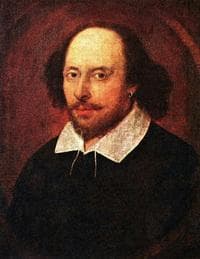
William Shakespeare was an English playwright, poet and actor. He is widely regarded as the greatest writer in the English language and the world's pre-eminent dramatist. He is often called England's national poet and the "Bard of Avon". His extant works, including collaborations, consist of some 39 plays, 154 sonnets, three long narrative poems, and a few other verses, some of uncertain authorship. His plays have been translated into every major living language and are performed more often than those of any other playwright. Shakespeare remains arguably the most influential writer in the English language, and his works continue to be studied and reinterpreted.







