“I could see the ocean, but I couldn't see the sky. I was blind.”
— Phillip's realization of his permanent blindness after the shipwreck.

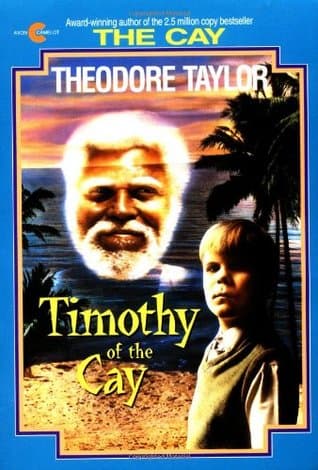
Theodore Taylor (1994)
Genre
Children's / Historical Fiction / Young Adult
Reading Time
120 min
Key Themes
See below
Sign in to track this book
Before and after a life-changing storm, this is the story of Timothy's past and Phillip's future, connected by the wisdom shared on a small island.
Timothy, born in 1884 on St. Thomas, had a hard childhood marked by poverty and his mother's early death. His grandmother, MaMa May, raised him, teaching him about the sea and how to survive. At a young age, he started working various jobs, like fishing and loading ships, to help his family. He developed a deep respect for the ocean. His early life involved hard work and struggle in the beautiful but often tough Caribbean islands. He dreamed of owning his own fishing boat and providing for his family, battling the economic difficulties of the time.
As a young man, Timothy took a job as a deckhand on a schooner that often traveled between the islands. During one trip, he met the Owens family, Americans living in Curaçao. He saw a young girl, Grace Owens, playing on deck, a detail that subtly connects to his future with Phillip. Timothy watched the family from a distance, noticing their different lifestyle. This brief meeting, though seemingly small then, gave him a sense of the wider world beyond his immediate struggles, subtly linking his future with the American community in the Caribbean.
Timothy spent most of his adult life working on various boats, from fishing vessels to cargo schooners, becoming an experienced seaman. He learned to navigate by the stars, read the weather, and understand the Caribbean Sea. His knowledge of the ocean was vast. He faced many storms, successes, and losses at sea, including losing fellow sailors. Despite the dangers, the sea was his home and his way of life. He married a woman named MaMa Fee and worked hard to provide for his family, always aiming for a better life and keeping his connection to nature.
As the 1940s began, World War II reached the Caribbean. German U-boats became a constant threat to shipping lanes, including those for oil from Aruba and Curaçao. Timothy, now an older, experienced sailor, continued his work, but the mood on the islands changed to one of tension and fear. He saw the increased military presence and the worry among the islanders. The war disrupted trade and made sea travel dangerous, forcing him and his community to adapt to a new reality, which would lead to the fateful voyage of the Hato.
In 1942, Timothy was working on the SS Hato, a freighter evacuating women and children from Curaçao. A German U-boat torpedoed the ship. In the chaos, Timothy, despite his age, acted bravely, helping others onto life rafts. He found a young, blind American boy, Phillip Enright, struggling in the water. Timothy pulled Phillip onto his small raft, ensuring the boy's survival as the Hato sank. This moment marked the start of their unusual bond, as Timothy put Phillip's safety first, setting the scene for their time on the small island.
Stranded on a deserted island, Timothy became a guardian and teacher to the blind and initially angry Phillip. He carefully organized their supplies, found water, and started a signal fire. Timothy patiently taught Phillip how to fish, gather food, and navigate their small island using his other senses. He shared his knowledge of the sea, the stars, and the island's plants and animals. Despite Phillip's early biases and anger, Timothy remained steady, showing great patience and wisdom. He slowly changed Phillip from helpless to independent, building a strong bond between them.
A powerful hurricane hit the island, threatening their lives. Timothy, with his strength and selflessness, protected Phillip from the storm, taking the force of the wind and flying debris. He tied Phillip to a palm tree and used his own body as a shield. Though they survived the hurricane, Timothy was badly hurt and died soon after. His death was a great loss for Phillip, but it also showed his ultimate sacrifice and the depth of his love for the boy he had come to see as his son. Timothy's last act ensured Phillip's survival.
After Timothy's death, Phillip, now able to care for himself thanks to Timothy's lessons, kept the signal fire going. A passing plane eventually spotted and rescued him. Phillip was reunited with his parents, who were happy but also sad about Timothy's death. Phillip struggled to return to his old life, finding society's comforts and rules restrictive after his experience. He missed Timothy deeply and felt a strong connection to the island. His blindness was still there, but it no longer made him helpless; he had learned to see the world differently.
Back in Curaçao, Phillip enrolled in a school for the blind in the United States. He did well in his studies, especially in subjects that allowed him to connect with nature and his memories of Timothy, such as marine biology and geography. He had multiple surgeries hoping to regain his sight, a long process. His determination came from his time on the island and his wish to fully appreciate the world Timothy taught him to see. He never forgot Timothy or the lessons learned, carrying the old man's spirit with him.
Years later, as a young man, Phillip, who had partially regained his sight, returned to the island where he and Timothy were stranded. He brought a gift for Timothy, a small, carved wooden sea horse, a symbol of their journey and Timothy's love for the sea. He found Timothy's grave and spent time thinking about their time together. This return was a pilgrimage, a moment of deep closure and thanks, confirming Timothy's lasting impact on his life and his personal growth. He left the sea horse as a tribute.
Phillip dedicated his life to keeping Timothy's memory alive and sharing the lessons he learned on the island. He became an advocate for environmental protection and told his story, stressing the importance of respecting nature and human connection across differences. He found satisfaction in his work and continued to visit the island, ensuring Timothy's grave was cared for. Phillip's life shows Timothy's wisdom, courage, and selfless love, demonstrating how one powerful experience can shape a person's entire path and purpose.
The Protagonist
Timothy's arc is one of ultimate self-sacrifice, as he dedicates his final months to transforming Phillip from a prejudiced, dependent child into a self-reliant and compassionate young man.
The Protagonist
Phillip undergoes a profound transformation from a prejudiced, dependent child to a self-reliant, empathetic, and wise young man, largely due to Timothy's mentorship and sacrifice.
The Supporting
Grace Enright's arc is less about personal change and more about representing the societal prejudices that Phillip must confront and overcome.
The Supporting
Phillip Sr. remains a constant, loving presence for Phillip, but his personal arc is less central to the story's core themes.
The Supporting
Stew Cat's arc is one of unwavering loyalty and companionship, providing comfort and a sense of continuity for Phillip throughout his ordeal.
The Mentioned
MaMa May's arc is complete before the main story, but her wisdom and teachings live on through Timothy.
The novel explores overcoming prejudice. Phillip, influenced by his mother, initially holds racial bias against Timothy, calling him a 'black man' and doubting his intelligence. But as they rely on each other to survive on the island, Phillip's biases fade. Timothy's patience, wisdom, and selfless actions show his deep humanity, making Phillip challenge his old ideas. This theme is central to Phillip's growth, showing how shared hardship can break down social barriers and build true understanding and love. For example, Phillip's realization that Timothy is 'black, but he is good' marks a key change in his view.
“I had been with him for over two months, and I had not seen him. I had not seen his color. I had only seen his kindness and his strength.”
Survival on the deserted island is a core theme. Timothy, with his knowledge of the sea and islands, teaches Phillip the skills needed to live off the land and sea—how to fish, find water, build shelter, and make fire. This process forces Phillip to move past his helplessness, especially after losing his sight. The harsh environment acts as a test, building Phillip's independence and strength. Timothy's lessons are not just about physical survival but also about mental toughness and adapting to extreme situations. His teachings ensure Phillip's survival after Timothy's death, proving the value of self-reliance.
“You got to learn to see with your hands, young bahss. Your ears. Everything.”
Timothy is a mentor and father figure to Phillip. Despite Phillip's initial anger and bias, Timothy offers him unconditional love, patience, and guidance. He teaches Phillip practical survival skills and life lessons about courage, strength, and kindness. Timothy's selfless acts, ending with his sacrifice during the hurricane, show the deep love he had for Phillip. This mentorship changes Phillip, giving him the tools to handle his blindness and the wisdom to understand the world beyond its surface, showing the power of a deep, caring relationship.
“I 'ave to go, young bahss. But I will always be wit' you. Always.”
The novel highlights the connection between people and nature. Timothy, a man of the sea, has a deep understanding of the ocean, weather, and the island's ecosystem. He teaches Phillip to appreciate and respect nature, to understand its rhythms, and to find food and comfort in it. The island, at first a symbol of isolation, becomes a classroom where Phillip learns to 'see' with his other senses and to feel part of the natural world. This connection creates a deeper appreciation for life and a sense of belonging, changing Phillip's view of his place in the world.
“The sea, she is a cruel mistress, but she can also be a kind mother.”
Loss and grief are central to Phillip's journey. He experiences losing his sight, his familiar life, and most importantly, Timothy. The trauma of the shipwreck and his blindness first plunges him into despair. However, it is Timothy's death that truly makes Phillip face grief and loneliness. This experience, though devastating, ultimately strengthens him, as he must rely entirely on the lessons Timothy taught him. His grief becomes a reason for further growth, solidifying his independence and deepening his appreciation for their bond.
“I cried for Timothy, and for the first time in my life, I cried for myself.”
Narrative techniques used to reveal Timothy's past and hint at future events.
The novel uses flashbacks to reveal Timothy's rich backstory, including his childhood on St. Thomas, his experiences as a seaman, and his encounters with other characters like the Owens family. These flashbacks not only provide depth to Timothy's character but also subtly foreshadow his eventual encounter with Phillip and his profound impact. For instance, the brief mention of seeing a young Grace Owens on a ship connects Timothy's past to Phillip's future, reinforcing the idea of fate and interconnected lives. This device enriches the reader's understanding of Timothy's wisdom and resilience.
Detailed descriptions focusing on non-visual senses to convey Phillip's experience.
Given Phillip's blindness, the narrative heavily relies on sensory imagery that emphasizes sound, touch, smell, and taste. This device allows the reader to experience the world as Phillip does, heightening empathy and understanding of his challenges and triumphs. Descriptions of the wind, the texture of sand, the taste of fish, and the smell of the sea become vivid and crucial to the storytelling, allowing the reader to 'see' the cay through Phillip's other senses. This technique effectively immerses the reader in Phillip's unique perspective.
The island serving as a contained world reflecting broader societal issues.
The small, isolated cay functions as a microcosm for the larger world, where themes of prejudice, survival, education, and human connection are played out in a concentrated setting. Stripped of societal structures and external influences, Phillip and Timothy are forced to confront their biases and rely solely on their shared humanity. The cay becomes a crucible where Phillip's character is forged, and the fundamental truths about human nature and interdependence are revealed. It allows for intense character development and thematic exploration within a confined space.
The ocean representing both danger and a source of life and wisdom.
The sea is a powerful symbol throughout the novel, representing both immense danger and a profound source of life, wisdom, and spiritual connection. It is the sea that brings Timothy and Phillip together through the shipwreck, and it is from the sea that they must draw sustenance for survival. For Timothy, the sea is home and a source of ancient knowledge. For Phillip, it initially represents fear and loss, but eventually becomes a symbol of freedom, resilience, and the interconnectedness of all life, reflecting his journey of growth and understanding.
“I could see the ocean, but I couldn't see the sky. I was blind.”
— Phillip's realization of his permanent blindness after the shipwreck.
“Dat be true, young bahss. God got his own ways of seein' things.”
— Timothy trying to comfort Phillip about his blindness.
“I had been born white, and Timothy had been born black. And there was a wall between us.”
— Phillip reflecting on the racial prejudice he initially held.
“I learned more about people that day than I had in all the years I'd been alive.”
— Phillip's internal thought after Timothy's kindness and sacrifice.
“I had to learn to see with my hands, with my ears, with my nose, with my mouth.”
— Phillip describing his adaptation to blindness on the cay.
“You got to be strong, young bahss. Strong like de wind, strong like de sea.”
— Timothy encouraging Phillip to build resilience.
“I was no longer afraid of the dark. I was no longer afraid of anything.”
— Phillip's growth in courage and independence.
“He saved my life, and I saved his. We were even.”
— Phillip's understanding of their mutual reliance and bond.
“The sea was our home now, and we were its children.”
— Phillip's acceptance of their isolated existence on the cay.
“I could feel his strength, his courage, his love.”
— Phillip reflecting on Timothy's character and their bond.
“Dis cay be like a teacher, young bahss. It teach you 'bout life.”
— Timothy explaining the lessons learned from their harsh environment.
“I never saw him again, but I saw him in my mind, walking on the beach.”
— Phillip's lasting memory of Timothy after his rescue.
“I had learned to live without my eyes, but I knew I could not live without Timothy.”
— Phillip's realization of the depth of his dependence and affection for Timothy.
“De storm be like life, young bahss. It come, it go. But de sun always shine again.”
— Timothy's philosophical outlook on challenges and hope.
Ready to see how well you understood this book? Take our interactive quiz with 10 questions.
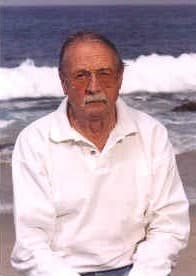
Biography coming soon.

Dan Gemeinhart
4.5
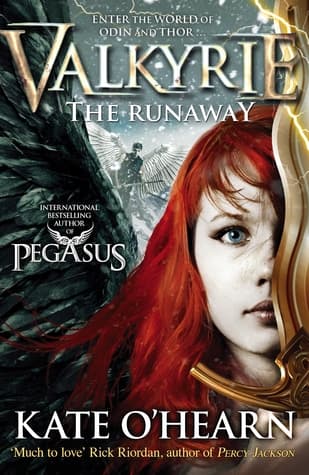
Kate O'Hearn
4.4

Jeanne Birdsall
4.4

Jen Wang
4.4
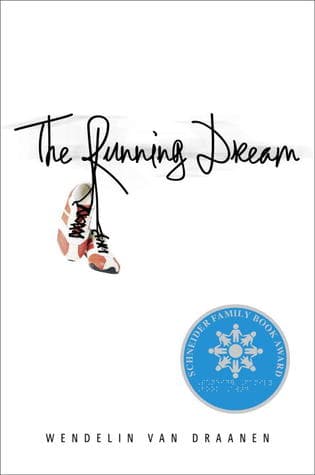
Wendelin Van Draanen
4.3

John Marsden
4.3

Chris Van Allsburg
4.3
Jennifer A. Nielsen
4.2