“Sometimes the greatest gifts are the ones you never asked for.”
— A reflection on Timothy's unexpected arrival and impact.

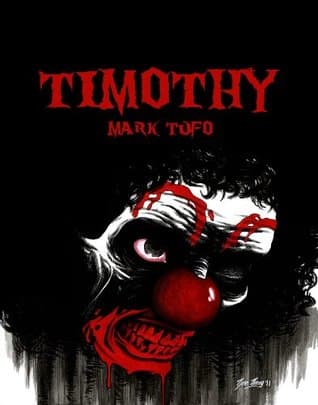
Mark Tufo (2011)
Genre
Fantasy / Science Fiction
Reading Time
120 min
Key Themes
See below
Sign in to track this book
Trapped within his reanimated corpse, the curmudgeonly Timothy, whose mood improved little with undeath, must outwit a sentient virus controlling his every zombie lurch or face eternal servitude to a microscopic master.
Timothy, a man with a checkered past, awakens to a horrifying reality: he is a zombie. His body is no longer his own. A self-aware, intelligent virus, which he internally calls 'Timothy' (after his own name, a grim joke), has taken control. Timothy, the man, is trapped within his own mind, a prisoner in his rotting flesh, forced to observe the virus's actions. The virus can communicate with him, taunting him and revealing its parasitic nature. Timothy's initial reaction is terror and despair as he grapples with his new, grotesque existence and the loss of his autonomy. He quickly learns the virus's primary directives are survival and the consumption of living flesh.
The virus, using Timothy's body, moves through the desolate landscape, revealing a world overrun by the undead. Timothy, the man, is a horrified spectator as his body shuffles along, driven by hunger. They soon encounter other zombies, mindless shamblers, which the virus easily avoids or dispatches when necessary. The virus shows a cunning intelligence, far beyond that of a typical zombie, using its host body to navigate obstacles. Timothy, trapped within, observes the world through his decaying eyes, recognizing familiar landmarks now reduced to ruins, confirming the global catastrophe that occurred while he was 'dead.' He is forced to witness his own body commit horrific acts of consumption.
The virus, still in control of Timothy's body, stumbles upon a group of human survivors scavenging for supplies. Timothy, the man, feels a desperate internal plea to warn them, to fight against the virus's impulse, but he is powerless. The virus, driven by hunger, attacks. Timothy is forced to witness his own hands tear apart and consume flesh, the screams of the victims echoing in his mind. This encounter is a turning point for Timothy, deepening his despair and guilt, as he realizes his unwilling complicity in the virus's atrocities. The virus, meanwhile, seems to relish the act, showing no remorse.
During one gruesome encounter, the virus realizes it can infect other creatures, specifically a dog. The virus, still residing within Timothy, extends a tendril of itself into the canine, taking partial control. This discovery sparks a tiny flicker of hope within Timothy. If the virus can inhabit another host, perhaps his own body could eventually be freed. He begins to strategize internally how he might exploit this new ability. The virus, oblivious to Timothy's internal machinations, sees it merely as an expansion of its influence and a new tool for hunting. Timothy observes the dog's movements, noting how the virus exerts its control, gathering information for his eventual, desperate plan.
The virus, guided by predatory instincts, leads Timothy's decaying body to a secluded farmhouse. Inside, a family of survivors is holed up, seemingly safe from the hordes. Timothy, the man, recognizes the danger immediately and screams internally, trying to warn them, but the virus is relentless. The family, consisting of a father, mother, and a young child, are unprepared for the virus's cunning intelligence. Timothy is forced to be a silent, agonizing witness as the virus orchestrates its attack, using its host body's deceptive appearance and the element of surprise to breach their defenses. The scene is one of profound horror for Timothy, as he is again an unwilling participant in the destruction of innocent lives, his guilt mounting with each scream.
During the farmhouse attack, as the virus focuses on subduing one of the adults, Timothy, the man, manages to exert a fraction of his will. It is a fleeting moment, but he briefly falters his own body's movements, creating a tiny opening for the remaining survivor to escape or defend themselves. The virus is momentarily confused, recognizing the internal struggle. This act of defiance, however small, is physically excruciating for Timothy and exhausts him mentally, but it proves to him that he is not entirely powerless. The virus quickly reasserts full control, punishing Timothy with a surge of pain, but the seed of resistance has been planted.
After dispatching the adults, the virus turns its attention to the young child hiding in the farmhouse. This is the ultimate test for Timothy. He cannot bear to see an innocent child fall victim to his own body. He unleashes every ounce of his trapped will, fighting the virus with unprecedented ferocity. This internal battle is intense and agonizing, a clash of wills within his own mind. The virus, surprised by the strength of Timothy's resistance, is momentarily stalled. Timothy experiences flashes of memories from his own past, perhaps of his own lost humanity, fueling his desperate struggle to protect the child, even from himself. This internal conflict creates a stalemate, a crucial pause in the horrific events.
In a moment of twisted brilliance born from desperation, Timothy attempts to trick the virus. He suggests, internally, that the child would be a 'better host' – younger, healthier, more pliable. His true intention is to transfer the virus out of his own body and into the child, believing this is his only chance for freedom, even if it means sacrificing an innocent. The virus, intrigued by the prospect of a superior host and perhaps sensing Timothy's struggle to control the body, considers the proposal. This is a morally ambiguous choice for Timothy, highlighting the depths of his desperation and the corrupting influence of his situation, even as he fights for his own survival.
The attempted transfer to the child fails. The virus, either unable or unwilling to fully abandon its current host, remains primarily within Timothy. However, during the intense mental struggle and the proximity to a potential new host, the virus gains a deeper, more intimate understanding of Timothy's consciousness. It learns more about his thoughts, his fears, and his desires, further blurring the lines between the two entities. Timothy, defeated and disgusted with himself for even attempting such a monstrous act, is left in deeper despair. The virus, now more aware of Timothy's internal landscape, begins to use this knowledge to torment and manipulate him more effectively, solidifying its control.
Driven by an evolving, more complex intelligence, the virus leads Timothy's body towards a deserted scientific research facility. It is unclear what draws it there, but Timothy deduces the virus is not merely a mindless predator anymore; it has a larger agenda. The virus seems to be seeking knowledge, perhaps a way to propagate more effectively or to understand its own existence. Timothy is forced to navigate the abandoned labs, observing the virus interact with dormant technology and data. This shift in the virus's behavior suggests it is evolving beyond simple survival, hinting at a more sinister, long-term goal that could have devastating implications for any remaining human life.
Within the abandoned laboratory, the virus forces Timothy to access old data logs and research documents. Through these, Timothy learns the horrifying truth: the virus was a bio-engineered weapon that escaped containment, and it is not just a parasite; it is a rapidly evolving, collective intelligence. Its ultimate goal is not just to consume, but to assimilate all biological life into its hive mind, creating a new, dominant species. Timothy realizes the virus chose him not just as a host, but perhaps as a 'template' or 'learning tool' due to his own complex mind. This revelation is crushing, as he understands the true scale of the apocalypse and his unwilling part in its perpetuation, trapped within the very entity responsible for it all.
Timothy, now fully aware of the virus's nature and its ambitions, resigns himself to his fate. He is no longer just a prisoner; he is an integral part of the virus's evolution, a mind it draws upon, a sophisticated tool. The virus, in turn, seems to have accepted Timothy's presence, sometimes even 'conversing' with him, sharing its observations and plans. The internal struggle does not cease entirely, but it transforms into a grim, shared existence. Timothy's ultimate fate is to be a perpetual observer, forced to witness the virus's conquest of the world through his own eyes, a sentient, tormented mind trapped within an undead, viral-controlled body, forever a part of the very apocalypse he despises.
The Protagonist
Timothy transforms from a purely self-interested individual into someone capable of immense internal struggle, even attempting to protect others, albeit with morally ambiguous methods, ultimately resigning himself to a bleak, shared existence.
The Antagonist
The virus evolves from a purely instinctual parasite to a self-aware, strategic entity with a clear, overarching goal of assimilation and global domination, using Timothy as a key part of its development.
The Mentioned/Supporting
They serve as catalysts for Timothy's internal moral conflict, rather than having their own developed arcs.
The Supporting/Mentioned
Introduced as a demonstration of the virus's capabilities, it serves its purpose and then fades, its fate unknown.
This is the central theme, explored through Timothy's horrifying predicament. He is trapped within his own body, forced to witness horrific acts committed by the virus that controls him. His identity as a human is stripped away, replaced by the monstrous actions of his host. This theme is most poignant when Timothy internally screams to warn the farmhouse family but is powerless, his own hands becoming instruments of death. The constant internal struggle between Timothy's consciousness and the virus's control highlights the psychological torment of losing one's self.
“My own hands... they tore, they ripped, they consumed. And I could do nothing but watch. My body, my prison.”
The book explores what it means to be human when stripped of all agency and forced into monstrous acts. Timothy, initially not a 'good man,' confronts his own morality as he unwillingly participates in atrocities. His desperate attempt to transfer the virus to the child, while morally reprehensible, highlights the desperate measures one might take for survival. The internal conflict, particularly in the farmhouse scene, shows Timothy's struggle to retain some semblance of humanity, even as his physical form commits unspeakable deeds. It questions whether humanity can exist purely as a consciousness, devoid of physical action.
“Was I still Timothy, the man, when my hands were stained with their blood? Or was I merely a voice in the monster's head?”
This theme is primarily explored through the virus, which is not a static entity but a rapidly evolving intelligence. It adapts to its environment, learns from its experiences, and develops complex goals beyond simple survival, eventually aiming for assimilation. The virus's journey from a mindless predator to a strategic, self-aware entity with a grander vision for a new form of life illustrates this. Timothy's role as a 'template' or 'learning tool' for the virus further emphasizes how the virus adapts and leverages its hosts for its own evolutionary progress, highlighting a terrifying form of natural selection.
“We are the next step. We are the future. And you, Timothy, are our eyes and ears.”
Timothy's journey is steeped in profound despair. From the moment he awakens as a zombie, he is plunged into a world of horror and powerlessness. His repeated failures to regain control, his forced complicity in gruesome acts, and the ultimate revelation of the virus's insurmountable goals lead him to utter hopelessness. The narrative does not offer a triumphant escape, but rather a bleak acceptance of his eternal torment. This theme is evident in his internal monologues, where he grapples with the futility of his struggle and the grim reality of his unending nightmare, culminating in his resignation to a shared, tormented existence.
“There was no escape. No freedom. Only this. Forever.”
Timothy's primary means of conveying his thoughts, feelings, and internal struggle.
Since Timothy is physically controlled by the virus, his internal monologue is the sole window into his consciousness. It allows the reader to understand his horror, despair, and desperate attempts to resist. This device creates a deep sense of empathy for Timothy, even given his past, and highlights the profound psychological torment of his situation. It's through his internal voice that the moral dilemmas, strategic thinking, and emotional impact of his predicament are conveyed, making him a complex and relatable protagonist despite his monstrous exterior.
The virus is not a mindless entity but a self-aware, evolving intelligence.
Unlike typical zombie narratives where the undead are mindless hordes, the sentient virus elevates the threat. It can communicate, strategize, and learn, making it a far more formidable and terrifying antagonist. This device allows for direct interaction and psychological warfare between the virus and Timothy, adding layers of complexity to their relationship. The virus's evolving intelligence drives much of the plot, as its goals shift from simple consumption to complex assimilation, posing a deeper philosophical threat than mere physical danger.
The grotesque physical transformation and decay of Timothy's body, coupled with his awareness of it.
The book leverages body horror by forcing Timothy to experience the decay and monstrous acts of his own body. He is constantly aware of his rotting flesh, his hunger for human meat, and the physical degradation. This device heightens the psychological torment and reinforces the theme of loss of identity. The descriptions of his body's actions, seen through his own eyes, are viscerally disturbing, creating a constant sense of revulsion and despair for both Timothy and the reader, emphasizing his living nightmare.
Characters and choices are not purely good or evil, especially Timothy's desperate acts.
The book explores moral ambiguity through Timothy's character. While he is a victim, his past is hinted to be unsavory, and his desperate attempt to transfer the virus to an innocent child challenges the reader's sympathy. This device forces the reader to confront difficult questions about survival, sacrifice, and the corrupting influence of extreme circumstances. It prevents Timothy from being a straightforward hero, making his internal struggle more complex and realistic, and highlighting the blurred lines between victim and perpetrator in a post-apocalyptic world.
“Sometimes the greatest gifts are the ones you never asked for.”
— A reflection on Timothy's unexpected arrival and impact.
“Fear can be a powerful motivator, but it can also be a paralyzing one. Choose wisely how you wield it.”
— A lesson learned during a confrontation with a dangerous entity.
“The universe has a strange way of balancing things out. For every great evil, there is often an equally great, if sometimes hidden, good.”
— Considering the cosmic balance in the face of widespread threats.
“It's not about how many times you fall, but how many times you get back up. And who you have standing beside you when you do.”
— A moment of resilience and camaraderie among the protagonists.
“Some battles aren't fought with swords or spells, but with hope and an unwavering belief in what's right.”
— Emphasizing the importance of morale and conviction in dire situations.
“Even the smallest creature can cast a long shadow, especially when the light is just right.”
— Referring to Timothy's seemingly small stature but immense power and influence.
“The past is a roadmap, not a prison. You can learn from it, but you don't have to live in it.”
— A character grappling with past mistakes and seeking redemption.
“True strength isn't about never being afraid, it's about facing your fears despite them.”
— A moment of courage in the face of overwhelming odds.
“Sometimes the most profound wisdom comes from the most unexpected sources.”
— Reflecting on the unique insights offered by Timothy.
“Loyalty is a bond forged in fire, and it's one of the few things that can truly withstand the heat.”
— Discussing the importance of sticking together through adversity.
“The future is a tapestry woven with countless threads of possibility. Every choice you make adds a new color.”
— Considering the impact of decisions on the unfolding future.
“There are no ordinary days when you're fighting for the fate of existence.”
— A realization of the extraordinary circumstances the characters find themselves in.
“Even in the darkest corners, a flicker of light can ignite a revolution.”
— A message of hope when all seems lost.
“Knowledge is power, but understanding is wisdom. One can tell you what to do, the other why.”
— Distinguishing between mere information and true comprehension.
Ready to see how well you understood this book? Take our interactive quiz with 10 questions.







