“So it goes.”
— Vonnegut's recurring phrase, used here to comment on the inevitability of events during the timequake.

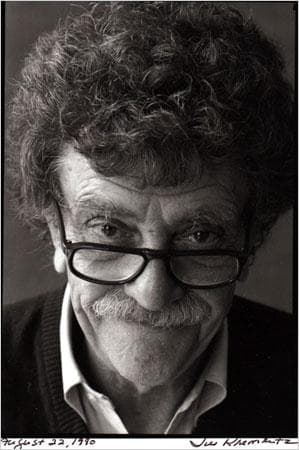
Kurt Vonnegut Jr. (1997)
Genre
Literary Fiction / Fantasy / Science Fiction
Reading Time
300 min
Key Themes
See below
Sign in to track this book
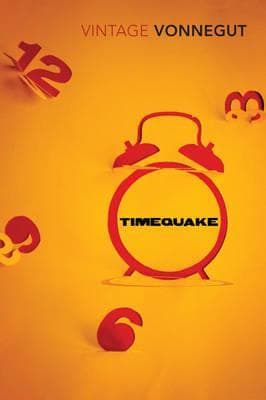
A 'timequake' makes humanity relive a dreadful decade of lost free will. Vonnegut’s satire examines memory, suicide, and reading through his recurring sci-fi writer, Kilgore Trout.
On February 13, 2001, at 2:27 PM EST, a 'timequake' occurs globally. This event, caused by a momentary indecision in the universe, forces everyone on Earth to rewind their lives exactly ten years. They relive every moment, thought, and feeling from February 13, 1991, to February 13, 2001, in perfect, unavoidable repetition. During this decade, free will does not exist. People are automatons, forced to re-enact past actions, no matter how foolish, tragic, or mundane. The narrator, Kurt Vonnegut, describes the mental and spiritual cost this takes on humanity, removing agency and purpose. When the timequake ends, on February 13, 2001, everyone is suddenly released from the compulsion. They are in shock and disoriented, unsure how to use their newly restored free will.
After the timequake, Kurt Vonnegut, the narrator, finds his recurring character, Kilgore Trout, in a deep catatonic state at the Chelsea Hotel in New York City. Trout, having endured the relived decade, is overwhelmed by the meaninglessness of life and the trauma of forced repetition. He believes humanity is too broken to make meaningful decisions again. Vonnegut feels responsible for his fictional creation and for humanity. He decides to act as a 'spiritual healer.' He thinks people, especially Trout, need a simple, direct command to restart their lives and use free will again. He gathers a crowd at the hotel, preparing for this intervention.
Kurt Vonnegut gathers people, including his catatonic friend Kilgore Trout, at the Chelsea Hotel. He gives a simple, yet powerful, command to the crowd and, by extension, to humanity. He repeatedly shouts, 'You are free to do whatever you like!' This phrase aims to jolt people out of their post-timequake paralysis and remind them they now have free will. Trout, at first unresponsive, is eventually moved by this direct instruction. The scene shows the human need for direction, especially after a period of no agency. Vonnegut’s act helps people reclaim their lives and move on from the traumatic decade of forced repetition.
After Vonnegut's command, Kilgore Trout slowly starts to come out of his catatonic state. He is still deeply affected by the timequake, but the simple instruction to be free gives him a new, fragile sense of purpose. He begins to watch the people around him, seeing their hesitant steps toward reclaiming their lives and making choices again. Trout, always a cynical observer, starts to think about free will, sanity, and the absurdity of human life after such an event. His recovery is not instant or complete, but it marks a shift from despair to a cautious re-engagement with the world.
The world after the timequake is very confusing. Having been without free will for a decade, many people struggle to make even simple decisions. They hesitate, second-guess themselves, or stand still, unable to start any action. Vonnegut describes people collapsing from indecision or doing random things as they try to get used to having agency again. The collective trauma has left a deep mark. The most basic human function, choosing, is a huge challenge. This period shows how essential free will is and the psychological damage from its absence. Humanity slowly and painfully relearns how to live meaningfully.
Throughout the story, Kurt Vonnegut often adds autobiographical stories, thoughts, and personal reflections that move away from the plot. He recalls his experiences during the Great Depression, his time in World War II, his interactions with various people, and his thoughts on literature, society, and the human condition. These additions provide context for his cynical yet compassionate view of the world. They often connect the timequake's themes, like lost agency and the search for meaning, to his own life. He thinks about memory, the decline of certain art forms, and the loneliness of being an artist, adding his distinct voice to the main story.
Vonnegut uses the timequake to explore the importance of art and storytelling in a chaotic world. He thinks about the purpose of writers like himself and Kilgore Trout. Their job is to create order from chaos, give meaning where there seems to be none, and offer comfort through shared experience. He discusses the decline of reading and the challenges artists face in a society driven by fleeting entertainment. The act of writing 'Timequake' itself is a comment on the need for stories, especially when reality has become an absurd, repetitive loop. Art, for Vonnegut, helps process trauma and rebuild a sense of purpose.
A large part of the book explores the ethical and moral problems caused by the timequake. What does it mean for people to have 'relived' terrible acts—murders, rapes, atrocities—without free will? Are they guilty? Vonnegut considers the nature of evil and responsibility when actions are predetermined. He suggests that the timequake, by forcing everyone to re-enact their past, showed humanity's flaws and occasional brilliance. The experience, though traumatic, also offered a strange universal understanding, as everyone shared the same, forced journey. This raises questions about judgment, forgiveness, and the human need for agency to be moral beings.
As the world slowly recovers and adjusts to the return of free will, Kilgore Trout, now clearer in thought, offers his final observations on humanity. Despite his cynicism and initial despair, he sees a certain resilience in people. He notes how, even after such a traumatic event, humans instinctively look for connection, meaning, and purpose. While he remains critical of their foolishness and capacity for self-destruction, he has a grudging respect for their ability to recover and try again. Trout's perspective, though bleak, holds a bit of hope, suggesting that even after the universe falters, humanity finds a way to endure and create new stories.
The novel ends with Kurt Vonnegut reinforcing his main message: live life fully in the present and appreciate free will. Having seen the horrors of a decade without choice, through his narration and Kilgore Trout's trauma, Vonnegut stresses making decisions, however small, and taking responsibility for one's actions. He encourages readers to accept the absurdity of life and to find joy and meaning in simply being alive and able to choose. The timequake is a strong reminder of what is lost when agency is removed, urging humanity to make the most of their valuable, unrepeatable present.
The Protagonist/Author-as-Character
From observer to active participant, he takes on the role of a spiritual guide to help humanity, and especially Kilgore Trout, reclaim free will.
The Supporting/Protagonist
Falls into catatonic despair after the timequake, then slowly recovers his ability to think and observe through Vonnegut's intervention.
The Supporting
Remains a constant, grounding figure amidst the chaos, demonstrating steadfastness.
The Antagonist/Plot Device
Its 'indecision' causes the timequake, and its 'resolution' ends it, setting the stage for human recovery.
The Mentioned/Symbolic
A static, symbolic character whose story illustrates the dangers of nihilism.
The Mentioned/Symbolic
A historical figure whose life is used to illustrate the philosophical questions raised by the timequake.
The Mentioned/Symbolic
A static, symbolic character whose past breakdown foreshadows the universal psychological trauma of the timequake.
The Mentioned/Symbolic
A static, symbolic character whose story illustrates the necessity of purpose and free will.
This is the central theme of 'Timequake.' The novel's premise is a decade where humanity loses free will, forced to relive every moment. Vonnegut explores the psychological and spiritual cost this takes on individuals, especially Kilgore Trout, who becomes catatonic. The book questions what it means to be human when choices are set and shows how important agency is for identity and purpose. Vonnegut's final message, 'You are free to do whatever you like,' directly affirms the need for free will.
“You are free to do whatever you like!”
After the timequake, humanity deals with the absurdity of having lived a decade without choice. Characters like Kilgore Trout show this struggle, at first finding life meaningless. Vonnegut uses the timequake as a metaphor for life's inherent absurdity, where events can be random and without clear purpose. The book suggests that meaning is not built in but must be actively created by individuals through their choices and actions. Storytelling itself is shown as a way to bring order and meaning to a chaotic world.
“I was a spiritual healer. And the disease I had to treat was a sudden, universal, and quite awful lack of any reason to go on living.”
The timequake forces everyone to relive ten years of their past, making memory a literal, inescapable prison. This theme explores memory's nature: how it shapes identity, how it can comfort or torment, and what happens when it is replayed involuntarily. Vonnegut also includes his own memories and autobiographical stories, blurring the lines between the timequake's fictional past and his personal history. The book suggests that while memory is important, being trapped by it, without the ability to change or progress, is torture.
“We were all in a time warp, with our bodies and brains doing what they had already done, and with our souls screaming in the wilderness.”
Vonnegut often thinks about the purpose of writers and artists, especially in a world that increasingly undervalues literature. He shows the importance of storytelling as a way to understand life, cope with trauma, and offer guidance. Kilgore Trout, a science fiction writer, accidentally gives the first, though slightly incorrect, prediction of the timequake, showing the artist's role as a prophet or seer. Vonnegut himself, as the narrator, acts as a 'spiritual healer' through his words, showing language's power to offer comfort and direction.
“Artists are the antennae of the race.”
Despite the deep trauma of the timequake, the novel ultimately shows humanity's ability to recover. While many are at first paralyzed by indecision and despair, Vonnegut's simple command helps them slowly re-engage with life. However, the book also reveals humanity's deep vulnerability, especially its psychological fragility when agency and meaning are lost. The extreme reactions of characters like Kilgore Trout show how easily the human spirit can break, yet also how it can slowly heal and adapt, even to the most absurd situations.
“But a lot of people just stayed put, unable to do anything, because they didn't know what they liked anymore.”
The author himself is a character in the story, blurring lines between reality and fiction.
Kurt Vonnegut appears as the narrator and a character within his own novel. He frequently breaks the fourth wall, addressing the reader directly, discussing his writing process, his personal life, and his philosophical views. This device allows him to comment on the nature of storytelling, the relationship between author and character (especially with Kilgore Trout), and the themes of the book. It also adds a layer of self-awareness and irony, making the narrative feel more personal and reflective of Vonnegut's unique voice and worldview, while simultaneously questioning the reality of the fictional events.
A cosmic event that rewinds time and removes free will for a decade.
The timequake is the central fantastical plot device that drives the entire narrative. It's a global event where the universe, experiencing a 'crisis of conscience,' rewinds itself ten years, forcing everyone to relive their past actions without free will. This device allows Vonnegut to explore profound philosophical questions about determinism, free will, the nature of memory, and the human condition. It creates a universal shared trauma that shapes the characters' post-timequake behavior and provides the backdrop for Vonnegut's social commentary. It's both a literal event and a powerful metaphor for feeling trapped by one's past.
Fictional stories within the novel used for thematic exploration.
Vonnegut frequently references or summarizes the plots of Kilgore Trout's fictional science fiction stories. These embedded narratives serve as allegories or parables that parallel and illuminate the main themes of 'Timequake,' such as the meaninglessness of existence, the nature of free will, and the absurdity of human behavior. For instance, the story of Kazak the intelligent dog or Clarence Wheater, who dies of boredom, directly reflects Trout's (and humanity's) despair after the timequake. They act as thought experiments, allowing Vonnegut to explore complex philosophical ideas through simplified, often darkly humorous, narratives.
The narrator frequently diverges into personal anecdotes and historical reflections.
Throughout the novel, Vonnegut frequently interrupts the main narrative to share personal anecdotes from his own life, reflections on his experiences (e.g., the Great Depression, WWII), and observations on society, art, and history. These digressions, while seemingly tangential, serve to ground the fantastical premise in a relatable human experience and to provide context for Vonnegut's cynical yet compassionate worldview. They enrich the thematic depth, connecting the timequake's impact to broader historical and philosophical concerns, and reinforce the author-as-character aspect of the book.
The use of repeated phrases and lists to emphasize themes and create rhythm.
Vonnegut employs repetition of phrases, especially 'You are free to do whatever you like!' to emphasize the core message of reclaiming free will. He also frequently uses lists (e.g., lists of things he likes, things he dislikes, famous people who stayed at the Chelsea Hotel) to create a distinctive rhythm, inject humor, and catalog the absurdity or beauty of human existence. This device reflects the repetitive nature of the timequake itself and serves as a stylistic signature, reinforcing the idea of patterns, both imposed and chosen, in human life and narrative structure.
“So it goes.”
— Vonnegut's recurring phrase, used here to comment on the inevitability of events during the timequake.
“We are here on Earth to fart around, and don't let anybody tell you different.”
— A humorous, philosophical reflection on the purpose of human existence.
“The timequake of 2001 was a cosmic charley horse in the sinews of Destiny.”
— Describing the central event where time resets, forcing people to relive a decade.
“I think I am trying to make my head as empty as it was when I was born onto this damaged planet fifty years ago.”
— Vonnegut's personal musing on simplicity and returning to innocence.
“There's only one rule that I know of, babies—God damn it, you've got to be kind.”
— A moral imperative delivered in Vonnegut's characteristic blunt style.
“The arts are not a way to make a living. They are a very human way of making life more bearable.”
— Reflecting on the role of art and creativity in human experience.
“Everything was beautiful and nothing hurt.”
— A poignant, ironic line often cited from Vonnegut's earlier work, referenced here.
“I want to stay as close to the edge as I can without going over. Out on the edge you see all kinds of things you can't see from the center.”
— A metaphor for living life with risk and perspective.
“The timequake had simply made the universe a much less interesting place.”
— Commenting on the dulling effect of reliving past events without free will.
“Laughter and tears are both responses to frustration and exhaustion. I myself prefer to laugh, since there is less cleaning up to do afterward.”
— Vonnegut's witty take on coping with life's hardships.
“We are what we pretend to be, so we must be careful about what we pretend to be.”
— A philosophical insight on identity and self-deception.
“The timequake was a free lunch for the cosmos, and we were all invited.”
— Describing the timequake as an inexplicable, universal event.
“I tell you, we are here on Earth to blow it, and blow it good.”
— A playful, irreverent twist on the idea of human purpose.
“The only difference between a rut and a grave is the dimensions.”
— A darkly humorous observation on stagnation and life choices.
Ready to see how well you understood this book? Take our interactive quiz with 10 questions.
Biography coming soon.







