“The past is like a foreign country; they do things differently there.”
— Al's grandfather, Professor Quentin, explains the nature of time travel and its potential for unexpected changes.

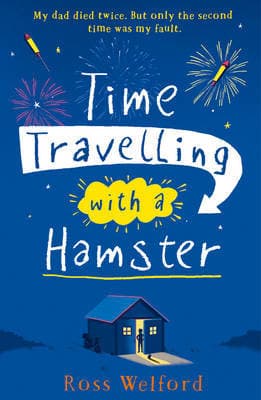
Ross Welford (2015)
Genre
Fantasy / Children's / Science Fiction / Young Adult
Reading Time
450 min
Key Themes
See below
Sign in to track this book
A boy with a vintage time machine and a hamster named Alan Shearer travels to the 1980s to save his father, even if it means changing history.
Al Chaudhury, a twelve-year-old, lives in Gateshead with his mother and step-father, Steve. Four years earlier, his inventor father, Terry, died of cancer. On his twelfth birthday, Al gets a letter from Terry, written before he died. It reveals a secret: Terry invented a time machine. The letter asks Al to go back to 1984 to stop an accident that broke his father's neck, saving his father's life and changing the future. The letter also gives directions to a shed in his grandmother's garden where the time machine is, along with instructions and a warning about a 'paradox'.
Following his father's letter, Al convinces his grandmother, Dolly, to let him look in the old shed. She resists at first, but they find a hidden space under the shed. It holds a strange machine: a bathtub with wires, circuits, and a control panel. This is Terry's time machine, powered by a glowing, unstable substance. Al understands how big his father's claims are and the hard task ahead. Dolly, though not believing in time travel, is touched by Al's resolve and the link to her son. She agrees to help him prepare.
Following his father's instructions, Al gets ready for his trip. He brings his pet hamster, Alan Shearer, and carefully types 1984 into the time machine. The machine starts, and after a confusing, sick-making trip, Al lands in a field, disoriented and muddy. He quickly learns that being in 1984 is harder than he thought. He has trouble with old technology, no money, and needs food and shelter. He soon meets a younger version of his mother, Fiona, and his grandfather, who is alive in this time. Al finds his way to his father's childhood home and watches his young father, Terry, from a distance.
Al learns the accident his father mentioned involves a treehouse. He watches the area, trying to understand what happened. He sees young Terry and his friends playing near the treehouse. The accident happens when Terry falls from it, breaking his neck. Al tries to warn them, but he is too far away and his efforts don't work. He watches in shock as the events happen just as his father said, seeing how hard it is to change the past. Sad but not giving up, Al knows he needs a more direct plan to stop the accident from happening again.
Al realizes a direct action is too risky and won't work. He decides he needs to destroy the treehouse before the accident. This needs money and things he doesn't have in 1984. He tries harder and harder ways: stealing money from his younger grandfather, breaking into his father's childhood home for a valuable comic book Terry owns, and finally, setting his old school (a rundown building in 1984) on fire. This is to create a diversion and maybe a hiding place. These actions bother him, but his need to save his father is stronger than his worries about doing wrong.
Al successfully sets fire to his old school, causing a big blaze that draws everyone's attention, including young Terry and his friends. In the confusion, Al tries to get away, but in his rush, he loses Alan Shearer, his pet hamster, who was with him in the time machine. This loss deeply upsets Al, adding more urgency and guilt to his task. He knows he can't leave 1984 without his hamster, making his next steps even harder, as he now has to save his father and find Alan Shearer.
After the fire, Al goes back to the treehouse, set on taking it apart. He uses tools he got and works hard to bring it down. Just as young Terry and his friends come near, Al pulls down the last support, and the treehouse falls safely. He has stopped the accident. But a big thought hits him: by saving his father, he has removed the reason for his own life. He is a paradox, a boy who shouldn't be. He feels himself starting to disappear, a scary result of changing his own past, just as his father warned about the 'paradox'.
As Al fades, he briefly sees the future he made: a world where his father is alive, married to a different woman, and has other children. Al sees his father, happy and well, but Al himself does not exist in this time. The vision is lovely but also very painful, confirming that his actions erased him. He now understands that to truly save his father, he must let the original accident happen. With a heavy heart, Al knows he must undo what he did, even if it means giving up his father's life to keep his own existence and the life he knows.
With new clarity and great sadness, Al uses the time machine to go back to the exact moment of the treehouse accident. This time, instead of stopping it, he watches, heartbroken, as young Terry falls and breaks his neck. He makes sure the original timeline stays the same, keeping his own existence. After seeing the tragedy again, Al goes back to his own time, carrying the heavy weight of what he has seen and done. He finds himself back in his grandmother's shed, the time machine still working, but his task is now done, though not how he expected.
Al returns home, tired and sad. He finds that while the main parts of his life are the same, there are small changes. His mother seems happier, and Steve, his step-father, is more present. He also finds Alan Shearer, his hamster, safe, having somehow returned to the present in the time machine. Al now understands his father's love and his own identity deeply. He realizes that even though he couldn't save his father, the journey itself, and the love that drove it, was a strong connection. He keeps the time machine a secret, a sign of his father's brilliance and their special bond.
The Protagonist
Al transforms from a grieving child into a young man who understands the complexities of life and death, accepting the past while cherishing his father's legacy.
The Catalyst/Deceased Father
Terry's arc is primarily revealed through his letters and Al's encounters with his younger self, showcasing his character's development from a mischievous boy to a loving, ingenious father.
The Supporting
Dolly initially struggles with her son's death but finds a renewed sense of purpose and connection through helping Al.
The Supporting
Fiona's arc is subtle, showing her moving on from grief to finding new happiness, which Al ultimately preserves.
The Supporting
Steve gradually earns Al's acceptance and becomes a more integral part of the family.
The Supporting/Symbolic
Alan Shearer's arc is static, serving as a symbol of innocence and companionship throughout Al's journey.
The Mentioned/Supporting
Grandpa Chaudhury's arc is limited to his appearance in 1984, showing him as a father figure to young Terry.
The Supporting
Mrs. Singh's arc is static, serving as a constant, caring presence in Al's life.
The novel explores Al's grief after his father's death. At first, he cannot accept the loss, which makes him try to change the past. But through his time travel, Al learns that real love means valuing memories and accepting what cannot be changed. His choice to let the past happen shows he accepts his father's death and his own life, moving from denial to a more mature understanding of grief.
““I knew that I couldn’t save my dad. But I could still try to save the things he loved.””
Al's mission connects directly to who he is. His father's letter suggests Al's life depends on the accident. When Al stops the accident, he faces the scary truth of a paradox — his own non-existence. This makes him ask basic questions about himself and his place. His journey is not just about saving his father, but about understanding his own role, leading him to choose his own life, even if it means accepting a hard truth.
““If I saved him, I would never have been born. And if I was never born, I couldn’t save him.””
The book explores the classic science fiction problem of time travel and its effects. Terry's warning about the 'paradox' sets up the main conflict. Al's actions in 1984, especially stopping the accident, show the grandfather paradox. This makes him see a future where he does not exist. This theme shows that changing the past, even with good intentions, can have unexpected and very bad personal results. It makes the reader think about the real cost of changing history.
““Some things, once done, cannot be undone. And some things, once undone, cannot be redone.””
At its heart, the novel shows the lasting power of family love. Al's strong love for his father drives him on his amazing journey. His relationships with his mother, grandmother, and even his step-father are key to his emotions. The story stresses that family bonds, whether by blood or situation, are strong and give needed support and meaning. Al's final decision, though sad, is an act of deep love, keeping the family he knows and the life he has.
““Love, I’d learned, wasn’t about being together forever. It was about making sure the people you cared about were happy, even if that meant letting go.””
A modified bathtub serving as the literal vehicle for time travel.
The time machine, ingeniously disguised as a modified bathtub in a shed, is the central plot device. Its unconventional appearance reflects Terry's eccentric genius and the slightly whimsical tone of the story. It functions as the literal means by which Al travels between 2014 and 1984, enabling the entire narrative. The specific instructions and dangers associated with its use, particularly the energy source and the 'paradox' warning, drive much of the plot's tension and Al's decision-making process.
Posthumous letters from Terry guiding Al's mission.
Terry's posthumous letters serve as a crucial plot device, setting Al's mission in motion and providing him with vital information, instructions, and warnings. These letters not only advance the plot by revealing the existence of the time machine and the specific task but also deepen the characterization of Terry, allowing his voice and personality to guide Al from beyond the grave. They create a strong emotional connection between father and son, despite Terry's death.
The central logical conflict of time travel, where changing the past erases the present.
The grandfather paradox is the core conceptual plot device of the novel. It is explicitly mentioned by Terry in his letters and becomes the terrifying reality Al faces when he successfully prevents his father's accident. This paradox forces Al to make the ultimate sacrifice, choosing between his father's life and his own existence. It elevates the story beyond a simple adventure, introducing a profound philosophical and emotional dilemma that drives Al's character development and the story's resolution.
The site of the fateful accident that sets the entire plot in motion.
The treehouse is a symbolic and literal plot device. It is the specific location where young Terry has the accident that leads to his broken neck and, eventually, his early death. As such, it becomes the focal point of Al's mission in 1984. Al's attempts to destroy or dismantle it represent his struggle against destiny and his efforts to change the past. Its eventual collapse, and then its re-establishment, mark the success and subsequent reversal of Al's interventions.
“The past is like a foreign country; they do things differently there.”
— Al's grandfather, Professor Quentin, explains the nature of time travel and its potential for unexpected changes.
“Sometimes the only way to move forward is to go back.”
— Al reflects on his quest to change the past and save his dad, realizing the necessity of his journey.
“Just because something is impossible doesn't mean you shouldn't try.”
— Al's internal monologue as he faces seemingly insurmountable obstacles on his adventure.
“What if the very thing you're trying to fix is the thing that makes everything else right?”
— Al grapples with the paradoxes of time travel and the potential unintended consequences of altering the past.
“Grief is a funny thing. It makes you do strange things, makes you see strange things.”
— Al observes his own behavior and motivations, driven by the loss of his father.
“Every decision you make, big or small, sends ripples through time.”
— Professor Quentin's warning to Al about the butterfly effect and the sensitivity of the timeline.
“It's not about changing the past. It's about understanding it.”
— Al's evolving perspective on his mission as he learns more about his family's history and the true meaning of his journey.
“Love, you see, is the ultimate time machine. It transcends all boundaries.”
— A profound realization Al has about the enduring power of love across different timelines and circumstances.
“Sometimes the greatest adventures are the ones you never intended to have.”
— Al reflects on the unexpected turns his life has taken since embarking on his time-traveling quest.
“Even a small hamster can change the course of history.”
— A nod to Alan Shearer, the hamster, and his unexpected role in Al's time-traveling escapades.
“The future isn't written. It's something we create, every single day.”
— Al's ultimate takeaway from his experiences, empowering him to embrace the present and future.
“It’s funny how the things you think you want the most turn out to be the things you need the least.”
— Al's growing maturity and understanding that his initial desire to 'fix' the past might not be what truly brings him peace.
“Home isn't a place, it's a feeling. And sometimes, you have to travel a long way to find it.”
— Al's journey helps him understand where he truly belongs and what family means to him.
Ready to see how well you understood this book? Take our interactive quiz with 10 questions.







