“Perhaps the world was such a place, after all. A place of peace and quiet. A place where nothing happened.”
— Ragle Gumm reflects on his mundane life before the truth of his reality is revealed.

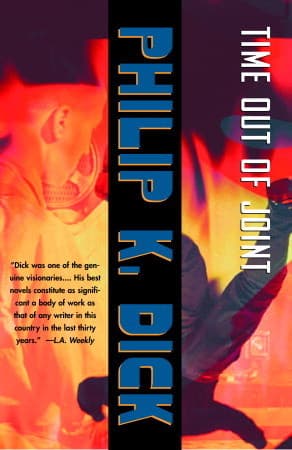
Philip K. Dick (1959)
Genre
Fantasy / Science Fiction
Reading Time
255 min
Key Themes
See below
Sign in to track this book
A puzzle champion in 1959 slowly uncovers the horrifying truth that his entire idyllic reality is a meticulously constructed lie, and he is its unsuspecting linchpin in a future war.
Ragle Gumm lives in a quiet, suburban American town in what he believes is 1959. His daily routine revolves around solving a complex newspaper puzzle called 'Where Will The Black Box Go Today?', which he consistently wins, earning a modest income from the newspaper. He lives with his sister, Margo, and her husband, Victor Nielson. Ragle finds comfort in the familiar rhythms of his life, though he occasionally notices odd discrepancies: a phone book with strange entries, anachronistic items, or misremembered details from his past. These fleeting moments of unease are quickly dismissed, attributed to his own absentmindedness or the quirks of small-town life. He is a local celebrity for his puzzle-solving prowess, a fact that gives him purpose and identity.
Ragle's comfortable existence begins to unravel when he experiences increasingly frequent and vivid hallucinations. Objects appear and disappear, or transform into bizarre, non-functional items. A soda bottle becomes a piece of paper with 'soda' written on it, a light switch turns into a cardboard cutout. He hears strange, unidentifiable sounds and sees glimpses of technology that don't belong in 1959. These incidents are deeply unsettling, causing Ragle to question his sanity. He tries to confide in Margo and Victor, but they dismiss his concerns, suggesting he's overworked or imagining things. The newspaper puzzles themselves also start to show subtle, unsettling changes, hinting at a reality beyond his comprehension.
Driven by his escalating experiences, Ragle begins to investigate the inconsistencies in his world. He finds an old telephone book with entries for businesses that don't exist in his town and discovers a modern-looking transistor radio in a junk heap. He tries to access parts of the town he's never been to, only to be subtly redirected or prevented by Margo and Victor. His suspicions grow that his entire environment, including the people in it, is artificial or controlled. He starts to view Margo and Victor's reassurances as part of a larger deception, leading to a growing sense of isolation and paranoia. He realizes the newspaper puzzle isn't just a game, but something far more significant.
Convinced that his town is a prison, Ragle decides to escape. He tries to drive out, but finds the roads inexplicably blocked or leading back to his starting point. He attempts to leave on foot, but is intercepted by Victor and other townspeople, who gently but firmly guide him back home, explaining his actions as a temporary delusion. During one such attempt, he sees a glimpse of a futuristic vehicle and hears strange, mechanical sounds, further confirming his belief that something is wrong. The attempts solidify his understanding that his 'family' are not merely concerned relatives, but active participants in his confinement, though their motives remain unclear.
After another failed escape attempt, Margo and Victor finally confront Ragle. They reveal that it is not 1959, but 1998, and that Ragle Gumm is not who he thinks he is. He is a crucial figure in a future war, a man with a unique psychic ability to predict the movements of a rebel organization. The 1959 environment is a carefully constructed simulation, a 'sanctuary' designed to keep him stable and productive, as his mind broke under the stress of the real war. The 'Black Box' puzzle he solves daily is actually a coded projection of the rebel's next target, which Ragle subconsciously deciphers. His hallucinations are 'breakdowns' in the simulation, glitches in the carefully maintained facade.
Margo and Victor explain the ongoing war between the 'Ones' (the ruling government) and the 'Separatists' (the rebels). Ragle, in his true identity, is a key asset for the Ones, capable of predicting Separatist attacks. The simulated 1959 world was created by the Ones to protect his fragile mental state and ensure his continued output. This revelation shatters Ragle's sense of self. He struggles to reconcile the peaceful, puzzle-solving man he believed himself to be with the reality of being a weapon in a future war. He is shown glimpses of the real 1998, a desolate, war-torn landscape, which horrifies and disorients him.
Ragle is taken to the real world and introduced to Colonel Glenn, his handler, who tries to integrate him into the war effort. However, Ragle finds it difficult to adjust. He misses the simplicity and familiarity of his simulated 1959 life. He begins to question the morality of the Ones and the Separatists, realizing that both sides are capable of great cruelty. He also starts to wonder if the 1959 world was truly for his benefit, or merely a means to exploit his abilities. His identity is now split between the Ragle Gumm of the past and the weapon of the future, leaving him deeply conflicted and searching for a genuine sense of purpose.
Through a series of events, Ragle makes contact with the Separatists. He learns that they view the Ones as oppressive and that the war is a fight for freedom and self-determination. The Separatists explain that they were aware of Ragle's role and the simulated environment. They offer him a different perspective on the war, painting the Ones as manipulative and tyrannical. This new information further complicates Ragle's loyalties. He realizes that the truth is more nuanced than he was initially led to believe, and that both sides have valid, yet flawed, arguments. He is now caught between two warring factions, unsure of where his true allegiance lies.
Ragle is now fully aware of the stakes and the moral ambiguities of the war. He understands that his unique ability makes him a powerful asset, and that both sides desperately want him. He grapples with the decision of whether to continue aiding the Ones, who created his false reality, or to defect to the Separatists, who promise freedom but are also engaged in violent conflict. He also considers the possibility of rejecting both sides and trying to find a way to live a normal life, free from the war. This internal struggle represents his ultimate crisis of identity and purpose, forcing him to define himself beyond his predetermined role.
After much introspection, Ragle makes a decisive choice. He realizes that neither side truly represents his own values. He decides to side with the Separatists, believing their cause for self-determination is more just, and also because he feels betrayed by the Ones who manipulated his entire life. His defection is a major blow to the Ones and a significant victory for the Separatists. His unique abilities, now consciously directed, provide the Separatists with a crucial advantage. The novel ends with Ragle having embraced his true self and actively working to shape his own destiny, even within the ongoing conflict, finding a new sense of purpose in fighting for what he believes is right.
The Protagonist
Ragle transforms from a passive participant in a false reality to an active, self-aware individual who chooses his own destiny in a future war.
The Supporting
Margo maintains her role as Ragle's handler throughout, though her emotional involvement with him is hinted at, showing the personal toll of her deception.
The Supporting
Victor remains consistent in his role as Ragle's handler, representing the practical and sometimes forceful aspect of Ragle's containment.
The Supporting
Colonel Glenn attempts to reintegrate Ragle into the war effort, representing the 'Ones' efforts to maintain control over their valuable asset.
The Antagonist/Supporting
The Separatists evolve from an unseen enemy to an alternative, morally complex faction that Ragle eventually aligns with.
The Mentioned
Bill Black remains a static background character, serving to highlight Ragle's unique situation.
The Mentioned
Junior's character remains static, serving as part of the domestic facade in Ragle's simulated world.
The central theme explores the thin line between what is real and what is fabricated. Ragle's entire world is a constructed illusion, designed to manipulate him. The novel constantly challenges the reader (and Ragle) to question the authenticity of their own perceptions. The 'breakdowns' in the simulation, where objects dissolve or transform, are stark reminders that reality can be a fragile construct. This theme is clear when Ragle sees a soda bottle turn into a slip of paper with 'soda' written on it, highlighting the arbitrary nature of his perceived reality.
“What was real? What was not real? He could not tell, not any more.”
Ragle Gumm's identity is fabricated, a persona created to keep him stable and productive. His journey is one of shedding this false self and grappling with who he truly is: a powerful psychic asset in a future war. The struggle to reconcile his peaceful, puzzle-solving past with his violent, exploited present forms the core of his internal conflict. This theme is evident in Ragle's deep distress when Margo and Victor reveal his true role, forcing him to confront a self he never knew existed.
“He was not Ragle Gumm. He was not a man who solved puzzles. He was a weapon.”
The 'Ones' exert absolute control over Ragle's life, from his environment and memories to his very purpose. The entire 1959 simulation is a grand scheme of manipulation, designed to harness his abilities without his conscious consent. This theme extends to the broader political conflict, where both factions seek to control individuals and outcomes. Ragle's journey is an act of rebellion against this manipulation, as he strives to reclaim agency over his own life and choices, culminating in his decision to align with the Separatists based on his own moral compass.
“They had built a whole world for him, a world of lies, to make him do their bidding.”
The novel explores the ethical cost of maintaining peace or security through deception and coercion. The 'Ones' justify their elaborate manipulation of Ragle as a necessary evil to win the war and protect their society. However, this 'peace' comes at the expense of an individual's freedom, truth, and sanity. The story forces readers to consider whether the end justifies the means, especially when the means involve stripping someone of their fundamental reality and identity. The contrast between the idyllic 1959 and the desolate 1998 highlights the stark choices made in the name of survival.
“Some things are more important than an individual's peace of mind, Ragle. The survival of an entire civilization, for instance.”
A meticulously constructed 1959 environment designed to house and manipulate the protagonist.
The simulated 1959 world is the primary plot device, serving as both a prison and a catalyst for Ragle's awakening. It is a highly detailed, immersive environment created by the 'Ones' to stabilize Ragle's fragile psyche and exploit his unique precognitive abilities. The glitches and 'breakdowns' in this simulation are crucial to the plot, as they are the first clues Ragle receives that his reality is false. This device allows for exploration of themes of reality, identity, and manipulation, as Ragle slowly peels back the layers of his artificial existence.
A daily newspaper puzzle that is secretly a coded projection of future events.
The newspaper puzzle is a brilliant plot device that cleverly integrates Ragle's unique ability into the narrative. What appears to be a mundane intellectual exercise is, in fact, a complex system for Ragle to subconsciously predict the movements of the Separatist forces. His consistent success isn't just a sign of intelligence, but a manifestation of his psychic gift. The puzzle provides a seemingly innocent framework for his critical function, and its true nature is a key reveal that dramatically shifts Ragle's understanding of his own life and purpose.
Discrepancies and sensory distortions that reveal the instability of the simulated world.
These elements are crucial in driving Ragle's initial suspicion and eventual realization of the truth. Anachronistic items (like modern technology in 1959) and Ragle's vivid hallucinations (objects dissolving, turning into paper with labels) are the 'glitches' in the simulated reality. They serve as direct evidence that his world is not what it seems, pushing him to question his sanity before he questions his environment. They create a growing sense of unease and paranoia, building tension and propelling Ragle's investigation into the true nature of his existence.
The overarching conflict in the true future reality that provides context for Ragle's situation.
This future war is the driving force behind the creation of Ragle's simulated reality and his exploitation. It provides the high stakes and moral dilemmas that Ragle must eventually confront. The ambiguity of the conflict, with both sides having valid yet flawed arguments, challenges simplistic notions of good versus evil. It serves as the ultimate backdrop for Ragle's personal journey of self-discovery and his eventual decision to choose a side, giving his individual story a larger, societal significance.
“Perhaps the world was such a place, after all. A place of peace and quiet. A place where nothing happened.”
— Ragle Gumm reflects on his mundane life before the truth of his reality is revealed.
“The past is gone, you can’t change it. The future…well, the future is what you make it.”
— Mrs. Keitelman offers advice to Ragle Gumm, unknowingly hinting at the manufactured nature of his world.
“If you want to know what a man is like, take a good look at how he treats his inferiors, not his equals.”
— This is a general observation within the narrative, reflecting on character.
“The greatest prison where men live is the fear of their own minds.”
— A philosophical musing that resonates with Ragle Gumm's eventual predicament.
“He felt a vast, weary, empty desolation. The world was nothing. Nothing but a stage for his torment.”
— Ragle Gumm's despair as he begins to grasp the artificiality of his existence.
“It’s a peculiar thing about the human mind, that it can hold two contradictory ideas at the same time and believe them both.”
— Observations on human cognition and the acceptance of cognitive dissonance, relevant to Ragle's situation.
“How can you tell what’s real and what isn’t, when the only thing you have to go by is what you see?”
— Ragle Gumm's growing confusion and questioning of his sensory input.
“The entire world was a construct, a fabrication for his benefit, or rather, for his exploitation.”
— Ragle Gumm's realization of the full scope of the deception.
“We’re living in a world made up of words, not things.”
— A character's cynical remark, foreshadowing the nature of Ragle's reality.
“Every man has a right to his own delusion. But not to impose it on others.”
— A statement about personal belief versus societal manipulation.
“The problem with living in a perfect world is that it’s not real.”
— A character's reflection on the inherent flaws of an artificially created utopia.
“What if everything you knew, everything you trusted, was just… a lie?”
— Ragle Gumm's internal struggle as he uncovers the truth.
“Sometimes the greatest freedom is to know you are not free, and to act accordingly.”
— A philosophical point made as Ragle Gumm begins to understand his true situation and options.
“There was a world outside his world, and that world was at war.”
— The ultimate revelation that his idyllic existence masks a larger, darker conflict.
Ready to see how well you understood this book? Take our interactive quiz with 10 questions.
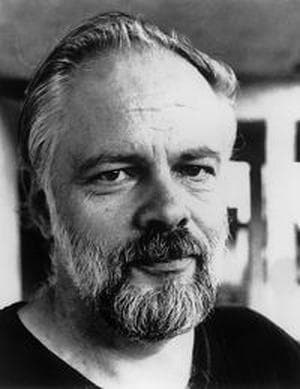
Philip Kindred Dick, often referred to by his initials PKD, was an American science fiction writer. He wrote 44 novels and about 121 short stories, most of which appeared in science fiction magazines during his lifetime. His fiction explored varied philosophical and social questions such as the nature of reality, perception, human nature, and identity, and commonly featured characters struggling against elements such as alternate realities, illusory environments, monopolistic corporations, drug abuse, authoritarian governments, and altered states of consciousness.







