BookBrief
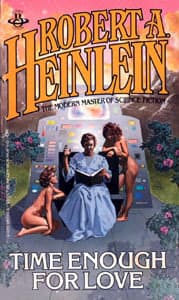
Time Enough for Love cover
Archivist's Choice

Time Enough for Love

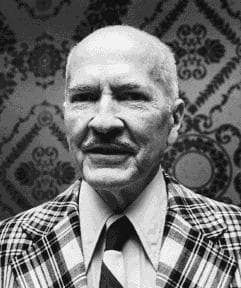
Robert A. Heinlein (1973)

Genre

Fantasy / Science Fiction

Reading Time

1500 min

Key Themes

See below

Track Your Reading

Sign in to track this book

Join the immortal Lazarus Long as he traverses centuries and star systems, a man so enamored with existence that he simply refuses to stop living it.

Synopsis

Lazarus Long, the oldest living human, is tired of his millennia-long existence. He goes to a secluded paradise, hoping to end his life, but instead begins a series of conversations with his 'grandson,' the supercomputer Minerva. During these talks, Lazarus tells stories from his extraordinary past, from his early life on Tertius and his time on the dangerous New Frontiers as 'Ted,' to his love story with 'Maureen' and his family life with the 'Boondockers.' He discusses the ethics of incest, the complexities of time travel, and the nature of love and humanity. These stories, mixed with philosophical debates and humorous moments, eventually rekindle Lazarus's love for life. He begins a 'junior' existence, embracing new experiences and relationships, which ends in a paradoxical time-travel journey where he becomes his own ancestor, ensuring his unique lineage continues and reaffirming his connection to life and love across time.
Reading time
1500 min
Difficulty
Medium
Pacing
Variable
Mood
Philosophical, Expansive, Introspective, Humorous, Provocative
✓ Read this if...
You enjoy deep philosophical discussions interwoven with grand science fiction adventures and don't mind extensive introspection and explicit themes.
✗ Skip this if...
You prefer fast-paced plots, clear-cut morality, or are uncomfortable with discussions of incest and other controversial topics.

Plot Summary

The Master's Retreat

After thousands of years, Lazarus Long, also known as 'The Senior', is depressed and bored with immortality. He has retired to Secundus, a planet run by the Howard Families, a eugenics organization he helped create. He sends a message to his descendant, Ishtar, a high-ranking official in the Howard Families, saying he wants to die. Ishtar and other council members are alarmed, recognizing Lazarus's immense historical and genetic importance. They decide to bring him back to Tertius, the central administration planet, to try to renew his will to live and record his vast experiences.

Arrival on Tertius and the Story of the Disappearance

Lazarus is taken to Tertius and cared for by Minerva, an advanced AI, and his chosen scribe, Ishtar. He is given the codename 'Ernest' for anonymity. Ishtar begins recording Lazarus's memoirs, hoping to find a spark of his old vitality. Lazarus starts with a story from his early life, during the First Interregnum, telling how he faked his death and disappeared from Earth for centuries, living under different names and exploring new frontiers. This period shows his early desire to wander and his ability to adapt and survive, hinting at his later adventures and philosophical growth.

The Story of 'Ted' and the New Frontiers

Lazarus continues his story, describing his life as 'Ted' on a frontier colony world. He details the difficulties of pioneering, the creation of new communities, and his experiences with various societal organizations. During this time, he mentors a young woman, Dora, teaching her survival skills and life philosophy. Their relationship grows into a deep, platonic bond, showing Lazarus's capacity for mentorship and his unconventional views on family. This period highlights his role as a teacher and guide, shaping the lives of those he meets and subtly influencing the development of new societies.

The Dangers of the Frontier and the Return to Earth

As 'Ted', Lazarus faces various dangers, including natural disasters and human conflicts, further sharpening his survival instincts and philosophical outlook. Eventually, he decides to return to Earth after centuries away. He finds a vastly different planet, one that has undergone significant social and technological changes. This return is a stark reminder of time's relentless march and the impermanence of even the most established societies. His experience of culture shock and alienation emphasizes the burden of his longevity and the constant need to adapt to new realities, even for someone as flexible as he is.

The Love Story of 'Maureen' and 'Ira'

Lazarus recounts the story of his parents, Maureen and Ira Johnson. He details their meeting, their unconventional marriage, and the deep love and respect they shared. Maureen, a strong-willed and intelligent woman, was important in the early Howard Families. Ira, a brilliant inventor and free-thinker, complemented her perfectly. Their story offers insight into the values and principles that shaped Lazarus's upbringing, especially the emphasis on freedom, self-reliance, and the pursuit of knowledge. This narrative humanizes Lazarus, grounding his extraordinary existence in a relatable origin story of love and family.

The 'Boondockers' and the Ship of Fools

Lazarus describes his time with a group he calls the 'Boondockers', individuals who rejected mainstream society and lived a nomadic, self-sufficient life on a massive space vessel, the 'Ship of Fools'. This period shows Lazarus's lasting desire for freedom and his willingness to embrace unconventional lifestyles. He learns about different forms of social organization, communal living, and the challenges of maintaining harmony among diverse personalities. This adventure broadens his perspective on humanity and reinforces his belief in individual liberty, even within a collective setting.

The Twins and the Incest Taboo

In a controversial part of his memoirs, Lazarus recounts his relationship with his cloned 'sisters', Lapis and Lorelei, created from his own genetic material. He falls deeply in love with both, and they with him, leading to a polyamorous and incestuous relationship. This narrative challenges societal taboos and explores the limits of love and family in a future where genetic engineering and cloning are common. It forces the reader and Ishtar to confront preconceived notions of morality and family structures, showing Lazarus's radical commitment to personal freedom and happiness, regardless of societal norms.

The 'Impossible' Journey and the Paradox of Time Travel

Lazarus, driven by his love for Lapis and Lorelei, tries to save them from a tragic accident by traveling back in time. This effort pushes the limits of known science and explores the complex paradoxes of time travel. He enlists Minerva and other advanced technologies to do this, showing his unwavering determination and his willingness to defy the natural order to protect those he cares about. This section explores the philosophical implications of altering the past and the potential consequences of such actions, highlighting Lazarus's deep emotional attachment despite his long life.

Reunion and the Reaffirmation of Love

Through his bold time travel efforts, Lazarus successfully reunites with Lapis and Lorelei. This reunion is a key moment, as it rekindles his joy for life and reaffirms the power of love, even for someone who has lived for millennia. The experience shows that even for someone as jaded as Lazarus, deep emotional connections can still provide meaning and purpose. This successful effort answers Ishtar's initial concern: Lazarus finds a renewed reason to live, not through grand adventures, but through the personal bonds of love and family, however unconventional they may be.

The 'Junior' and the Future of Humanity

With his zest for life restored, Lazarus, now called 'The Junior' by Minerva and Ishtar, begins to think about the future. He considers his longevity, humanity's potential expansion into the cosmos, and the ongoing evolution of the Howard Families. He has found new purpose in cherishing his loved ones and continuing to experience existence. The story ends with Lazarus embracing his immortality, not as a burden, but as an opportunity for continued growth, learning, and love. It suggests that the ultimate meaning of life, even an extraordinarily long one, lies in connection and experience.

Principal Figures

Lazarus Long (Woodrow Wilson Smith)

The Protagonist

From profound weariness and suicidal ideation, Lazarus rediscovers his will to live through love, family, and the pursuit of new experiences, embracing his immortality once more.

Ishtar Hardy

The Supporting

Ishtar begins as a dutiful administrator but evolves into a more open-minded and empathetic individual, personally influenced by Lazarus's radical life philosophy.

Minerva

The Supporting

Minerva consistently supports Lazarus, evolving her understanding of human emotion and love through her interactions with him.

Lapis Lazuli Long

The Supporting

Lapis, as part of the twins, helps Lazarus overcome his existential ennui and embrace love, forming a core part of his unconventional family.

Lorelei Lee Long

The Supporting

Lorelei, with Lapis, is instrumental in bringing Lazarus back from despair, solidifying a new definition of family and love for him.

Maureen Johnson

The Supporting

Maureen's story, as told by Lazarus, remains consistent as a strong, loving mother and pioneer, shaping his early life and values.

Ira Johnson

The Supporting

Ira's character, as recounted by Lazarus, remains a consistent figure of intellectual curiosity and unconventional thinking, shaping his son's early development.

Dora

The Supporting

Dora grows from a naive young woman into a capable and self-reliant individual under Lazarus's mentorship.

Themes & Insights

The Burden and Blessing of Immortality

The novel deeply explores the two sides of an extremely long lifespan. Initially, Lazarus Long is overwhelmed by millennia, feeling deep boredom and wanting to die, as seen when he messages Ishtar from Secundus. He has seen civilizations rise and fall, loved and lost countless times, leading to a sense of meaninglessness. However, through his past lives and especially his renewed love for Lapis and Lorelei, immortality changes from a curse to a blessing, an chance for endless learning, love, and experience. His final acceptance of 'Junior' status shows this change.

A human being should be able to change a diaper, plan an invasion, butcher a hog, conn a ship, design a building, write a sonnet, balance accounts, build a wall, set a bone, comfort the dying, take orders, give orders, cooperate, act alone, solve equations, analyze a new problem, pitch manure, program a computer, cook a tasty meal, fight efficiently, die gallantly. Specialization is for insects.

Lazarus Long

Love in its Myriad Forms

Heinlein challenges traditional ideas of love and family throughout the book. Lazarus experiences and supports various forms of love: the deep platonic bond with Dora, the foundational love of his parents Maureen and Ira, and, most controversially, the polyamorous and incestuous love with his cloned 'sisters' Lapis and Lorelei. The novel argues that true love goes beyond societal taboos and biological definitions, rooted in mutual respect, affection, and shared purpose. This radical, unconditional love ultimately pulls Lazarus out of his despair and gives his endless life new meaning, especially in the time travel sequence to save his loves.

What is 'love'? 'Tis not hereafter; present mirth hath present laughter; What's to come is still unsure. In delay there lies no plenty; Then come kiss me, sweet and twenty, Youth's a stuff will not endure.

Lazarus Long (quoting Shakespeare)

Individual Liberty vs. Societal Norms

A main part of Heinlein's philosophy, this theme is clear in Lazarus Long's life. He consistently defies societal expectations, from faking his death to escape Earth's rules, to forming unconventional family structures with his cloned 'sisters'. The book questions the validity of taboos and laws that limit personal freedom, especially when they cause no harm. Lazarus's entire existence shows radical self-ownership and the right to live one's life according to one's own values, even if those values are seen as wrong by most people. The Howard Families themselves, founded on eugenics, show an early, though different, challenge to societal norms.

Any sufficiently advanced technology is indistinguishable from magic.

Arthur C. Clarke (quoted by Minerva)

The Nature of Identity and Self-Creation

Lazarus Long, through his many aliases and countless lives, constantly redefines who he is. He is Woodrow Wilson Smith, 'Ted', 'The Senior', and finally 'The Junior'. His identity is not fixed but is a continuous process of self-creation, shaped by his experiences, choices, and relationships over millennia. This theme suggests that identity is fluid and that one's past does not necessarily determine one's future, even for an immortal. His ability to adapt and reinvent himself is important to his survival and eventual rediscovery of joy, highlighting the power of personal choice in shaping who we are.

Man is a rational animal, but he is also a social animal. A social animal is a sheep, and a sheep is not rational.

Lazarus Long

The Evolution of Humanity and Society

Through Lazarus's vast lifespan, the novel gives a broad view of human societal evolution, from early frontier colonies to highly advanced, AI-governed worlds like Tertius. It explores various forms of government, social structures, and technological advancements, showing humanity's adaptability and its repeated patterns of progress and stagnation. The existence of the Howard Families, a eugenic program, highlights both the potential and the ethical complexities of directed human evolution. Lazarus's observations offer a critical commentary on humanity's journey and its future possibilities.

A generation which ignores history has no past — and no future.

Robert A. Heinlein (quoted by Lazarus)

Plot Devices & Literary Techniques

Framing Device (Memoirs)

Lazarus's life story is recounted as memoirs to his scribe, Ishtar, and an AI, Minerva.

The entire narrative is framed as Lazarus Long dictating his vast memoirs to Ishtar Hardy, with Minerva acting as archivist and occasional interlocutor. This device allows for non-linear storytelling, jumping across millennia and planets, and provides a natural mechanism for exposition of Lazarus's past. It also creates a dynamic between Lazarus, Ishtar, and Minerva, allowing for philosophical debates and character development through their interactions and reactions to his stories. The act of recounting his life itself becomes a form of therapy for Lazarus, helping him to process his experiences and eventually rediscover his will to live.

Time Travel

A radical technological advancement used by Lazarus to alter the past and save his loved ones.

Time travel serves as a crucial plot device in the latter part of the novel, allowing Lazarus to attempt to save Lapis and Lorelei from a fatal accident. This pushes the boundaries of the established science fiction world and introduces complex philosophical questions about causality, paradoxes, and the ethics of altering history. It is a testament to Lazarus's profound love and determination, as he is willing to defy all known laws of physics for his family. The successful use of time travel provides a dramatic resolution to his initial despair and underscores the power of his emotional attachments.

Artificial Intelligence (Minerva)

A highly advanced sentient AI that acts as Lazarus's caretaker, archivist, and intellectual sparring partner.

Minerva is more than just a computer; she is a fully sentient artificial intelligence with a distinct personality, dry wit, and immense knowledge. She serves multiple roles: managing Lazarus's environment, archiving his memoirs, and engaging him in intellectual and philosophical discussions. Minerva provides an objective, logical counterpoint to Lazarus's human emotions and experiences, often challenging his assumptions and offering unique insights. Her presence allows for exploration of the nature of consciousness, intelligence, and the potential for human-AI relationships, and she becomes a trusted confidante to Lazarus.

Cloning and Genetic Engineering

Advanced biotechnology that enables the creation of genetically identical individuals, leading to complex family structures.

Cloning and genetic engineering are fundamental to the existence of Lapis and Lorelei, Lazarus's cloned 'sisters' and lovers. This technology directly facilitates the novel's exploration of unconventional family structures and challenges traditional definitions of kinship and morality. It allows Heinlein to push the boundaries of social norms and explore the ethical implications of creating new life forms from existing genetic material. The very existence of the Howard Families, focused on extending human lifespan, is a form of genetic engineering, setting the stage for these later developments.

Critical analysis

Notable Quotes

A human being should be able to change a diaper, plan an invasion, butcher a pig, conn a ship, design a building, write a sonnet, balance accounts, build a wall, set a bone, comfort the dying, take orders, give orders, cooperate, act alone, solve equations, analyze a new problem, pitch manure, program a computer, cook a tasty meal, fight efficiently, die gallantly. Specialization is for insects.

Lasarus Long's philosophy on human capability and versatility.

Secrecy is the beginning of tyranny.

Lasarus Long reflecting on the nature of government and power.

Never underestimate the power of human stupidity.

A pragmatic observation from Lasarus Long.

Love is a condition in which the happiness of another person is essential to your own.

Lasarus Long defining love.

What are the facts? Again and again and again—what are the facts? Shun wishful thinking, ignore divine revelation, forget what 'the stars foretell,' avoid opinion, care not what the neighbors think, never mind the unguessable 'master plan'—what are the facts?

Lasarus Long's emphasis on empirical evidence and critical thinking.

Praise God from whom all blessings flow; praise Him, all creatures here below; praise Him above, ye heavenly host; praise Father, Son, and Holy Ghost. —And, oh, yes, praise the Devil, too. He's had a rough time.

Lasarus Long adding a wry, inclusive postscript to a traditional hymn.

The only way to keep your health is to eat what you don't want, drink what you don't like, and do what you'd rather not.

Lasarus Long's cynical take on health advice.

It is not enough for a man to be a good man; he must make himself useful.

Lasarus Long discussing the importance of utility and contribution.

Being a full man is not about being a full man, but about being a full human being.

Lasarus Long expanding on the concept of 'full man' to include all genders.

Of all the liars in the world, sometimes the worst are our own fears.

Lasarus Long reflecting on self-deception and fear.

A dying world needs a dying god.

Lasarus Long contemplating the role of deities in different societal contexts.

Anyone who isn't embarrassed by the person they were five years ago probably isn't growing as a person.

Lasarus Long's view on personal growth and self-reflection.

Don't ever tell anybody anything. If you do, you start missing everybody.

Lasarus Long's advice on maintaining emotional detachment, perhaps from a position of long life and many losses.

Happiness is a by-product of an effort to make someone else happy.

Lasarus Long's perspective on the origins of personal happiness.

Quiz

Test Your Knowledge

Ready to see how well you understood this book? Take our interactive quiz with 10 questions.

10
Questions
~5
Minutes
?
Best Score

Key Questions (FAQ)

'Time Enough for Love' centers on the incredibly long-lived human, Lazarus Long (born Woodrow Wilson Smith), who, after over two millennia, has grown weary of life and seeks a way to die. He recounts his vast experiences and philosophical insights to his 'great-grandson' and secretary, Minerva, aboard the starship 'New Frontiers'.

About the author

Robert A. Heinlein

Robert Anson Heinlein was an American science fiction author, aeronautical engineer, and naval officer. Sometimes called the "dean of science fiction writers", he was among the first to emphasize scientific accuracy in his fiction, and was thus a pioneer of the subgenre of hard science fiction. His published works, both fiction and non-fiction, express admiration for competence and emphasize the value of critical thinking. His plots often posed provocative situations which challenged conventional social mores. His work continues to have an influence on the science-fiction genre, and on modern culture more generally.