“The gods, after all, are there, and in theelf-world, there are no atheists.”
— Orual reflecting on the undeniable presence of the divine in her world.

C.S. Lewis (1968)
Genre
Fantasy / Spirituality / Philosophy
Reading Time
360 min
Key Themes
See below
Sign in to track this book
In a brutal, pre-Christian land, an embittered queen's possessive love for her beautiful sister, chosen by a god, shatters her understanding of divine and human affection, forcing her to confront her own hidden self.
Orual, the eldest princess of Glome, tells her life story, starting with her childhood in the brutal kingdom. She describes herself as ugly, overshadowed by her younger half-sister, Redival, and later by the beautiful Psyche, born from their father's third marriage. Orual's mother dies in childbirth, and her father, King Trom, is a harsh, often uncaring ruler. Orual finds comfort with Lysias, a Greek slave, who becomes her tutor and friend, teaching her philosophy and new ways of thinking. Psyche's arrival, a child of almost supernatural beauty and goodness, deeply affects Orual, who develops an intense, possessive love for her.
A plague strikes Glome, causing widespread suffering and death. The fearful and superstitious people, encouraged by the Fox and the priests of Ungit, believe the gods are angry and demand a sacrifice. The priests declare that Psyche, because of her unusual beauty and the widespread adoration she receives, has offended Ungit and must be offered to the Shadow Brute on the Mountain of the Skull. King Trom, despite his love for Psyche, is pressured by his people and the priests to agree. Orual is devastated and tries to change her father's mind and sway the people, but her efforts fail. Psyche, with a strange calm, accepts her fate.
Orual, with the Fox, takes Psyche to the Mountain of the Skull for the sacrifice. The journey is full of emotional pain for Orual, who struggles with her grief and anger. Psyche remains remarkably calm, almost happy, believing she will meet a divine lover. Orual must bind Psyche to the sacrificial tree, a moment of deep agony for her. After leaving Psyche, Orual returns to Glome, filled with sorrow and a feeling of injustice. The Fox tries to comfort her with reason, but Orual's heart is set on revenge against the gods.
Months later, unable to bear the thought of Psyche's fate, Orual defies her father and the priests, secretly returning to the Mountain of the Skull. She is determined to find Psyche's bones or proof of her death. Instead, she finds Psyche alive and well, living in a magnificent, invisible palace. Psyche describes her husband as a god and her life as one of pure happiness. However, Orual sees nothing but a desolate, rocky landscape and a crude hut. She believes Psyche is deluded, living in poverty, or worse, has become a prostitute, and that the 'god' is a common criminal.
Convinced that Psyche is in mortal danger and being tricked, Orual desperately tries to persuade her sister to reveal her husband's face. Psyche, bound by a promise to her divine husband, refuses. Orual, driven by her possessive love and fear, manipulates Psyche, appealing to her love for Orual and threatening to kill herself if Psyche does not agree. Eventually, Psyche gives in. That night, Psyche takes a lamp to look at her husband, Cupid, and accidentally spills oil on him, revealing his divine form. Cupid awakens and, seeing Orual nearby, vanishes with the palace, cursing Psyche to wander as a mortal.
Orual returns to Glome, believing she has saved Psyche from a monstrous delusion, but is haunted by the brief glimpse of Cupid's divine beauty and the terrible results of her actions. She finds Glome still caught in superstition and her father's tyranny. The Fox, disappointed by Orual's actions and the perceived uselessness of reason against divine power, feels his life's work undone. He eventually asks for his freedom and leaves Glome, returning to his Greek homeland, leaving Orual feeling even more isolated and bitter. Orual vows to dedicate her life to ruling Glome fairly and writing a book of complaint against the gods.
Orual's father dies, and she becomes queen of Glome. She rules with a strong will and a firm sense of justice, changing the kingdom from a barbaric state into a more ordered society. She builds better roads, establishes fairer laws, and strengthens Glome's defenses. However, her heart grows increasingly cold and bitter, fueled by her grievance against the gods and her longing for Psyche. She becomes known as Queen Orual, the wise but distant ruler, feared more than loved. Her relationship with Redival remains tense, marked by resentment and unspoken issues.
As Orual ages, her inner pain grows stronger. She decides to undertake a long and difficult pilgrimage to the Great Temple of Ungit, a journey she believes will allow her to present her formal complaint against the gods. She travels through various lands, seeing different cultures and religious practices. During her journey, she experiences a series of strange, dream-like visions and encounters. These experiences begin to subtly challenge her fixed worldview and her perception of the gods and herself, though she resists the change.
At the temple, Orual experiences a deep, mystical trial. She is brought before a divine court, where her book of complaint is read. But as her words are spoken aloud, they are revealed not as a righteous accusation of the gods, but as a self-serving, possessive love that has harmed those she claimed to love most. She sees herself reflected in a clear, truthful mirror, not as the noble, suffering victim she believed herself to be, but as a monstrous, jealous figure. This vision shatters her self-deception and forces her to confront the ugliness of her own soul.
In the midst of her self-revelation, Orual hears a divine voice, which she identifies as the voice of the god of the Mountain. She understands that her life-long struggle has been a misunderstanding of the divine, and that her 'love' for Psyche was deeply flawed. She realizes that she must truly know herself, 'till she has a face' that is her own, not a mask of grievance or self-pity. She sees a vision of Psyche and Cupid reunited, and understands the true nature of divine love. Orual dies shortly after this experience, but not before a final vision of divine acceptance, where she is told her complaint was accepted and changed into something beautiful.
The Protagonist
Orual transforms from a self-righteous, bitter accuser of the gods to a soul who confronts her own flaws and ultimately understands and accepts divine love.
The Supporting
Psyche endures suffering and separation but ultimately achieves union with her divine beloved, symbolizing the soul's journey to God.
The Supporting
The Fox remains largely static in his rational worldview, struggling to comprehend the divine, and eventually returns to his Greek roots, leaving Orual to grapple with spirituality alone.
The Supporting
King Trom remains largely unchanged, a product of his barbaric culture, and dies without significant personal growth.
The Supporting
Redival remains a secondary character, never experiencing the profound spiritual journey that Orual does.
The Antagonist/Divine Figure
Ungit's nature is reinterpreted by Orual from a monstrous idol to a raw, unrefined aspect of divine love, symbolizing Orual's changing perception of the divine.
The Divine Figure
Cupid's presence and actions serve as the catalyst for the sisters' journeys, representing the inaccessible and often misunderstood nature of divine love.
The Supporting
Batta remains a static character, a representation of Glome's superstitious populace.
This theme explores the destructive power of possessive, selfish love versus the freeing, selfless nature of divine love. Orual's initial 'love' for Psyche is revealed as a grasping, controlling force that ultimately harms Psyche and herself. She wants to own Psyche, to keep her safe on Orual's own terms, rather than letting Psyche follow her own divine path. This contrasts sharply with Cupid's pure, accepting love for Psyche, which allows for freedom and spiritual growth, even through suffering. The novel suggests that true love, whether human or divine, must be selfless and willing to let go. This mirrors the change of Ungit from a monstrous idol to a symbol of raw, consuming, yet ultimately transforming love. This is clearly shown when Orual forces Psyche to look at Cupid, believing she is saving her, but actually destroying Psyche's happiness.
“How can I love you, Lord, if I love you not enough to be willing to be damned for you?”
Orual's entire journey is a search for truth, though she first believes she is seeking truth about the gods and their unfairness. The novel ultimately reveals that the deeper truth she needs to uncover is about herself. Her 'book of complaint' is exposed as proof of her own self-deception and the ugliness of her unexamined motives. The phrase 'till we have faces' means shedding masks of self-pity, grievance, and false virtue to confront one's true self, however flawed. Only through this radical self-knowledge can one truly see and understand the divine. Orual's visions and the divine trial force her to see her own motivations clearly, revealing the true face hidden beneath her perceived martyrdom.
“You are indeed he whom I have been seeking all my life. Why did you not reveal yourself before?”
Orual struggles with the unfairness of the gods, especially in Psyche's sacrifice and the suffering that follows. She cannot reconcile the idea of good gods with the pain and cruelty she sees and experiences. Her complaint against the gods comes from her inability to understand their ways from a purely human, rational viewpoint. The novel suggests that divine justice works on a different level, one that includes suffering in a larger, ultimately good plan. Orual's eventual understanding comes from realizing that the gods are not 'just' in a human sense, but are Love itself, and that their ways, though mysterious, are always for ultimate good. Her suffering is not meaningless, but a path to deeper understanding and transformation.
“The gods are not just. But they are merciful. The gods are not just, but they are good.”
A central theme is how human perception distorts reality, especially concerning the divine. Orual, at first, is spiritually blind, unable to see Psyche's palace or understand her divine marriage. She interprets all events through her own biases, fears, and rational framework, leading her to misunderstand Psyche's joy as delusion or degradation. This 'veil' of perception prevents her from seeing the true nature of reality, both human and divine. Her journey is about having this veil lifted, allowing her to see things as they truly are, rather than as she wishes or fears them to be. The moment she sees Cupid and the palace, however briefly, shatters her rational worldview and begins her spiritual awakening.
“Holy places are dark places. It is life and strength, not knowledge and words, that we get in them. Holy wisdom is not clear and thin like water, but thick and dark like blood.”
The novel highlights the ongoing tension between the rational, philosophical approach represented by the Fox and the primitive, superstitious beliefs of Glome, particularly concerning Ungit. Orual is caught between these two worlds. The Fox's teachings give her intellectual tools but fail to address her deepest spiritual longings or the reality of the divine. The barbaric faith, while crude, at least acknowledges a greater power. Orual's journey ultimately goes beyond both, suggesting that a purely rational approach is not enough for understanding the divine, but also that blind superstition is equally flawed. A true faith must combine understanding with experience.
“The Fox had taught me to think, to use my reason. But now I saw that reason itself was a god, and a jealous god, who would not suffer me to look beyond his altars.”
Orual's personal account of her life and complaint against the gods
The entire novel is presented as Orual's memoir, her 'complaint' against the gods, written in her own voice. This device allows for deep immersion into Orual's psyche, revealing her biases, self-deceptions, and intense emotional landscape. It also creates dramatic irony, as the reader gradually perceives truths that Orual herself is initially blind to. The memoir structure is crucial to the climax, where Orual's written words are 'read back' to her in a divine court, revealing their true meaning and her own flawed perspective.
A physical manifestation of spiritual blindness and the hidden divine
The invisible palace where Psyche lives with Cupid serves as a powerful symbol of Orual's spiritual blindness. Orual sees only a barren landscape and a hovel, while Psyche experiences a magnificent dwelling. This device literally illustrates the theme of perception – that the divine realm is present but inaccessible to those who lack the spiritual sight or are clouded by their own prejudices and rational limitations. It underscores the idea that belief and a receptive heart are necessary to perceive spiritual realities.
A symbolic tool for confronting one's true self
The mirror appears primarily in Orual's divine trial, where she is forced to see her true 'face' – her inner ugliness and the monstrous nature of her possessive love – reflected back at her. This device is pivotal for Orual's transformation, as it shatters her carefully constructed self-image as a wronged victim. It represents the painful but necessary process of self-knowledge and the stripping away of illusions, allowing her to ultimately accept her true self and thus, truly 'have a face' before the gods.
A re-telling and reinterpretation of a classical myth
C.S. Lewis reworks the ancient myth of Cupid and Psyche, using its framework to explore deeper theological and philosophical questions. By placing the story within the barbaric, pre-Christian setting of Glome and telling it from the perspective of Psyche's 'ugly' sister, Orual, Lewis provides a fresh, complex interpretation. The familiar elements of the myth (the divine marriage, the forbidden sight, the trials) are imbued with new meaning, allowing Lewis to explore themes of possessive love, divine justice, and spiritual transformation through a familiar narrative lens.
“The gods, after all, are there, and in theelf-world, there are no atheists.”
— Orual reflecting on the undeniable presence of the divine in her world.
“How can the gods love us, if they will not be known?”
— Orual's central complaint and question regarding the hidden nature of the divine.
“You are a goddess, Psyche, a true goddess. And I am a plain, ugly woman.”
— Orual's intense jealousy and self-pity when comparing herself to Psyche.
“The sweetest thing in all my life has been the knowledge that you carry me in your heart.”
— Psyche speaking to Orual, highlighting the depth of their bond.
“Holy places are dark places. It is life and strength, not knowledge and words, that one must seek in them.”
— The Fox's philosophical insight into the nature of sacred sites.
“I saw well why the gods do not speak to us openly, nor show themselves. Not because they have no faces, but because we have no faces.”
— Orual's profound realization at the end of her journey, understanding her own blindness.
“You are indeed he. For all your other names were but the names of the place where I found you.”
— Orual recognizing the true identity of the god of the mountain, transcending her initial perceptions.
“The complaint was the answer.”
— Orual's ultimate understanding that her lifelong questioning and accusation were part of her purification.
“Who can be good enough for the gods? No one.”
— The Fox's pragmatic view on human inadequacy in the face of divine perfection.
“I was to be a queen, and I must be a queen. I must be Orual.”
— Orual embracing her difficult destiny and identity as the queen of Glome.
“You have a right to your own sorrow. And you have a right to your own way of bearing it.”
— The Fox's compassionate advice to Orual regarding her grief.
“The world is a dance, and when you dance, you are part of the dance.”
— A philosophical metaphor used by the Fox to describe the interconnectedness of existence.
“To be loved, she must be beautiful. To be beautiful, she must be seen.”
— Orual's early understanding of Psyche's fate and the importance of visibility.
“The highest good is not to live in truth, but to live in the love of truth.”
— A subtle distinction made by the Priest of Ungit, reflecting on the nature of devotion.
Ready to see how well you understood this book? Take our interactive quiz with 10 questions.
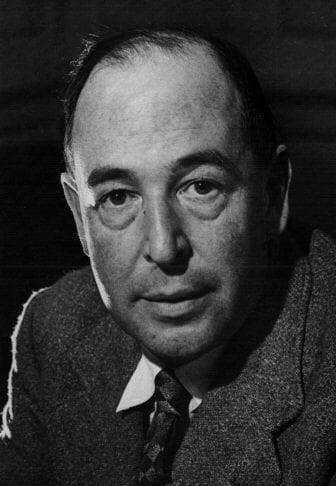
Clive Staples Lewis was a British writer, literary scholar, and Anglican lay theologian. He held academic positions in English literature at both Oxford University and Cambridge University. He is best known as the author of The Chronicles of Narnia, but he is also noted for his other works of fiction, such as The Screwtape Letters and The Space Trilogy, and for his non-fiction Christian apologetics, including Mere Christianity, Miracles, and The Problem of Pain.







