Biography coming soon.

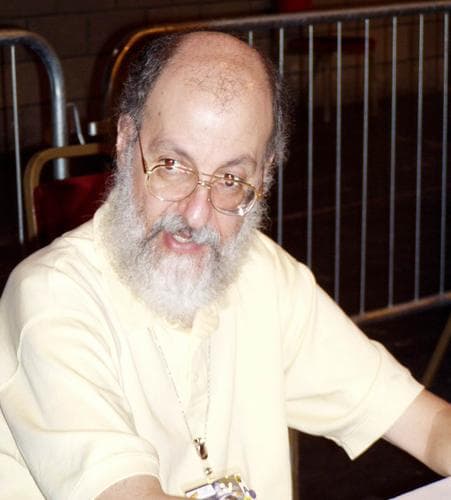
Harry Turtledove (2001)
Genre
Fantasy / Historical Fiction / Science Fiction
Reading Time
12 Minutes
Key Themes
See below
Sign in to track this book
In a fractured world on the brink of war, a hidden girl and her protector navigate treacherous streets and nascent magic to forge an alliance against a ruthless empire, proving that ordinary people can ignite extraordinary change.
The novel opens with Valnia, a young Kaunian girl, living in hiding in Forthweg, a nation under Algarvian occupation. Her Forthwegian protector, Chakal, constantly risks his life navigating the dangerous, Algarvian-patrolled streets to find work and food. Valnia must remain unseen and unheard, or the Algarvians will discover her and subject her to their brutal 'bloodless magic' experiments. These experiments have already claimed many Kaunian lives. Chakal's loyalty is her only shield in a world turned upside down by war and oppression. Their daily struggles show the harsh realities faced by ordinary citizens caught in the conflict.
In the distant nation of Kuusamo, scholars and mages are in a desperate race against time. They study captured Algarvian artifacts and interrogate prisoners, trying to understand the 'bloodless magic' that gives the Algarvians a devastating advantage in the war. This magic drains life without shedding blood. It is terrifyingly efficient and largely incomprehensible to Kuusamo's traditional magic users. The pressure is immense, as the war is going poorly for the allied forces. Understanding or countering this power is their last hope. Their efforts are made harder by the dangers of experimenting with an unknown and malicious force.
The world's political situation is defined by a fragile and often mistrustful alliance between Kuusamo, Lagoas, and Unkerlant. Despite historical rivalries, cultural differences, and mutual suspicions, these three kingdoms have united against the Algarvian Empire. Each nation has its own strengths and weaknesses, but the lack of complete trust often leads to bickering, delayed decisions, and internal sabotage, hindering their collective war effort. Ambassadors and military leaders constantly navigate diplomatic tensions, knowing that the alliance's collapse would mean defeat for all.
As the war continues and Algarvian occupation tightens its grip, the conflict begins to spill beyond the battlefields. Across various occupied territories, common people – farmers, merchants, laborers – begin to organize into resistance movements. These 'farmer soldiers,' lacking formal military training and often poorly equipped, are driven by a fierce dedication to reclaim their lands and freedom. Their tactics range from sabotage and intelligence gathering to outright skirmishes against Algarvian patrols. This grassroots rebellion, though often brutalized by the occupiers, represents a new and unpredictable front in the war, forcing the Algarvians to divert resources and attention from the main battlefronts.
Chakal's life in occupied Forthweg is a daily struggle for survival, marked by constant danger and moral compromises. He works various menial jobs, often for Algarvian overseers, enduring their contempt and suspicion, all while pretending to be a loyal subject. His resourcefulness and street smarts are essential, as he scrounges for food, avoids patrols, and navigates the black market to provide for Valnia. He sees firsthand the brutality of the Algarvian occupation, the arbitrary arrests, and the disappearance of locals, which strengthens his resolve to keep Valnia safe and hidden, no matter the cost.
Confined to her hiding place, Valnia's understanding of the world is shaped by Chakal's reports and her own imagination. She grapples with the burden of her Kaunian heritage, knowing that her existence makes her a target for the Algarvians' bloodless magic. She begins to understand the immense sacrifices Chakal makes for her, creating a deep sense of gratitude and guilt. As she matures, she starts to question her passive role, feeling a growing desire to contribute to the fight, even if she doesn't yet know how. Her isolation, while keeping her safe, also creates a longing for action and connection to the outside world.
After countless failures, the scholars of Kuusamo finally achieve a significant breakthrough in their understanding of Algarvian bloodless magic. Through careful study of a newly captured artifact and the desperate insights of a dying Kaunian prisoner, they uncover a critical vulnerability or counter-measure to the Algarvian's unique power. This discovery, though potentially dangerous to implement, offers a glimmer of hope for turning the tide of the war. The news energizes the allied forces, providing a much-needed morale boost and a new strategic direction. However, it also brings with it the daunting task of weaponizing their new knowledge before it's too late.
In Unkerlant, a major uprising orchestrated by the local resistance movement takes shape. Fueled by years of resentment against Algarvian and even some Unkerlant-aligned oppressors, these farmer soldiers launch a daring series of coordinated attacks on Algarvian supply lines, garrisons, and administrative centers. Though initially successful and causing significant disruption, the uprising faces brutal Algarvian retaliation. The fighting is fierce and often desperate, with heavy casualties on both sides. This event shows the growing popular discontent and the willingness of ordinary people to sacrifice everything for their freedom, even against overwhelming odds.
Driven by his desire to protect Valnia and seeing the growing despair around him, Chakal takes an increasingly reckless risk to aid the local resistance in Forthweg. He uses his knowledge of the city's underbelly and his apparent loyalty to the Algarvians as a cover to gather intelligence, smuggle supplies, or even directly participate in minor acts of sabotage. These actions put him in extreme peril, constantly on the brink of discovery by the ever-vigilant Algarvian secret police. His motivations are complex. He balances his personal mission to protect Valnia with a growing sense of responsibility to his community and the larger war effort, drawing him deeper into the conflict.
During a moment of extreme stress or a chance encounter, Valnia experiences a profound revelation about her Kaunian heritage. She discovers that she possesses a latent ability or a unique connection to the 'bloodless magic' that the Algarvians are so desperate to control. This is not the destructive power the Algarvians wield, but perhaps an innate resistance, a way to disrupt it, or even a different, benign manifestation of it. This discovery is both terrifying and empowering, offering a potential key to countering the Algarvian threat, but also placing an even greater target on her back. She must now decide how to use this newfound power, and whether to reveal it to Chakal or the wider world.
Building on the intelligence gathered by the resistance and the new understanding of bloodless magic from Kuusamo, the allied forces, with the local Forthwegian resistance, launch a major offensive to liberate Forthweg. The battle is fierce, combining conventional warfare with guerrilla tactics. Chakal plays a key role, using his knowledge of the city to guide resistance fighters and disrupt Algarvian movements. Valnia, now aware of her unique abilities, might also find herself directly involved, using her powers to try to turn the tide. The fate of the city, and potentially the war, hangs in the balance as both sides commit everything to the conflict.
The battle for Forthweg concludes with a hard-won victory for the allied forces and the resistance, but at a tremendous cost. The immediate Algarvian threat in Forthweg is neutralized, largely due to the combined efforts and the application of Kuusamo's new knowledge and Valnia's emerging abilities. However, the war is far from over. The victory in Forthweg is a significant turning point, offering hope, but the Algarvian Empire remains a formidable enemy. The novel concludes with the characters looking towards a future that, while no longer completely despairing, still promises immense challenges and further struggles 'through the darkness' of an ongoing conflict and the long process of healing and rebuilding.
The Protagonist
Valnia transforms from a fearful, hidden child into an active participant in the war, embracing her unique abilities to aid the allied cause.
The Protagonist
Chakal evolves from a man solely focused on personal survival to a key figure in the Forthwegian resistance, risking everything for a larger cause.
The Antagonist
The Algarvian Empire's seemingly unstoppable advance is eventually challenged and partially repelled, revealing their vulnerabilities.
The Supporting
Rylas maintains his oppressive control until the very end, ultimately facing defeat but never truly changing his beliefs.
The Supporting
Elara's tireless research leads to a pivotal discovery that shifts the balance of power in the war.
The Supporting
Kael navigates the political and military complexities of the alliance, ultimately becoming a key figure in coordinating the successful Forthweg offensive.
The Supporting
Jorn successfully galvanizes the Forthwegian resistance, playing a vital role in the liberation of his homeland.
The Supporting
The Seer's prophecies, initially vague, become clearer as the war progresses, guiding the allied forces towards a crucial understanding.
Despite overwhelming oppression, constant danger, and immense loss, the characters in 'Through the Darkness' show an unwavering capacity for hope, resistance, and survival. Valnia's quiet strength in hiding, Chakal's relentless protection, and the 'farmer soldiers'' dedication against a superior enemy all exemplify this theme. It explores how ordinary individuals find extraordinary courage when faced with existential threats. It highlights the power of individual will and collective determination to endure and fight for freedom, even when the odds seem insurmountable. The narrative emphasizes that even in the darkest times, the desire for liberty and a better future persists.
“Even in the deepest shadows, a flicker of defiance can ignite a blaze.”
The novel examines the multifaceted nature of power, especially in the Algarvian Empire's brutal occupation. It shows how power can be used through military might, advanced (magical) technology, and psychological warfare, leading to widespread fear and subjugation. Conversely, it also explores the power of unity, resistance, and knowledge as counter-forces. The Algarvian's 'bloodless magic' is a chilling metaphor for insidious, dehumanizing control. The theme also touches upon the moral compromises made by both the oppressed and the oppressors, and the corrupting influence of unchecked authority.
“Their magic was not of blood, but of essence, draining life with an unseen hand, a more terrifying subjugation than any blade.”
Valnia's Kaunian heritage is central to this theme, as her identity makes her a target for the Algarvians' magical experiments. The novel explores the weight of carrying a heritage that is both unique and dangerous, forcing individuals into hiding or making them objects of exploitation. It also extends to the national identities of Kuusamo, Lagoas, and Unkerlant, whose distinct cultures and historical mistrust hinder their alliance. The theme questions how one's identity, personal or national, shapes their destiny and their role in conflict, and how it can become both a source of vulnerability and unexpected strength.
“To be Kaunian was not merely a birthright; it was a curse, a beacon in the darkness that drew the Algarvians like moths to a destructive flame.”
This theme explores the complexities and difficulties of forming and maintaining alliances between different groups, even when faced with a common, overwhelming enemy. The alliance between Kuusamo, Lagoas, and Unkerlant is full of historical mistrust, cultural differences, and competing national interests. The narrative highlights how internal divisions and a lack of complete faith in one another can undermine even the most vital collective efforts. It explores the constant diplomatic struggles, the compromises required, and the ever-present threat of betrayal or collapse, emphasizing that unity is a fragile construct requiring constant effort.
“Three kingdoms, bound by fear, yet each eye still watched the others for the slightest tremor of deceit.”
'Through the Darkness' examines the ethical dilemmas and sacrifices inherent in warfare. Characters like Chakal make morally ambiguous choices to survive and protect Valnia, blurring the lines between right and wrong in a desperate situation. The 'farmer soldiers' sacrifice their lives and livelihoods for freedom, highlighting the personal cost of resistance. The scholars in Kuusamo wrestle with the ethical implications of their research into 'bloodless magic,' even if it is for a 'good' cause. The theme questions what lengths one is willing to go to win, and the lasting scars left by such a conflict.
“Freedom's price was often paid in coin of blood and conscience, a debt few could ever truly settle.”
The Algarvian's unique, life-draining power.
Bloodless magic is the central fantastical element and a primary plot device. It is the Algarvian Empire's unique and terrifying power, capable of draining life force and vitality without physical harm. This magic provides the Algarvians with their military advantage and fuels their oppressive regime, making them a formidable and mysterious enemy. Its existence drives the scholars of Kuusamo to understand and counter it, creating the central scientific/magical mystery of the plot. It also directly impacts Valnia, whose Kaunian heritage makes her a target for its effects and experiments, and later, a potential key to its undoing.
Valnia's secret existence drives much of the early plot.
Valnia embodies the 'hidden child' archetype, a character who must remain concealed for their safety, often due to a unique characteristic or threat. This device generates constant tension and suspense, as Chakal's every action is dictated by the need to keep her secret. It also fosters Valnia's character development, as her isolation forces introspection and a growing understanding of her situation. Her eventual emergence from hiding, and the revelation of her true potential, marks a significant turning point in the narrative, transforming her from a passive recipient of protection to an active participant.
Grassroots rebellion against the oppressors.
The various resistance movements, particularly in Forthweg and Unkerlant, serve as a crucial plot device. They represent the popular uprising against the Algarvian occupation, providing a counterpoint to the official military efforts of the allied kingdoms. This device introduces a new layer of conflict, tactical intrigue, and moral complexity, as ordinary citizens take up arms. It allows for characters like Chakal to become involved in the larger war effort beyond personal survival, and demonstrates the far-reaching impact of the war on common folk. The resistance acts as a catalyst for localized conflicts and intelligence gathering.
The fragile pact between Kuusamo, Lagoas, and Unkerlant.
The alliance between Kuusamo, Lagoas, and Unkerlant is a key plot device driving the overarching political and strategic narrative. Its inherent instability and the mistrust between its members create constant internal conflict and diplomatic challenges, often hindering the war effort. This device allows for exploration of themes like unity, diplomacy, and national interest. The need for this alliance, despite its flaws, underscores the overwhelming threat of the Algarvian Empire and forces disparate nations to find common ground, highlighting the difficulties of cooperation in desperate times.
Ready to see how well you understood this book? Take our interactive quiz with 10 questions.
Biography coming soon.







