Kazumasa's Unexplained Affliction and the Search for a Cure
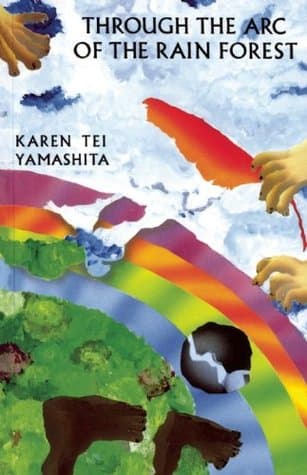
The story begins with Kazumasa, a young Japanese man in Brazil, who has a strange condition: a small, perfectly spherical plastic ball orbits his head. It never touches him but is always there. This phenomenon grows over time, causes no pain, but makes him unique. His mother, worried, takes him to healers, doctors, and spiritualists, but no one understands it. Their search for a cure eventually leads them to the Amazon rainforest, a place where strange things are becoming common. This journey sets the stage for Kazumasa's unexpected involvement in the region's environmental and social problems.
Masa's Discovery and the Rise of the Feather Industry
Meanwhile, deep in the Amazon, an indigenous man named Masa finds an unusual feather. This feather can replicate itself, growing new feathers from its own material. Masa recognizes its special qualities and begins to cultivate these feathers, initially for decoration in his community. News of the feather spreads beyond the rainforest, drawing the attention of collectors, business people, and scientists. Soon, a profitable industry grows around these 'magic feathers,' leading to widespread commercial use and new interest in the rainforest. This often harms its natural state and the local people.
The Arrival of the American Industrialist and the Search for the Feather
Joel, an American industrialist, becomes interested in the rumors of Masa's self-replicating feathers. He sees them as a valuable product and a source of wealth and technological progress. He travels to Brazil to get them. Joel represents the destructive forces of unchecked capitalism and globalization, viewing the rainforest and its resources only as things to exploit. His arrival increases commercial pressure on Masa and his community, threatening their traditional life and the ecosystem's balance. Joel's pursuit connects his fate with Masa's and, later, with Kazumasa's.
Chico Paco's Vision and the Pilgrimage
At the same time, a religious leader named Chico Paco appears. He declares the Amazon rainforest a sacred place, set for a new spiritual awakening. He speaks of miracles and divine intervention, attracting more and more pilgrims to the region. These followers, seeking enlightenment, healing, or belonging, gather in the rainforest, building temporary settlements and further straining its resources. Chico Paco's movement, driven by strong belief, adds another layer of complexity to the unstable environment. It contrasts with the scientific and commercial interests, but everyone is drawn to the same disputed land.
The Convergence of Destinies in the Rainforest
As the different interests grow, the rainforest becomes a meeting point for various motivations. Kazumasa and his mother continue their search for a cure, moving closer to the center of the activity. Masa tries to protect his feathers and his community from the growing commercialism and the large number of outsiders. Joel sets up a base of operations, using different methods to get the feathers. Chico Paco's pilgrims increase, forming a lively but chaotic spiritual community. These seemingly separate stories begin to connect, driven by the feathers' unique qualities, the rainforest's appeal, and Kazumasa's orbiting plastic sphere.
The Discovery of the Plastic Field
During the feather industry and religious pilgrimages, a major discovery is made: an immense, impenetrable plastic field lies beneath the Amazon rainforest. This 'plastic field' is not man-made in the usual way; it seems to be a natural, though very strange, geological formation. Its discovery further puzzles scientists and brings even more attention to the region. The plastic field becomes a focus for different groups—scientists trying to understand it, corporations wanting to use it, and environmentalists raising concerns. This anomaly greatly impacts the rainforest ecosystem and the lives of those there.
The Intertwined Fates of Kazumasa and the Feather
A key moment happens when Kazumasa's orbiting plastic sphere and Masa's self-replicating feathers are found to be linked. The plastic sphere, which has grown larger and more complex, is made of the same material as the plastic field. It also shows a subtle, almost unnoticeable, self-replicating quality, though much slower than the feathers. The feathers are somehow affected by the plastic, or perhaps the plastic by the feathers. This connection suggests a deeper, almost symbiotic relationship between these two phenomena, hinting at a larger ecological mystery in the rainforest.
The Rise of the Plastic-Feather Industry and its Consequences
With the link between the plastic and the feathers known, a huge, new industry starts. Joel, among others, profits from 'growing' plastic from the field using the feather's principles, leading to a huge demand for both. The rainforest becomes a factory for these new, endlessly reproducible materials. This boom creates great wealth for some but rapidly destroys the rainforest. The ecosystem collapses under the stress of exploitation, pollution, and mass migration, causing widespread environmental damage and social unrest.
The Emergence of the 'Perfect' Human and the Epidemic
In a strange turn, a 'perfect' human is made from the plastic material. This creation, showing humanity's pride and technical ambition, walks among people, representing a strange, artificial perfection. At the same time, a mysterious and fast-spreading epidemic starts among the population drawn to the rainforest. This disease, possibly linked to environmental damage or the plastic's strange properties, causes widespread illness and death. It further destabilizes the chaotic situation and shows the unforeseen results of human interference with nature.
The End of the World and the Narrator's Role
The combination of environmental collapse, uncontrolled industry, spiritual fervor, and epidemic causes a catastrophic breakdown of society and the natural world. The rainforest, once full of life, is completely changed, its life gone or permanently altered. The orbiting satellite, the novel's narrator, continues to observe these final, apocalyptic events without emotion. It sees the ultimate results of human greed, faith, and the constant pursuit of progress. The story ends with a feeling of great loss and the world's complete transformation, leaving a stark, new reality shaped by the rainforest's destruction.