“‘She had three wishes, you know. Only she didn’t use them for what she should have.’”
— The opening line, hinting at the central conceit and a past regret.

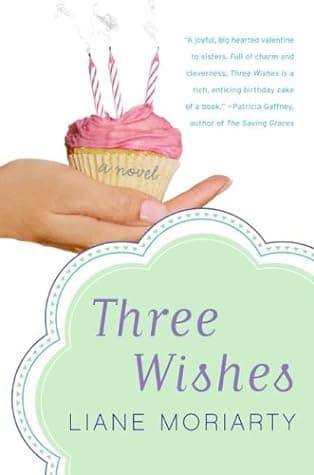
Liane Moriarty (2004)
Genre
Fantasy / Historical Fiction / Science Fiction / Young Adult / Romance
Reading Time
7 hours 30 min
Key Themes
See below
Sign in to track this book
Three distinct triplets navigate the hilarious and heartbreaking chaos of their thirty-third year, dealing with marital secrets, ticking biological clocks, and their unusual family.
The novel opens with the Kettle triplets, Lyn, Cat, and Gemma, celebrating their 33rd birthday at a restaurant. An unnamed observer recounts the scene, noting the sisters' chaotic energy and striking beauty. An argument breaks out between Cat and her husband, Eddie, leading to Cat throwing a fondue fork at him. This scene is a flash-forward, hinting at Cat's marital problems and setting the tone for the sisters' intertwined, often dramatic, lives. This public display of their private turmoil immediately establishes the central conflicts and the unique dynamic of the Kettle family.
Lyn, the most organized and seemingly put-together triplet, carefully manages her life, career, and three children, Ruby, Max, and Chloe. She constantly makes lists and strives for perfection. However, her control is often challenged by family demands, especially her children's squabbles and her husband Michael's relaxed approach. Her efforts to maintain order are further complicated by her sisters' and parents' drama. Lyn often feels pressure to be the 'responsible' one, trying to keep everyone, including herself, on track while secretly battling her own anxieties about balancing everything perfectly.
Cat's marriage to Eddie appears idyllic, but the fondue incident hints at deeper issues. Cat discovers Eddie is having an affair with a much younger woman. This revelation shatters her world and her trust, causing intense emotional turmoil. The discovery forces Cat to confront her marriage's reality and her identity outside of it. She deals with feelings of betrayal, anger, and confusion, while also navigating their shared life and the potential impact on their future, especially as they had been considering starting a family.
Gemma, the free-spirited artist, consistently ends relationships just as they approach the six-month mark. She claims to get bored or feel trapped, but deep down, she fears true intimacy and commitment. Her latest relationship with Charlie seems promising, but as the six-month anniversary nears, Gemma begins to find fault and create distance. Her sisters and grandmother often comment on this pattern, urging her to break it. This recurring self-sabotage is a major source of conflict for Gemma, as she longs for love but pushes it away.
The triplets' divorced parents, Frank and Brenda Kettle, begin an unexpected and awkward romance with each other, much to their daughters' dismay and confusion. Frank, a charming but often irresponsible man, and Brenda, a more grounded but still eccentric woman, navigate their renewed relationship with a mix of humor and underlying tension. This development adds another layer of chaos to the sisters' lives, forcing them to confront their parents' past and present dynamics, and often placing them in uncomfortable mediating positions as their parents bicker and reconcile.
Frances, the triplets' grandmother, is an opinionated woman who provides both comic relief and unexpected wisdom. Despite her age, she is tech-savvy, often using the internet and social media, which creates humorous contrasts with the triplets' own struggles. She offers blunt advice, often cutting through the sisters' self-deception and encouraging them to face their problems directly. Her presence is a grounding force, reminding the sisters of their family history and the lasting strength of their lineage, while also embracing the modern world.
Adding to Cat's already difficult situation, she discovers she is pregnant. This news sends her into an even deeper emotional spiral, as she must now consider bringing a child into a marriage broken by infidelity. She struggles with the important decision of whether to keep the baby and what that means for her future with Eddie. The pregnancy forces Cat to re-evaluate her priorities and consider the kind of life she wants for herself and her child, pushing her to make difficult choices about her marriage and her own happiness.
As Gemma approaches the six-month mark with Charlie, she feels the familiar urge to flee. However, with encouragement from her sisters and grandmother, and a deeper look into her past, she finally confronts her fear of commitment. She realizes her pattern stems from a fear of abandonment and a desire to control her emotional vulnerability. Instead of breaking up with Charlie, she tells him her fears, marking a significant step in her personal growth and offering hope for a stable, loving relationship.
Lyn's constant pursuit of perfection eventually takes its toll. The stress of balancing her demanding career, her children's needs, and her sisters' dramas pushes her to the brink. She experiences intense anxiety and near burnout, realizing her need for control is unsustainable. This crisis forces Lyn to confront her own vulnerabilities and the unrealistic expectations she places on herself. She begins to learn to delegate, accept imperfection, and lean on her support system, including her husband Michael, allowing for a healthier balance in her life.
The story returns to the opening scene at the restaurant, finally explaining why Cat threw the fondue fork at Eddie. It is revealed that the argument was a culmination of the stress and betrayal Cat felt after discovering Eddie's affair and her subsequent pregnancy. The public outburst symbolizes her breaking point and her refusal to silently endure the pain. This full circle moment provides closure to the initial mystery and solidifies the emotional intensity of Cat's journey throughout the year.
By the end of their thirty-third year, each sister has made significant progress in addressing her personal challenges. Cat begins to rebuild her life, making difficult decisions about her marriage and embracing motherhood. Gemma commits to Charlie and confronts her fears. Lyn learns to ease her grip on perfection. Their individual journeys are intertwined with their strong sisterly bond. Despite the chaos, they consistently support each other, offering tough love, humor, and loyalty, showing the lasting strength of their family ties as they face new beginnings.
The Protagonist
Lyn learns to relinquish some control, accept imperfection, and prioritize her well-being over relentless striving, finding a healthier balance.
The Protagonist
Cat navigates betrayal and heartbreak, ultimately finding her inner strength to make difficult choices for her future and her child's well-being.
The Protagonist
Gemma confronts her fear of commitment, breaks her six-month relationship pattern, and opens herself up to true intimacy.
The Supporting
Frances remains a steady, unchanging source of wisdom and love for her granddaughters, offering guidance without undergoing a personal arc.
The Supporting
Eddie grapples with the consequences of his infidelity, attempting to seek forgiveness and reconcile with Cat, though his path to redemption is uncertain.
The Supporting
Michael remains a steadfast and supportive partner, helping Lyn to navigate her anxieties and find a better work-life balance.
The Supporting
Charlie's steadfast love and understanding help Gemma to overcome her commitment phobia, leading to a more stable relationship.
The Supporting
Brenda navigates her renewed relationship with Frank, finding a tentative peace and happiness in their unconventional romance.
The Supporting
Frank attempts to be a more present and reliable figure in his daughters' lives, particularly as he rekindles his relationship with Brenda.
The lasting and complex bond between the Kettle triplets is the central theme. Despite their distinct personalities and individual struggles, Lyn, Cat, and Gemma consistently support each other, offering tough love, humor, and loyalty. The novel emphasizes that even amidst chaos and personal crises, the family unit, especially the sisterly connection, provides a vital source of strength and identity. This is clear in scenes where the sisters rally around Cat after her marital betrayal or collectively try to advise Gemma on her commitment issues, highlighting their interdependence.
“They were three separate women, but together they were a force of nature. A beautiful, chaotic, unstoppable force.”
This theme is most strongly shown through Lyn, who carefully orchestrates her life to appear perfect, both to herself and to the outside world. However, the narrative consistently reveals the cracks in this image, showing the immense pressure and anxiety that come with such an endeavor. The public spectacle of the fondue incident at the beginning of the book immediately shatters any illusion of a perfectly serene family. The theme explores the societal pressure on women to 'have it all' and the toll it takes, ultimately suggesting that true happiness comes from embracing imperfection and vulnerability.
“Lyn had always believed that if you just organized everything perfectly, nothing could go wrong. She was wrong.”
Cat's storyline is the main way this theme is explored, as she deals with the devastating betrayal of her husband's infidelity. The novel delves into the pain of broken trust, the complexities of navigating a relationship after such a wound, and the difficult process of deciding whether forgiveness is possible or even desired. It also touches on different forms of love – the passionate, the enduring, and the self-sabotaging (Gemma's arc). The parents' rekindled romance also adds to this, exploring whether past hurts can truly be overcome for a second chance at love.
“How could one person hold so much love and so much rage for the same man?”
Each triplet, at 33, is at a crossroads, forced to re-evaluate who they are and who they want to be. Cat must redefine herself outside of her marriage, Lyn must confront her perfectionism and find a more authentic self, and Gemma must understand the roots of her commitment phobia to form a stable identity. The novel suggests that self-discovery is an ongoing process, not limited to youth, and that significant life events, even challenging ones, can be catalysts for personal growth. Their journey highlights the continuous evolution of identity, especially within the context of family and societal expectations.
“She was 33, and it felt like she was just beginning to figure out who she was, or who she was supposed to be.”
The novel opens with a dramatic scene from the future, creating immediate intrigue.
The book begins with a flash-forward to the triplets' 33rd birthday dinner, where Cat throws a fondue fork at her husband. This immediately hooks the reader, establishing a sense of mystery and foreshadowing the marital strife and dramatic events that will unfold. It creates a narrative frame, prompting the reader to piece together the events that led to this explosive moment. This device effectively sets the tone for the chaotic and emotionally charged journey of the Kettle sisters, building suspense from the very first page.
While primarily third-person, the narrative often shifts its focus to each sister's internal thoughts.
Although the novel is told in the third person, it frequently dives deep into the individual consciousness of Lyn, Cat, and Gemma, offering intimate access to their thoughts, feelings, and internal struggles. This allows the reader to understand each sister's unique perspective on shared events and their distinct personal challenges. This device enriches the character development, provides a comprehensive view of the family dynamics, and highlights the theme of individual identity within a strong collective bond, making each sister's journey feel equally significant.
A seemingly mundane object becomes a powerful symbol of marital breakdown and emotional release.
The fondue fork, initially a tool for sharing and connection, transforms into a symbol of Cat's rage and the irreparable damage to her marriage. Its public throwing signifies a breaking point, a dramatic release of pent-up anger and betrayal that can no longer be contained. It's a vivid, slightly absurd image that encapsulates the blend of domesticity and high drama inherent in the story. The fork's trajectory mirrors Cat's emotional journey from suppressed pain to an explosive confrontation, making it a memorable and effective symbolic element.
“‘She had three wishes, you know. Only she didn’t use them for what she should have.’”
— The opening line, hinting at the central conceit and a past regret.
“‘Sometimes you just have to ride it out. The bad bit. And wait for the good bit to come along.’”
— A character offering advice on enduring difficult times.
“‘Love wasn’t a choice, it was a compulsion. You loved who you loved, despite all the reasons not to.’”
— Reflecting on the uncontrollable nature of romantic feelings.
“‘Families were like that, weren’t they? A tangle of affections and resentments, all tied up with invisible string.’”
— A general observation about the complexities of family dynamics.
“‘The past wasn’t really past. It was always there, a shadow walking beside you.’”
— A character contemplating the lasting impact of past events.
“‘It’s amazing how much you can forgive someone when you really want them to be happy.’”
— A moment of profound realization about forgiveness in relationships.
“‘Maybe the real wish was just to be seen, to be understood, to be loved, exactly as you were.’”
— A character's internal reflection on fundamental human desires.
“‘Life had a way of throwing curveballs, and sometimes all you could do was duck.’”
— A pragmatic view on dealing with unexpected challenges.
“‘The silence between them was comfortable, the kind that only years of shared history could create.’”
— Describing a moment of intimacy and understanding between long-term companions.
“‘Sometimes the most ordinary moments were the ones that held the most magic.’”
— A character appreciating the beauty in everyday life.
“‘She learned that wishing for things wasn’t about getting them, but about knowing what you truly wanted.’”
— A reflection on the deeper meaning of making wishes.
“‘It’s a funny thing, regret. It’s always there, lurking in the corners, waiting to pounce.’”
— A character musing on the persistent nature of regret.
“‘There was a fierce joy in finally letting go of something you’d held onto for far too long.’”
— Describing the liberation that comes with releasing old burdens.
Ready to see how well you understood this book? Take our interactive quiz with 10 questions.

Biography coming soon.







