BookBrief
Three Soldiers cover
Archivist's Choice

Three Soldiers

John Dos Passos (1921)

Genre

Historical Fiction

Reading Time

543 min

Key Themes

See below

Track Your Reading

Sign in to track this book

Three American soldiers, each from a different background, face the brutal realities of World War I, which shatters their youthful ideals and shows the true social cost of global conflict.

Synopsis

Three Soldiers follows three American enlistees during World War I, showing the common soldier's experience and subsequent disillusionment. John Andrews, an educated musician, enlists out of duty but finds his artistic spirit crushed by the military's strict conformity and brutality. Chrisfield, a simple farm boy, struggles with war's dehumanizing aspects, eventually deserting to find solace in art, only to face military justice. Dan Fuselli, an ambitious Italian-American, seeks advancement and respect, believing in the military's promise of opportunity, but compromises his morals and loses his dreams to the system. The novel details their training, their experiences on the Western Front, and their struggles with war's psychological and moral toll. Andrews deals with intellectual stifling, Chrisfield with a desperate fight for individual freedom, and Fuselli with ambition's corrosive effects. The war breaks each man differently: Chrisfield faces a court-martial, Fuselli's aspirations crumble, and Andrews is left with post-war disillusionment, his artistic soul scarred. The narrative criticizes the military machine and its impact on the individual spirit.
Reading time
543 min
Difficulty
Medium
Pacing
Moderate
Mood
Bleak, Disillusioning, Realistic, Critical
✓ Read this if...
You're interested in a gritty, unromanticized depiction of WWI from the perspective of the common soldier, and enjoy character-driven historical fiction that critiques societal structures.
✗ Skip this if...
You prefer fast-paced plot-driven narratives, or are looking for a heroic or patriotic portrayal of war.

Plot Summary

Enlistment and Initial Training

Chrisfield, a sensitive musician, enlists with naive patriotism and a desire for adventure. He quickly becomes disillusioned with harsh military life and brutal training. Fuselli, an ambitious, working-class Italian-American, sees the army as a chance for advancement and to prove himself. He is diligent and eager to conform, hoping to rise in rank. Andrews, a cynical Harvard graduate, is drafted and enters service with fatalism and intellectual distance, viewing the military as an absurd, oppressive machine. Their early experiences show how different their expectations are and how quickly the military system begins to wear down their individual spirits.

Arrival in France and Early Experiences

Chrisfield, Fuselli, and Andrews are sent to France, where they immediately face the vast scale of the war and the confusing foreign environment. Chrisfield is assigned to a transport unit, where he sees destruction and suffering, further eroding his initial idealism. His artistic sensibilities clash with the ugliness around him. Fuselli, always striving, tries to impress superiors and navigate bureaucracy, hoping for a promotion. Andrews, with his intellectual nature, observes the war's absurdity and futility from a distance, remaining cynically detached. The initial excitement of being in France quickly gives way to constant movement, poor conditions, and the ever-present threat of violence.

Chrisfield's Desertion and Artistic Struggle

Overwhelmed by the war's brutality and senselessness, especially after accidentally killing a superior officer, Chrisfield deserts his unit. He goes to Paris, hoping to escape the military and dedicate himself to music. In Paris, he finds temporary peace and begins composing, trying to capture the anguish and beauty he has seen. He meets Genevieve, a young French woman who offers companionship. However, constant fear of discovery and internal conflict between his art and desertion guilt plague him. His time in Paris is a fragile break, always overshadowed by the threat of recapture.

Fuselli's Pursuit of Advancement

Fuselli, unlike Chrisfield, stays committed to the military structure, believing it offers his best chance for social mobility. He works hard, obeys orders, and tries to gain favor with his superiors. He focuses on becoming a corporal, seeing it as a clear sign of success and respect. His ambition, however, often puts him at odds with other enlisted men, who view his eagerness with suspicion. He gets involved with a French woman, Jeanne, which further complicates his focus. Despite his efforts, the promotions he wants are hard to get. He faces repeated frustrations and disappointments within the rigid, often unfair, military system, leading to growing resentment and a feeling of being overlooked.

Andrews's Intellectual Disillusionment

Andrews, because of his education, often works in clerical or administrative roles behind the lines, giving him a unique view of the war's inner workings. He sees firsthand the bureaucratic inefficiency, senseless orders, and casual disregard for human life throughout the military hierarchy. His initial cynicism deepens into a profound disillusionment with all institutions, not just the army. He often discusses the conflict's political and social implications with other educated soldiers. He finds temporary escape in alcohol and women, but these offer only brief relief from his despair, solidifying his belief in organized society's absurdity and cruelty.

Chrisfield's Recapture and Court-Martial

Chrisfield's fragile peace in Paris breaks when military police find and arrest him. He faces a harsh court-martial, where the military justice system disregards his artistic aspirations and reasons for desertion. The trial highlights the contrast between his individual conscience and military law's rigid demands. He is found guilty and sentenced to a long prison term, crushing his spirit and dreams of becoming a composer. His recapture marks the tragic end of his attempt to assert individual freedom against state power, leaving him broken and without hope.

Fuselli's Moral Compromise

As the war continues and his hopes for promotion go unfulfilled, Fuselli becomes desperate. He sees corruption and favoritism and starts adapting, making compromises to get ahead. He engages in petty black market dealings and uses his relationship with Jeanne for personal gain, betraying her trust. His initial belief in the army as a meritocracy slowly gives way to a cynical understanding that advancement often comes through manipulation. These actions leave him feeling hollow and resentful, realizing the system he wanted to succeed in has corrupted his morals without truly rewarding him.

Andrews's Post-War Disillusionment

When the war ends, Andrews, like many soldiers, struggles to find meaning outside the military. He is discharged, but the experience has changed him deeply; he cannot connect with the civilian world or find comfort in his former intellectual pursuits. Post-war society's superficiality seems meaningless after his experiences at the front. He drifts through Paris, engaging in casual relationships and drinking, but finds no lasting satisfaction. His intellectual detachment has turned into a deep sense of aimlessness, a feeling of being a stranger in his own life, unable to shake off the war's mark.

The End of Fuselli's Dreams

As American forces prepare to return home, Fuselli makes a final attempt to secure a favorable position or promotion that would help him in civilian life. He tries to use his service and connections, but all his efforts are met with indifference or rejection. He is discharged without the recognition or advancement he wanted. His relationship with Jeanne also ends, leaving him alone and without a clear future. He returns to America a disillusioned man, his dreams of upward mobility shattered, facing the same working-class existence he had hoped to escape, but now burdened by war's psychological scars and his own moral compromises.

Chrisfield's Final Fate

The novel ends with Chrisfield in a military prison. His spirit is crushed by confinement and the loss of artistic freedom. The military system has broken him, extinguishing his creative spark and will to resist. His dreams of composing music and living a life of self-expression are lost. His fate symbolizes the military's power to destroy individual identity and ambition, showing the tragic consequences for those who defy its authority. Chrisfield's story is the most poignant example of the profound and often irreversible damage inflicted on the 'three soldiers' by their wartime experiences.


Principal Figures

John Andrews

The Protagonist

Andrews's initial cynicism deepens into a complete existential despair, leading to profound post-war alienation and an inability to reconnect with civilian life.

Chrisfield

The Protagonist

Chrisfield's initial idealism is systematically destroyed, leading to his desertion and ultimate spiritual and physical imprisonment by the military.

Dan Fuselli

The Protagonist

Fuselli's relentless ambition for upward mobility through the military is ultimately thwarted, leaving him disillusioned, resentful, and unchanged in his social standing.

Genevieve

The Supporting

Genevieve serves as a temporary haven for Chrisfield, representing the fleeting possibility of escape from the military's grasp.

Jeanne

The Supporting

Jeanne is a casualty of Fuselli's ambition, revealing his capacity for manipulation and selfishness as his dreams crumble.

Lieutenant Anderson

The Mentioned

Anderson's character primarily serves as a catalyst for Chrisfield's desertion and subsequent downfall.

Sergeant Williams

The Supporting

Williams remains a static representation of military authority, contributing to the soldiers' disillusionment.

Themes & Insights

Disillusionment with War and Authority

The main theme of 'Three Soldiers' is the deep disillusionment experienced by young men facing World War I's reality. The novel removes romantic ideas of heroism or patriotism, replacing them with the grim truths of senseless violence, bureaucratic incompetence, and dehumanizing military discipline. Chrisfield's initial idealism, Fuselli's ambition, and Andrews's intellectual detachment all break under the war's absurdity. The narrative shows the military as an oppressive, impersonal machine that crushes individual spirit, seen most clearly in Chrisfield's tragic fate in prison.

They had wanted to fight for democracy. They had fought for the right to be cogs in a machine.

Narrator

Loss of Individuality and Freedom

The novel shows how the military system strips soldiers of their individual identities and freedoms. From enlistment, men are forced into uniforms, subjected to rigid routines, and denied personal choice. Chrisfield, as an artist, feels this loss most acutely, leading to his desertion to pursue self-expression. Fuselli's attempts to assert himself through ambition are repeatedly blocked, showing the system's resistance to individual advancement outside its prescribed paths. Andrews's intellectual freedom is also limited, leaving him with only internal cynicism as resistance. The army demands absolute conformity and obedience, costing the unique human spirit.

He felt that he was a cog in a great machine that was grinding on, grinding on, with no purpose but to grind.

Chrisfield's internal thought

The Failure of the American Dream

For characters like Fuselli, the military initially seems like a path to the American Dream—a chance for upward mobility, respect, and a better life regardless of background. However, the novel clearly shows how this dream is crushed by war's realities and the military's rigid class structures. Fuselli's tireless efforts and moral compromises bring no real advancement, leaving him disillusioned and bitter. The promise of meritocracy proves false, replaced by favoritism and a system that favors the already privileged or those willing to abandon their integrity. The war, far from being an equalizer or opportunity, becomes a trap that worsens existing social inequalities and leaves participants worse off.

All his life he had been struggling to get ahead, to make something of himself. And now he was just a private, like all the others.

Fuselli's internal thought

Art vs. War

This theme is strongest in Chrisfield's character. His love for music and desire to compose directly oppose war's brutality and senselessness. His artistic sensitivity makes him vulnerable to the horrors he sees, and his desertion is an attempt to preserve his creative spirit. The novel contrasts art's life-affirming power with warfare's destructive force. Chrisfield's imprisonment and the crushing of his musical aspirations symbolize the war machine's tragic victory over human creativity, suggesting that art cannot thrive in an environment defined by violence and oppression.

He wanted to make music, not to kill men.

Narrator, describing Chrisfield's inner conflict

Class and Social Inequality

The novel consistently highlights how class and social background affect soldiers' experiences. Andrews, with his Harvard education, often gets clerical duties, giving him a different, though equally disillusioning, view than those on the front lines. Fuselli, from a working-class background, sees the military as his only real chance for social advancement, only to find the system rigged against him. Chrisfield's artistic temperament, while not strictly class-defined, sets him apart from more pragmatic soldiers. The different fates and opportunities given to the three protagonists show how pre-existing social inequalities are not erased by the war, but often reinforced within the military hierarchy.

It was the same old story. The big shots got the soft jobs, and the little fellows did all the dirty work.

Fuselli's complaint

Plot Devices & Literary Techniques

Multiple Perspectives

The novel shifts between the viewpoints of three distinct soldiers to offer a comprehensive critique of the war.

Dos Passos employs a rotating third-person limited perspective, focusing on Chrisfield, Fuselli, and Andrews in separate sections. This technique allows the author to explore the war's impact on different personality types and social backgrounds. Chrisfield represents the artistic idealist, Fuselli the ambitious working-class striver, and Andrews the cynical intellectual. By showcasing their varied experiences—from combat and desertion to administrative duties and the pursuit of advancement—the novel builds a multifaceted and damning indictment of the military industrial complex, demonstrating that disillusionment is universal regardless of one's initial outlook or role.

Stream of Consciousness (Interior Monologue)

Passages of interior monologue reveal the characters' inner turmoil and psychological states.

Dos Passos frequently delves into the characters' thoughts and feelings, often presenting them in a free-flowing, stream-of-consciousness style. This device allows readers direct access to the soldiers' anxieties, hopes, and profound disillusionment, bypassing conventional dialogue or external narration. It is particularly effective in conveying Chrisfield's artistic sensibilities and his despair, Fuselli's frustrated ambitions, and Andrews's cynical observations. These internal monologues highlight the psychological toll of war and the characters' struggle to maintain their individual identities against the overwhelming force of the military machine.

Symbolism of Music

Music symbolizes individual expression, freedom, and the life-affirming force crushed by war.

Chrisfield's passion for music serves as a powerful symbol throughout the novel. It represents his desire for creativity, beauty, and individual expression—qualities directly antithetical to the destructive, conforming nature of war. His attempts to compose music, both before and during his desertion, are acts of defiance against the military's dehumanizing grip. The ultimate crushing of his musical aspirations through imprisonment symbolizes the war's ability to destroy not just lives, but also the human spirit, creativity, and the very possibility of freedom and self-actualization.

Naturalistic Detail

Vivid, unromanticized descriptions of military life, landscapes, and combat create a sense of harsh reality.

The novel is characterized by its stark, unembellished descriptions of the squalor, violence, and boredom of military life. Dos Passos employs naturalistic detail to convey the physical and psychological impact of the war without romanticization. From the mud and grime of the trenches to the bureaucratic drabness of offices and the fleeting pleasures of Parisian streets, these details ground the narrative in a harsh reality. This unflinching realism serves to strip away any heroic illusions, forcing the reader to confront the brutal, often mundane, truth of the soldiers' experiences and the pervasive sense of decay and disillusionment.

Critical analysis

Notable Quotes

They were going to be great, wonderful, a tremendous success for the benefit of mankind. All the old institutions were going to be smashed, and out of the ruins a new world, a world of peace and brotherhood, was to arise.

Reflecting the initial idealism and hope many soldiers felt at the beginning of World War I.

War is a great adventure, but it is also a great school.

A character's early, somewhat romanticized view of war, before experiencing its full horror.

The army was a huge, grinding machine that took men and made them into cogs.

A soldier's growing disillusionment with military life and the loss of individual identity.

There was no beauty left in the world, only mud and blood and the smell of death.

A stark description of the battlefield, emphasizing the brutal reality of trench warfare.

The greatest tragedy of war is not that it kills men, but that it makes them killers.

A profound reflection on the psychological toll and moral compromise demanded by war.

He felt like a fly caught in a spider's web, struggling, but knowing it was useless.

A soldier feeling trapped and powerless within the military system.

Home was a long way off, and it seemed to grow further away every day.

The emotional distance and alienation felt by soldiers from their past lives.

The only thing that kept them going was the camaraderie, the shared misery.

Highlighting the bond between soldiers forged in the crucible of war.

He hated the war, he hated the army, he hated everything that had brought him here.

An expression of intense resentment and bitterness towards the war and military service.

Peace seemed like a dream, something that might never come, or if it did, would be too late for them.

The lingering pessimism and sense of being permanently altered by the war, even if it ended.

They were all just numbers, expendable, forgotten.

The feeling of dehumanization and insignificance experienced by common soldiers.

The past was a blur, the future an empty space.

A soldier's sense of disorientation and loss of purpose after prolonged exposure to war.

Freedom was a word they used, but what did it mean when you were trapped in a uniform, marching to someone else's tune?

Questioning the concept of freedom in the context of military conscription and control.

The world had changed, and they had changed with it, but not for the better.

A somber reflection on the irreversible negative impact of the war on individuals and society.

Quiz

Test Your Knowledge

Ready to see how well you understood this book? Take our interactive quiz with 10 questions.

10
Questions
~5
Minutes
?
Best Score

Key Questions (FAQ)

'Three Soldiers' follows the individual experiences of three American enlisted men – John Andrews, Chrisfield, and Fuselli – during World War I, detailing their disillusionment with military life and the broader social structures that exploit them. The novel starkly portrays the harsh realities of trench warfare, the dehumanizing effects of military discipline, and the psychological toll on common soldiers, moving from initial idealism to profound despair.

About the author

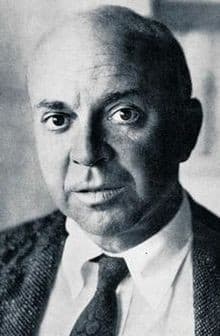
John Dos Passos

John Roderigo Dos Passos was an American novelist, most notable for his U.S.A. trilogy.