“Rose Johnson was a tall, robust, rather handsome woman, with a strong, though to most people, a pleasing personality.”
— Opening description of the character Rose Johnson.

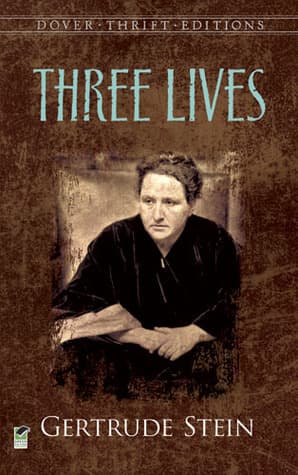
Gertrude Stein (1909)
Genre
Literary Fiction
Reading Time
176 min
Key Themes
See below
Sign in to track this book
Gertrude Stein's "Three Lives" shows the inner lives of three ordinary working-class women, turning their simple existences into a look at human consciousness and an easy way into her new literary style.
Anna, a German immigrant, starts her life as a servant in America. She has an almost obsessive need for order and cleanliness. She works for different families, especially the rich and kind Miss Mathilda, who values Anna's hard work and loyalty. Anna's life is defined by her work, her pets (especially her dogs, which she loves greatly), and her strict rules. She always worries about money, even when she has enough, and often scolds others for what she sees as mistakes or moral failures. Her interactions with other servants, especially younger, less experienced ones, show her bossy but often well-meaning nature. Her early experiences set up her later struggles with control and her deep-seated worries.
Anna continues working, mainly for Miss Mathilda, but also takes on more duties, like caring for her sister's children and various animals. Her relationships are often strained by her demanding personality and her need to be in charge. She often criticizes the children, believing she knows best, but also shows real affection. Her dogs, especially the terrier 'Baby,' are her constant friends and get her kindest feelings. She forms a close, though somewhat co-dependent, bond with a younger maid, Mrs. Lehntman, whom she often scolds but also relies on. Anna's life is a constant cycle of work, worry, and occasional generosity, always within her strict view of the world.
As Anna gets older, her health starts to fail, and her worries, especially about money and her own death, become stronger. She gets various illnesses, which she carefully describes and often makes sound worse. Despite Miss Mathilda's continued kindness and help, Anna believes she will die poor. Her focus on saving money leads her to make more and more unreasonable choices, often hurting herself. She becomes more isolated, pushing away those who try to help her, including Miss Mathilda and Mrs. Lehntman. Her dogs remain her only comfort, and she worries intensely about them after she dies. Her final years are marked by deep loneliness and a losing fight against her own mental and physical decline.
Anna's health keeps getting worse, with more pain and mental confusion. Her once sharp mind becomes cloudy with worries and physical suffering. Despite the efforts of Miss Mathilda and doctors, Anna dies from her illness. Her death is quiet, showing the lonely nature of her later life. Her careful savings and her beloved dogs are left behind, showing her unique and often conflicting character. Her story ends with thoughts on her life of service, her strong belief in her own rules, and her unfulfilled desires for safety and control that shaped her life. Her death marks the end of a life lived with strong, though often mistaken, conviction.
Melanctha Herbert, a young Black woman from Bridgepoint, is introduced as sensitive and thoughtful, always trying to understand life, love, and human nature. She has a series of early relationships, marked by strong emotions and a repeating pattern of seeking and then questioning her partners' honesty. Her relationship with Jane Harden is important, as Jane introduces Melanctha to a more worldly view and challenges her usual understanding of right and wrong. Melanctha's deep need for honesty and her curiosity lead her to constantly analyze her feelings and others', often causing complex and difficult romantic situations.
Melanctha's friend, Rose Johnson, starts a relationship with Jeff Campbell, a good-natured but somewhat simple Black man. Melanctha watches their courtship and marriage with a critical and analytical eye. She questions the shallow nature of Rose's love for Jeff, seeing it as based more on comfort and social expectation than deep emotional connection. Melanctha herself finds Jeff appealing in his sincerity, but she cannot match his simple nature with her own complex need for honest thought and emotion. This time shows Melanctha's unique view on love, contrasting her intense, questioning nature with the simpler affections of those around her.
Melanctha and Jeff Campbell, even with his marriage to Rose, begin a complex and very intellectual love affair. Their relationship is marked by long, detailed talks where Melanctha constantly questions Jeff about his feelings, his understanding of love, and his commitment. She always pushes him to say what he feels and to look deeper into their connection. Jeff, though at first unsure and confused by Melanctha's intensity, becomes very drawn to her unique mind and spirit. Their love is strong but full of misunderstandings, as Melanctha's need for complete honesty clashes with Jeff's simpler, more traditional view of love and faithfulness. They spend many hours talking, arguing, and trying to define their feelings for each other.
Despite their deep connection, Melanctha and Jeff's relationship does not last. Melanctha's constant questioning and her inability to fully trust Jeff's simple statements of love eventually wear him down. He struggles to meet her intellectual and emotional demands, feeling not good enough when she is around. Melanctha, in turn, becomes more and more frustrated by what she sees as his lack of depth and his inability to truly understand her. Their constant arguments and the emotional cost of their intensity lead to a painful but unavoidable separation. The split leaves both of them deeply hurt, with Melanctha withdrawing further into her thoughtful and lonely life, still looking for deep understanding.
After splitting from Jeff, Melanctha continues her wandering life, moving from place to place and having other relationships, none of which give her the lasting understanding or connection she wants. Her health begins to decline, and she gets consumption (tuberculosis). She keeps thinking about her past and the nature of love, but her physical weakness and loneliness lessen her strong spirit. She eventually moves to a faraway city, looking for a change of scenery and maybe a cure, but her condition worsens. Her story ends with her lonely death, a sad end for a woman who so strongly tried to understand and experience life's deepest truths.
Lena, a young German immigrant, arrives in America to live with her aunt and uncle. From the start, Lena is known for her extreme gentleness, her quiet nature, and a very simple mind. She is often called 'stupid' by others, though her lack of sharp thinking is always balanced by her natural goodness and willingness to please. She struggles to adapt to the new language and customs, often staying silent and passive. Her aunt and uncle, though kind, find her hard to manage because she lacks initiative and understanding. Lena's early life in America is quiet, marked by her inability to truly grasp the complexities of her new surroundings.
Lena's aunt and uncle arrange her marriage to Herman, a serious and hard-working German tailor. Herman is drawn to Lena's quiet beauty and gentle manner, but he quickly becomes frustrated by her passivity and her inability to keep their home clean or manage household tasks well. Lena tries her best to be a good wife, but her basic lack of understanding and her slow movements make her unsuited for the demanding role. Herman often scolds her, but Lena rarely responds, simply accepting her fate with quiet resignation. Their marriage shows Lena's constant obedience and Herman's growing frustration.
Lena has several children, a process she goes through with the same quiet passivity as everything else in her life. She is a gentle mother, but her natural simplicity means she struggles with the practical parts of raising children and managing the home. Herman's frustration deepens as their family grows, and the burden of supporting and managing the household falls almost entirely on him. Lena's children, like their father, learn to expect little action from her. Her life settles into a boring routine of having children and quiet living, defined by her unchanging nature and her inability to engage deeply with the world around her. She remains 'gentle Lena,' always in the background of her own life.
Lena's story does not end with a big event or a major change. Instead, it concludes with her continuing to live her life as she always has: quiet, gentle, and very simple. She keeps having children, and her home remains a source of frustration for Herman. There is no growth for Lena; she stays the same person she was at the beginning. Her life shows the strength of an unchanging nature, a quiet acceptance of fate, and the big impact of simplicity in a world that often asks for complexity. Her story simply stops, leaving her in her unchanging, gentle life.
The Protagonist
Anna's arc is one of gradual decline, as her meticulousness transforms into debilitating obsession and her anxieties lead to isolation and a lonely death.
The Protagonist
Melanctha's arc depicts her persistent, yet ultimately unfulfilled, quest for true understanding and honest love, culminating in her decline and lonely death.
The Protagonist
Lena's arc is notable for its absence of change; she remains fundamentally the same gentle, passive individual throughout her life, enduring circumstances rather than shaping them.
The Supporting
Miss Mathilda's character remains consistent, embodying unwavering kindness and support despite Anna's challenging personality.
The Supporting
Jeff's arc involves being drawn into, and eventually overwhelmed by, Melanctha's intense intellectual and emotional world, ultimately returning to a more conventional path.
The Supporting
Rose's character remains largely static, serving as a foil to Melanctha's complex nature and demonstrating a more traditional path in love and marriage.
The Supporting
Herman's arc is one of growing frustration and eventual resignation to Lena's unchanging nature, leading him to take on more responsibilities.
The Supporting
Mrs. Lehntman's role is primarily to reflect Anna's character, remaining a consistent presence in Anna's life without significant personal development.
This theme is most clearly seen in 'Melanctha,' where the main character constantly looks for a deep, honest, and intellectually satisfying connection. Melanctha's endless questioning of Jeff Campbell's feelings and her inability to accept simple statements of love show her belief that true love needs complete openness and deep understanding. She struggles to make her complex inner world fit with the more common and often shallow ways of showing affection she finds. Her journey suggests that for some, love is less about comfort and more about a constant search for truth, even if it leads to pain and loneliness.
“She was always seeking, seeking to know what it was that she was always wanting, and what it was that she was always having, and what it was that she was always losing.”
Anna's story deeply explores how obsession and worry can destroy. Her carefulness, at first a good trait, turns into a disabling focus on order, cleanliness, and money. Despite having steady work and kind employers like Miss Mathilda, Anna is always consumed by fears of poverty and illness. This theme shows how unchecked worries can isolate someone, twist their view of reality, and ultimately lead to lonely, self-inflicted suffering, even with outside help. Her constant worrying about her dogs and her savings defines her later years.
“Always she was worrying, always she was wanting to be having things regular, and always she was fearing that she would not have them so, and so she was always worrying.”
This theme is clearly shown by the sharp difference between Melanctha and Lena. Melanctha is a character who is always changing intellectually and emotionally, always questioning, seeking, and growing, even if her search ultimately leads to sadness. Her life is a series of intense experiences and thoughts. In contrast, Lena represents a static self. Despite marriage, motherhood, and immigration, Lena's basic nature—her gentleness, simplicity, and passivity—remains the same. Her story suggests that some people, no matter what happens outside, have an inherent, unchanging core, showing different ways of existing within the human experience.
“Lena was patient, Lena was gentle, Lena was simple, Lena was good. Lena was gentle and good and simple and patient. She was always good and gentle and simple and patient.”
In all three stories, characters struggle to truly understand and be understood by others. In 'Melanctha,' her endless questioning of Jeff highlights how hard it is to put complex emotions into words and the gap between inner experience and what is said. Jeff often cannot meet her intellectual demands, leading to frustration. In 'The Good Anna,' her rigid view of the world and habit of scolding prevent real connection, even with those who care for her. In 'The Gentle Lena,' her inherent simplicity makes deep communication almost impossible, as she often fails to grasp the details of conversation, leading to misunderstandings and loneliness. This theme emphasizes the natural barriers to true understanding between people.
“It was hard for him always to be understanding just what Melanctha was always wanting that he should be always understanding.”
Stein's distinctive prose style that builds meaning through reiteration and extended clauses.
Gertrude Stein's signature use of repetition, particularly in 'Melanctha,' serves to emphasize character traits, emotional states, and thematic ideas. Phrases and clauses are repeated with slight variations, creating a rhythmic, incantatory effect that deepens the reader's understanding of a character's internal world. This technique, combined with long, cumulative sentences that layer descriptive details and thoughts, mirrors the characters' internal monologues and the slow, deliberate unfolding of their lives. It forces the reader to dwell on specific ideas, much like the characters themselves, especially Melanctha's relentless questioning or Anna's persistent worrying.
Accessing characters' inner thoughts and perceptions through narrative voice.
While not a full-blown stream of consciousness in the Joycean sense, Stein's narrative style in 'Three Lives' often delves deeply into the internal worlds of her characters, particularly Melanctha and Anna. The narration frequently mimics the rhythm and preoccupations of their thoughts, allowing the reader direct access to their anxieties, questions, and emotional processes. This device helps to establish the unique psychological landscape of each woman, revealing their motivations and struggles from an intimate perspective. It creates a sense of immediacy and psychological realism, despite the somewhat detached narrative voice.
Characters who highlight the distinct traits of others through contrast.
The novel effectively uses foil characters to illuminate the protagonists' defining traits. Rose Johnson serves as a foil to Melanctha, highlighting Melanctha's intellectual intensity and complex emotional needs by presenting a more conventional, simpler approach to love. Similarly, Miss Mathilda's calm generosity contrasts sharply with Anna's obsessive anxieties, making Anna's internal struggles more pronounced. Herman's hardworking and practical nature acts as a foil to Lena's passive simplicity, underscoring Lena's unchanging essence. These contrasts enrich the characterizations and deepen the thematic exploration of different human natures.
A narrator who knows the thoughts and feelings of one character at a time, but maintains a somewhat detached, observational tone.
The narrative voice in 'Three Lives' is primarily limited omniscient, focusing intimately on the inner lives of Anna, Melanctha, and Lena in their respective stories. However, it maintains a certain distance, presenting their thoughts and actions with a careful, almost clinical observation. This allows the reader deep insight into each woman's psychology without fully merging with their perspective, creating a unique balance of empathy and objective analysis. This narrative choice supports the experimental nature of Stein's writing, allowing for detailed psychological portraits while retaining an authorial voice that shapes perception.
“Rose Johnson was a tall, robust, rather handsome woman, with a strong, though to most people, a pleasing personality.”
— Opening description of the character Rose Johnson.
“She was a good woman, and she was often happy, but she was not a bright one.”
— Describing Melanctha Herbert's general disposition and intellect.
“Melanctha always loved too hard and too much, and then she always had to suffer.”
— A recurring theme in Melanctha Herbert's relationships.
“It is a funny thing about women, how they are always wanting to know what men are thinking.”
— A general observation made during Melanctha's story.
“She was a woman who always had a strong feeling for what was right and what was wrong.”
— Describing the moral compass of Anna Federner.
“She was always very careful, and she was always very clean, and she always did her work well.”
— Describing Anna Federner's diligent nature as a servant.
“She was a good woman, and she was always doing good, but she was never quite happy.”
— A summary of Anna Federner's life and internal state.
“She was a big, strong, clumsy, German woman, and she was always very good.”
— Description of Anna Federner's physical and moral attributes.
“It was a very hard thing to be a woman and to be alone, and to have to earn your living.”
— Reflecting on the challenges faced by women like Anna Federner.
“She was one of those women who are always wanting to make things be the way they should be.”
— Describing Rose Johnson's desire for order and correctness.
“She was always seeking to find out what it was that she really wanted.”
— Melanctha Herbert's internal quest for self-understanding.
“She had always been a very careful woman, and she had always been a very quiet woman.”
— Describing Anna Federner's consistent demeanor.
“Melanctha, she was always seeking to be a real, true, honest one, and she was always seeking to find out what it was that she wanted.”
— A core description of Melanctha's character and her internal struggle.
Ready to see how well you understood this book? Take our interactive quiz with 10 questions.
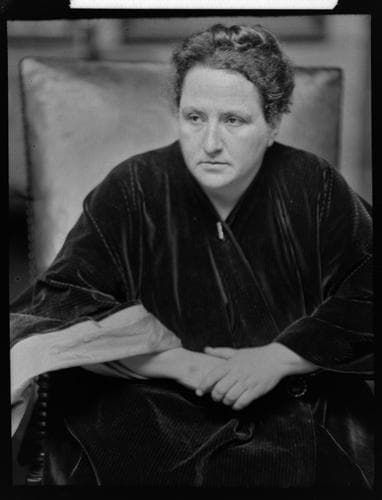
Gertrude Stein was an American novelist, poet, playwright, and art collector. Born in Allegheny, Pennsylvania, and raised in Oakland, California, Stein moved to Paris in 1903, and made France her home for the remainder of her life. She hosted a Paris salon, where the leading figures of modernism in literature and art, such as Pablo Picasso, Ernest Hemingway, F. Scott Fitzgerald, Sinclair Lewis, Ezra Pound, Sherwood Anderson and Henri Matisse, would meet.







