BookBrief
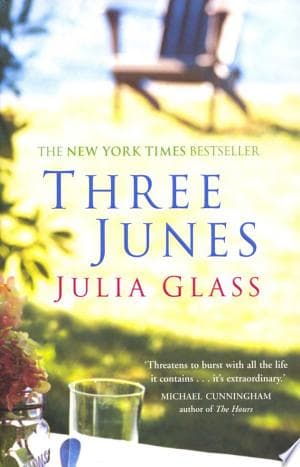
Three Junes cover
Archivist's Choice

Three Junes

Julia Glass (2002)

Genre

Literary Fiction

Reading Time

750 min

Key Themes

See below

Track Your Reading

Sign in to track this book

Over three Junes, a Scottish family deals with the effects of love, loss, and new connections, uncovering their lives through a widower's Greek affair, a son's return home, and an artist's look at her past.

Synopsis

In June 1989, Paul McLeod, a recently widowed Scottish newspaper publisher, travels to Greece and begins an affair with Fern, a young American artist. He thinks about his past marriage and his connection with Fern. Six years later, in June 1995, Paul's sudden death brings his three adult sons back to their family home in Scotland for a tense reunion. Fenno, the oldest son and a gay bookseller from New York, tells this part of the story, finding out surprising facts about his father's life and his family's secrets, which challenge his view of himself. Four years later, in June 1999, Fenno meets Fern Olitsky on the Long Island shore. Pregnant and thinking about her past and future, Fern faces her link to Paul and the McLeod family. The novel explores love, loss, family secrets, and how lives connect over ten years, showing the power of understanding.
Reading time
750 min
Difficulty
Medium
Pacing
Moderate
Mood
Reflective, Melancholy, Introspective, Tender, Bittersweet
✓ Read this if...
You enjoy character-driven literary fiction exploring family dynamics, secrets, and the passage of time, with a focus on internal lives and relationships.
✗ Skip this if...
You prefer fast-paced plots, clear-cut resolutions, or books with a strong genre focus (e.g., thriller, fantasy).

Plot Summary

Paul in Greece, June 1989

Paul McLeod, a Scottish newspaper publisher, goes on a package tour of Greece in June 1989, a few months after his wife Maureen's sudden death. He is alone, still dealing with his forty-year marriage, which had both deep love and unspoken problems. During the tour, Paul watches other travelers, especially a young American artist named Fern Olitsky. He likes her independent spirit, which is very different from his own sad mood. They talk a few times, and Paul finds himself drawn to her, thinking about love, loss, and the chance for connection even while grieving.

Paul's Encounter with Fern

In Greece, Paul and Fern are drawn to each other. One night, Paul asks Fern to dinner, and they talk openly, sharing parts of their lives. Fern, a free-spirited artist, tells him about her art goals and her traveling life. Paul, in turn, shares bits of his life with Maureen, admitting the emotional distance that grew between them over time. Their closeness leads to a night together, a moment of passion that makes Paul feel renewed and aware of the life he had and the life he might still have.

Return to Scotland and Maureen's Secret

Back in Scotland, Paul is still thinking about his time with Fern. He sees his life and marriage in a new way. While going through Maureen's things, he finds hidden letters showing a long, secret relationship Maureen had with another man. This discovery shatters Paul's understanding of his marriage, adding betrayal he never suspected. He deals with anger, hurt, and a deep re-evaluation of his wife's character and their shared past, adding another layer to his grief.

Fenno's Introduction, June 1995

Six years later, in June 1995, Paul McLeod dies suddenly. This brings his three adult sons – Fenno, David, and Dennis – and their families back to the family home in Scotland for the funeral and to sort out his estate. Fenno, the oldest, a gay man who lives quietly as a bookseller in Greenwich Village, tells this part. He has always felt like an outsider in his family, keeping some emotional distance. Returning home makes him face his past, his brothers, and the tensions that have always been in their family.

Family Reunion and Tensions

The family reunion is full of old resentments. Fenno watches his brothers, David, the responsible middle son, and Dennis, the youngest, a more free-spirited and often troubled person. Their wives and children are also there, making the dynamic more chaotic. As they handle funeral plans and estate matters, old arguments come up, and the brothers' different personalities clash. Fenno feels a familiar sense of being alone, struggling to connect with his family while also getting pulled into their complex relationships.

Fenno's Discoveries about Paul

While going through his father's things, Fenno finds several surprising items. He finds proof of Paul's connection to Fern Olitsky, the American artist, specifically a letter and a painting. This discovery changes Fenno's view of his father, whom he had seen as conventional and quiet. The secret affair, especially after his mother's death, makes Fenno rethink his parents' marriage and his own ideas of love. He also finds a box of his mother's letters, hinting at her own secret life, which further complicates his understanding of his family's past.

Fenno's Personal Struggles

Amidst the family drama, Fenno also faces his personal issues. He thinks about his long-term relationship with his partner, Tony, and their challenges. Going back to his childhood home and seeing his family's history brings up his anxieties. He deals with feelings of not being good enough and pressure to fit in, especially about his sexuality. The weight of his family's secrets and past conflicts adds to Fenno's inner struggle, making him question his choices and his place in the world.

Fern's Life in New York, June 1999

Four years later, in June 1999, the story moves to Fern Olitsky. She is now in New York City, pregnant and working as a teacher. Even after time has passed, Fern is still affected by her past, especially her short but strong encounter with Paul McLeod in Greece. She feels guilt and unresolved feelings about their connection, knowing he was a recently widowed man. Her pregnancy makes her face her own wishes for family and stability, while also dealing with her past choices and relationships.

Fern and Fenno's Chance Encounter

Fern walks her dog on the Long Island shore and meets Fenno McLeod, who is staying at a friend's beach house. Unaware they are linked through Paul, they start talking. Fenno likes Fern's artistic side and her open personality, while Fern finds Fenno's quiet thoughtfulness appealing. Their first talk is casual, but a subtle sense of familiarity begins between them, hinting at the deeper ties that connect their lives through Paul McLeod.

The Revelation and Its Aftermath

As their talks continue, Fenno and Fern slowly figure out the truth: they are connected through Paul McLeod. Fenno eventually recognizes Fern from the painting his father had and from the letters. Fern, in turn, realizes Fenno is Paul's son. This discovery is a key moment, bringing the story's different parts together. They talk about Paul, his life, and his impact on both of them. This shared understanding helps Fern face her guilt and gives Fenno a new view of his father's life and human relationships.

Fenno's Perspective Shift

Through his talks with Fern and looking back at his family's history, Fenno changes. He starts to see his father not just as the quiet, conventional man he remembered, but as a complex person capable of unexpected passions and secrets. He also gains a clearer understanding of his mother, Maureen, and her hidden life. This wider view helps Fenno accept his own identity and his relationship with his family, allowing him to build a stronger sense of self and a deeper connection to his past, even with ongoing complexities.

Fern's Reconciliation and Future

Meeting Fenno and talking about Paul helps Fern come to terms with her past. The guilt and uncertainty she felt about her connection with Paul start to fade as she gets a fuller picture of his life and marriage. She finds a sense of closure. With her pregnancy moving forward, Fern accepts her future as a mother with new purpose and hope. The experience helps her redefine what family means to her, not just by blood, but also through the unexpected connections that have shaped her life.

Principal Figures

Paul McLeod

The Protagonist (Part 1), Catalyst

Paul moves from a state of quiet grief and reflection to experiencing unexpected passion and then confronts the shattering truth about his marriage, leading to a re-evaluation of his entire life.

Fenno McLeod

The Protagonist (Part 2 & 3), Narrator

Fenno begins as a somewhat detached observer of his family, but through discovering his parents' secrets and meeting Fern, he gains a deeper understanding of love, family, and himself, leading to greater self-acceptance and connection.

Fern Olitsky

The Protagonist (Part 3), Catalyst

Fern moves from a state of unresolved guilt and artistic wandering to finding a sense of peace and purpose through confronting her past and embracing motherhood.

Maureen McLeod

The Supporting, Catalyst (post-mortem)

Her character arc unfolds posthumously, as her hidden life is revealed, transforming her family's understanding of her and their shared history.

David McLeod

The Supporting

David remains largely static, representing the anchor of conventionality against which his brothers' more complex journeys unfold.

Dennis McLeod

The Supporting

Dennis remains somewhat troubled, his character highlighting the enduring challenges and complexities within the family dynamic.

Tony

The Supporting

Tony's character remains a consistent source of support for Fenno, his presence underscoring the theme of steadfast love.

Themes & Insights

The Nature of Love and Fidelity

The novel explores love, from lasting marriage bonds to unexpected passions, and questions common ideas of faithfulness. Paul's forty-year marriage to Maureen, which he thought was stable, had hidden secrets from both sides. His short but strong affair with Fern challenges his understanding of love after grief. Similarly, Maureen's long-term secret relationship makes her children, especially Fenno, rethink their parents' lives and human connection. The book suggests that love is rarely simple, often containing compromises, longing, and sometimes betrayal, but also the chance for new beginnings.

What does a person know about another person, even after forty years?

Paul McLeod (narrator)

Family Secrets and Their Legacy

A main theme is how family secrets affect generations. Maureen's hidden affair and Paul's short meeting with Fern, though seemingly separate, deeply shape their children's lives. Fenno, in particular, must face a very different picture of his parents than he grew up with. These secrets show the hidden depths of people in a family, challenging beliefs and making characters rethink their past and their own identities. Finding these secrets helps characters grow emotionally and reconcile.

Sometimes the things you kept secret were the only things that kept you whole.

Narrator about Maureen

Grief and Renewal

The novel shows the process of grief and the unexpected ways to heal. Paul's journey starts right after Maureen's death, where he deals with loss and rethinking his marriage. His meeting with Fern offers an unexpected connection and the chance for new life. Fenno also deals with losing his father, but also losing his idealized image of his parents. The story suggests that grief is not a straight path but one that can open doors to new understandings, relationships, and a renewed sense of self, even years after the initial loss.

Grief was a thing that could make you see things you'd never seen before, or never allowed yourself to see.

Fenno McLeod (narrator)

Identity and Self-Discovery

Each main character goes on a journey of self-discovery, prompted by important life events. Paul, after Maureen's death, questions who he is as a husband and a man. Fenno, as a gay man living somewhat apart from his family, struggles with his place in the McLeod family and societal expectations. Finding his parents' secrets makes him redefine his understanding of family and his own identity. Fern, dealing with her past and upcoming motherhood, tries to define what family and a stable future mean for her. The novel suggests that identity changes and is always shaped by relationships, discoveries, and personal choices.

You could spend your whole life trying to figure out who you were, and then one day, you just were.

Fern Olitsky (narrator)

The Passage of Time and Memory

The novel's structure, covering three Junes over ten years, highlights the passing of time and its effect on memory and viewpoint. Past events, first remembered one way, are seen differently as new information comes out. Paul's memories of Maureen change a lot after he finds her letters. Fenno's understanding of his parents changes with his discoveries. The novel shows how memory is not fixed but an evolving story, always reshaped by present experiences and new information, finally influencing how characters understand their lives and relationships.

Time changed everything, of course, but it didn't always make things clearer.

Narrator

Plot Devices & Literary Techniques

Shifting Perspectives (Three Junes)

The narrative shifts between three main characters across three distinct Junes.

The novel is divided into three sections, each focusing on a different 'June' (1989, 1995, 1999) and primarily narrated from the perspective of a different main character (Paul, Fenno, Fern). This device allows the reader to experience the story from multiple viewpoints, gradually revealing layers of information and character motivations. It creates suspense as secrets are hinted at in one section and fully revealed in another, enriching the understanding of the McLeod family's complex history and the interconnectedness of their lives.

Posthumous Revelation

The secrets of deceased characters are revealed after their death, impacting the living.

Both Maureen and Paul McLeod have secrets that are only fully uncovered after their deaths. Maureen's hidden letters revealing her affair, and Paul's painting and letters related to Fern, serve as crucial plot points. This device allows the deceased characters to continue influencing the narrative and the lives of the living, prompting their children to re-evaluate their understanding of their parents and their own identities. It underscores the lasting legacy of personal choices and the complexity of human relationships even beyond death.

The Motif of 'June'

Each major narrative section is set in the month of June, signifying new beginnings and turning points.

The recurring setting of 'June' for each of the three major plot segments is more than just a chronological marker. June, often associated with summer, weddings, and new beginnings, symbolically frames the pivotal moments of change and revelation for the characters. It is in June that Paul meets Fern, in June that Paul dies and Fenno confronts his family's past, and in June that Fenno and Fern finally meet. This motif highlights the cyclical nature of life, love, and loss, and underscores the idea that even amidst endings, there are always opportunities for new beginnings and deeper understanding.

Symbolism of Art (Painting)

Fern's painting of the Greek landscape acts as a tangible link between characters and past events.

Fern's painting, depicting a Greek landscape, serves as a powerful symbolic object. It is a physical manifestation of her encounter with Paul and becomes a key piece of evidence that Fenno discovers, linking his father to this secret past. The painting represents memory, unspoken desires, and the lasting impact of fleeting connections. Its discovery is a turning point, prompting Fenno to seek out Fern and ultimately leading to the full revelation of the interconnected lives of the characters.

Critical analysis

Notable Quotes

It was a common enough fantasy, he knew, to imagine one’s life as a movie, but it was less common, perhaps, to imagine it as a novel, with the constant possibility of revision, new chapters, different endings.

Paul reflecting on his life and the idea of narrative.

The past was like a foreign country, but one you could visit anytime, if you only knew how to get there.

Fern contemplating memories and the past.

Love was not a state of being, but a series of actions, a daily choice.

Lila's understanding of love's demands.

Grief, she was learning, wasn't a linear progression but a spiral, returning again and again to the same points, each time with a slightly different view.

Fern processing her grief after a loss.

There was a certain freedom in being alone, a lightness that came from having no one to answer to, no one to disappoint.

Dennis enjoying his solitude.

Families were like that, he thought, a collection of separate orbits, sometimes intersecting, sometimes drifting far apart, but always held by an invisible force.

Paul's observation about family dynamics.

The older you got, the more complicated happiness became. It wasn't just a feeling; it was a balancing act.

A character reflecting on the nature of happiness in older age.

Books were a way of living many lives, of understanding the world from countless perspectives.

Fern's love for reading and its impact.

Sometimes the biggest decisions were made by not making any decision at all.

A character contemplating the consequences of inaction.

It was impossible, she realized, to truly know another person, even someone you loved. Everyone carried their own secret world.

Lila's realization about the hidden aspects of others.

The beauty of life was in its unexpected turns, the way one path could lead to an entirely different one, if you were open to it.

A character embracing the unpredictability of life.

Memory was a tricky thing, not a clear photograph but a painting, constantly being retouched and reinterpreted.

Paul considering the unreliable nature of memory.

The quiet moments were often the loudest, filled with all the unspoken thoughts and feelings.

A character observing the depth in silence.

To be truly seen was a rare and precious gift, especially by someone who didn't judge what they saw.

A character experiencing genuine acceptance.

Quiz

Test Your Knowledge

Ready to see how well you understood this book? Take our interactive quiz with 10 questions.

10
Questions
~5
Minutes
?
Best Score

Key Questions (FAQ)

'Three Junes' traces the lives of the McLeod family, particularly focusing on patriarch Paul and his eldest son Fenno, across three pivotal Junes in 1989, 1995, and 1999. It explores themes of love, loss, family secrets, and the unexpected connections that shape their destinies, often through the lens of grief and unexpected encounters.

About the author

Julia Glass

Julia Glass is an American novelist. Her debut novel, Three Junes, won the National Book Award for Fiction in 2002.







