
Biography coming soon.

Esther M. Friesner (2010)
Genre
Historical Fiction / Young Adult / Romance
Reading Time
12 Minutes
Key Themes
See below
Sign in to track this book
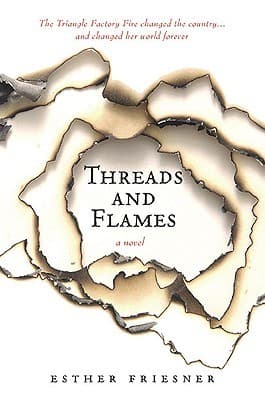
In 1910 New York, a young Polish immigrant named Raisa navigates a new world of friendship, love, and factory work, only to face the devastating inferno of the Triangle Shirtwaist Factory fire that will forever mark her life.
Thirteen-year-old Raisa travels alone from her Polish shtetl, arriving at Ellis Island. She is overwhelmed by New York City's size and noise. Her initial joy turns to fear when her older sister, Anna, who was supposed to meet her, is gone. Raisa, alone and with little English, struggles on the chaotic streets. She finds the tenement apartment where Anna lived, only to learn from the landlady that Anna left some time ago without a forwarding address. Raisa must now fend for herself in a strange new world, her dreams of a reunion shattered.
Desperate for a place to stay, Raisa is taken in by Mrs. Goldstein, Anna's former landlady, who offers her a small space for help around the building. Through Mrs. Goldstein, Raisa meets Bella, a girl her age who also works in a factory. Bella quickly becomes Raisa's first friend in America, offering comfort and advice. Bella helps Raisa get a job at the Triangle Shirtwaist Factory, a large garment factory making fashionable blouses. Raisa, though daunted by the noisy, fast-paced environment, is grateful for the chance to earn money and gain independence.
Raisa starts work as a 'finisher' at the Triangle Shirtwaist Factory, sewing bodices. She quickly learns the demanding pace and long hours, experiencing the cramped conditions and strict rules. Despite the hard work, Raisa finds camaraderie among her fellow workers, many of whom are young immigrant women like herself. She befriends Sarah, a more experienced seamstress, and observes the various personalities and struggles in the factory. Raisa also notices subtle dangers and injustices, such as locked doors and low wages, though she tries to remain optimistic about her future in America.
Raisa's factory routine is occasionally brightened by Jacob, a handsome young delivery boy who often brings supplies to the factory floor. Their initial interactions are brief and hesitant, marked by shy glances and polite exchanges. Raisa is drawn to Jacob's kind eyes and gentle manner, and a quiet affection begins to grow between them. These moments offer a welcome escape from her work's drudgery. Raisa starts to dream of a future beyond the factory walls, a future that might include Jacob. She admits to herself that she is falling in love.
Despite settling into her new life, Raisa never gives up hope of finding Anna. She often asks Mrs. Goldstein and others if they have seen or heard anything about her sister. She even tries asking around the neighborhood and at other factories, but her efforts fail. Each dead end is a fresh disappointment, reminding Raisa of her sister's mysterious disappearance and the vast, indifferent city that seems to have swallowed her. The uncertainty of Anna's fate weighs on Raisa, even as she tries to build a new life.
As months pass, Raisa notices the growing discontent among the factory workers. Conversations about unfair wages, long hours, and dangerous working conditions become more frequent. Some older, more experienced workers, like Sarah, openly discuss forming a union to demand better treatment. Raisa listens, understanding the grievances but also fearing potential consequences. The factory management's dismissive attitude and constant pressure to increase production only fuel the workers' frustration, creating a tense atmosphere.
One afternoon, after work, Jacob bravely approaches Raisa and invites her for a walk. Raisa, thrilled and nervous, accepts. They spend a precious hour together, away from the factory's noise and grime, talking and laughing. Jacob shares his dreams and aspirations, and Raisa feels a deep connection with him. This brief escape from their harsh realities solidifies their budding romance, offering Raisa a glimpse of happiness and normalcy she hadn't thought possible. It is a moment of pure joy and hope, a stark contrast to her everyday struggles.
It is an ordinary Saturday afternoon, March 25, 1911. The Triangle Shirtwaist Factory is busy with workers. Raisa is at her sewing machine, lost in thought, when the unmistakable smell of smoke fills the air. Panic erupts as a small fire quickly escalates into a raging inferno on the eighth floor. The fire spreads quickly, fueled by fabric scraps and wooden tables. Chaos ensues, with screams and shouts echoing through the factory. Raisa, along with her friends, realizes their lives are in immediate danger.
As the fire intensifies, Raisa and her fellow workers rush towards the exits, only to find them locked or blocked. The stairwells are engulfed in flames, and the single fire escape is flimsy and quickly collapses under the weight of desperate people. Raisa, Bella, and Sarah huddle together, their terror mounting as the smoke thickens and the heat becomes unbearable. They try to find another way out, but every path leads to a dead end. The horrifying reality of their entrapment sets in, and the air becomes thick with despair and the desperate cries of those around them.
With no other options, and the flames rapidly closing in, Raisa faces an impossible choice. She sees some coworkers, in sheer desperation, jump from the windows of the multi-story building, plummeting to their deaths. In a moment of terror and instinct, Raisa finds a small opening and, with Sarah's encouragement, manages to escape the burning building. The details of her escape are harrowing. She survives, but Bella and many other friends die in the fire, leaving Raisa with deep grief and survivor's guilt.
In the days and weeks following the fire, Raisa is in shock and deep mourning. The city is gripped by the tragedy, and the streets are filled with grief and outrage. Raisa, physically scarred and emotionally traumatized, struggles to process the horror she witnessed and the loss of her friends. She desperately searches for Jacob, fearing the worst but clinging to a sliver of hope. The fire changes her perspective on everything; her dreams now seem fragile and distant, replaced by the heavy burden of memory and loss.
Amidst the despair, Raisa is miraculously reunited with Jacob, who also survived the fire, though he is deeply affected by the tragedy. Their shared experience strengthens their bond. The fire changes Raisa's life. Inspired by the public outcry and the growing labor movement, she finds a new voice and purpose. She becomes an advocate for workers' rights, determined to ensure such a tragedy never happens again. With Jacob by her side, Raisa begins to heal and build a new future, honoring the memory of those lost by fighting for justice.
The Protagonist
Raisa transforms from a naive, hopeful immigrant into a hardened but resilient survivor and advocate for social justice, finding her voice and purpose after immense tragedy.
The Supporting
Bella remains a hopeful and supportive friend throughout her time, tragically losing her life in the factory fire, serving as a poignant symbol of the victims.
The Supporting
Jacob develops from a shy love interest into a supportive partner for Raisa, sharing the trauma of the fire and helping her find a path forward.
The Supporting
Sarah is a consistent voice for workers' rights, providing guidance and representing the collective struggle, tragically perishing in the fire.
The Supporting
Mrs. Goldstein remains a consistent source of maternal comfort and stability for Raisa, providing a home and emotional support.
The Antagonists
These characters remain steadfast in their pursuit of profit and neglect of worker safety, ultimately facing legal repercussions but largely escaping accountability.
The Supporting
Anna's arc is largely off-page, her disappearance serving as a catalyst for Raisa's journey and a symbol of the dangers faced by young immigrant women.
The novel shows the challenges and resilience of immigrants in early 20th-century New York. Raisa's journey from a Polish shtetl to a bustling city highlights culture shock, language barriers, and the struggle to find one's place. It explores the hope for a better life versus the harsh realities of poverty, exploitation, and the longing for home. The camaraderie among factory workers, many of whom are immigrants, shows the importance of community and shared struggle in adapting to a new world.
“America was supposed to be a golden land, but the gold seemed to be mostly in the pockets of men like Mr. Blanck and Mr. Harris.”
A central theme is the exploitation of the working class, especially immigrant women, in the industrial era. The Triangle Shirtwaist Factory is an example of systemic injustices: long hours, low wages, dangerous working conditions, and locked doors. The novel highlights the early labor movement and calls for unionization, showing workers' struggle for dignity and safety against powerful factory owners. The fire itself is a tragic symbol of the devastating consequences of prioritizing profit over human life, fueling the fight for reform.
“The bosses cared more about keeping us from stealing a few scraps of cloth than they did about keeping us alive.”
The Triangle Shirtwaist Factory Fire is the ultimate example of loss and trauma in the novel. Raisa experiences deep grief from losing friends and witnessing horror. The narrative explores the psychological aftermath of such a catastrophe, including survivor's guilt and the struggle to process immense suffering. However, it also emphasizes human resilience. Raisa's journey through grief to finding a new purpose, fueled by the memory of those lost, shows the strength to endure, heal, and fight for justice in the face of tragedy.
“The fire took so much, but it couldn't take away the memory of their faces, or the fight it ignited in my heart.”
In the face of overwhelming adversity, community and friendship offer vital support and strength. Raisa's initial isolation in New York is lessened by Mrs. Goldstein's kindness and her immediate friendship with Bella and Sarah. These relationships provide emotional support, practical help, and a sense of belonging in a harsh environment. The solidarity among factory workers, sharing struggles and hopes, shows the important role human connection plays in navigating difficult circumstances. Even after tragedy, these bonds, and their memory, continue to shape Raisa's path.
“In that factory, we were not just workers; we were sisters, bound by the needle and the thread, and the hope for something better.”
Hints of impending danger and tragedy.
The novel uses subtle and overt foreshadowing to build tension towards the inevitable fire. Discussions among workers about locked doors, inadequate fire escapes, and previous small fires create an ominous atmosphere. Comments about the flammability of the fabric scraps and the crowded conditions serve as direct warnings. This device heightens the reader's awareness of the impending disaster, making the eventual tragedy feel both horrifyingly sudden and tragically unavoidable, emphasizing the preventable nature of the catastrophe and the negligence of the factory owners.
Objects and events representing deeper meanings.
The 'threads and flames' themselves are powerful symbols. The threads represent the interconnected lives of the immigrant workers, their shared labor, and the delicate fabric of their new lives. The flames, while literally destructive, symbolize not only the immediate tragedy of the fire but also the spark of injustice that ignited the labor movement, the burning desire for change, and Raisa's own internal fire of resilience and advocacy. The locked factory doors symbolize the entrapment and exploitation of the workers, and the systemic disregard for their safety and freedom.
Intimate perspective of Raisa's experiences.
The story is told from Raisa's first-person perspective, allowing readers an intimate and immediate experience of her journey. This narrative choice immerses the reader in Raisa's thoughts, fears, hopes, and observations, making her struggles and triumphs deeply personal. It effectively conveys the sensory details of her new life, from the overwhelming sounds of New York to the oppressive atmosphere of the factory. Crucially, it brings an emotional depth to the tragedy of the fire, as readers witness the horror unfold directly through her eyes, fostering a strong sense of empathy and connection.
References to real-world historical events and figures.
The novel is firmly grounded in historical reality, using allusions to the broader context of early 20th-century New York. References to Ellis Island, tenement housing, the garment industry, and the nascent labor movement (including the concept of 'shirtwaists' as a popular fashion item) provide authenticity. The central event, the Triangle Shirtwaist Factory Fire of March 25, 1911, is a direct historical allusion, making the story a powerful fictionalization of a real-life tragedy. This device educates readers about a significant moment in American history and labor rights.
Ready to see how well you understood this book? Take our interactive quiz with 10 questions.
Biography coming soon.







